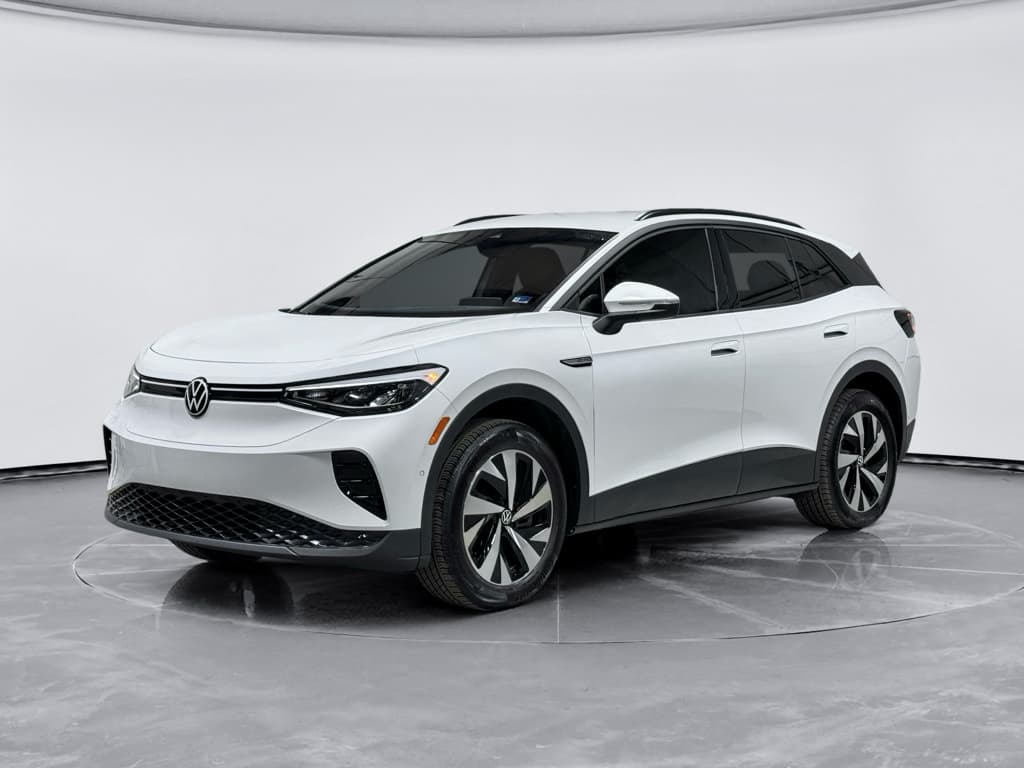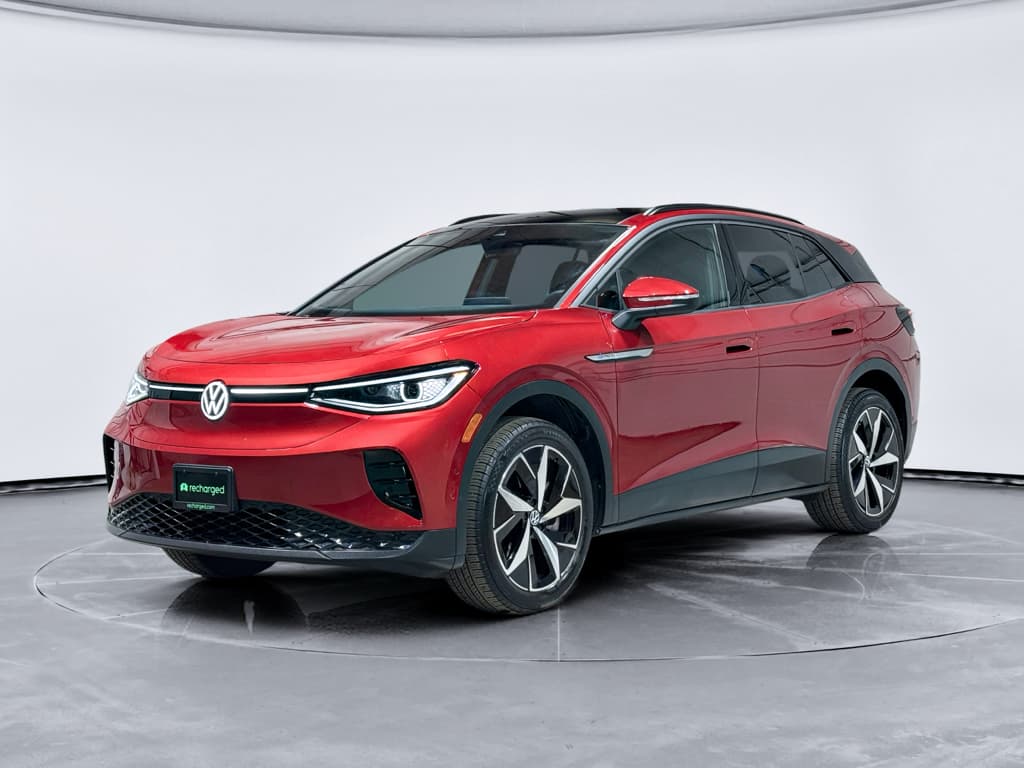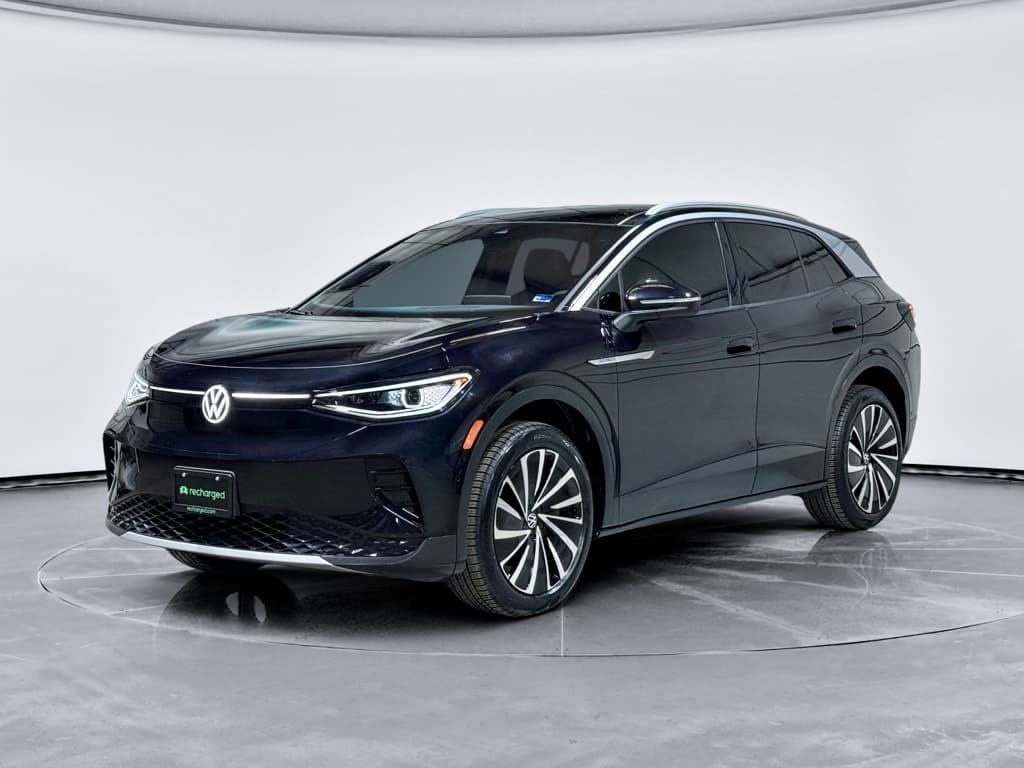
If you like the idea of a familiar, practical compact SUV that just happens to be electric, the 2025 Volkswagen ID.4 sits right in your strike zone. This buying guide walks you through trims, range, pricing, charging and ownership costs, plus when a low‑mileage used ID.4 from Recharged might be the smarter move than buying new.
What’s new for the 2025 ID.4
Why consider the 2025 Volkswagen ID.4?
Think of it as an electric Tiguan
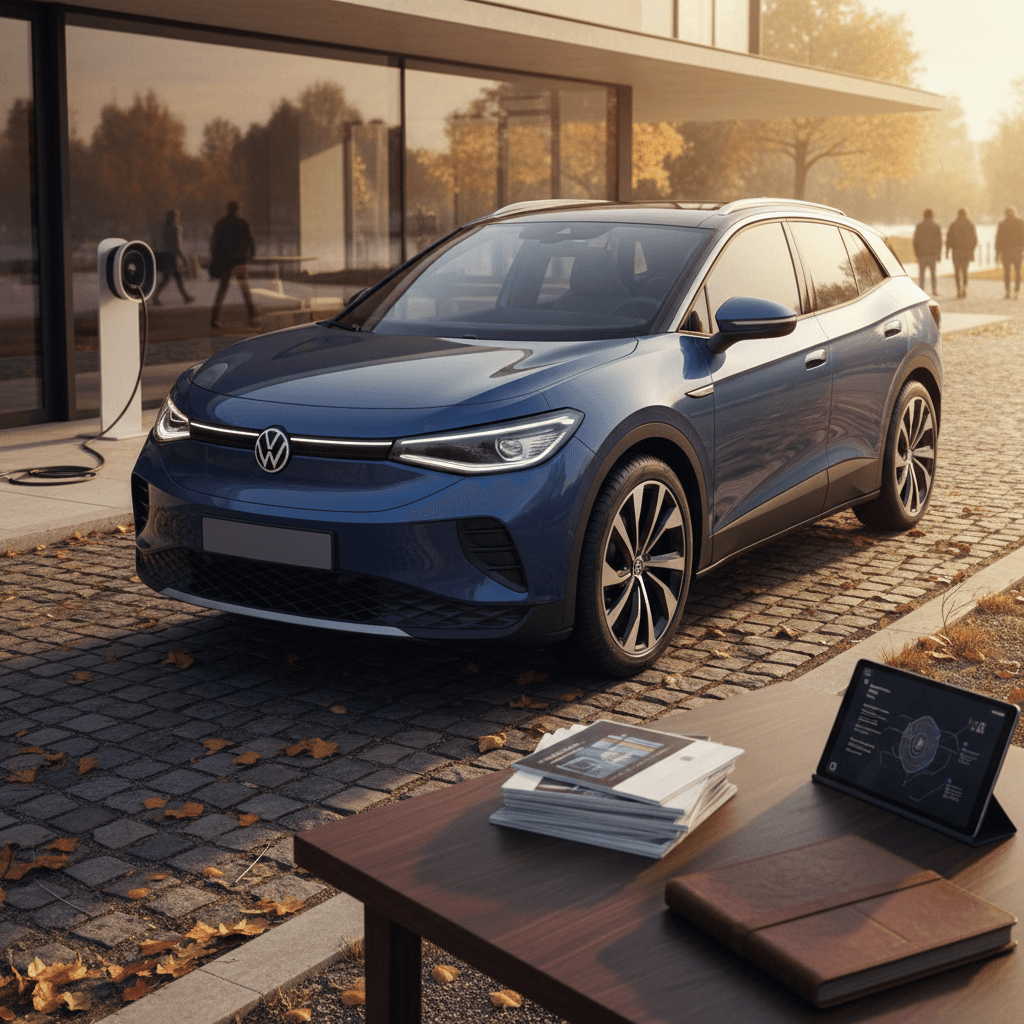
The 2025 ID.4 is roughly the size of a VW Tiguan or Toyota RAV4, with roomy seating for four adults (five in a pinch) and a big, squared‑off cargo area. If you’re cross‑shopping gasoline compact crossovers, the ID.4 feels familiar, just quieter and smoother.
- Easy step‑in height
- Comfort‑focused suspension, not track‑tuned
- Good outward visibility and simple controls by EV standards
Where it fits in the EV world
The ID.4 competes with the Hyundai Ioniq 5, Kia EV6, Tesla Model Y and Ford Mustang Mach‑E. It doesn’t chase headline 0–60 times; it aims for comfort, value and usable range. If you want a normal‑feeling family SUV that cuts your fuel bills, the ID.4 is squarely in the mix.
If you’re EV‑curious but not excited about paying new‑car money, a used ID.4 with a verified Recharged Score can deliver the same basic experience for a lot less.
2025 Volkswagen ID.4 quick numbers (U.S.)
Tip for budget‑minded buyers
2025 ID.4 trims, batteries and real-world range
Volkswagen’s naming can be confusing, so it’s worth slowing down here. For 2025 in the U.S., the core lineup revolves around the larger battery pack (often called 77–82 kWh gross, depending on source), branded as Pro. Smaller‑battery “Limited” or “Standard” versions have been on‑again, off‑again and may only be available in limited quantities or later in the model year.
2025 VW ID.4 trims at a glance (U.S.)
High‑level guide to common 2025 ID.4 Pro trims. Exact equipment and availability vary by region and build month, so always confirm with a dealer when you spec your car.
| Trim | Battery | Drive | Power | Est. EPA range | Highlights |
|---|---|---|---|---|---|
| Pro (RWD) | ≈82 kWh | Rear‑wheel | ~282 hp | Up to ~291 mi | Strong range for the money, heated seats in many regions, 12.9" infotainment, IQ.DRIVE standard. |
| Pro (AWD) | ≈82 kWh | All‑wheel | ~335 hp | Mid‑260s mi | Quicker acceleration and better traction; slightly less range than RWD. |
| Pro S (RWD) | ≈82 kWh | Rear‑wheel | ~282 hp | Similar to Pro | Adds premium upholstery, 20" wheels, panoramic glass roof in most builds, 30‑color ambient lighting. |
| Pro S (AWD) | ≈82 kWh | All‑wheel | ~335 hp | Slightly below RWD | More power and traction plus S‑level comforts; range trade‑off vs. Pro RWD. |
| Pro S Plus (AWD only) | ≈82 kWh | All‑wheel | ~335 hp | Similar to Pro S AWD | Top trim: 21" wheels, black roof with silver accents, upgraded audio, more convenience tech. |
Battery and drivetrain drive range more than cosmetic packages, so focus there first.
About the smaller‑battery ID.4
- Range sweet spot: The ~82 kWh RWD Pro or Pro S trims, which land near the top of the ID.4 range ladder and rival Tesla Model Y and Ioniq 5 in daily usability.
- AWD vs. RWD: All‑wheel drive adds punchy acceleration and winter confidence but usually costs you 20–30 miles of rated range.
- Real‑world expectations: Highway speeds, cold weather and frequent DC fast‑charging will pull range down. Many owners report seeing 75–85% of EPA numbers on long‑distance trips, more in mild city driving.
Battery longevity and degradation
Pricing, tax credits and what you’ll actually pay
Sticker shock is real with new EVs, but the 2025 ID.4 has a few levers working in your favor: factory incentives, dealer discounts and, if you qualify, federal and state tax breaks. The wrinkle is that MSRPs moved up when VW paused the smaller‑battery base model, so focus on the out‑the‑door number and your monthly cost, not just the window sticker.
Typical 2025 VW ID.4 pricing landscape (U.S.)
Ballpark numbers to frame your shopping. Always confirm current pricing and incentives in your ZIP code.
| Trim (approx.) | MSRP range | Who it suits | Value notes |
|---|---|---|---|
| Pro RWD | Low–mid $40,000s | Commuters, families in milder climates | Strong range per dollar; often the best value if you don’t need AWD. |
| Pro AWD | Mid–upper $40,000s | Snow‑belt drivers, performance‑minded | Quicker and more secure in bad weather, but budget for a bit less range. |
| Pro S RWD | Upper $40,000s–low $50,000s | Comfort‑focused buyers | You’re paying for nicer materials and features more than extra capability. |
| Pro S AWD | Low–mid $50,000s | Well‑equipped family SUV | Pairs the nicer interior with all‑weather traction. |
| Pro S Plus AWD | Mid‑$50,000s+ | Top‑trim shoppers | Makes sense only if you truly care about the appearance and added luxuries. |
MSRPs skew higher on paper, but transaction prices often end up lower thanks to incentives and dealer discounts.
Federal tax credit and purchase incentives
Depending on how the car is built and how you buy it, a new 2025 ID.4 may qualify for a federal clean vehicle credit or a similar dealer‑applied incentive. The rules change frequently and depend on income caps, MSRP caps and where the battery components are sourced.
Rather than assuming, ask the dealer for a written breakdown of:
- Whether the specific VIN qualifies for a federal credit
- Any lease‑only incentives the captive finance arm is stacking on top
- How state or utility rebates apply in your area
Real‑world deals vs. MSRP
Price guides and owner forums consistently show transaction prices below MSRP for the ID.4, especially on in‑stock units. On the other hand, limited trims, hot colors and fresh arrivals can hold closer to sticker.
If you’re flexible on color and options, a low‑mile used ID.4 at Recharged can undercut a new 2025 by five figures, often with similar tech and range, and still qualify for competitive financing and nationwide delivery.
Leasing vs. buying a 2025 ID.4
Charging: how the 2025 ID.4 fits your routine
The ID.4 is built around the assumption you’ll do most of your charging at home or work, then lean on DC fast‑charging for road trips. The good news: it’s compatible with most major public networks and, using a VW‑approved NACS adapter, can tap into Tesla’s Supercharger network as it opens to non‑Tesla vehicles.
Key 2025 ID.4 charging facts
What daily life with an electric VW looks like
Home Level 2
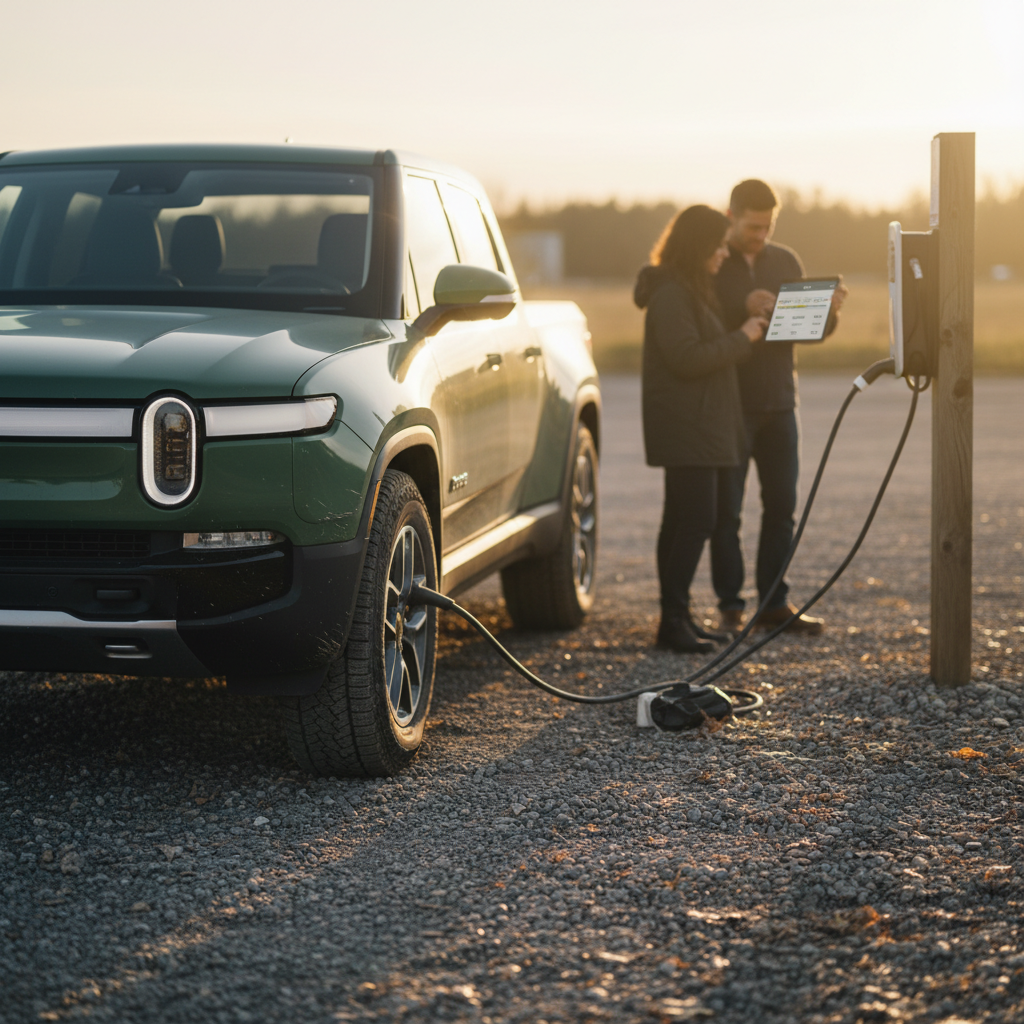
Most owners install a 240‑volt Level 2 charger at home. That typically refills the battery overnight, adding roughly 25–30 miles of range per hour of charging.
If you can’t install at home, check whether your workplace, apartment or nearby public lots offer Level 2 options.
DC fast‑charging
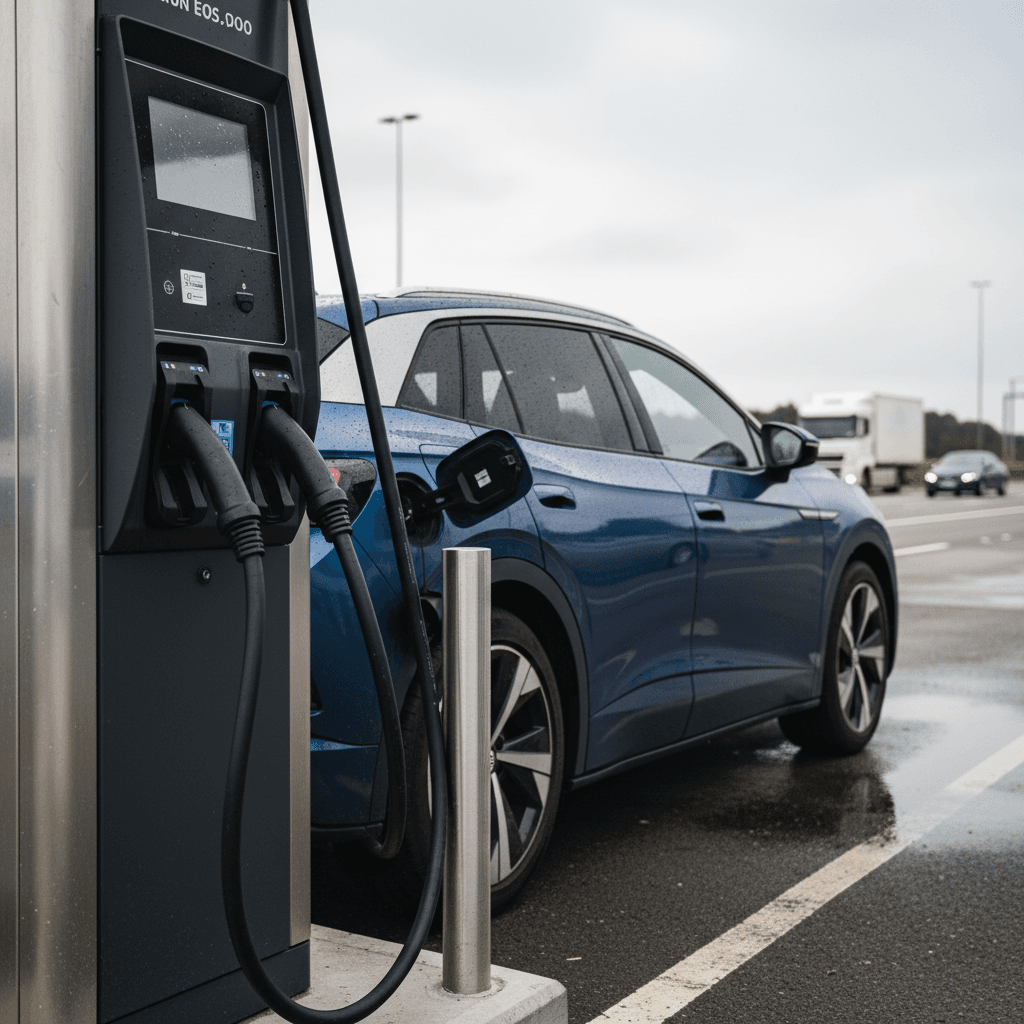
On a capable DC fast charger, larger‑battery ID.4s can go from about 10% to 80% in roughly 30–40 minutes in good conditions.
Use this for road trips, not every day, frequent DC fast‑charging can accelerate battery wear over time.
Network access
The ID.4 uses the industry‑standard CCS connector, and Volkswagen is rolling out access to Tesla Superchargers via a NACS adapter.
Apps like Electrify America, ChargePoint, and A Better Routeplanner make finding and planning stops easier.
Cold‑weather charging reality check
Tech, safety and comfort features to know
Volkswagen leans hard on its IQ.DRIVE suite and a cleaner interior layout to make the 2025 ID.4 feel modern without being overwhelming. That’s a plus for shoppers who find some EV dashboards more distracting than helpful.
2025 ID.4 features most shoppers ask about
Where the tech makes daily driving easier
IQ.DRIVE driver assistance
All new automatic Volkswagens now include IQ.DRIVE as standard, and the ID.4 is no exception. Depending on trim and market, this bundles:
- Adaptive cruise control with stop‑and‑go
- Lane‑keeping assistance and lane centering
- Blind‑spot monitoring and rear cross‑traffic alert
- Forward collision warning and automatic emergency braking
It’s not hands‑free driving, but it does reduce fatigue on long highway stints.
Interior, screens and controls
Most 2025 ID.4s feature a 12.9‑inch central touchscreen with navigation, wireless Apple CarPlay/Android Auto and back‑lit climate sliders that are easier to use than earlier versions.
Higher trims add 30‑color ambient lighting, premium audio and more adjustable seats. If you’re sensitive to touch‑only controls, spend extra time in a test drive making sure the layout works for you.
Practical comfort details
2025 ID.4 vs. used ID.4: which makes more sense?
The 2025 ID.4 is the most refined version yet, but EVs don’t follow traditional depreciation curves. A two‑ or three‑year‑old ID.4 with healthy range can undercut a new one by a wide margin while delivering similar day‑to‑day usability. That’s where Recharged’s focus on used EVs and battery health comes in.
Reasons to favor a new 2025 ID.4
- Latest software and hardware: Fresh infotainment, updated driver‑assist tech and any mid‑cycle improvements.
- Full factory warranty: Comprehensive bumper‑to‑bumper and 8‑year/100,000‑mile battery warranty coverage.
- Potential tax credits or lease incentives: Depending on how you buy and your eligibility.
- Exactly the spec you want: Order your color, trim and options if you’re willing to wait.
Why a used ID.4 can be the smarter play
- Huge upfront savings: 2023–2024 ID.4 Pros often list for the price of a well‑equipped gas crossover, not a brand‑new EV.
- Proven real‑world range: A Recharged Score report measures current battery health instead of guessing from the EPA sticker alone.
- Faster delivery: Buy from available inventory and have it shipped nationwide instead of waiting for a factory slot.
- Transparent pricing: Recharged shows what similar ID.4s are selling for, so you know where your deal stands.
How Recharged helps ID.4 shoppers
Ready to find your next EV?
Browse VehiclesHow the ID.4 compares to other compact EV SUVs
When you’re cross‑shopping, focus less on horsepower bragging rights and more on range, interior space and charging convenience. Here’s how the 2025 ID.4 typically stacks up against common rivals.
2025 ID.4 vs. popular EV SUV rivals
High‑level comparison of where the ID.4 tends to shine or fall short versus key alternatives.
| Model | Strengths | Potential drawbacks vs. ID.4 | Best for |
|---|---|---|---|
| Volkswagen ID.4 | Comfortable ride, practical cabin, strong range for the price, familiar VW feel. | Not the quickest; infotainment still polarizing for some. | Shoppers wanting a normal‑feeling family SUV that happens to be electric. |
| Tesla Model Y | Supercharger access, tech ecosystem, acceleration and efficiency. | Harsher ride, minimalist interior not for everyone, pricing can swing with incentives. | Tech‑focused buyers and frequent road‑trippers who value the Supercharger network. |
| Hyundai Ioniq 5 | Ultra‑fast charging, stylish design, spacious interior. | Complex trims, some regions see limited inventory, pricing can float higher. | Design‑conscious buyers who want very fast charging when networks support it. |
| Kia EV6 | Sporty handling, strong performance, good charging speeds. | Lower roofline and sportier tuning can feel less family‑friendly. | Drivers who want a sportier take on an EV crossover. |
| Ford Mustang Mach‑E | Brand appeal, engaging drive, decent charging speeds. | Cargo space and rear headroom can’t quite match ID.4’s boxy practicality. | Those who prioritize style and driving dynamics over maximum interior volume. |
Specs vary by trim and market; always compare specific configurations, not just nameplates.
Checklist before you commit to a 2025 ID.4
2025 Volkswagen ID.4 buyer checklist
1. Clarify your daily driving and road‑trip needs
Write down your typical weekday mileage, your longest regular trips and how often you do true road trips. If most days are under 60–80 miles and you road‑trip a few times a year, the ID.4’s range is likely ample.
2. Decide on RWD vs. AWD first
If you live in a snow‑belt state or value quicker acceleration, target AWD. If you’re in a milder climate and want maximum range and value, RWD usually makes more sense.
3. Verify battery size and EPA range
Don’t rely on trim names alone. Confirm the exact battery pack (larger Pro vs. any limited small‑pack variants) and EPA range rating on the Monroney sticker or listing details.
4. Map out your charging plan
Can you install a Level 2 charger at home, or reliably charge at work or nearby public stations? Price out installation ahead of time and check local utility rebates for home EVSEs.
5. Compare new vs. used total cost
Look at monthly payments, insurance and charging costs for a new 2025 ID.4 vs. a used 2023–2024 ID.4 on Recharged. Factor in any tax credits, dealer incentives and the value of a Recharged Score battery report.
6. Spend a full test drive on ergonomics
Live with the controls for at least 30–45 minutes. Adjust the seats, use the climate and audio, and try common driver‑assist features. If something annoys you on day one, it will bother you in year three.
7. Look ahead to resale
EV tech evolves quickly. Favor popular colors, mainstream trims and larger‑battery variants, those typically hold value better and are easier to resell or trade later, whether through a dealer or a marketplace like Recharged.
Frequently asked questions about the 2025 VW ID.4
2025 Volkswagen ID.4 FAQ
Bottom line: is the 2025 Volkswagen ID.4 right for you?
If you want an EV that feels like a normal, comfortable compact SUV, the 2025 Volkswagen ID.4 deserves a serious look. It won’t win many drag races, but it quietly nails the fundamentals: solid range, a family‑friendly interior, mature ride quality and broad charging options that now include access to Tesla’s network through a NACS adapter.
The key is matching the right battery and drivetrain to your routine, then deciding whether a brand‑new 2025 or a carefully vetted used ID.4 offers the best value. Take the time to map your charging, run the numbers on incentives and payments, and, if you’re looking used, lean on tools like the Recharged Score to remove the guesswork around battery health. Do that, and the ID.4 can be an easy, confidence‑inspiring entry point into electric ownership rather than a science experiment in your driveway.