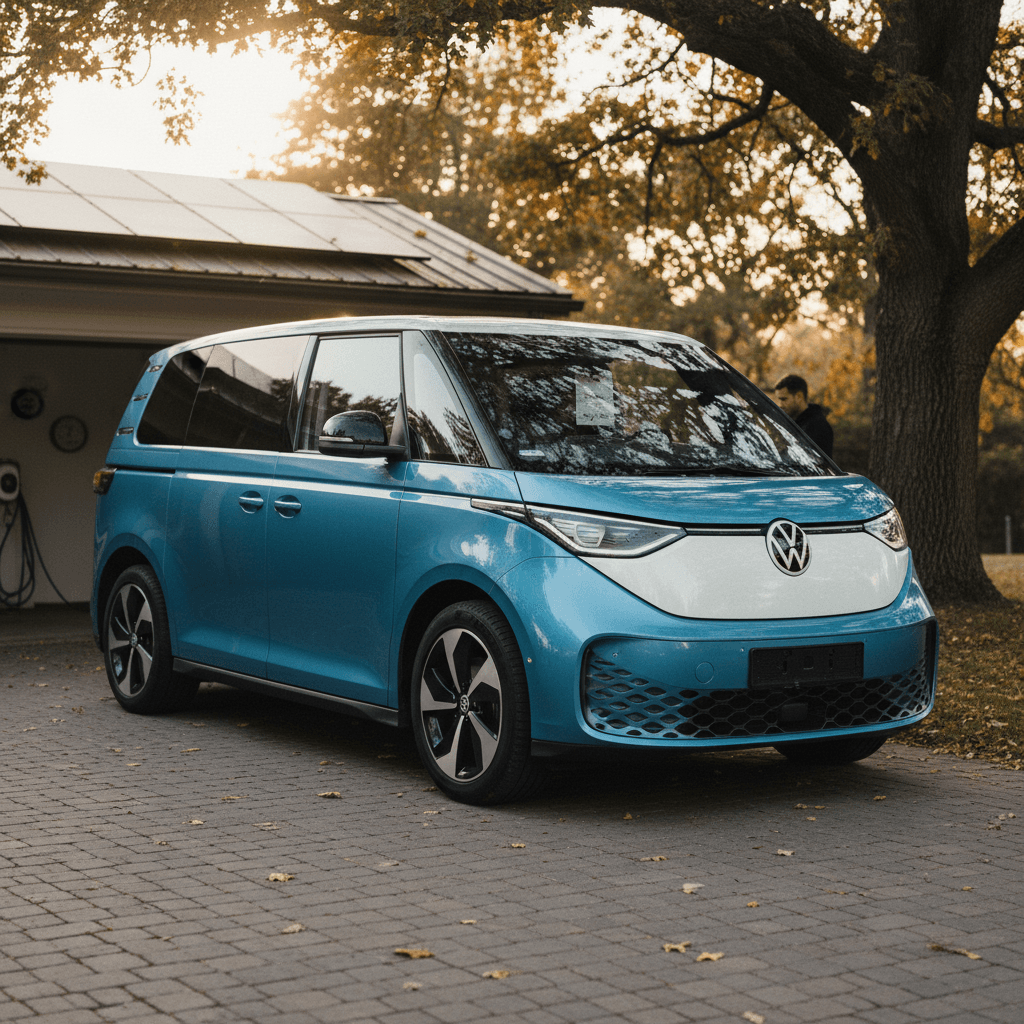
The 2025 Volkswagen ID. Buzz is one of the most talked‑about electric vehicles of the past few years. It blends microbus nostalgia with modern EV tech and three‑row space, but by 2026 many early examples are already hitting the used market. If you’re eyeing a used 2025 Volkswagen ID. Buzz, you need to know whether the charm holds up once the new‑car smell and factory warranty premium are gone.
Quick take
Overview: 2025 ID. Buzz as a used buy
What makes the ID. Buzz special
- Iconic, retro‑inspired design that still turns heads.
- Genuinely roomy interior with three rows and a flat floor.
- Modern MEB‑platform EV tech shared with proven VW ID.3/ID.4.
- Fast DC charging (about 30 minutes 10–80% in ideal conditions).
- Quiet, smooth driving manners that suit family use.
Where used buyers should be cautious
- Range that’s merely okay for such a large, pricey EV.
- Higher purchase price than many 3‑row ICE vans and some newer EV SUVs.
- U.S. model pause for 2026 means limited supply and uncertain long‑term support cadence, even though VW says it’ll return for 2027.
- Early‑build bugs and software quirks common to most first‑year EVs.
As a used purchase, the ID. Buzz is less about pure rational value and more about whether its blend of character, space, and EV convenience matches your life. Compared with a used ID.4 or Kia EV9, you’re paying a premium for style, packaging, and brand story. That’s fine, if you walk in with clear eyes about its strengths and compromises.
Key specs that matter when it’s used
2025 Volkswagen ID. Buzz: headline numbers for used shoppers
2025 ID. Buzz key spec snapshot (U.S. long‑wheelbase)
These are the specs most used‑EV shoppers will care about when cross‑shopping other family EVs.
| Item | RWD ID. Buzz | AWD ID. Buzz |
|---|---|---|
| Horsepower | ≈282 hp single motor | ≈335 hp dual motor |
| Drive type | Rear‑wheel drive | All‑wheel drive |
| Usable battery | ≈86 kWh | ≈86 kWh |
| EPA range | ~234 miles | ~231 miles (slightly lower) |
| 0–60 mph | About mid‑7‑second range | Around 6 seconds (VW estimate) |
| Max DC charge | Up to ~170 kW (nominal) | Similar peak, slightly different curve |
| Seats | Up to 7 | Up to 7 |
Always verify exact specs against the window sticker or build sheet for the van you’re considering.
Trim and options matter
Driving experience and ride comfort
Behind the wheel, the 2025 ID. Buzz feels more like a high‑roof crossover than an old‑school van. The steering is light, visibility is excellent thanks to the upright seating position and huge glass area, and the instant EV torque makes city driving easy. The single‑motor RWD model is more than adequate for everyday use, while the dual‑motor AWD adds extra punch and all‑weather confidence without turning it into a performance vehicle.
How the ID. Buzz drives day to day
Comfort‑biased tuning with a few quirks to know about used
Ride comfort
The suspension is tuned for comfort, and most owners will find it well‑suited to broken urban pavement and long‑distance highway running. With 20‑ or 21‑inch wheels, sharper bumps and expansion joints are more noticeable, so test drive the exact van you’re considering.
Handling & body roll
For a tall, heavy EV, the ID. Buzz stays composed. The battery’s low mounting keeps the center of gravity down, but you’ll still feel some lean in faster corners, nothing alarming, just a reminder you’re in a three‑row family hauler, not a hot hatch.
Noise & refinement
At city speeds the cabin is very quiet, helped by the electric powertrain. On coarse highway surfaces, wind and road noise creep in around those big mirrors and flat sides. On a test drive, pay attention to noise at 70–75 mph if you do a lot of interstate travel.
Check alignment and tire wear
Range, charging and road‑trip reality
On paper, a roughly 234‑mile EPA range for the long‑wheelbase rear‑drive ID. Buzz looks fine. In practice, a big, slab‑sided van with a full load of people, luggage, roof rack accessories, and highway speeds will see noticeably lower real‑world range. For planning, most owners are happier using 170–190 miles as their everyday highway comfort zone, especially in cold weather.
- In mixed driving at moderate speeds, many owners report efficiency in the same ballpark as an ID.4, but wind resistance hurts at 70+ mph.
- Winter, headwinds, and heavy loads can easily trim 20–30% off the EPA rating.
- If you tow a small trailer (where allowed), expect another significant hit to range, and double‑check local regulations and tongue‑weight limits.
Charging a used 2025 ID. Buzz
What daily life with public and home charging looks like
DC fast charging
VW quotes roughly 30 minutes from 10–80% at a capable DC fast charger under ideal conditions. In the real world, expect 30–40 minutes depending on battery temperature and station performance.
Home Level 2
On a 40‑ or 48‑amp Level 2 charger at home, a near‑empty ID. Buzz battery will typically recharge overnight. Installing a dedicated 240V circuit is highly recommended, especially if you routinely arrive home with less than 20% charge.
Used‑buyer tip
Ask the seller for their typical charging habits. Frequent DC fast‑charging from very low state of charge isn’t ideal long‑term, while consistent home Level 2 charging is generally easier on the battery.
Don’t overestimate road‑trip range
Battery health, warranty and longevity
The good news for used‑ID. Buzz shoppers is that Volkswagen’s MEB‑platform batteries have shown lower‑than‑feared degradation in real‑world testing on siblings like the ID.3 and ID.4. Independent testing of high‑mileage ID‑family cars has found batteries still well above 70% capacity after years and tens of thousands of miles, suggesting the chemistry and thermal management are doing their job.
What protects you on a used ID. Buzz
Key battery‑related considerations for second owners
8‑year / 100,000‑mile warranty
Volkswagen backs the high‑voltage battery in the ID. Buzz for 8 years or 100,000 miles against dropping below 70% usable capacity (with normal use). On a 2025 model, that means many used examples in 2026–2028 will still have several years of battery coverage left.
Degradation expectations
While VW doesn’t publish an official per‑year degradation figure, owner data from ID.4 and ID.3, built on similar tech, suggests single‑digit percentage loss over the first several years when charged reasonably. The individual van’s history still matters, which is why verified battery‑health data is so valuable when you’re buying used.
Why a battery health report matters
Practicality, space and family duty
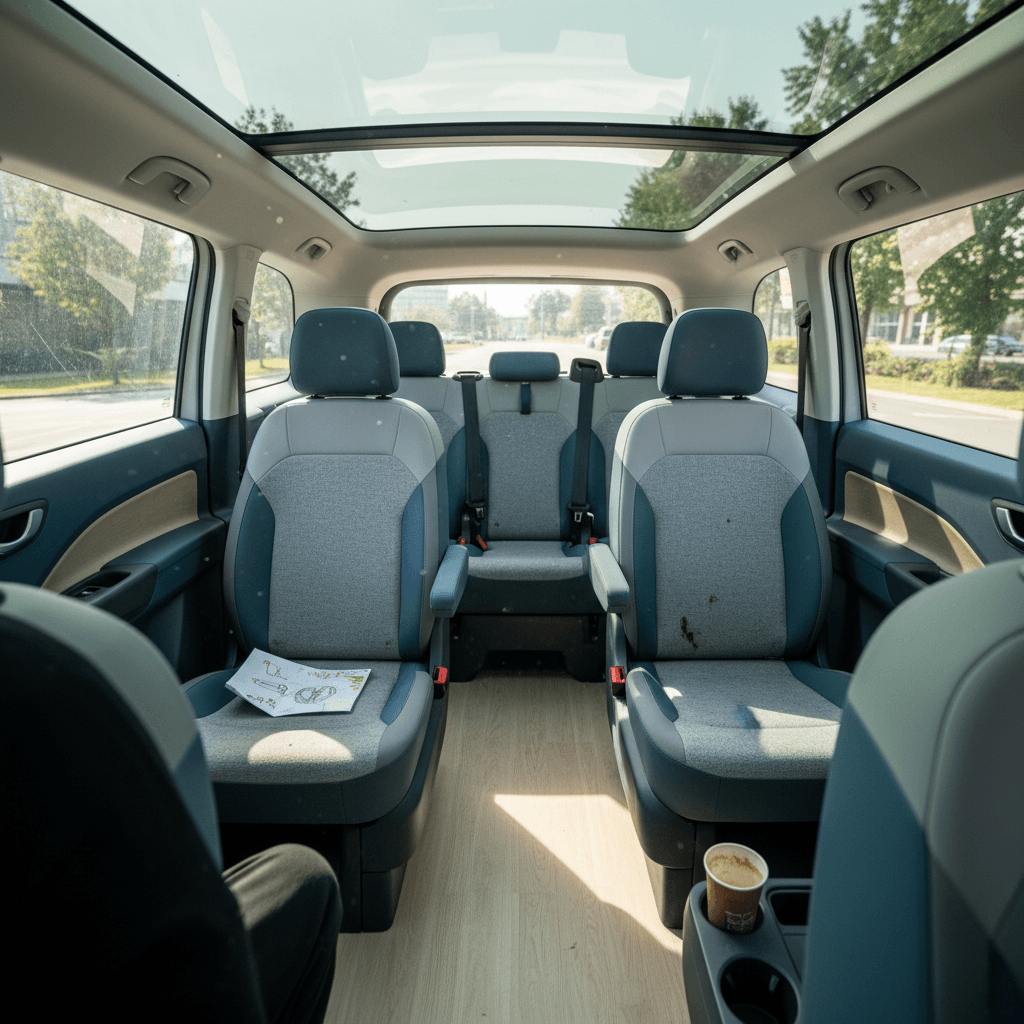
Practicality is where the 2025 ID. Buzz justifies its footprint and price. The long‑wheelbase body, flat floor, and sliding doors make it an easy sell for families who’d never consider a traditional minivan. The seating layout varies by market and trim, but U.S. models typically offer three rows with flexible configurations and plenty of glass to keep kids happy.
Everyday usability strengths
Why the ID. Buzz works well as a family EV
Space for people
Adults can actually sit in all three rows, especially if you’re willing to trade a bit of cargo space. The tall roof and upright seating position beat many three‑row crossovers for comfort, particularly on longer drives.
Cargo flexibility
With all rows up, cargo room is adequate for groceries and strollers; fold or remove seats and it turns into a small cargo van. If you’re into camping or bikes, the flat floor and boxy shape make it much easier to load gear than sloped‑roof SUVs.
Kid‑friendly details
Sliding rear doors, big windows, and easy step‑in height are kid and grandparent friendly. Just double‑check ISOFIX/LATCH anchor positions and third‑row access on the specific configuration you’re evaluating.
Climate and interior wear
Ownership costs and depreciation
As a used EV, the ID. Buzz sits in an interesting place. In Europe it’s been a strong seller among electric vans, and U.S. demand has been driven as much by nostalgia and scarcity as by spreadsheets. Early used examples in 2026 may still command firm prices simply because supply is limited and VW is skipping a 2026 model year for the U.S. before an updated 2027 version arrives.
Key cost factors for a used 2025 ID. Buzz
What drives total cost of ownership beyond the purchase price
Fuel vs electricity
Compared with a gasoline minivan or full‑size SUV, you’ll likely save substantially on fuel, especially if you can charge at home on off‑peak rates. Public DC fast charging is more expensive per mile, so factor that in if you can’t reliably charge at home or work.
Maintenance & repairs
EVs avoid oil changes, exhaust systems, and complex transmissions, but they still have brakes, tires, and suspension components. The ID. Buzz’s weight and tall profile mean you should budget for quality tires and periodic suspension checks, particularly on higher‑mileage used examples.
Depreciation curve
Because the ID. Buzz is both a niche lifestyle vehicle and a practical family hauler, expect depreciation somewhere between mainstream EV crossovers and collectible oddballs. As more used inventory appears and the 2027 revision lands, prices should normalize, so don’t overpay just for the novelty factor.
Financing and trade‑in options
Common issues and what to inspect
Because the 2025 ID. Buzz is still relatively new, we don’t yet have a decade of failure data. However, early ownership reports and experience with the ID.4 and ID.3 suggest a few themes you should watch for when shopping used.
- 12‑volt battery glitches: Some early ID. Buzz and ID‑family owners have reported problems with the auxiliary 12‑volt battery causing warning lights or no‑start conditions. Check for recent 12‑volt replacement or software updates in the service history.
- Software quirks: Infotainment lag, random reboots, or driver‑assist system warnings are not unheard of in MEB‑platform vehicles. During your test drive, exercise the touchscreen, navigation, and driver‑assist features thoroughly.
- Charging behavior: Plug into both Level 2 and (if possible during inspection) a DC fast charger to make sure the van charges consistently, reaches expected speeds, and doesn’t throw errors.
- Water leaks and wind noise: With large sliding doors and lots of glass, check seals around doors and windows. Look for water staining on the headliner or in footwells, and listen for excessive wind noise at highway speeds.
- Suspension wear: Creaks over speed bumps or clunks when braking/turning at low speed can indicate bushing or strut wear, common enough on heavy people‑movers if they’ve seen rough roads.
Always run a history and recall check
How a Recharged Score helps with a used ID. Buzz
The big wildcard with any used EV is battery health and prior charging behavior. That’s where the Recharged Score becomes particularly valuable on a 2025 ID. Buzz. Every vehicle listed on Recharged includes a detailed battery‑health diagnostic, fair‑market pricing analysis, and a condition overview tailored to EV‑specific wear items.
What you see in a Recharged Score report for an ID. Buzz
Reducing the guesswork when you buy used
Verified battery state of health
Instead of assuming the battery is “fine,” you see a quantified estimate of remaining capacity based on real diagnostics, plus context from similar MEB‑platform vehicles.
Fair‑market price analysis
Recharged compares your ID. Buzz’s mileage, trim, options, and battery health to the broader market so you can see whether you’re paying a premium for cosmetic upgrades, or getting a deal because of higher miles.
EV‑specialist support
If you’re new to EVs, Recharged’s specialists can walk you through what range, charging, and battery data really mean for your lifestyle, and help you compare a used ID. Buzz against other used EVs you’re considering.
Ready to find your next EV?
Browse VehiclesChecklist: buying a used 2025 ID. Buzz
11 things to do before you sign
1. Confirm battery warranty dates
Use the VIN and in‑service date to confirm exactly how much of the 8‑year/100,000‑mile battery warranty is left. Don’t just rely on the model year.
2. Get a battery health report
Ask for a recent battery diagnostic or buy from a seller that provides one, such as a Recharged listing with a Recharged Score. You want more than just the dashboard range guess.
3. Review charging history
If possible, ask where and how the van has been charged, mostly home Level 2 is ideal. A life spent at high‑power DC fast chargers from very low state of charge is less desirable.
4. Test both AC and DC charging
During inspection, plug into a Level 2 charger and, if practical, a DC fast charger to ensure the car charges reliably and reaches expected speeds without faults.
5. Inspect tires, brakes, and suspension
Look for uneven tire wear, vibration, or clunks over bumps that can indicate alignment or suspension issues. Remember the vehicle’s weight is hard on consumables.
6. Check all doors and seals
Open and close both sliding doors repeatedly, check power operation if equipped, and inspect seals for wear, water staining, or wind‑whistle marks.
7. Stress‑test the software
Spend time with the infotainment system and driver‑assist features. Pair a phone, run navigation, adjust settings, and ensure everything behaves as expected.
8. Evaluate real‑world range
On a long test drive, reset the trip computer and see what consumption looks like at your typical speeds. Use that to back into realistic range for your use case.
9. Verify accessory and seat configuration
Make sure the number of seats, storage solutions, and options (tow package, roof rails, etc.) actually match your needs so you’re not paying for the wrong layout.
10. Run a full history report
Check for accidents, flood or lemon history, frequent dealer visits, or title issues. A clean history plus good battery health is worth paying for.
11. Compare alternatives
Cross‑shop similar‑price used EVs, like a Kia EV9, Mercedes EQB, or a long‑range ID.4, to be sure you’re choosing the ID. Buzz for its unique mix of style and space, not just because it’s the first three‑row EV you found.
Frequently asked questions
Used 2025 Volkswagen ID. Buzz FAQ
Bottom line: should you buy a used ID. Buzz?
If you judge it purely on specs, the 2025 Volkswagen ID. Buzz is a mixed bag as a used purchase: range is merely decent, pricing remains firm, and newer EVs offer sharper efficiency and tech. But that’s only half the story. The ID. Buzz is one of the few electric vehicles that truly rethinks family space, with design that makes people smile and packaging that makes everyday life easier.
You should seriously consider a used ID. Buzz if you want a three‑row EV that doesn’t feel like a generic crossover, you have reliable home charging, and your regular trips fit comfortably within its real‑world range. If you’re stretching for long‑distance road‑trip duty or hunting for the absolute best value per dollar, you may be happier in a more conventional used EV.
Either way, treat battery health, charging behavior, and warranty status as first‑class citizens in your decision. A transparent battery report and expert‑guided buying experience, like the Recharged Score and EV‑specialist support you get when you shop through Recharged, can turn the ID. Buzz from a risky impulse buy into a smart, informed step into character‑rich electric family transport.