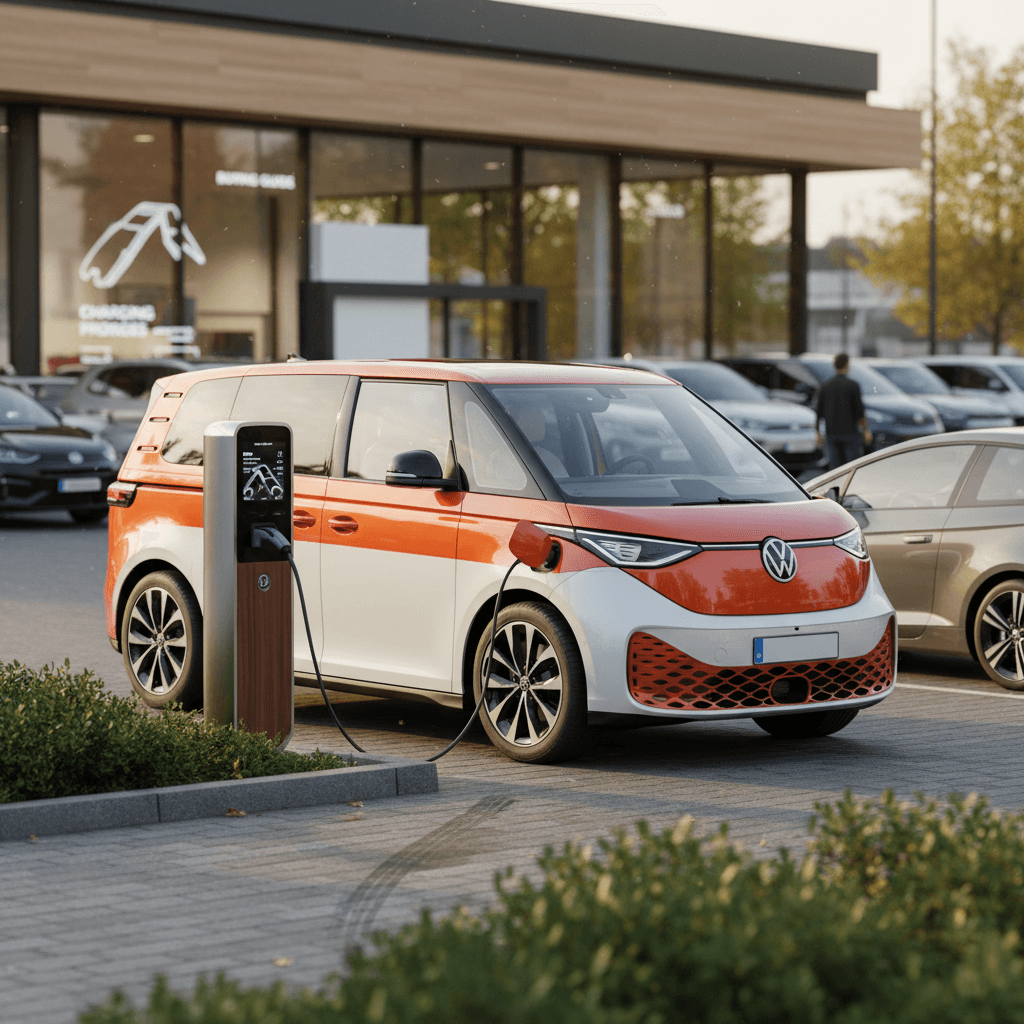
If you’ve ever looked at a crowded minivan lot and wished for something with more personality, the 2025 Volkswagen ID. Buzz is probably on your short list. It’s a three-row electric people mover with retro Microbus looks, modern EV tech, and a price tag that lands squarely in premium territory. This 2025 Volkswagen ID. Buzz buying guide walks you through trims, pricing, range, pros and cons, and how to decide whether to buy new or used in today’s market.
Quick context for U.S. shoppers
Overview: Why the 2025 ID. Buzz Is Different
At its core, the 2025 ID. Buzz is a three-row electric van that sits somewhere between a traditional minivan and an electric SUV. It rides on Volkswagen’s MEB EV platform, shares some hardware with the ID.4, and offers sliding doors, a flat floor, and true adult‑friendly third‑row space. Where most family EVs feel like crossovers with cramped third rows, the Buzz leans into the van layout with upright seating, big glass, and flexible cargo room.
How it differs from a 3‑row EV SUV
- Sliding doors instead of swing‑open rear doors.
- Boxier shape and more headroom in all three rows.
- More usable cargo floor with seats folded/removed.
- Less towing focus; more people‑moving focus.
How it differs from a minivan
- Fully electric powertrain, no gas engine.
- Shorter overall than some minivans, but similar interior volume.
- Higher price and more premium positioning.
- Range and charging planning replace gas‑station stops.
Don’t treat it like a bargain minivan
Quick Specs: 2025 ID. Buzz at a Glance
2025 Volkswagen ID. Buzz Key Numbers
Those specs put the Buzz squarely in the "real‑world 200‑mile EV" camp. It’s fine for road trips with some planning, but not a long‑range champion, especially compared with newer 3‑row EVs that push 280–300 miles or more on a charge.
Trim Levels and Pricing: Pro S vs Pro S Plus vs 1st Edition
For 2025, U.S. buyers see three basic trims: Pro S, Pro S Plus, and a limited‑run 1st Edition. All ride on the long‑wheelbase, three‑row body with an 86‑kWh battery. The main differences are equipment and whether you choose rear‑wheel drive (RWD) or 4MOTION all‑wheel drive (AWD).
2025 ID. Buzz Trim and Pricing Snapshot (U.S.)
Approximate starting MSRPs before destination, options, or incentives. Always verify with a current window sticker or dealer quote.
| Trim | Drivetrain | Seating | Approx. Starting MSRP* | Highlights |
|---|---|---|---|---|
| Pro S | RWD | 7 (2nd‑row bench) | ≈$59,995–$61,500 | Entry model; 20" wheels; 3‑row seating, large touchscreen, full driver‑assist suite. |
| Pro S Plus (RWD) | RWD | 7 (bench) or 6 (captain’s chairs) | ≈$63,500–$65,000 | Adds upgraded interior, panoramic roof availability, power doors/tailgate, more convenience tech. |
| Pro S Plus (4MOTION AWD) | AWD | 6 (captain’s chairs) | ≈$67,000–$69,000 | More power and traction; captain’s chairs required; reduces seating to six. |
| 1st Edition | RWD (mostly) | 7 | ≈$65,000+ (when new) | Launch‑year special with exclusive colors, badging, and bundled options; largely sold out new. |
Pricing and feature emphasis for each 2025 ID. Buzz trim.
Which trim hits the sweet spot?
Choosing the Right ID. Buzz Trim for Your Priorities
Match the trim to how you’ll actually use the van, not just the window sticker.
Budget‑conscious family
Look for a Pro S or lightly optioned Pro S Plus RWD, especially as a low‑mile used van. You’ll still get the signature Buzz look and three rows without paying for every bell and whistle.
Snow‑belt or adventure driver
Consider Pro S Plus 4MOTION AWD if you routinely deal with snow, steep gravel roads, or unpaved campsites. Just be honest: if you mainly commute on plowed suburban streets, RWD with good winter tires might be plenty.
Collector or design‑first buyer
If you love special colors, unique trims, and long‑term collectability, a 1st Edition may appeal, especially on the used market once the initial premium fades.
Range, Battery, and Charging: What You Really Get
Every 2025 ID. Buzz in the U.S. uses an ~86‑kWh battery pack and supports up to 200 kW DC fast charging. EPA range estimates land roughly in the low‑ to mid‑230‑mile region for RWD models, with AWD a few miles lower. Real‑world range will depend heavily on speed, temperature, cargo, and how many people you’re hauling.
- Typical mixed‑driving range: often 200–230 miles between charges for RWD in mild weather.
- High‑speed highway road trip: expect more like 170–200 miles, especially at 75+ mph.
- Cold weather with a full load: range can dip below 200 miles if you’re running heat and accessories.
Range expectations check
Home charging reality
- A 40‑amp Level 2 charger can typically add 25–30 miles of range per hour.
- Overnight charging from 10–80% is easy if you plug in regularly.
- If you can’t install home charging (apartment/condo), think carefully, living with a Buzz on DC fast charging alone can get old fast.
Public fast charging
- VW quotes 10–80% in about 26 minutes under ideal conditions.
- In cold weather or at busy stations, expect more like 30–40 minutes.
- Plan stops around meals and rest breaks to make charging feel less like a chore.
Future‑proof your charging
Interior Space, Seating, and Everyday Practicality
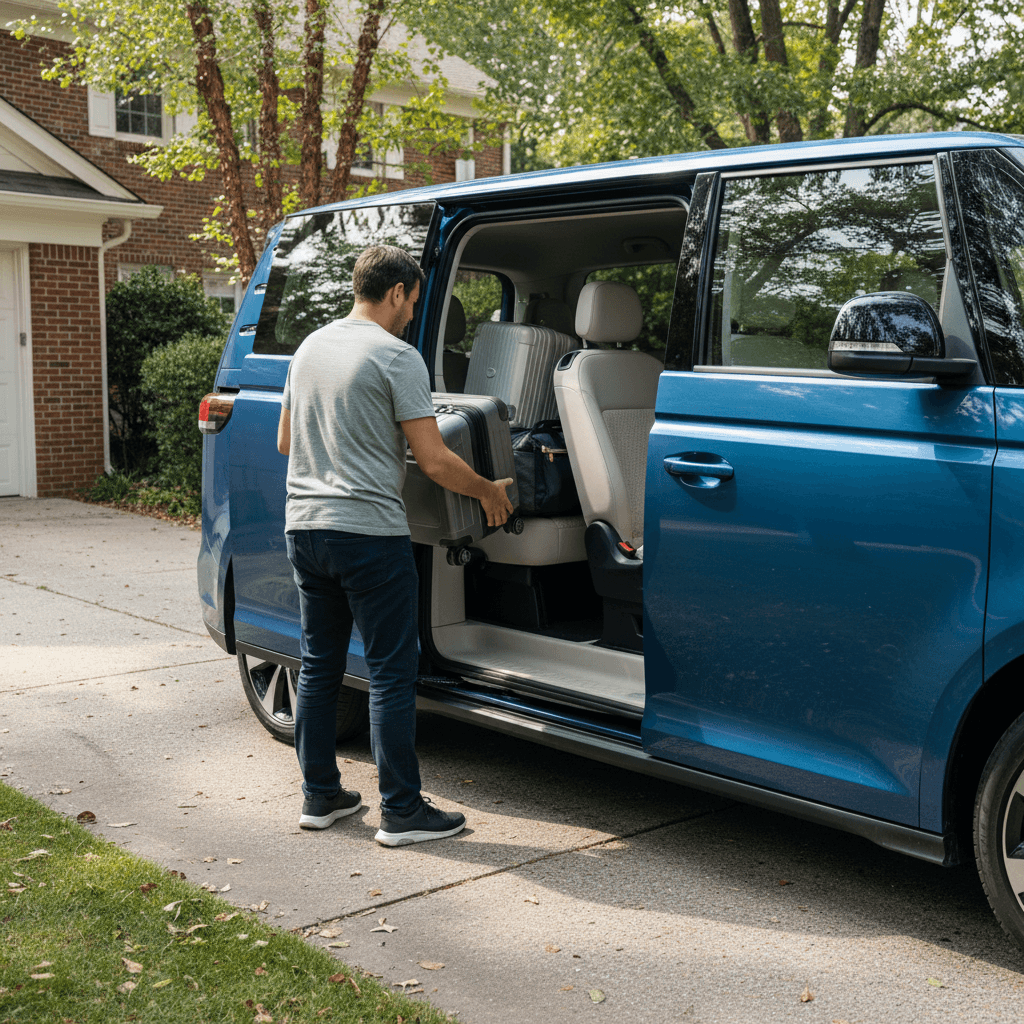
For families, the ID. Buzz’s biggest strengths are visibility, ease of access, and genuine three‑row comfort. The squared‑off body and long wheelbase deliver generous passenger space without driving something that feels like a shuttle bus.
2025 ID. Buzz Interior Highlights
Key practicality notes that matter more than hard‑spec numbers for most shoppers.
| Feature | What It Means for You |
|---|---|
| Sliding rear doors | Much easier kid loading in tight parking lots and garages. |
| 3rd‑row legroom | Adults can actually fit for more than a quick restaurant run. |
| Flat floor | Easier movement between rows; better for car seats and storage. |
| Removable 3rd row | Pop it out for big cargo missions or camping setups. |
| Big windows & glass roof | Airy feel; kids are less prone to carsickness, but you’ll want good sunshades. |
| Small‑item storage | Lots of cubbies and pockets, but not as many as the cleverest minivans. |
How the ID. Buzz works as a daily family hauler.
Car‑seat friendliness
Driving Experience, Performance, and Tech
From behind the wheel, the 2025 ID. Buzz feels more like a tall, comfortable wagon than a bus. The electric powertrain delivers smooth, near‑silent acceleration, and the low battery placement helps keep body roll in check despite the tall roof. It’s not a sports car, and it doesn’t pretend to be, but it accelerates more briskly than a lot of gas vans.
On‑Road Character: What to Expect
Where the ID. Buzz feels great, and where it doesn’t.
Power & acceleration
RWD models make about 282 hp; AWD jumps to 335 hp. That’s good for roughly 0–60 mph in the 6‑second range with AWD, plenty for merging and passing, especially with a full load of passengers.
Ride & handling
The long wheelbase and low battery help the Buzz feel planted. Ride quality is generally comfortable, though big wheels and short sidewalls can transmit sharp impacts on rough pavement.
Tech & infotainment
You get a large central touchscreen, wireless phone integration, and a full suite of driver‑assist systems. The 2025 model benefits from VW’s updated software and more physical controls vs. earlier ID models, but you should still spend time with the interface on a test drive.
Software and interface reality
Cost of Ownership, Depreciation, and Used ID. Buzz Value
Because the ID. Buzz is new to the U.S. and priced at the high end of the family‑EV spectrum, its depreciation curve matters a lot. Early data from pricing guides and auction lanes suggests that first‑year Buzzes are already seeing meaningful value drops, common for expensive EVs in a fast‑moving market.
Early ID. Buzz Depreciation Snapshot
Depreciation is not theoretical here
The flip side: if you’re open to a used ID. Buzz, early depreciation can work in your favor. As more 2025 vans come off leases and first owners trade out, especially with a 2027 refresh coming, you may be able to buy a low‑mile Buzz for thousands less than new, with most of the battery warranty still intact.
Why battery health matters so much on a used Buzz
Ready to find your next EV?
Browse VehiclesWho the 2025 ID. Buzz Is (and Isn’t) For
The 2025 ID. Buzz is a strong fit if…
- You want a characterful family EV that doesn’t look like every other SUV.
- Your daily driving fits inside a 150–200‑mile real‑world bubble, with home Level 2 charging.
- You use all three rows regularly and appreciate sliding doors and easy access.
- You value quiet, smooth EV driving and don’t need to tow heavy loads.
- You’re realistic about higher upfront cost and potential depreciation.
You might want to look elsewhere if…
- You routinely drive 250–300 miles per day without time to charge.
- You need to tow boats, large campers, or heavy trailers.
- Your budget tops out in the low $40,000s and you don’t want a payment that feels like a luxury SUV.
- You can’t install home charging and don’t have reliable workplace options.
- You’re chasing maximum range or the latest driver‑assist tech above all else.
How to Shop: New vs. Used 2025 ID. Buzz
Because U.S. supply is limited and there’s no 2026 model year on the way, the 2025 ID. Buzz sits in a strange place: some dealers are discounting remaining inventory, while lightly used vans are starting to appear with meaningful savings. Your best move depends on how long you plan to keep the van and how sensitive you are to monthly payment vs. total cost of ownership.
New vs. Used 2025 ID. Buzz: Pros and Cons
There’s no one "right" answer, only what matches your risk tolerance and budget.
Buying new
- Full factory warranty and latest software.
- Ability to spec colors and options (where inventory allows).
- Access to manufacturer lease or APR programs.
- But you’ll take the steepest slice of depreciation in the first 1–3 years.
Buying used
- Let the first owner eat the largest depreciation hit.
- Potential savings of five figures vs. original MSRP on low‑mile vans.
- Less choice on color/options; you shop what’s available.
- Battery health and prior charging habits matter a lot, this is where tools like the Recharged Score shine.
Lease vs. buy on a new ID. Buzz
Checklist: Before You Buy a 2025 ID. Buzz
Pre‑Purchase Checklist for 2025 Volkswagen ID. Buzz Shoppers
1. Confirm your daily range needs
Add up your typical weekday mileage, plus kid drop‑offs, errands, and seasonal trips. If you regularly exceed 180–200 miles in a day without easy charging breaks, the ID. Buzz may feel tight.
2. Lock in a home charging plan
Verify you can install a <strong>240‑volt Level 2 charger</strong> where you park, garage, driveway, or carport. Get an electrician quote before you sign for the van, not after.
3. Cross‑shop alternative 3‑row EVs
Compare the ID. Buzz against vehicles like the Kia EV9, Volvo EX90, or large plug‑in hybrid SUVs. You might find better range or pricing, but you won’t match the Buzz’s vibe.
4. Test the third row with real people
Bring the family. Put adults or teens in the third row and drive for at least 20–30 minutes. Pay attention to comfort, noise, and how easy it is to get in and out.
5. Live with the infotainment on a test drive
Pair your phone, try navigation routing, adjust climate settings, and test the driver‑assist systems. Make sure the interface feels intuitive enough for daily life.
6. For used vans, demand a battery health report
Odometer mileage doesn’t tell you everything. Use a marketplace like <strong>Recharged</strong>, where every ID. Buzz comes with a Recharged Score Report showing <strong>verified battery health and fair‑market pricing</strong> so you can avoid surprises.
7. Run the numbers realistically
Look beyond the monthly payment. Factor in charging costs, insurance, potential tax credits or state incentives, and a conservative depreciation estimate. Make sure you’d still be comfortable if the van is worth less than you hope in 3–5 years.
Frequently Asked Questions: 2025 Volkswagen ID. Buzz
Common 2025 ID. Buzz Questions, Answered
Bottom Line: Is a 2025 ID. Buzz Right for You?
The 2025 Volkswagen ID. Buzz is one of those rare vehicles you buy with your heart as much as your head. It’s not the cheapest or longest‑range three‑row EV, and early depreciation is real. But if you’re the right kind of driver, with home charging, realistic range expectations, and an appreciation for its retro‑modern charm, it can be a deeply satisfying family vehicle.
If you decide the Buzz fits your life, consider letting someone else take the first big depreciation hit. A low‑mileage used 2025 ID. Buzz with a verified battery‑health report can deliver most of the magic for far less money than new. That’s exactly the kind of scenario Recharged was built for: transparent battery diagnostics, fair‑market pricing, and expert EV specialists who can help you compare the Buzz against other family EVs before you commit.