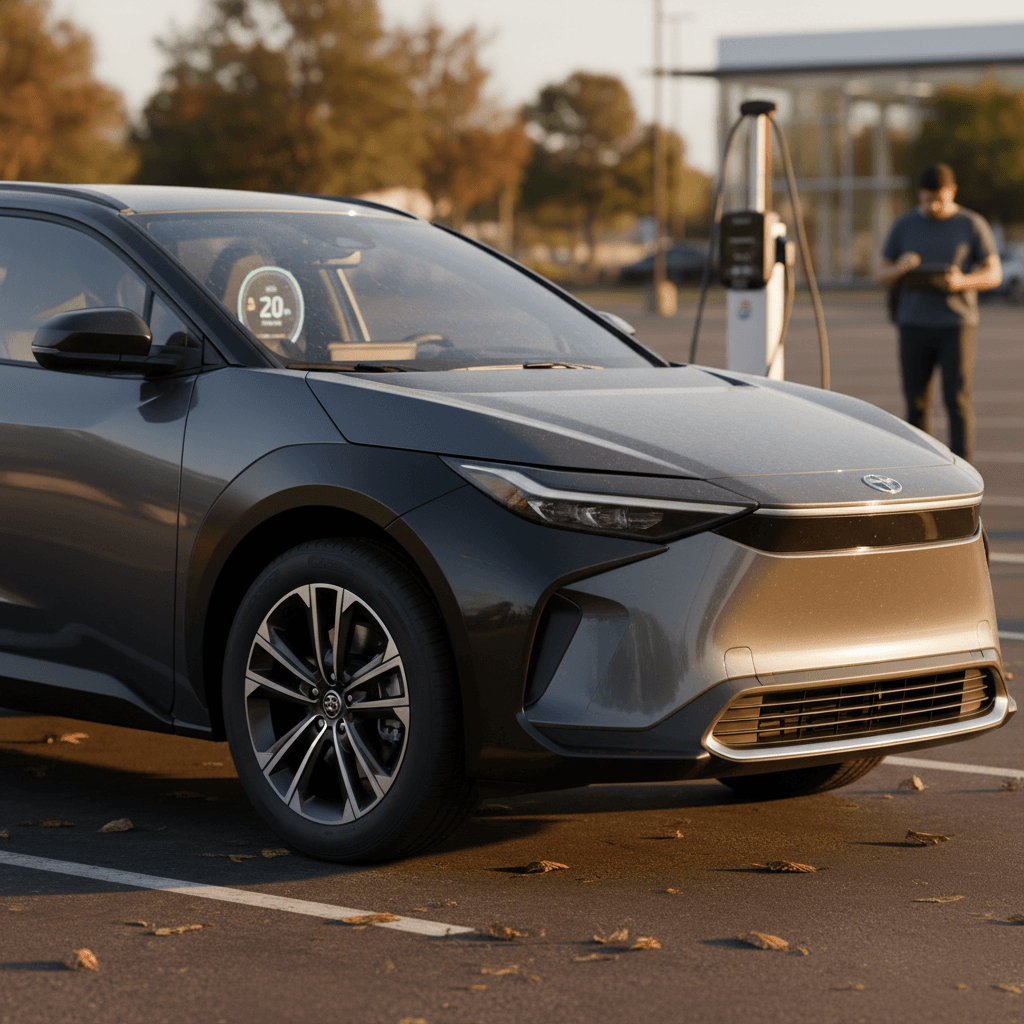
If you’re shopping the used EV market, a 2025 Toyota bZ4X sits in a sweet spot: newer than the first‑year 2023 models, but already past the steepest new‑car depreciation. This review focuses specifically on the 2025 bZ4X as a used buy, how it drives, how its battery and warranty hold up, what problems to watch for, and how it stacks up against alternatives like the Hyundai Ioniq 5, Kia EV6, and Tesla Model Y.
Quick Take
Overview: Why the 2025 bZ4X Matters on the Used Market
Toyota launched the bZ4X in the U.S. for the 2023 model year as its first dedicated battery‑electric SUV. Early cars were overshadowed by a wheel‑bolt recall and limited fast‑charging performance, but by 2025 the formula had quietly improved. For used shoppers, that timing is important: you’re getting a relatively fresh EV from a brand known for long‑term durability, without paying new‑car money, and with lingering factory warranty coverage that can take some risk out of your first EV purchase.
2025 Toyota bZ4X Used-Buyer Highlights
Where this compact electric SUV stands out, and where it doesn’t
Size & Segment
Range & Battery
Used-Market Role
Key Specs and What Changed for 2025
2025 Toyota bZ4X Key Numbers (U.S.)
By 2025, the bZ4X was a known quantity. Toyota had worked past the early wheel‑bolt recall on 2023 models and refined software and charging behavior. The 2025 SUV still uses the same basic e‑TNGA platform and pack, with front‑wheel‑drive and all‑wheel‑drive versions available. The big jump comes in 2026, when Toyota renames the vehicle simply “bZ” in North America and adds more range and power, so the 2025 model year effectively represents the last “first‑generation” bZ4X. As a used purchase, that usually translates into a lower price than a 2026‑and‑newer bZ while still feeling contemporary.
Model-Year Shopping Tip
Driving Range and Charging: How the 2025 bZ4X Really Performs
Real‑World Range
On paper, a 2025 Toyota bZ4X is good for roughly low‑to‑mid‑200s in miles of EPA range, varying slightly by trim, wheels, and whether you choose FWD or AWD. In normal mixed driving, many owners see 3.0–3.5 mi/kWh, which puts real‑world range in the 200–240 mile band on a full charge.
Cold weather or consistent high‑speed interstate driving will push that down, sometimes into the 160–190 mile range window, so if you live in a northern climate, build in extra buffer and plan to pre‑condition the cabin while plugged in whenever you can.
Charging Performance
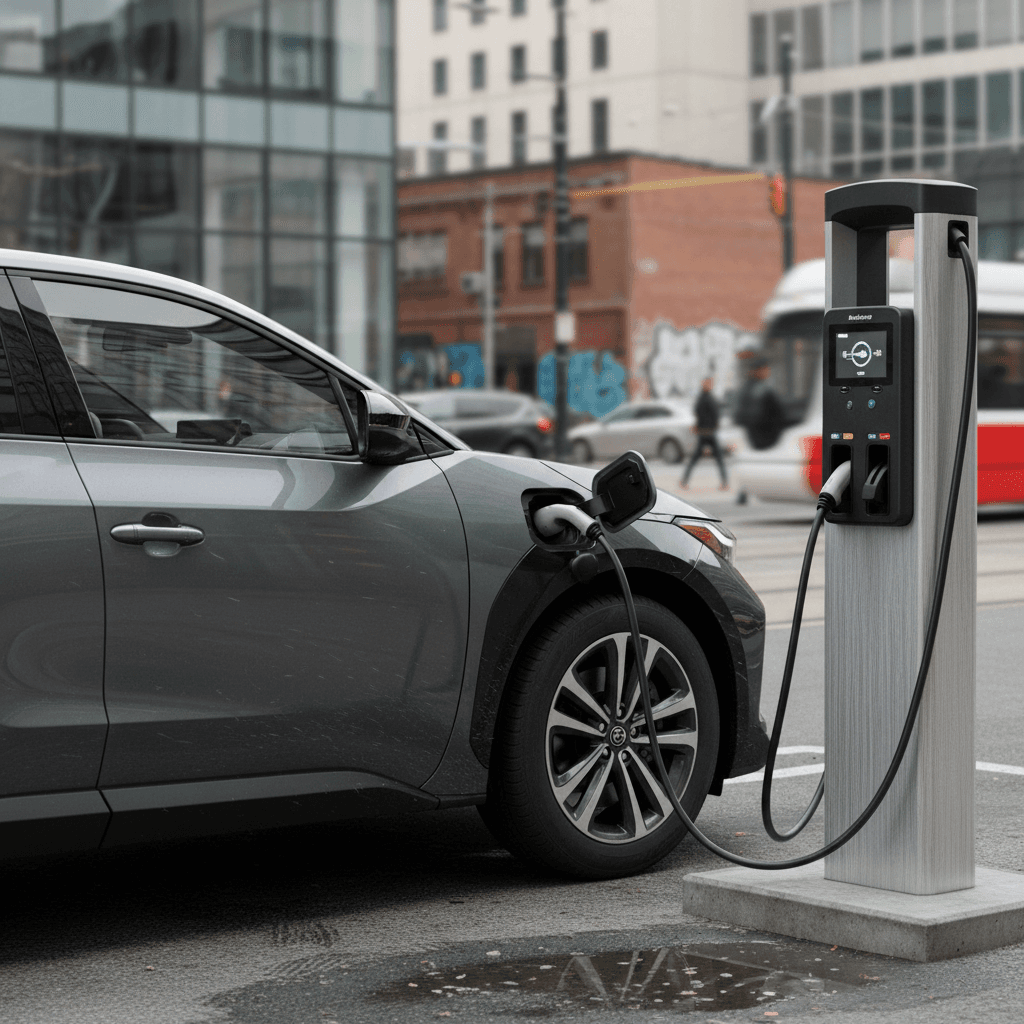
The bZ4X supports DC fast charging up to roughly 100–150 kW, depending on battery variant and conditions. That’s usable, but behind the fastest‑charging rivals that routinely hit 200+ kW with stronger mid‑curve performance. At a highway charger, you’re typically looking at 30–45 minutes to go from a low state of charge to 80%.
On Level 2 (240V) home or public chargers, the onboard charger can draw around 6–7 kW, so a full charge from near empty usually takes overnight, roughly 8–10 hours. For many owners, that’s perfectly acceptable as long as there’s reliable home or workplace charging.
Fast-Charging Caveat
Reliability, Problems, and Recalls (2023–2025)
Toyota’s reputation for reliability is a huge part of this SUV’s appeal, but the bZ4X story has been more mixed than, say, a Corolla Hybrid. Early 2023 models went through a high‑profile wheel‑bolt recall and some teething issues with software, infotainment, and 12‑volt batteries. By 2025, most of the big structural issues had been addressed at the factory and through dealer campaigns, but you still want to go in with eyes open.
Common Issues Reported on bZ4X (Up to 2025)
What you’ll see most often in owner forums and complaint databases.
| Issue | Model Years Most Affected | What to Look/Ask For | Used-Buyer Impact |
|---|---|---|---|
| Wheel-bolt recall / wheel separation risk | Primarily early 2023 | Confirm recall completion by VIN; look for documentation in service history. | Mostly historical if recall work is done; walk away if it’s outstanding. |
| HVAC / heat pump faults | 2023–2025 | Weak or inconsistent heating, especially in cold weather; any HVAC warning lights or prior repairs. | Could affect comfort and resale; repairs may be covered by recall or warranty. |
| 12-volt battery problems | 2024–2025 | Difficulty starting the car, random error messages, or reports of the car going "dead" after sitting. | A fresh 12V battery or documented replacement is a plus on a used car. |
| Software & app glitches | All years | Infotainment freezes, random reboots, remote app not connecting or preconditioning reliably. | Annoying but seldom dangerous; dealer updates often improve behavior. |
Not every 2025 bZ4X will experience these issues, but they’re worth checking on a used example.
Always Run the VIN
Battery Health and Warranty Protection on a Used 2025 bZ4X
Toyota backs the bZ4X’s high‑voltage components with an EV component warranty typically rated at 8 years / 100,000 miles in the U.S., including the traction battery. In some markets there are additional provisions or health checks that can extend coverage further, but for most American shoppers, that 8‑year window is the critical number. A used 2025 bZ4X bought in 2026–2028 will almost always have several years of battery coverage left, which is a big reason it’s starting to look attractive on the used lot.
Battery Health: What Matters Most on a Used 2025 bZ4X
Degradation is usually modest so far, but still worth checking carefully
State of Health (SOH)
Climate & Storage
Charging Habits
How Recharged Helps Here
Ready to find your next EV?
Browse VehiclesYou can also run your own spot‑check. Fully charge the car, reset a trip meter, and drive a known route at moderate speeds. Compare the miles driven and energy used to the displayed range drop to get a rough sense of efficiency. If numbers seem wildly off from other bZ4X owner experiences, you’ll want a deeper diagnostic before buying.
Used Pricing, Depreciation, and Value vs. Rivals
Because the bZ4X launched into a crowded EV market and faced stiff competition, it hasn’t held its value quite as fiercely as some historically bulletproof Toyotas. That’s bad news for first owners, but good news for you if you’re coming in as the second or third owner and buying in 2026 or later.
How the 2025 bZ4X Typically Sits in the Used Market
Where the 2025 bZ4X Offers Value
- Warranty runway: Buying a 1–3‑year‑old example leaves several years of EV component coverage.
- Conservative engineering: Toyota tends to favor durability over bleeding‑edge performance, which can be reassuring on a used EV.
- Price positioning: In many markets, used pricing undercuts similarly equipped Hyundai Ioniq 5 and Tesla Model Y examples of the same age.
Where It Falls Short
- Charging speed: Slower DC fast charging than many modern rivals makes back‑to‑back road‑trip days less convenient.
- Brand cachet: Less range and sizzle than some rivals can hurt long‑term desirability versus trendier EVs.
- 2026 upgrades: The refreshed 2026 bZ with more range and power may pressure 2025 resale values over time.
Daily Driving: Comfort, Tech, and Ownership Experience
On the road, the 2025 bZ4X aims for comfort and predictability rather than sportiness. Acceleration is adequate, especially in city driving, but not neck‑snapping compared with dual‑motor rivals. Steering is light, the ride skews soft, and cabin noise is well controlled. If you’re coming from a traditional compact crossover or a hybrid RAV4, the driving experience will feel familiar, just smoother and quieter.
- Cabin space is competitive for a compact SUV, with comfortable front seats and adequate room for two adults in the rear.
- Cargo volume is similar to a RAV4 with the seats up; rear seatbacks fold to create a flat load floor for bulky items.
- Toyota’s big central touchscreen is functional, with wireless Apple CarPlay and Android Auto on most trims, but the interface can be slower and less intuitive than Tesla’s or Hyundai/Kia’s systems.
- Toyota Safety Sense driver‑assist tech (like adaptive cruise and lane‑keep assist) is standard and works well once you learn the settings.
- The companion Toyota app offers remote functions and pre‑conditioning, though owner reports mention occasional connectivity hiccups.
User Experience Snapshot
Who a Used 2025 bZ4X Is Best For (and Who Should Skip It)
Is a Used 2025 bZ4X Right for You?
Match the SUV to your driving reality
Great Fit If…
- You have consistent home or workplace Level 2 charging.
- Your daily driving falls well under 150 miles, even in winter.
- You value Toyota’s dealer network and warranty coverage more than maximum performance.
- You’re price‑sensitive and want a newer EV without paying new‑car money.
Maybe Skip It If…
- You do frequent long‑distance highway trips and rely heavily on DC fast charging.
- You want the quickest, longest‑range EV in the segment.
- You prioritize cutting‑edge infotainment and over‑the‑air update ecosystems.
- You can stretch your budget to a 2026‑and‑newer bZ, Tesla Model Y, or Hyundai/Kia with significantly quicker charging.
Inspection Checklist Before You Buy a Used 2025 bZ4X
Pre‑Purchase Checklist for a Used 2025 Toyota bZ4X
1. Verify Warranty Start Date
Ask for the original purchase paperwork or a dealer printout so you know exactly when the 8‑year / 100,000‑mile EV component warranty started and what’s left.
2. Confirm All Recalls Are Closed
Run the VIN through NHTSA and Toyota recall tools and insist on documentation that any applicable bZ4X campaigns, especially those spanning 2023–2025, have been completed.
3. Get a Battery Health Assessment
Request a recent battery health report or have one performed. If you’re buying through Recharged, the Recharged Score includes pack diagnostics so you don’t have to guess.
4. Inspect Tires and Brakes for Uneven Wear
Unusual or uneven wear can point to alignment, suspension, or driving‑style issues. These aren’t EV‑specific, but they can hint at how the car was treated.
5. Test DC Fast Charging, If Possible
If you can, plug into a DC fast charger and watch charge speed and stability from 10–60%. Consistently low or erratic speeds may warrant further investigation.
6. Stress-Test the HVAC and Infotainment
Run heat, A/C, and defrost on different settings, and spend time with the touchscreen and app connectivity. Look for glitches or warning lights that might hint at HVAC or software issues.
7. Check for Signs of Flood or Collision Damage
As with any used car, look underneath for corrosion, inspect panel gaps and paint consistency, and pull a vehicle history report to spot crashes or insurance totals.
8. Review Charging History & Use Case
Ask how the previous owner charged (mostly home Level 2 vs. constant DC fast charging) and what kind of driving they did. Highway‑heavy and rideshare duty can accelerate wear.
Buying Through Recharged
FAQ: Used 2025 Toyota bZ4X
Frequently Asked Questions About the 2025 Toyota bZ4X (Used)
Bottom Line: Is a Used 2025 Toyota bZ4X a Good Buy?
A used 2025 Toyota bZ4X isn’t the flashiest EV in the segment, and it won’t win many spec‑sheet drag races. But it does deliver a balanced mix of range, comfort, and warranty coverage at increasingly attractive used prices. If your driving is mostly commuting, errands, and the occasional trip, and you value Toyota’s conservative engineering and dealer support, it can be a smart, lower‑risk way into EV ownership, as long as you verify battery health and recall completion.
If, on the other hand, you live at DC fast chargers and demand the quickest road‑trip stops and longest range, you may be happier stretching for a used Hyundai Ioniq 5/6, Kia EV6, or Tesla Model Y. Whichever way you lean, taking the time to review battery diagnostics and service history, and leaning on tools like the Recharged Score, will help you choose a used 2025 bZ4X with confidence and avoid surprises down the road.