If you’re eyeing the 2025 Toyota bZ4X, reliability is probably at the top of your checklist. Toyota has earned its reputation by building some of the longest‑lasting gasoline cars on the road, but the bZ4X is one of the company’s first modern EVs, and early electric models don’t always live up to their brand’s legacy. Let’s unpack what real owners, recalls, and warranty data tell us about 2025 Toyota bZ4X reliability today.
Quick verdict
2025 Toyota bZ4X reliability at a glance
2025 bZ4X reliability snapshot
On paper, the 2025 bZ4X has a lot going for it: Toyota’s excellent overall brand reliability scores, an extended vehicle and battery warranty, and relatively simple single‑speed EV drivetrains. At the same time, real‑world owner feedback is mixed. Some drivers report “boringly reliable” daily use, while others describe repeated trips to the dealer for HVAC quirks, 12‑volt battery failures, or slow DC fast‑charging performance, especially on long summer or winter road trips.
How Toyota’s reliability record translates to the bZ4X
Traditionally, Toyota finishes near the top of major reliability surveys, and that reputation does carry some weight with the bZ4X. Independent testers note that while they “don’t yet have long‑term reliability data for the bZ4X,” Toyota as a brand ranked near the very top in recent large‑scale reliability studies. That matters, because it tells you how Toyota typically designs components, responds to issues, and supports owners over the long haul.
Where Toyota still shines on the bZ4X
Brand habits that help offset first‑generation EV risk
Long coverage
Toyota backs the bZ4X with:
- 8–10 years of battery coverage (market‑dependent)
- High‑voltage component warranty
- Extended vehicle warranty when you service at Toyota
Conservative engineering
Toyota tends to underrate power and charge speeds rather than chase headline numbers, reducing stress on components and batteries.
Dealer network
Compared with smaller EV startups, you benefit from a large dealer network that’s quickly learning common bZ4X issues and fixes.
That said, you shouldn’t assume the bZ4X will behave like a Camry that just happens to be electric. The platform is new, software is far more complex, and Toyota is still refining cold‑weather charging and HVAC behavior. Think of the 2025 bZ4X as a first‑generation EV from a very conservative carmaker: the fundamentals are sound, but there are still software and electrical glitches being ironed out.
Known 2025 Toyota bZ4X problems and recalls
When you’re evaluating reliability, you want to know not just how often something fails, but what fails and how serious it is. For the 2025 bZ4X, the major red flag at the moment is an HVAC software recall, plus a set of recurring owner complaints that are annoying but rarely catastrophic.
Common 2023–2025 Toyota bZ4X issues
Not every 2025 bZ4X will have these problems, but they’re the patterns showing up in recalls and owner reports.
| Issue | How it shows up | Severity | Fix/Status |
|---|---|---|---|
| HVAC / defrost recall | Heater or defroster stops working correctly in cold weather; poor windshield clearing | Safety‑relevant | Toyota software update via dealer; recall covers 2023–2025 bZ4X, Lexus RZ, Subaru Solterra |
| 12‑volt battery failures | Car won’t start after sitting a day or two; repeated jump‑starts or tows | Annoying, can strand you | Dealers often replace 12‑V battery and check for parasitic drain; some owners report multiple replacements |
| AC compressor failures | Loss of cabin cooling or heating; sometimes loud under‑hood noise and long dealer stays | Moderate to serious | HVAC compressor and related components replaced under warranty; parts delays can mean weeks in the shop |
| Infotainment glitches | Radio not working, random reboots, blank instrument screens | Low to moderate | Software updates and head‑unit replacement under warranty have resolved most cases |
| DC fast‑charging quirks | Charging session stops, car needs a “reset,” slow charge speeds on long trips | Trip inconvenience | ECU software updates improve behavior; performance still lags best‑in‑class fast chargers |
Use this as a checklist when test‑driving or inspecting a new or used bZ4X.
Take the HVAC recall seriously
Outside of those trouble spots, the 2025 bZ4X hasn’t shown widespread motor, inverter, or structural failures. The suspension, brakes, and body hardware have behaved like you’d expect from a modern Toyota crossover. Many owners report tens of thousands of miles with “zero issues” beyond routine tire rotations.
Battery life, degradation and long‑term durability
Battery health is the single biggest long‑term reliability concern on any EV. For the 2025 bZ4X, we’re still early in the car’s life cycle, but we can combine Toyota’s warranty promises with early owner reports to get a realistic picture.
What Toyota promises
- Traction battery warranty: typically 8 years / 100,000 miles in the U.S. (check your state for details).
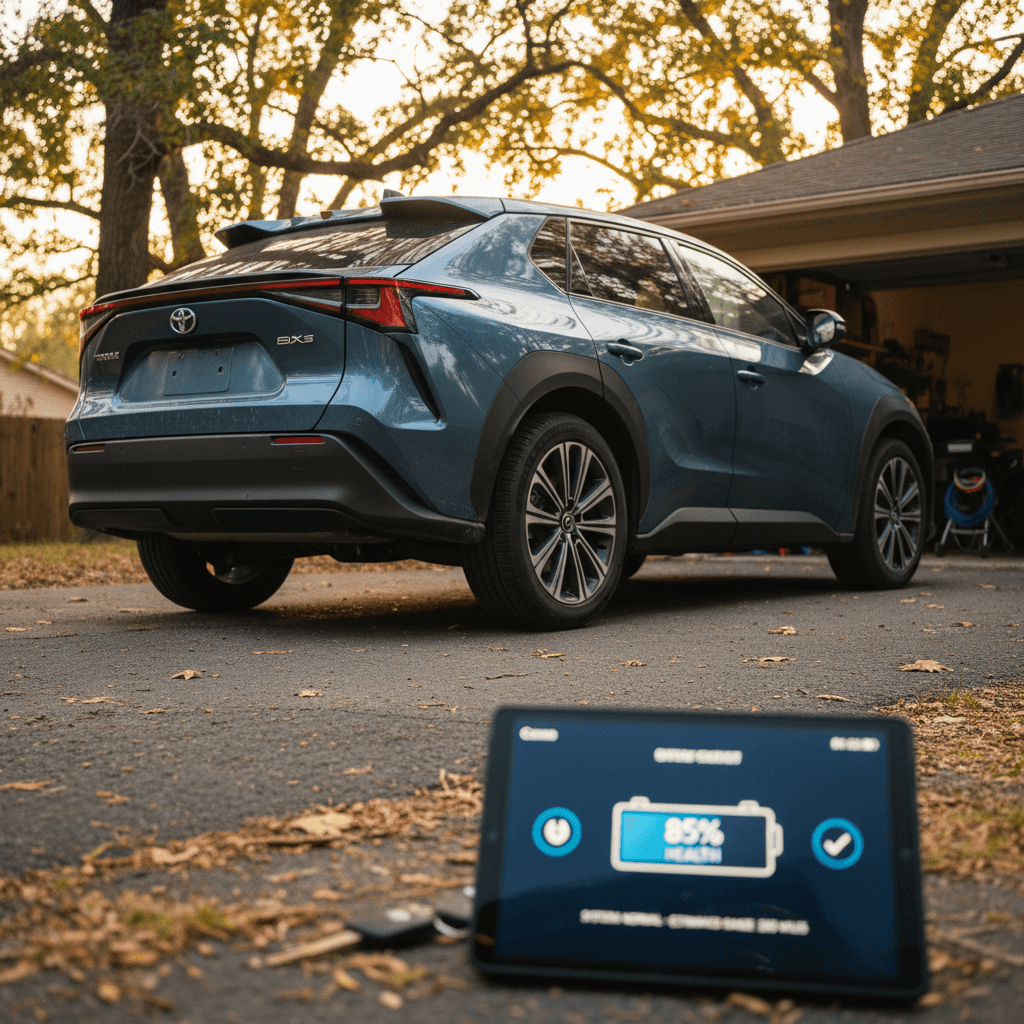
- Extended battery care: in many markets, annual EV health checks can extend protection up to 10 years with a 70% capacity target.
- Conservative tuning: Toyota doesn’t push ultra‑high DC rates, which may help long‑term cell longevity even if it slows road‑trip charging.
What early owners report
- Most U.S. owners after 1–2 years report little obvious range loss in everyday use.
- A minority of high‑mileage or taxi use cases in Europe report noticeable range drop (for example, from about 500 km indicated to ~420 km within several months).
- Degradation appears within the normal band for first‑gen EVs, not standout good, but not catastrophic either.
Battery health buying tip
The bottom line: Toyota’s pack design and warranty should protect most owners from expensive battery surprises in the first decade, but if you’re an extremely high‑mileage driver or rely on DC fast charging multiple times a day, you’ll want a battery health check before you buy and periodically during ownership.
Owner reviews vs. lab testing: is the bZ4X dependable?
Objective ratings and subjective owner comments paint a nuanced picture. Early 2025 consumer reviews on major U.S. sites show a middling reliability score, around 2.6 out of 5 for reliability and roughly 40% of owners saying they’d recommend the vehicle. That’s far from a disaster, but it’s off the pace of Toyota’s best efforts.
What real bZ4X owners are saying
Patterns from forums and consumer‑review sites
“Totally unremarkable, in a good way”
Many owners report 10,000–25,000 miles with nothing beyond tire rotations and routine software updates. For them, the bZ4X drives like any other Toyota crossover, just quieter.
Small but nagging issues
Some complain about squeaky interior panels, finicky infotainment, cold‑weather range drops of 30–50%, and the occasional sensor or software gremlin that requires a dealer visit.
Outliers with serious problems
A smaller group has dealt with repeated 12‑volt failures, failed AC compressors, or cars stuck at the dealer for weeks waiting on parts from Japan. These are frustrating, but still a minority of stories.
“It has been entirely unremarkable. In a good way. The way owning a Toyota should be.”
What this all suggests is that the 2025 bZ4X isn’t a lemon‑prone model, but it also isn’t the set‑and‑forget appliance some buyers expect from the Toyota badge. If you’re risk‑averse, the combination of a strong warranty and average‑plus mechanical durability may still work for you, as long as you go in aware of the software and HVAC history.
2025 bZ4X reliability vs. Tesla, Hyundai and others
To judge the 2025 Toyota bZ4X fairly, you have to compare it with other compact electric crossovers, not with a 15‑year‑old Prius. In that peer group, its reliability story is competitive, but not class‑leading.
How the 2025 bZ4X stacks up for reliability
High‑level comparison with key compact EV rivals.
| Model | Reliability reputation | Common complaints | Warranty strengths |
|---|---|---|---|
| Toyota bZ4X (2025) | Average to above‑average mechanicals; mixed owner scores | HVAC recall, 12‑V battery, slow fast‑charge, interior squeaks | Strong overall Toyota warranty; extended battery coverage with health checks |
| Tesla Model Y | Powertrain often solid; variable build quality | Panel gaps, interior rattles, software bugs, service delays | Excellent fast‑charge network; 8‑year battery/drive unit warranty |
| Hyundai Ioniq 5 | Generally good, with a few high‑profile issues | Early 12‑V and charging‑port glitches, occasional software recalls | Long 10‑year powertrain warranty; solid EV component coverage |
| Volkswagen ID.4 | Improving but still spotty | Infotainment lag, software recalls, some early build issues | Good basic warranty; software slowly improving via updates |
General tendencies only, individual vehicles vary, especially on the used market.
Where the bZ4X is a safe bet
Practical reliability tips for current bZ4X owners
Reduce your odds of reliability headaches
1. Get all recalls and TSBs done
Ask your Toyota dealer to check your VIN for open recalls, especially the HVAC/defrost software fix, and technical service bulletins (TSBs). Get them handled well before winter or a big road trip.
2. Watch the 12‑volt battery
If the car struggles to “start” after sitting for a day or two, or accessories behave oddly, ask the dealer to load‑test the 12‑V battery and check for parasitic drains. Document each visit in case you ever need to pursue lemon‑law protection.
3. Update infotainment software
Many instrument‑cluster and radio glitches are solved with newer software. During regular service, request that the dealer apply all available multimedia and ECU updates.
4. Moderate your DC fast‑charging
Occasional DC fast‑charging is fine, but back‑to‑back high‑power sessions in extreme heat can stress both the pack and the HVAC compressor. When possible, rely on Level 2 at home or work for the bulk of your charging.
5. Protect range in cold weather
Pre‑condition the cabin while plugged in, use seat and steering‑wheel heaters instead of blasting cabin heat, and avoid repeated short trips on a cold pack. All of this reduces strain and keeps the car feeling more consistent.
6. Keep clean service records
A tidy paper trail of maintenance, software updates, and any repairs will help if you ever need warranty goodwill, and will make your bZ4X more appealing if you decide to sell or trade into another EV later.
Shopping a used Toyota bZ4X: what to watch for
On the used market, the bZ4X can be an appealing value play because early depreciation has been steeper than on Toyota’s hybrids. That said, a careless or unlucky first owner can turn any EV into a headache. A thoughtful inspection is non‑negotiable.
Used bZ4X reliability checklist
Confirm recall completion
Ask for a printout showing that HVAC, wheel‑hub (on early 2023s), and any other relevant recalls or TSBs have been performed. If anything is open, negotiate to have the work done before delivery.
Request a battery health report
Don’t rely only on the guess‑o‑meter range estimate. A data‑driven report, like the Recharged Score you get on every EV at <strong>Recharged</strong>, can flag unusual degradation or pack imbalances before you buy.
Test HVAC in realistic conditions
On a cold or damp day, verify that the heater and defroster reach temperature quickly and keep the windshield clear. On a warm day, make sure the AC cools consistently without strange noises from the compressor.
Evaluate DC fast‑charging behavior
If possible, stop at a public fast charger and watch how quickly the car ramps up and whether it stays charging without errors. Sudden drops or repeated failures may point to software or hardware issues.
Listen for interior rattles and squeaks
Drive over rough pavement at city speeds with the radio off. Some owners report squeaky door panels and console plastics; not deal‑breakers, but useful leverage in price negotiations.
Review ownership history
Preference goes to single‑owner vehicles with moderate mileage, clean accident history, and regular dealer service, exactly the types of cars Recharged curates, inspects, and backs with transparent condition reporting.
How Recharged helps de‑risk a used bZ4X
2025 Toyota bZ4X reliability FAQ
Frequently asked questions about 2025 bZ4X reliability
Bottom line: is the 2025 bZ4X a safe bet?
If you’re hoping the 2025 Toyota bZ4X will be the EV equivalent of a Camry, utterly invisible from a reliability standpoint, you may be disappointed. As an early‑generation electric, it carries some predictable growing pains: a high‑profile HVAC recall, occasional 12‑volt battery headaches, and software that still needs periodic massaging. At the same time, the underlying hardware appears sound, Toyota’s brand‑wide reliability record remains excellent, and the long battery and vehicle coverage soften much of the risk.
For many buyers, that adds up to a reasonable bet, especially if you’re diligent about recall completion and battery health. If you’d like a second set of eyes, Recharged can help you compare a bZ4X against other used EVs, decode its battery and charging data with a Recharged Score Report, arrange financing or trade‑in, and deliver the car to your driveway. With the right homework and the right partner, a 2025 bZ4X can be a calm, efficient addition to your garage rather than a rolling science experiment.