Search traffic around “2025 Toyota bZ4X problems and fixes” has climbed as more of these compact electric SUVs hit the used market. The good news: the worst early bZ4X issues, like the 2022 wheel‑bolt “do not drive” recall, were fixed long before the 2025 model year. The bad news: HVAC, 12‑volt battery, charging, and software quirks still show up in owner complaints, and they matter if you’re buying or already driving one.
Key problem areas at a glance
Overview: What “2025 Toyota bZ4X problems” Really Means
When shoppers ask about 2025 Toyota bZ4X problems, they’re usually blending three things together: the early 2023 wheel‑bolt recall history, ongoing HVAC and 12‑volt complaints that span 2023–2025, and the car’s conservative charging performance versus rivals. The 2025s are much less dramatic than the launch‑year cars, but they’re not completely drama‑free.
2025 bZ4X problem snapshot (context for shoppers)
If you mostly charge at home and live in a moderate climate, many of these issues are annoyances rather than deal‑breakers. If you road‑trip often, live somewhere cold, or are shopping a used bZ4X that’s been fast‑charged hard, you’ll want to dig deeper into the specific problems and fixes below.
Known 2025 Toyota bZ4X Recalls and Safety Fixes
By the 2025 model year, the bZ4X has outgrown its most notorious safety defect, but recall history still matters, especially for used buyers. Here’s what to know before you sign paperwork.
Key bZ4X recall history that still matters in 2025
Always run the VIN through NHTSA and Toyota’s owner site to confirm recall status on any individual 2025 bZ4X.
| Issue | Model Years Affected | Risk if Ignored | What the Fix Looks Like |
|---|---|---|---|
| Wheel hub bolts loosening | Primarily early 2023 bZ4X | Potential wheel detachment and loss of control | Dealer replaces hub bolts with updated design and confirms torque; 2025s should already have updated hardware. |
| HVAC/defroster performance | 2023–2025 bZ4X and related models | Poor windshield defogging, limited heat in cold weather | Dealer software updates, revised components, or HVAC system repairs under recall/warranty, depending on VIN. |
| Software/charging logic TSBs | 2024–2025 bZ4X | Incorrect charging limits, inconsistent behavior | Dealer applies updated software (Technical Service Bulletins rather than formal recalls). |
Always verify recall completion
HVAC & Defroster Problems: Foggy Windows and Weak Heat
One of the most visible 2025 Toyota bZ4X problems is actually invisible: a windshield that won’t clear quickly or a cabin that struggles to warm up in cold weather. Toyota and regulators have treated this seriously because poor defrosting is a safety issue, not just a comfort complaint.
- Sluggish defrost on cold, damp mornings, even with the system set to full heat and defog.
- Uneven airflow or temperature between driver and passenger vents.
- HVAC that feels fine around town but can’t keep up on highway drives in freezing conditions.
- Fan noise changes or intermittent A/C performance, hinting at component wear.
How to spot HVAC problems on a test drive
- On a cold start, turn the climate system to full heat and defrost. Time how long it takes for the windshield to clear.
- Cycle through fan speeds and vent modes, listen for rattles, whines, or fan speeds that don’t change.
- If possible, test both in Eco and normal HVAC modes; note any big differences in heat output.
Common fixes owners report
- Dealer‑performed software updates and HVAC bulletin work under recall or warranty.
- Cabin air filter replacement and evaporator cleaning to restore airflow and air quality.
- HVAC component replacement (blower, valves, or heat‑pump parts) on affected VINs.
Ask the seller for the latest HVAC campaign or TSB paperwork. A bZ4X that’s already had the latest fix is more attractive than one that hasn’t.
Climate test you should always do
12V Battery and Electrical Quirks
The bZ4X’s big high‑voltage pack grabs headlines, but a surprising number of 2023–2025 owner complaints center on the humble 12‑volt battery. When it misbehaves, you can see everything from warning lights to a car that simply won’t wake up, even though the traction battery still has plenty of range.
Typical 12‑volt and electrical symptoms on 2025 bZ4X
Most are nuisances, but repeated failures can signal a deeper electrical or software problem.
Dead 12V after sitting
Owners report the car refusing to start after sitting for a few days, even with the main battery well above 50%.
Random warning lights
Temporary “Check EV system” or other alerts that clear after restarting can be related to low 12‑volt voltage.
Always‑online behavior
Some reports tie 12‑volt drain to the car’s constant communication with Toyota’s servers and connected‑services features.
One legal and consumer‑advocacy trend worth noting: lemon‑law firms have started bundling repeated 12‑volt failures, software glitches, and charging problems into larger “electrical system” cases. For most owners, though, the fix is more mundane, an updated 12‑volt battery, current software, and a few usage tweaks.
How to reduce 12‑volt headaches
1. Keep software and recalls current
Ask a Toyota dealer to apply all outstanding software updates and service campaigns. Several address energy management and charging logic that indirectly affect the 12‑volt system.
2. Avoid long stretches parked “half on”
Extended accessory use (audio, HVAC, screens) without driving can drain the 12‑volt faster than you expect. If you’ll sit for a while, put the car fully in Ready mode or shut it down completely.
3. Don’t ignore early warnings
Slow cranking sounds don’t exist in EVs, but dim screens, glitchy startups, or repeated low‑battery warnings are your cue to have the 12‑volt tested and replaced if needed.
4. Ask for a battery health printout
During a pre‑purchase inspection or service visit, have the dealer document 12‑volt test results. It’s a small component that can cause outsized headaches when weak.
Charging Problems: Slow DC Fast Charging and Home-Charging Glitches
Compared with newer EVs that boast 200 kW–plus peak DC speeds, the bZ4X’s hardware is conservative and its charging curve drops off early. That’s baked into the design, not a defect, but it explains many online complaints about “slow charging” on 2023–2025 bZ4X models. Layer on some real‑world network glitches and you get a car that’s excellent for home‑charging commuters and merely average for frequent road‑trippers.
- DC fast‑charging that briefly peaks, then quickly settles to lower kW, stretching 10–80% session times compared with rivals.
- Sessions that fail to start on certain public networks, especially when relying on app‑to‑charger hand‑offs like Toyota’s EVgo integration.
- Home Level 2 charging that stops mid‑session or ignores the in‑car schedule, often traced to communication quirks between charger and vehicle.
Expectation setting matters here
How to test DC fast charging before you commit
- Start a session around 20–30% state of charge on a reputable network (Electrify America, EVgo, etc.).
- Watch the power display: brief peaks are normal, but frequent drops or failures to initiate may point to charger issues or vehicle software.
- Confirm the car will comfortably reach 80% without errors, then note how long that takes versus your expectations.
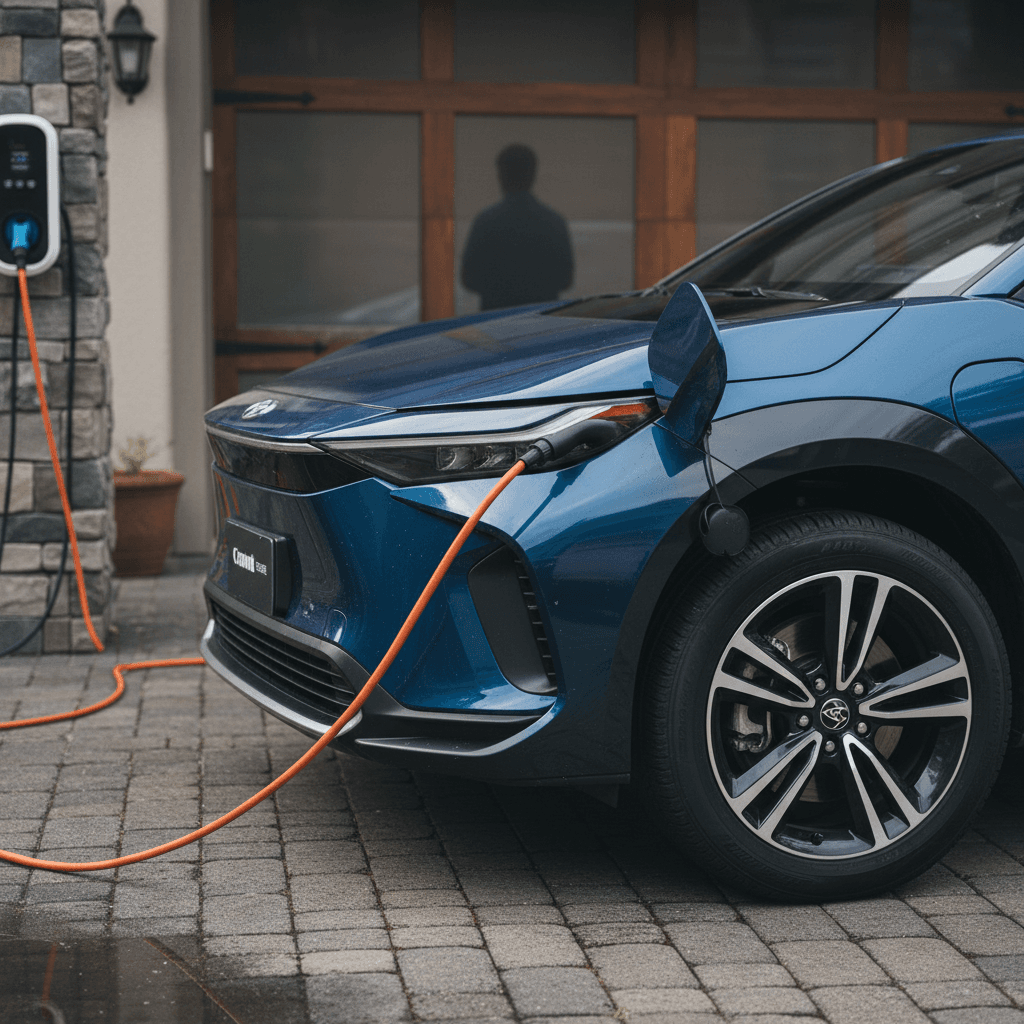
Common home‑charging fixes owners report
- Turning off one of the two overlapping schedules (charger app vs. in‑car schedule) to avoid conflicts.
- Updating firmware on smart chargers like ChargePoint or Wallbox and rebooting both the charger and the car.
- Having an electrician confirm proper wiring and breaker size for 240V circuits after repeated mid‑session shut‑offs.
Pro tip for used shoppers
Software, Infotainment & Toyota App Frustrations
Hardware issues get the headlines, but there’s a steady background buzz of owner gripes about the infotainment system and Toyota app on 2023–2025 bZ4X models. These problems rarely strand you, but they can erode confidence if you rely on connected services for charging data or trip planning.
Typical software and app‑related bZ4X complaints
Toyota app inconsistencies
Missing or delayed home‑charging history, incorrect state of charge, or failure to show updated range, especially when the car is parked in areas with weaker cell coverage.
Infotainment lag or freezes
Occasional slow responses, audio cutouts, or nav glitches when juggling Bluetooth audio, navigation, and calls.
EVgo integration hiccups
Owners attempting to activate free or discounted charging through Toyota’s EVgo partnership sometimes see VIN‑recognition or sign‑in errors and end up using the EVgo app directly.
Random reboots or resets
Head unit restarts mid‑drive, often cured (temporarily) by a full power‑cycle or software update at the dealer.
The simple “first fix” for software gremlins
Ride, Noise, and Drivetrain Complaints
Pure mechanical failures, motors, inverters, gearboxes, are relatively rare complaints on the 2025 bZ4X. Most real‑world gripes show up in subtler ways: tire and wind noise, a ride that feels busier than some competitors, or the occasional suspension or brake noise on cars that sit for long stretches.
- Brake squeal or light grinding after the car sits, especially in wet or salty climates (common for many EVs, not just Toyota).
- Higher‑than‑expected tire roar on coarse pavement, particularly with 20‑inch wheels and OEM tires.
- Occasional alignment or steering‑pull reports after curb hits or potholes, similar to other compact crossovers.
Don’t skip the highway test drive
How to Check a 2025 bZ4X for Problems Before You Buy Used
The 2025 bZ4X can be a solid used‑EV value, but only if you separate well‑maintained examples from cars with unresolved HVAC, electrical, or charging issues. Here’s a structured way to do that, whether you’re buying from a private seller, franchise dealer, or EV‑focused marketplace like Recharged.
Pre‑purchase checklist for a used 2025 Toyota bZ4X
1. Pull the full recall and service history
Use the VIN to check NHTSA and Toyota’s owner site, then ask the seller for dealer invoices. Confirm completion of any HVAC or software campaigns and look for repeated visits for 12‑volt or electrical issues.
2. Get objective battery health data
Toyota’s own state‑of‑health reporting is helpful but not perfect. At Recharged, every vehicle gets a <strong>Recharged Score battery report</strong> that’s independently validated, so you know how the pack compares to similar bZ4X SUVs.
3. Test AC and DC charging
Plug into a known‑good Level 2 charger and, if possible, a public DC fast charger. Look for mid‑session drop‑outs, error messages, or behavior that doesn’t match the owner’s description.
4. Do a true cold‑start HVAC test
Meet when the car has been sitting for several hours. Start from cold, turn on full defrost and heat, and confirm the windshield clears rapidly without odd noises or smells.
5. Scan for warning lights and stored faults
Ask for a pre‑purchase inspection at a Toyota dealer or EV‑savvy shop. Have them scan for stored diagnostic codes, even if the dash is clear today.
6. Evaluate how the car was used
High DC fast‑charge usage, rideshare history, or repeated short trips with long sits can affect wear patterns. Prioritize cars with documented home Level 2 charging and regular maintenance.
Why marketplace choice matters
Owner Fixes and Preventive Maintenance Tips
Not every 2025 Toyota bZ4X problem requires a major repair. A lot of day‑to‑day frustration can be solved, or avoided, with smart charging habits, regular software updates, and some EV‑specific maintenance.
High‑impact fixes and habits for smoother 2025 bZ4X ownership
Update on a schedule
Ask your dealer to check for software updates at least annually, ideally alongside tire rotations or brake inspections.
Optimize charging routines
Use Level 2 at home when possible, charge between roughly 20–80% for daily driving, and avoid stacking multiple DC fast charges in a single day unless necessary.
Keep HVAC breathing freely
Replace the cabin air filter on schedule and keep footwells clear of debris that can obstruct vents or cause blower noise.
Exercise the brakes
Occasional firm brake applications from moderate speed help clean the rotors and can reduce the light grinding common to EVs with heavy regen.
Check your home electrical
Have an electrician confirm that your 240V circuit is correctly sized and wired. Marginal wiring can mimic vehicle charging problems.
Document everything
Keep a log of dates, mileage, photos, and dealer work orders for any repeated issue. This paper trail is invaluable if you need goodwill repairs, or to invoke lemon‑law protections.
When a Dealer (or Lemon Lawyer) Should Get Involved
Most 2025 bZ4X problems can be solved through normal warranty channels. But if your SUV spends more time at the dealership than in your driveway, or the same issue returns over and over, it’s time to escalate.
Situations where you should push harder with the dealer
- The same 12‑volt or electrical issue has required multiple repairs and still comes back.
- HVAC or defroster performance remains poor after a recall repair or TSB.
- Charging problems prevent you from using the car as intended, and the dealer can’t replicate or resolve the fault.
Ask to open a case with Toyota corporate and request that a field technician or regional specialist review your vehicle history.
When to talk to a lemon‑law attorney
- Multiple unsuccessful repair attempts for a safety‑related issue (brakes, steering, repeated shutdowns).
- Your bZ4X spends extended time out of service during its first year or within your state’s statutory window.
- The dealer acknowledges a defect but says there’s “no approved fix yet” after many months.
Strong documentation, service orders, messages, and photos, is critical here. Start building that file from the first visit.
Important note on legal advice
FAQ: 2025 Toyota bZ4X Problems and Fixes
Frequently asked questions about 2025 Toyota bZ4X problems
Bottom Line: Should 2025 Toyota bZ4X Problems Scare You Off?
The 2025 Toyota bZ4X isn’t the problem‑child launch EV some shoppers remember from 2022 headlines. The wheel‑bolt crisis is in the rearview mirror, and catastrophic failures are uncommon. Most 2025 Toyota bZ4X problems and fixes revolve around HVAC performance, 12‑volt and electrical quirks, conservative charging behavior, and software frustrations, issues you can often anticipate and manage with good diagnostics and habits.
If you want an ultra‑fast‑charging road‑trip machine, other EVs may fit you better. But if you value Toyota’s overall durability, plan to charge mostly at home, and take the time to verify recall status, software updates, and battery health, a 2025 bZ4X can be a smart, relatively affordable way into an electric SUV. And when you shop through Recharged, every used bZ4X comes with a Recharged Score battery health report, transparent pricing, nationwide delivery, and EV‑specialist support, so you’re not guessing about the car’s past when you bet on its future.