Search for 2025 Rivian R1T problems and you’ll find two very different stories. Some owners are past 50,000 miles with almost no issues. Others have trucks that seem to live at the service center, dealing with rattles, recalls, and software gremlins. If you’re thinking about buying a 2025 R1T, new or used, or you already own one and feel a little uneasy, you’re in the right place.
Quick take
Overview: How worried should you be about 2025 Rivian R1T problems?
Let’s level-set. The 2025 R1T isn’t an unreliable disaster, but it also doesn’t have the buttoned-down dependability of a Toyota pickup. Owner reports from Rivian forums and social media paint a mixed picture: plenty of trucks that have been nearly flawless, and a noticeable minority with repeated visits for rattles, suspension noises, warning lights, and software weirdness.
2025 Rivian R1T problem snapshot
If you’re cross-shopping, that puts the R1T in the same general bucket as other first‑generation EV trucks: incredibly capable, still maturing. The difference is that Rivian leans heavily on software and complex air suspension hardware, which means more things can get fussy even when the fundamentals, battery, motors, structure, hold up well.
Tip for shoppers
Major 2025 Rivian R1T recalls and safety issues
Before we get into day‑to‑day annoyances, it’s worth understanding the big-ticket items: official recalls that affect 2025 R1T trucks. These are safety‑critical issues that Rivian and the National Highway Traffic Safety Administration (NHTSA) have flagged and, in most cases, already addressed.
Key recalls affecting 2025 Rivian R1T trucks
This table focuses on high‑level themes you should ask about when looking at a specific truck. Always run the VIN through NHTSA or Rivian to verify recall status.
| Issue | What can happen | Typical fix | What to ask the seller |
|---|---|---|---|
| Front turn signal lamps | Front turn signals may fail to illuminate or flash, reducing other drivers’ ability to see your intent to turn or change lanes. | Replace affected Myotek front lamp units at a Rivian service center. | “Has the front turn signal recall been completed, and do all signals function normally now?” |
| Driver-assist software (Highway Assist) | Hands‑free or highway assist systems may not correctly detect a lead vehicle in some situations, raising crash risk if the driver over‑trusts the system. | Over‑the‑air (OTA) software update to the driver‑assist system, sometimes followed by a dealer verification. | “Is the truck running the latest driver‑assist software, and were any driver‑assist recalls closed out?” |
| Rear suspension service procedure | R1 trucks that previously had rear suspension work may have an improperly reassembled rear toe‑link joint, which can loosen or separate over time and affect stability. | Inspection of the rear suspension and replacement of hardware if needed, using updated procedures and parts. | “Has the rear toe‑link inspection or related recall been performed, and is the documentation available?” |
| Seatbelt wiring / detection | A faulty cable or detection logic can prevent the driver’s seatbelt system from working as designed, potentially reducing protection in a collision. | Inspection of hardware and an OTA update to improve detection of incorrect belt usage; parts replaced if needed. | “Are there any open safety recalls, especially involving seatbelts, airbags, or crash protection systems?” |
Exact recall campaigns, VIN ranges, and remedy details should always be confirmed with Rivian or NHTSA at the time you buy.
Don’t skip the VIN check
Software bugs, screen glitches, and driver-assist quirks
Rivian loves software. That’s a blessing when it means new drive modes, better efficiency, or improved route planning. It’s a curse when the latest over‑the‑air update gives your truck a case of the jitters. For 2025 owners, the most common R1T problems reported online are software‑related rather than mechanical.
Common 2025 R1T software and tech complaints
What owners report, and how serious it usually is
Freezing or rebooting screens
Several owners describe the center and driver displays freezing or rebooting while driving. In most cases, steering and braking remain normal, but you temporarily lose navigation, climate controls, and some driver‑assist visuals.
Often resolved by a hard reboot or a subsequent software update, but unnerving on a road trip.
Phantom drain after updates
Reports of increased phantom battery drain, for example, losing 4–5% overnight where it used to be 1–2%, tend to spike right after major software releases.
Drain often settles down after a few days, but if the truck is parked unplugged for long stretches, it can be a real annoyance.
Weird infotainment behavior
Owners have seen odd bugs like radio stations changing when you adjust the climate, settings menus refusing to scroll, or backup cameras going fuzzy until a reboot.
Most are low‑risk but frustrating, especially in a six‑figure truck.
Highway Assist and driver‑assist quirks
Rivian’s adaptive cruise and lane‑keeping systems are generally well‑reviewed, but the company has already had to patch bugs in its more advanced Highway Assist features. The key takeaway: treat these systems as driver assistance, not autopilot. Hands‑off or eyes‑off driving is not what the R1T is built for today.
How to protect yourself as an owner
- Install updates when you have time to drive and test the truck afterward, not right before a long trip.
- Keep a simple reboot sequence written down or saved in your phone in case both screens go black.
- If an update introduces obvious bugs, like unusable climate controls, document everything and open a service ticket right away.
Pro move before a road trip
Build quality, suspension, and hardware complaints
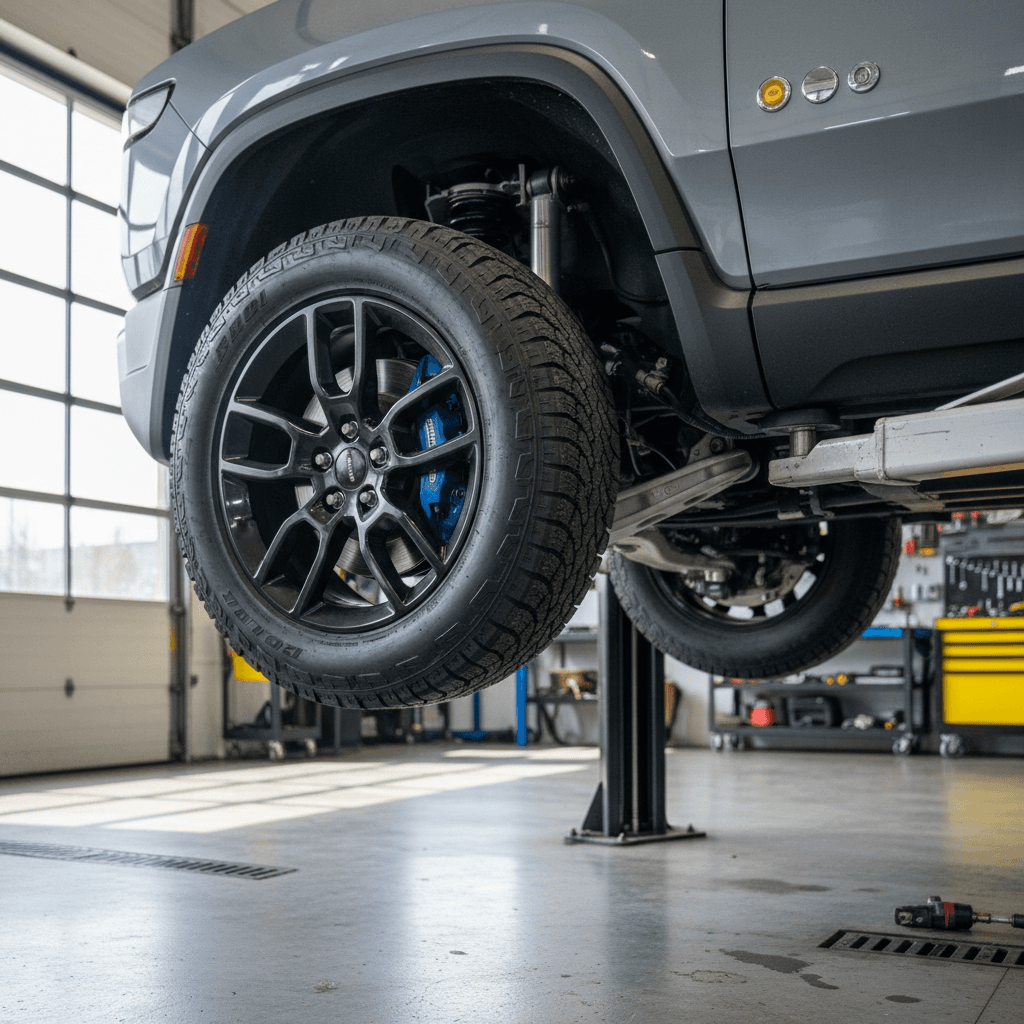
Underneath the software layer, the 2025 R1T still carries some of the growing pains that early owners of 2022–2024 trucks reported: squeaks, rattles, and suspension noises that feel out of place on a premium vehicle. The stories vary, but certain themes repeat often enough that you should pay attention.
- Interior rattles and door buzzes, sometimes traced to loose clips or panels that need to be shimmed or taped down.
- Suspension clunks or steering‑wheel shake, especially over broken pavement, occasionally requiring new parts or revised alignment work.
- Panel gaps or paint imperfections that should’ve been caught at the factory but weren’t.
- Occasional one‑off hardware failures like a 12‑volt battery, washer reservoir, or air‑suspension component going bad early.
Why this matters more on a Rivian
DIY build-quality check when test‑driving a 2025 R1T
1. Start with a cold soak drive
If possible, drive the truck first thing in the morning before it’s warmed up. That’s when many rattles, creaks, and suspension noises are most noticeable.
2. Use bad pavement to your advantage
On the test drive, find a rough road or expansion joints and <strong>lightly load and unload the suspension</strong>. Listen for clunks, thumps, or steering‑wheel shimmy.
3. Turn the stereo off
Spend a few minutes driving with no music, no HVAC fan on high, and windows up. Any dash, door, or headliner rattles will be much easier to hear.
4. Inspect panel gaps and paint
Walk around the truck and look closely at panel alignment (especially roof, windshield surround, and tailgate) and paint consistency. Note any resprays or misaligned trim.
5. Test all doors, windows, and the frunk
Open and close every door, the frunk, and the gear tunnel. Take note of anything that feels gritty, misaligned, or requires more force than it should.
6. Ask about past suspension work
If the truck has had suspension service, ask specifically what was done and whether it was related to a recall or revised procedure. Get copies of the work orders.
Battery, range, and charging problems on the R1T
The good news: for 2022–2025 R1Ts, you don’t see a flood of reports of catastrophic high‑voltage battery failures. The bigger complaints are about real‑world range versus the EPA stickers, winter performance, and occasional charging headaches at public stations.
Battery and charging pain points owners talk about
Most are manageable, if you know to expect them
Real‑world range vs. EPA
Lifted stance, chunky tires, and a brick‑shaped body mean the R1T drinks electrons on the highway. Many owners see 15–30% less range than the EPA rating at 75 mph, especially with accessories or cargo.
Plan conservatively for road trips, particularly in winter.
Cold‑weather losses
Like all EVs, the R1T loses range in the cold, faster warm‑ups and a big cabin don’t help. Expect noticeably reduced range and longer fast‑charge times on ski trips.
Pre‑conditioning the battery and cabin while plugged in makes a big difference.
Charging reliability
Most charging “problems” are actually network‑side issues (Electrify America, etc.), but some owners have run into handshake failures or finicky behavior that required a full truck reboot before fast charging would work again.
As with any EV, having multiple network options and a backup plan is smart.
Home charging solves 90% of the pain
When you’re looking at a used 2025 R1T, ask how it was charged. A truck that lived its life on home Level 2 charging with only occasional DC fast charging is ideal. That’s also where Recharged’s Recharged Score battery health diagnostics come in, we measure real battery health so you’re not guessing about hidden degradation.
Rivian service experience: loaners, wait times, and frustration
Ask 10 R1T owners about service and you’ll get 12 answers. Some praise Rivian’s mobile technicians and same‑week appointments. Others have trucks sitting at a service center for weeks, waiting on parts or a slot in the schedule. The 2025 R1T hasn’t magically escaped this split personality.
Where Rivian service shines
- Mobile service can handle a surprising amount of minor work in your driveway, from trim fixes to some mechanical repairs.
- Many owners report getting R1T or R1S loaners for longer jobs, which takes the sting out of a multi‑day repair.
- Warranty coverage is generous on high‑voltage components, so big‑ticket items are often fixed at no cost in the early years.
Where it falls short
- Service center coverage is still thin; if you don’t live near one, a long drive or tow isn’t unusual.
- Some owners report slow communication before drop‑off, then better responsiveness once the truck is actually in the bay.
- Because parts are unique and volumes are lower, certain repairs can drag on simply waiting for components.
Factor downtime into your decision
Buying a used 2025 Rivian R1T: what to inspect closely
Because 2025 R1Ts are just now entering the used market, you’re getting the benefit of Rivian’s latest hardware, software, and quality improvements, but you’re still early in the model’s life. That makes a careful, structured inspection absolutely worth the time.
Six problem areas to investigate on a used 2025 R1T
Walk through these systematically before you commit
1. Recall and service history
Ask for a complete service printout from Rivian. Look for evidence that major recalls (turn signals, driver‑assist, suspension inspections, seatbelts) have been completed.
A truck with zero history isn’t automatically better; it might just mean issues haven’t surfaced yet.
2. Noises and ride quality
On your test drive, hunt for rattles, clunks, or steering shimmy. Don’t accept “they all do that” as an answer, many don’t.
If something sounds off, get a written estimate for repairs before you negotiate price.
3. Software behavior
Spend time in the menus. Does anything lag, freeze, or behave strangely? Check backup camera clarity, climate controls, audio, and drive‑mode changes.
Ask which software version the truck is on and whether the owner has had to reboot frequently.
4. Battery health & charging
If possible, review a recent battery health report or charging logs. At Recharged, every R1T gets a Recharged Score with a deep battery assessment so you know what you’re buying.
Also test that the truck will start a fast‑charging session cleanly.
5. Underbody and off‑road use
Many R1Ts see real trail duty. Inspect the skid plates, underbody, and tow points for scrapes or bends. A few scars are fine; structural damage is not.
Confirm that height‑adjustable suspension still cycles smoothly through its modes.
6. Pricing vs. problems
A truck with a long list of small issues might still be a good buy, at the right price. Use documented problems as leverage in your negotiation or ask the seller to fix them before delivery.
At Recharged, we price used R1Ts against fair market data and their actual condition, so ugly surprises don’t show up after delivery.
How the 2025 R1T’s problems compare with other electric trucks
If you’re shopping a 2025 R1T against a Ford F‑150 Lightning, GMC Hummer EV, or a Ram REV, you’re not choosing between “problem‑free” and “problem child.” You’re choosing which quirks you can live with.
Rivian R1T
- Strengths: phenomenal performance and off‑road ability, clever packaging, strong software feature set.
- Typical issues: software bugs, rattles, occasional suspension or alignment complaints, evolving service network.
Ford F‑150 Lightning
- Strengths: familiar F‑150 bones, broad dealer network, strong tow ratings.
- Typical issues: range loss while towing, occasional software and charging bugs, dealer‑to‑dealer service quality varies.
Other premium EV trucks
- GMC Hummer EV and others bring their own mix of high complexity and first‑gen gremlins.
- Most owners across brands report at least some software hiccups in the first few years.
When a used R1T makes sense
FAQ: 2025 Rivian R1T problems and reliability
Frequently asked questions about 2025 Rivian R1T problems
Bottom line: Should 2025 R1T problems stop you from buying?
If you want an electric truck that feels special every time you drive it, the 2025 Rivian R1T is hard to beat. Its problems are real, but they’re not universal, and they’re rarely about the core EV hardware. Instead, you’re weighing a world‑class driving experience against the realities of a young brand: more software drama, more build‑quality variability, and a service network that’s still filling in the map.
The right answer depends on your tolerance for quirks. If your top priorities are absolute bulletproof reliability and dealership density, a more traditional truck or a simpler EV may fit you better. But if you’re willing to trade a little extra vigilance, and the occasional service visit, for innovation and capability, a carefully vetted 2025 R1T can be a terrific truck, especially bought used.
That’s where Recharged comes in. Every used Rivian R1T we list includes a Recharged Score Report with verified battery health, recall status checks, fair‑market pricing, and expert EV guidance from first click to final delivery. If you love what Rivian is building but don’t want to roll the dice blind on a used truck, shopping through Recharged gives you the story behind the spec sheet.