The 2025 Nissan Ariya is a beautiful misfit. It looks like concept art sent accidentally to production, it rides like a Lexus, and yet the market shrugged. With Nissan preparing to pull the plug on U.S. Ariya imports after the 2025 model year, you’re left with a fascinating question: is the 2025 Nissan Ariya a lame duck, or a secretly great buy, especially used?
Context: Ariya’s early exit from the U.S.
2025 Nissan Ariya overview: the short version
2025 Nissan Ariya at a glance
The quick hits before we dive deep
What it is
Battery & range
Charging & networks
- Smooth, quiet ride and upscale interior feel
- Handsome, distinctive design that doesn’t look like a science project
- Competitive range with the larger battery pack
- Charging speeds that lag many 2025 rivals
- No U.S. 2026 model means future support questions (mainly perception, not service)
- Often excellent value as a used EV versus newer, pricier competitors
What’s new for the 2025 Nissan Ariya
If you drove a 2024 Ariya and stepped into a 2025, you’d need a keen eye to spot the differences. Mechanically, the SUV is largely unchanged. Nissan’s tweaks are subtle but useful if you live with the car every day.
Key 2025 updates
Small quality-of-life gains, simplified lineup
More standard tech
Simplified trims & pricing
Dropped: longest‑range configuration
Powertrain, battery, and real-world range
The 2025 Nissan Ariya comes in front‑wheel‑drive (single‑motor) and e‑4ORCE all‑wheel‑drive (dual‑motor) flavors, each paired with one of two battery packs. Think of the small pack as “daily commuter” and the big pack as “road‑trip hopeful.”
2025 Nissan Ariya batteries, power, and range
Approximate U.S. specs for core trims
| Trim example | Drivetrain | Battery (gross) | Horsepower | EPA range (mi, approx.) |
|---|---|---|---|---|
| Engage FWD | Single‑motor FWD | 66 kWh | ~214 hp | ~216 |
| Engage e‑4ORCE | Dual‑motor AWD | 66 kWh | ~335 hp | ~205 |
| Evolve+ FWD | Single‑motor FWD | 91 kWh | ~238 hp | ~289 |
| Evolve+ e‑4ORCE | Dual‑motor AWD | 91 kWh | ~389 hp | ~267 |
| Platinum+ e‑4ORCE | Dual‑motor AWD | 91 kWh | ~389 hp | ~257 |
Exact figures vary slightly by trim; always confirm window‑sticker EPA numbers for the specific car you’re considering.
Real-world range expectations
Single‑motor Ariyas feel adequately brisk, roughly in compact‑SUV territory. Dual‑motor e‑4ORCE versions are genuinely quick, with sub‑5‑second 0–60 mph times that shove you smartly into the headrest. But even the hot ones deliver their speed with a kind of hushed, grown‑up demeanor, more business‑class lounge than roller coaster.
Charging: where the Ariya still lags, and where it shines
Here’s the Ariya’s Achilles heel in the 2025 EV class: charging speed. On paper, peak DC fast‑charge rate is around 130 kW. In a world where Hyundai, Kia, and some Teslas flirt with 200–250 kW and 800‑volt architectures, the Ariya looks old‑school.
Charging fast facts
Supercharger access for Ariya drivers
Where the Ariya feels dated
- Peak DC rates trail the best in class, so long trips mean longer coffee stops.
- The charge curve is conservative; it doesn’t hold max power as long as newer 800‑V rivals.
- Onboard 7.2 kW AC charging is fine, but not luxurious, if you have only short overnight windows.
Where it still works just fine
- If you mainly charge at home, the difference between 130 kW and 200 kW fast charging is academic.
- For a typical 40–60‑mile daily commute, you’re sipping 15–25% of the battery per day.
- With Supercharger access and a growing non‑Tesla network, finding a plug is rarely the problem; patience is.
Don’t buy it for road‑trip heroics
Interior, comfort, and practicality
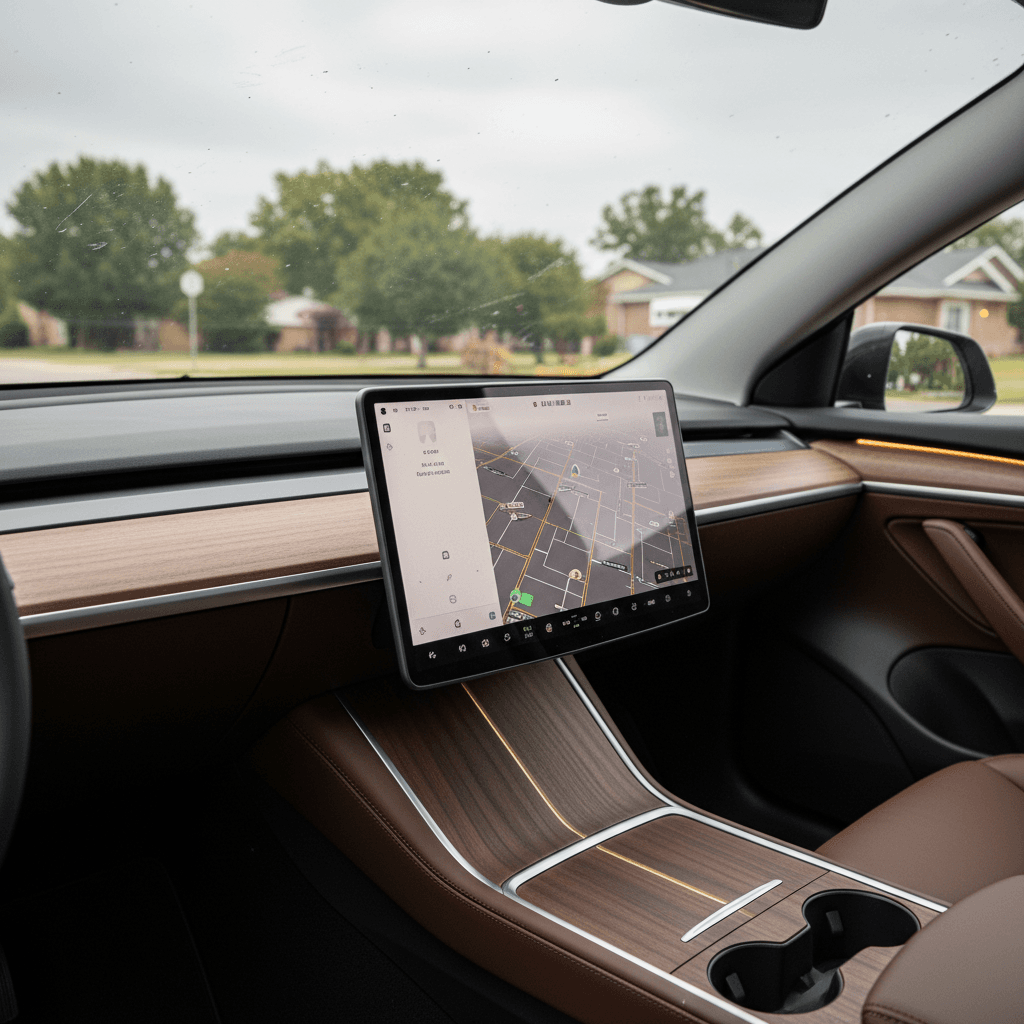
Inside, the 2025 Nissan Ariya is where Nissan’s designers clearly spent the good china. The dashboard is minimalist without being sterile, with a warm, lounge‑like atmosphere. Materials are a class above what the badge might lead you to expect, soft surfaces, interesting textiles, and tasteful lighting.
Cabin highlights
Where the Ariya quietly feels premium
Comfort first
Dual‑screen layout
Practical space
Family‑friendly notes
On-road behavior: serene, not sporty
Drive the Ariya like a hot hatch and it will shrug, slightly offended. This is a calm, almost plush EV that prefers a smooth hand on the wheel and a steady throttle. The steering is light, the suspension tuned more for compliance than cornering, and the cabin impressively quiet.
Ride quality
- One of the Ariya’s best traits: it glides over broken pavement in a way some stiffer rivals simply don’t.
- Noise suppression is excellent; at 70 mph the cabin feels more premium than the price suggests.
- It’s an EV you can happily drive all day without a headache.
Handling personality
- Body motions are well controlled, but the car never begs you to drive harder.
- e‑4ORCE all‑wheel drive adds reassuring traction in bad weather and makes the Ariya feel more planted.
- If you want sharp, playful dynamics, a Mustang Mach‑E or Ioniq 5 has more sparkle.
2025 Nissan Ariya trims, batteries, and pricing
For 2025, Nissan rationalizes the Ariya lineup. Fewer trims, clearer choices. MSRPs below exclude destination charges but give you a realistic sense of the walk up the ladder.
2025 Nissan Ariya U.S. trims (approximate)
Simplified view of the 2025 lineup
| Trim | Drivetrain | Battery (usable) | Key equipment highlights | Approx. MSRP* |
|---|---|---|---|---|
| Engage FWD | FWD | ~63 kWh | Smaller battery, single motor, cloth seats, wireless charging, core safety tech | ≈ $40k–$41k |
| Engage e‑4ORCE | AWD | ~63 kWh | Dual motors (e‑4ORCE), more power and traction, similar equipment | ≈ $44k–$45k |
| Evolve+ FWD | FWD | ~87 kWh | Larger battery, upgraded interior and tech, long‑range champ of lineup | ≈ $44k–$45k |
| Evolve+ e‑4ORCE | AWD | ~87 kWh | Big battery with AWD, more features and comfort options | ≈ $48k–$49k |
| Platinum+ e‑4ORCE | AWD | ~87 kWh | Top trim: leather, more luxury features, panoramic feel, most expensive Ariya | ≈ $54k–$56k |
Pricing varies by dealer and incentives. Use this as a relative guide, not a quote.
What this means used
2025 Nissan Ariya vs key rivals
Tesla Model Y
- Better charging network and quicker road‑trip stops.
- More efficient, often more range dollar‑for‑dollar.
- Ariya counters with a calmer ride, more conventional controls, and often lower used prices.
Hyundai Ioniq 5 / Kia EV6
- 800‑V architectures deliver blazing fast charging and sharp performance.
- Cabins are airy and tech‑forward, though sometimes busier to live with.
- Ariya’s advantage: ride comfort and interior warmth, plus less aggressive styling if you prefer subtlety.
Ford Mustang Mach‑E
- More playful handling, strong performance options.
- Software experience can be hit‑or‑miss; ride can be firmer.
- Ariya is the quieter, more refined commuter; Mach‑E is the extrovert of the pair.
Where the Ariya still holds its own
Should you buy a 2025 Nissan Ariya new, or used?
Here’s the delicate part: with Nissan winding down Ariya imports after 2025, buying one new in 2026 can feel like showing up to the party just as the DJ is packing cables. That doesn’t mean you shouldn’t; it just changes the value equation.
Key considerations: new vs used Ariya
1. Depreciation curve
Early Ariyas took the typical new‑EV value hit plus extra pressure from price cuts and incentives. A 1–3‑year‑old Ariya can undercut a new one by thousands while offering nearly the same hardware.
2. Warranty coverage
Nissan’s battery warranty (commonly 8 years/100,000 miles on EV components) means many 2023–2025 Ariyas will have long coverage left, making a well‑chosen used example a smart play.
3. Charging expectations
If your life is mostly local commuting with home charging, a used Ariya is an easy recommendation. If you road‑trip often, consider how much you value faster charging from rivals.
4. Future model support
Even as new imports stop, Nissan will continue to support existing Ariyas with parts and service. The bigger impact is resale perception, not basic maintainability.
5. Financing and total cost
Used EVs often qualify for competitive financing, and some buyers may stack state incentives. Running costs are low; the question is how much you pay up front.
How Recharged can help with a used Ariya
Battery health, reliability, and long‑term ownership
Nissan learned hard lessons with the first‑generation Leaf, whose air‑cooled battery chemistry earned a dubious reputation in hot climates. The Ariya is a different animal: liquid‑cooled pack, more modern chemistry, and thermal management designed for long‑haul durability.
- Liquid‑cooled battery helps reduce heat‑related degradation compared with older Nissan EVs.
- EPA‑rated ranges have held up reasonably well in early real‑world reports, especially for drivers who avoid repeated 100% fast‑charges.
- Software and infotainment are not segment‑leading but generally stable; over‑the‑air update cadence is more conservative than Tesla’s.
Watch fast‑charging habits
For long‑term owners, the Ariya’s softer ride and quiet cabin are actually a kind of reliability feature: it’s a car that encourages gentle use. Couple that with routine software updates and normal EV service (tires, brakes, coolant intervals), and there’s no obvious red‑flag pattern that should scare you away, especially if you can see hard data on the battery’s state of health.
Who the 2025 Ariya is (and isn’t) right for
Is the 2025 Nissan Ariya a good fit for you?
Match the car to your driving reality, not the brochure
Great choice if…
- You mostly drive locally or regionally and can charge at home or work.
- You prioritize a quiet, comfortable ride and a tasteful cabin over track‑day handling.
- You’d rather save money on a well‑priced used EV than chase the very latest specs.
- You like the idea of Supercharger access but don’t need the quickest DC speeds.
Probably not your car if…
- You regularly do multi‑state road trips and care deeply about minimizing charge stops.
- You want the most cutting‑edge driver‑assist and infotainment experience.
- You prioritize sporty handling and instant throttle thrills over serenity.
- You’re allergic to the idea of owning a model that’s being discontinued in the U.S.
The 2025 Nissan Ariya is not the future of Nissan EVs in America, that job now falls to the next‑gen Leaf and whatever comes after. But judged on its own merits, it’s a gently luxurious, quietly competent electric SUV that never quite got the spotlight it deserved. As a new buy, it’s a niche pick. As a used EV, especially with a clean battery health report, it starts to look like exactly the kind of under‑the‑radar deal savvy shoppers love to find.