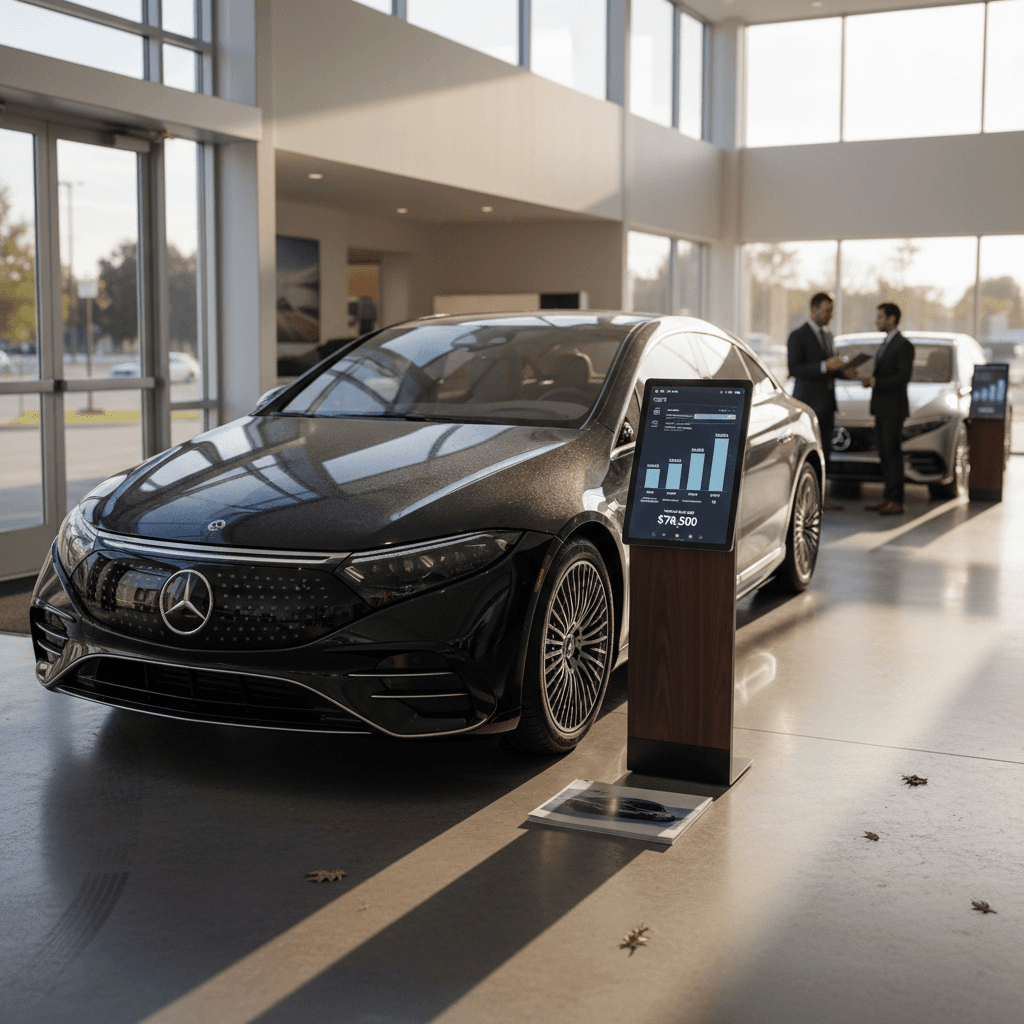
If you’re staring at your 2025 Mercedes EQS payment and wondering what it’s actually worth as a trade-in, you’re not alone. Deep discounts on new EQS models, heavy incentives, and fast EV technology cycles have made **2025 Mercedes EQS trade in value** harder to predict than a typical gas S‑Class. The good news: with the right data and a smart strategy, you can keep thousands of dollars from slipping through the cracks when you sell or trade.
Context: why EQS values feel “off” in 2025–2026
Why 2025 EQS trade-in values are tricky
With a traditional luxury sedan, you can glance at auction data and price books and quickly approximate trade value. The EQS is different. Several forces are pushing **2025 Mercedes EQS trade-in values** around at once:
- Heavy incentives and price cuts on new EQS models drag used prices down, because shoppers can often buy or lease new for less than expected.
- Rapid EV tech improvements make 2–3‑year‑old luxury EVs feel older than their age, especially on range and software features.
- Niche demand: not everyone shopping a luxury sedan or SUV is ready to commit to a large electric flagship, so buyer pools are smaller than for a gas S‑Class or GLE.
- Battery health uncertainty: many buyers and lenders are still learning how to value a used EV pack, so they lean conservative unless they see clear, third‑party data.
Sticker shock is normal
Current 2025 Mercedes EQS trade-in value ranges
Exact numbers depend on trim, mileage, and condition, but recent used‑market data and depreciation studies make one thing clear: the EQS depreciates faster than the average luxury EV. By 2025–2026, many early EQS sedans are trading hands for a fraction of their original price, and that sets the tone for newer models, including 2025s.
Typical EQS trade-in value bands in today’s market
These are illustrative U.S. ranges based on real‑world asking prices, wholesale data for recent model years, and how 2025 values usually slot in. Your actual offer will depend on mileage, options, region, and battery health.
| Model / status (U.S.) | Original MSRP ballpark | Typical trade-in band in 2025–2026 | What that means for you |
|---|---|---|---|
| 2022–2023 EQS 450+ sedan (average miles) | $105,000–$115,000 | $35,000–$45,000 | Shows how steep early EQS depreciation has been; sets buyer expectations for newer cars. |
| 2023–2024 EQS SUV 450+/450 4Matic | $110,000–$130,000 | $40,000–$55,000 | SUVs tend to hold slightly better, but still see heavy depreciation vs. MSRP. |
| 2024 EQS sedan (well‑equipped) | $110,000–$130,000 | $50,000–$65,000 | Later sedans have somewhat firmer residuals, but still sensitive to incentives and mileage. |
| Early 2025 EQS sedan or SUV (low miles, clean history) | $110,000–$140,000 | $65,000–$80,000+ | A 2025 is effectively “nearly new”; expect trade‑in to sit well below MSRP but above used 2023–24 values. |
| AMG EQS performance trims | $140,000–$160,000+ | Often similar to, or only slightly above, non‑AMG trades | Higher MSRP doesn’t always translate to dramatically higher trade‑in; demand is narrow for ultra‑high‑end EQS. |
Use this table as a directional guide, then verify with live quotes from dealers and online buyers.
Direction, not a quote
EQS value snapshot heading into 2026
Biggest factors that move your EQS trade-in number
When appraisers look at a 2025 EQS, they’re really pricing risk: future demand, reconditioning costs, and the probability that the car will sit on the lot. These are the levers that matter most to **2025 Mercedes EQS trade in value**.
Key levers that change your EQS trade-in value
Understanding these helps you see what’s negotiable, and what isn’t.
1. Mileage & usage
Low mileage is your friend. A 2025 EQS with under 15,000 miles will appraise very differently from one already at 35,000–40,000 miles.
- Under 10k miles: priced almost as new
- 10k–25k: typical for 1–2 years
- 30k+: triggers bigger wholesale discounts
2. Condition & history
Luxury EV buyers expect clean bodies and clean Carfax reports.
- No accidents and matching paint = stronger bids
- Wheel rash, interior wear, or panels replaced = instant deductions
- Missing keys, worn tires, or cracked glass also hit value
3. Battery health & range
On an EQS, usable range is a core part of the value story.
- Healthy pack with verified diagnostics feels like a safer bet
- Noticeable degradation or range complaints = conservative offers
- Battery warranty remaining reassures buyers and lenders
4. Market & incentives
Trade‑in value is tied to today’s incentives on new EQS inventory.
- Big factory rebates or lease specials push used values down
- Limited new inventory in your region can boost your trade
- Interest rates and used‑EV demand also matter
5. Trim, options & color
Features that broaden the buyer pool help trade‑in value.
- Popular colors, ventilated seats, and driver‑assist packages resell well
- Extremely niche colors or unusual option mixes can narrow demand
- AMG styling without full AMG complexity often hits a sweet spot
6. Where you get quotes
Different buyers see different exit strategies.
- Luxury dealers may pay more for clean, low‑mile examples
- EV‑focused retailers understand battery health and pricing nuance
- Auction‑oriented buyers lean toward wholesale numbers
Why battery data matters on an EQS
Lease vs loan: what if your EQS is worth less than the payoff?
A lot of EQS owners in 2025–2026 are discovering that their payoff, what’s owed on the lease or loan, is well above what dealers are willing to offer. How you handle that depends on whether you leased or financed your 2025 Mercedes EQS.
Leased 2025 EQS
If you leased through Mercedes‑Benz Financial or a third‑party bank, your residual (the buyout price) may be far above real‑world market value.
- Turning it in at lease end: If you’re not attached to the car, this is the cleanest move. You walk away, even if the market value is lower than the residual.
- Trading early: Some lenders will negotiate the buyout figure with a dealer to get the car off their books, especially when market values are dramatically lower than residuals.
- Buying it out yourself: Only makes sense if you’ve confirmed the buyout is at or below realistic market value.
Financed (loan) 2025 EQS
If you financed your EQS, negative equity is your responsibility.
- Check your payoff vs. realistic trade: The difference is your negative equity.
- Roll it into a new loan? Possible, but you’re stacking a fast‑depreciating asset on top of existing debt.
- Bring cash to close the gap: Painful, but often healthier than burying negative equity in a new loan.
- Consider holding longer: If you’re not forced to sell, another year or two of ownership can spread out the hit.
Avoid hiding negative equity in another luxury EV
How to check your 2025 EQS trade-in value step by step
You don’t have to guess what your 2025 Mercedes EQS trade‑in value should be. Here’s a practical, dealer‑style process you can follow in a weekend to see where you really stand.
6-step process to sanity-check your EQS trade value
1. Document your EQS accurately
Write down your exact trim (EQS 450+, EQS 580, AMG EQS, SUV vs sedan), mileage, VIN, option highlights, and color. Note any damage or upcoming maintenance (tires, brakes, services).
2. Pull pricing from at least two guidebooks
Use industry guides like KBB, Edmunds, or similar tools to get trade‑in and private‑party estimates. Focus on <strong>trade‑in</strong> and <strong>wholesale-oriented</strong> values, not just optimistic private‑party prices.
3. Scan retail listings for comps
Search nationwide for 2024–2025 EQS listings matching your trim and mileage. Look at what similar cars are advertised for at dealers and online retailers. Knock ~10–15% off asking prices to estimate where wholesale typically lands.
4. Get instant online offers
Submit your EQS to a few online buyers and local dealers for instant or same‑day offers. Use the same description and photos for consistency. These numbers tell you how real‑world buyers are pricing risk today.
5. Factor in payoff and taxes
Compare the strongest offer with your payoff and any state tax credits for trading in (in some states, you only pay tax on the price difference between your trade and the next car). This tells you your real out‑of‑pocket cost.
6. Decide: trade, sell private, or hold
If offers cluster near market data and you’re comfortable with the net, trading or selling now may make sense. If you’re deeply underwater and don’t need to move, consider holding the EQS longer or pivoting to a more affordable used EV when the numbers work.
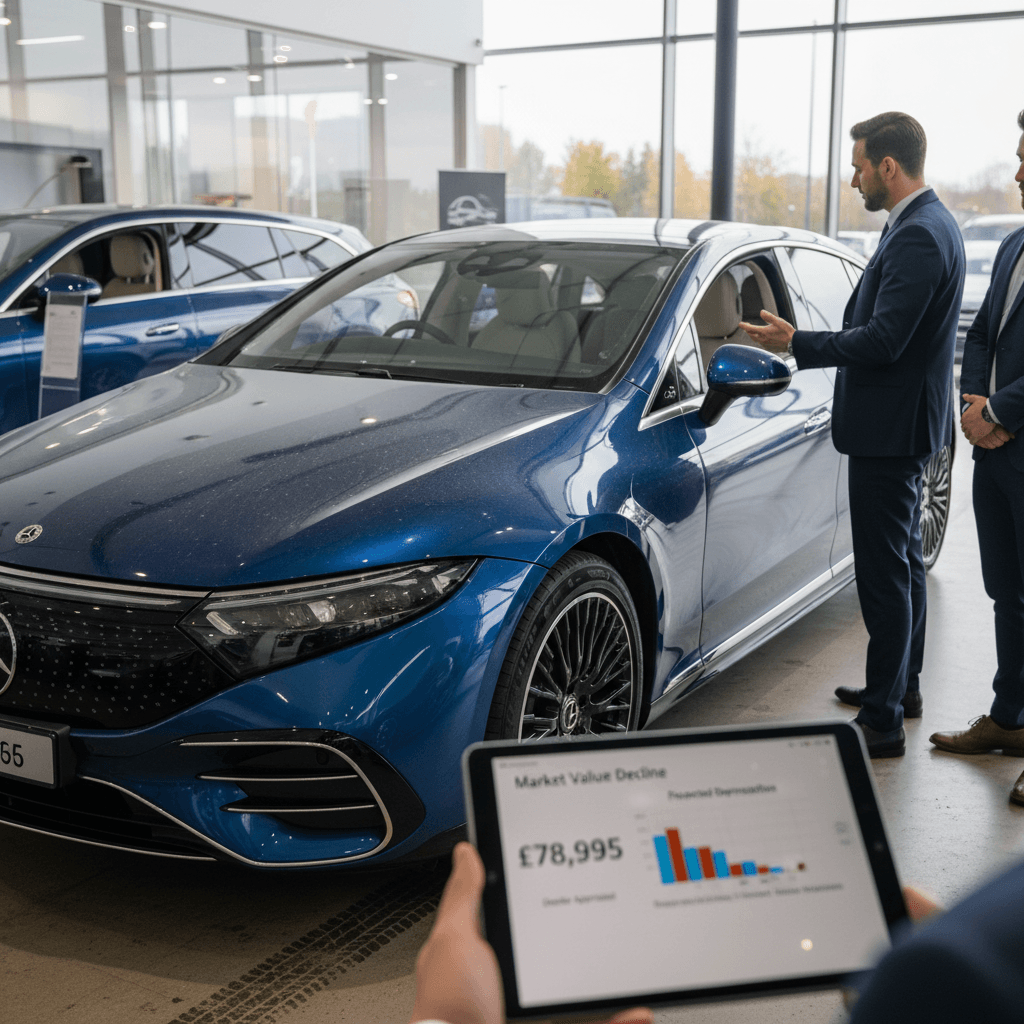
How Recharged can simplify the valuation process
Boosting your valuation before you get quotes
You can’t rewrite EQS depreciation, but you can absolutely influence where in the range your offers land. Small preparation steps often move a dealer from the bottom of their range to the top.
Quick ways to put your EQS in the top of the value band
Low-cost steps that help your car appraise like a higher‑trim example.
Detail inside and out
Have the EQS professionally detailed or thoroughly cleaned.
- Remove personal items and odors
- Clean glass, screens, and ambient lighting surfaces
- Fix minor scuffs where a detailer can help
Luxury buyers make emotional decisions quickly, first impressions matter.
Gather service & charging records
Upload or print digital service history, tire receipts, and any warranty work. For EVs, documentation that you’ve used appropriate charging (no chronic DC fast‑charging abuse, for example) can also reassure buyers and appraisers.
Address obvious, cheap fixes
Dealers will deduct more than it might cost you to fix simple issues yourself.
- Replace worn wiper blades
- Fix minor windshield chips
- Replace a missing key or floor mat set
Get a battery health report
For an EV like the EQS, this is gold. A third‑party diagnostic, like the Recharged Score battery health check, quantifies usable battery capacity and flags issues early, which reduces risk in the eyes of buyers and lenders.
Update software and clear warnings
Make sure the car is on current software, then clear any non‑critical warnings that can be addressed before appraisal. Persistent dash lights (even tire pressure) make appraisers assume reconditioning costs.
Shop multiple exit paths
Don’t stop at the first number. Local Mercedes dealers, independent dealers, EV‑focused retailers like Recharged, and online buyers all see different upside in an EQS. Cast a wide net and use the strongest offers as leverage.
Think like a remarketer
Special considerations: EQS SUV vs sedan, AMG trims
Not all EQS variants behave the same at trade‑in time. Body style and performance trim change who your next buyer is, and that changes the appetite dealers have for your car.
EQS sedan vs EQS SUV
- EQS sedan: The original flagship, but a tougher sell in some markets as shoppers tilt toward SUVs. Earlier sedans have taken some of the hardest depreciation hits, which can weigh on 2025 sedan values.
- EQS SUV: Plays in the hot luxury‑SUV segment. In many regions, dealers are more comfortable stocking SUVs because they align with what affluent families actually buy today.
- Regional differences: In dense urban markets, the sedan may still do fine. In SUV‑heavy suburbs, dealers may bid more aggressively on EQS SUVs than on sedans.
AMG EQS and heavily optioned builds
- Smaller buyer pool: Not every EV shopper is looking for a 600‑plus‑horsepower luxury sled with massive wheels and expensive tires.
- Higher reconditioning risk: Big wheels, performance brakes, and complex driver‑assist hardware are costly to service, so some dealers bid cautiously.
- Upside at the right outlet: The right luxury‑oriented or enthusiast‑focused buyer will pay more, but it may take longer to find them. That’s why some mainstream buyers price AMGs close to non‑AMG equivalents on trade‑ins.
Big MSRP doesn’t guarantee big trade-in
Should you trade your EQS for a used EV?
Given how fast the EQS has depreciated, many owners are asking whether it makes sense to get out now, often into a lower‑priced used EV with more predictable costs. That’s where companies like Recharged sit squarely in the middle of the story.
- Trading down can fix your payment, not your sunk cost. If you’re deep in negative equity, that money has already been spent. The question now is which vehicle and payment structure make sense going forward.
- Used EVs have already taken the big hit. A 3–4‑year‑old EV often reflects the steepest part of the depreciation curve. Moving from a nearly new EQS into a well‑vetted used EV can shrink your payment and future risk.
- Battery transparency matters even more on the next car. Look for used EVs with documented health checks, transparent pricing, and clear warranty coverage. That’s the philosophy behind the Recharged Score battery health report.
- Run a full cost‑of‑ownership comparison. Insurance, tires, and maintenance on a 6‑figure luxury EV can stay high even after it depreciates. A more modest used EV might save you real money every year, even if you take a short‑term hit today.
How Recharged fits if you’re exiting an EQS
Ready to find your next EV?
Browse VehiclesFAQ: 2025 Mercedes EQS trade-in value
Frequently asked questions about 2025 EQS trade-in value
The EQS is a showcase for what Mercedes can do with a luxury EV, but it’s also a textbook case of how fast a new technology segment can move, and how that impacts **2025 Mercedes EQS trade-in value**. If you understand how incentives, depreciation, and battery health shape your car’s number, you can make sharper decisions: whether that means hanging on a little longer, negotiating harder with multiple buyers, or trading into a used EV whose value story is easier to read. However you choose to exit, don’t go in blind. Use real‑world data, verified battery diagnostics, and a wide net of offers to make sure the next move with your EQS works for your budget, not just the other side of the desk.