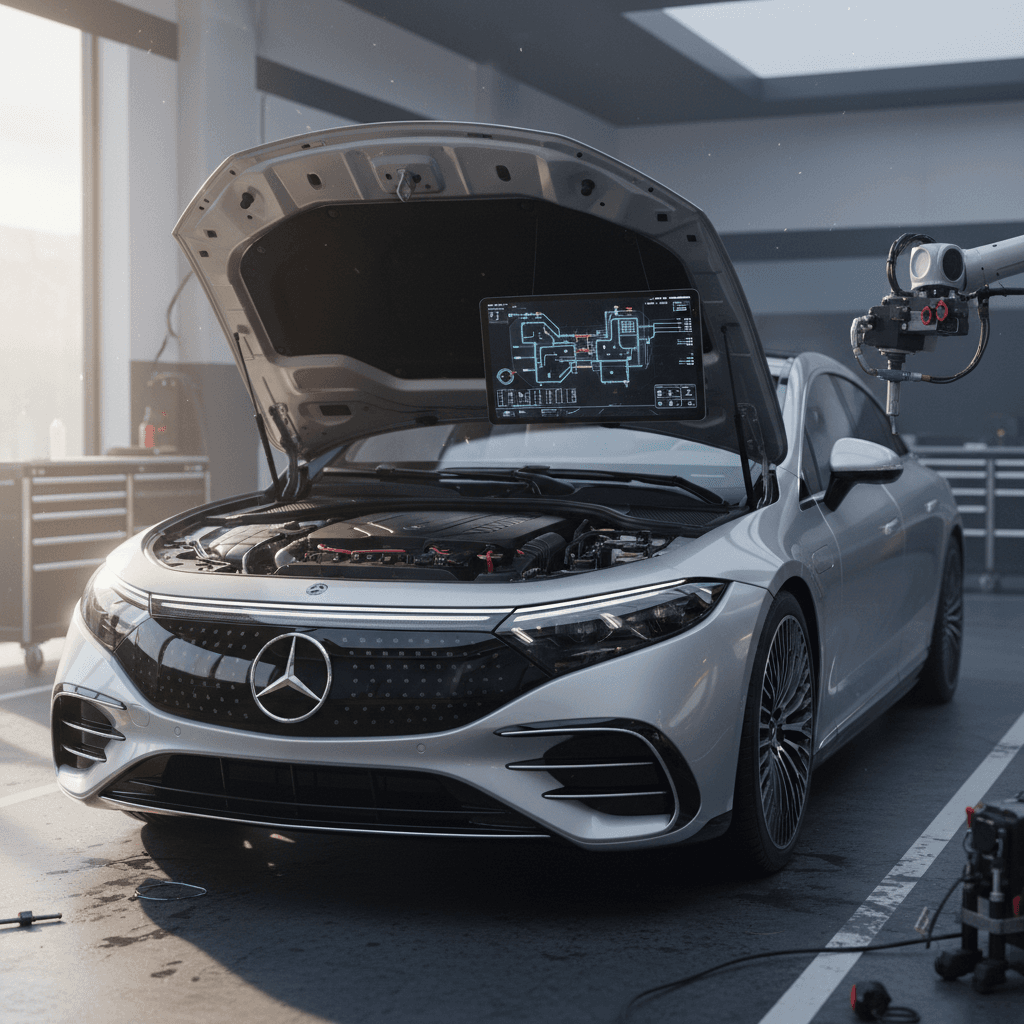
If you’re eyeing a 2025 Mercedes EQS, whether the sleek sedan or three‑row SUV, you’ve probably heard mixed things about reliability. The good news: many owners rack up quiet, comfortable miles with minimal drama. The bad news: some EQS drivers still battle software gremlins, driver‑assist faults, and occasional hardware hiccups. This guide breaks down the most common 2025 Mercedes EQS problems and fixes so you know what’s normal, what’s not, and how to protect yourself if you’re buying used.
Sedan vs. SUV
2025 Mercedes EQS problems: the big picture
2025 EQS reliability snapshot (early owner data)
We’re now several years into the EQS story. Early 2022–2023 cars built the reputation, good and bad, with issues ranging from glitchy infotainment and Hyperscreen bugs to driver‑assist systems that cried wolf and, in rare cases, lost propulsion or braked unexpectedly. By 2024 and 2025, Mercedes had rolled out multiple software updates and recall campaigns, so most of the ugliest defects have been addressed on properly maintained cars.
- Fewer catastrophic failures (sudden loss of drive, complete software meltdowns) compared with early years.
- Ongoing nuisance issues like random warning messages, ADAS (driver‑assist) errors, and occasional air suspension complaints.
- Battery pack and drivetrain are generally solid when the car is up to date on recalls and software.
What’s new for 2025 EQS, and why it matters for reliability
2025 EQS updates that help (or hurt) reliability
Most changes are subtle but meaningful if you’re buying used.
Refined software stack
By 2025, many earlier bugs in MBUX, the Hyperscreen, and driver‑assist logic have been patched. Cars built or updated in late 2024–2025 typically ship with more mature code and fewer show‑stopping glitches.
Updated service campaigns
Key recalls affecting 2022–2024 EQS and EQE models, such as 12V system updates and acoustic warning sound fixes, were extended to cover many 2025 builds. A 2025 EQS that’s current on campaigns is a very different ownership experience than one that isn’t.
Chassis and trim tweaks
Mercedes quietly refines suspension tuning, bushings, and interior trims over time. 2025 cars benefit from lessons learned on early SUVs that saw premature shock wear or minor squeaks and rattles.
Because 2025 EQS models sit on essentially the same hardware as 2022–2024, you should think of them as late‑run, de‑bugged versions of the same car, not a clean‑sheet redesign. That’s good news if you buy the right example, because you can leverage several years of real‑world data and factory fixes.
Model year vs. build date
Problem 1: Software bugs, glitches and random warnings
The single biggest category of 2025 Mercedes EQS problems is still software. Owners report that the car drives beautifully, but the screens and systems sometimes seem to have minds of their own.
- Hyperscreen or center display freezing or rebooting mid‑drive
- Apple CarPlay / Android Auto disconnects or lag
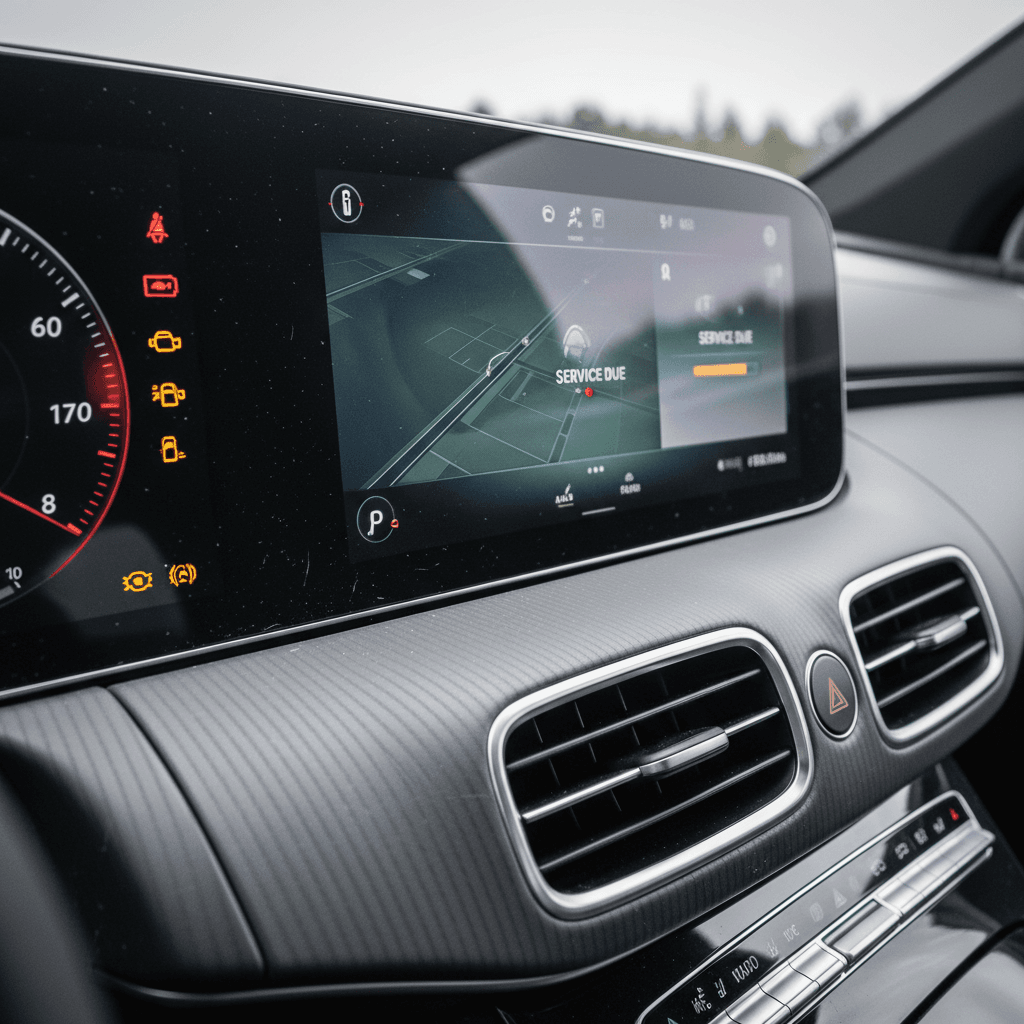
- Random warning messages (“Drive System Malfunction,” “Visit Workshop,” ADAS unavailable) that clear after a restart
- Occasional black screens at startup, followed by a delayed boot
- Over‑the‑air update failures or stalled downloads
Why it matters
Software bug fixes and owner playbook
1. Confirm latest software version
Before buying, or at your next service, ask the dealer to confirm the car is on the latest MBUX, drivetrain, and ADAS software. Insist they apply all open campaigns, even if the car seems fine. This is your single best defense against known bugs.
2. Reboot properly, don’t just power cycle
If the Hyperscreen locks up, use the official reboot sequence from the owner’s manual instead of repeatedly shutting the car off. Reboots clear memory without interrupting updates mid‑stream.
3. Document repeatable glitches
If a warning pops up under the same conditions, heavy rain, specific highway, certain ADAS setting, record a short video and note the mileage. That’s gold for your service advisor and, if needed, for lemon‑law documentation.
4. Use a single, known‑good phone cable
Many EQS owners trace CarPlay drops to sketchy USB cables or wireless dongles. Test with a fresh, high‑quality cable plugged directly into the factory port before blaming the car.
Problem 2: Driver‑assist (ADAS) warnings, false braking and sensor faults
Next up in the 2025 EQS problems hall of fame: ADAS drama. On the highway, the car’s radar, cameras, and ultrasonic sensors orchestrate adaptive cruise, lane‑keeping, emergency braking, and parking functions. When everything’s in sync, it feels like a spaceship. When it isn’t, owners report:
- Random collision warnings on empty roads
- Automatic emergency braking triggering too aggressively
- Lane‑keeping assist dropping out with “Unavailable” messages
- Front or rear sensor faults after a car wash or snowstorm
- Steering assist that ping‑pongs between lane markers until it gives up
Why ADAS issues show up
- Sensor calibration drift after windshield or bumper repairs.
- Software thresholds that are tuned conservatively and see ghosts.
- Ice, dirt, or road film covering radar or camera lenses.
- Wiring or module faults that trigger intermittent drop‑outs.
What you should do
- Clean camera and radar surfaces gently and see if errors clear.
- Ask the dealer for a full ADAS calibration after any glass or collision work.
- Insist they scan for stored fault codes, not just “no problem found.”
- If the car brakes hard without reason more than once, treat it as a safety defect, not a quirk.
Do not ignore phantom braking
Problem 3: Air suspension noises, ride quality and alignment
The EQS rides on complex air suspension and adaptive dampers, especially in higher‑trim SUVs. Earlier EQS SUVs showed some patterns of premature rear shock wear and alignment sensitivity; by 2025 this is better, but not gone.
- Clunks or creaks from the front end over low‑speed bumps
- Rear‑end “float” or wallow at highway speeds
- Uneven tire wear or the car pulling slightly to one side
- Ride height inconsistencies when switching between drive modes
- Occasional “Air Suspension Malfunction” warnings on cold starts
How to tackle EQS suspension and ride issues
1. Get a four‑wheel alignment with printout
The EQS is heavy, powerful, and sensitive to alignment. Before you buy (or as soon as you notice odd wear), invest in a proper four‑wheel alignment and keep the before/after report with your records.
2. Inspect tires and wheels closely
Run your hand across the tread for cupping or feathering, check inner shoulders with a flashlight, and look for curb rash that hints at pothole hits. Uneven wear often points to alignment or shock problems.
3. Test all ride heights and modes
On a test drive, cycle between Comfort/Sport/Off‑road (where equipped) and listen carefully as the car raises and lowers. Hisses and soft compressor sounds are normal; loud banging or repeated warning messages are not.
4. Use factory parts for air‑suspension repairs
Cheap aftermarket air springs and compressors can create more problems than they solve. On a high‑end EV like the EQS, stick with OEM parts or high‑quality equivalents, ideally installed by a Mercedes‑experienced shop.
Problem 4: Charging quirks and battery‑related complaints
So far, the EQS battery pack itself has not generated widespread horror stories in the way some early EVs did. The most common 2025‑era complaints are about charging behavior and expectations rather than catastrophic pack failures.
Typical 2025 EQS charging & battery complaints
What owners report, and what’s actually a problem.
“It’s not charging at the advertised speed”
DC fast‑charging peaks depend on pack temperature, state of charge, and the charger itself. Many owners only see peak rates for a short window. That’s normal, but wildly unstable charging curves or repeated charging errors are not.
“My range dropped after a year or two”
Some range loss is expected as the EQS battery ages. What you want to watch for is rapid or uneven degradation compared with similar cars, often a sign of heavy fast‑charging or out‑of‑spec cells.
Home charging quirks
Occasional complaints include charge sessions ending early, the car not starting a scheduled charge, or wallbox communication faults. These are often solved with firmware updates to the EVSE or vehicle.
Cold‑weather performance
Like any EV, the EQS sees reduced range and slower charging in cold weather. Preconditioning and smart charge‑timing help, but if the car throws repeated battery temperature warnings, have it inspected.
How Recharged helps on battery health
Key 2025 EQS recalls and service campaigns
Because the 2025 EQS shares architecture with 2022–2024 models, some recall campaigns extend right into the 2025 model year. The exact applicability depends on build date and VIN, but these are the big categories you should ask about:
Major recall themes affecting 2025 Mercedes EQS models
Always run the VIN through official databases and ask for a completed campaign printout before you buy.
| Recall theme | What’s affected | Symptoms owners might see | Typical fix |
|---|---|---|---|
| 12V system / control module software | Certain EQS and EQE builds through 2024–2025 | Random “Stop vehicle” or drive system warnings, car refusing to start or going into limp mode | Dealership software update for control modules, sometimes combined with 12V component checks |
| Acoustic pedestrian warning sound (AVAS) | Some 2022–2025 EQS, EQE and S‑Class EVs/PHEVs | Unusual or missing pedestrian warning sounds at low speeds | Software update to bring the sound generator in line with regulations |
| Drive unit / inverter software | Specific early EQS builds, sometimes updated on later cars as a precaution | Loss of propulsion warnings, sudden power reduction with multiple dash alerts | Reprogramming the drive unit controller and related modules |
| MBUX / Hyperscreen behavior | Various EQS model years including some 2025 VINs | Screen lockups, improper app behavior while driving | Infotainment software updates and configuration corrections |
This table is a guide, not a substitute for an official recall search. Campaign coverage can change as regulators and Mercedes update their data.
How to check recalls on a 2025 EQS
Fixes: What you can do about 2025 Mercedes EQS problems
What you can handle yourself
- Keep software current by approving updates when the car prompts you and maintaining a strong Wi‑Fi connection in your garage.
- Document every glitch with photos, videos, and dates so patterns are obvious.
- Clean sensors and cameras gently when warnings pop up after bad weather or car washes.
- Monitor range and charging over time, sudden changes are worth a dealer visit.
What belongs at the dealer or specialty shop
- Repeated ADAS faults, phantom braking, or steering issues.
- Persistent drive system warnings or limp‑home behavior.
- Air‑suspension faults, ride‑height inconsistencies, or loud compressor noise.
- High‑voltage battery or drive unit work of any kind, this is not DIY territory.
Leverage your warranty
Shopping used? Checklist for a 2025 Mercedes EQS
Because the market for luxury EVs softened in 2025–2026, you’ll see some very tempting deals on nearly new EQS sedans and SUVs. A smart inspection separates a good buy from someone else’s frustrating experiment.
Pre‑purchase checklist for a 2025 EQS
1. Scan the full service and recall history
Look for documentation of software updates, completed recalls, and any ADAS or suspension work. A thin service file on a tech‑heavy EV is a red flag.
2. Test every screen and function
Spend 15–20 minutes in Park cycling through MBUX menus, camera views, audio sources, user profiles, and driver‑assist settings. A used EQS that glitches in the showroom will not improve in your driveway.
3. Take a long, mixed test drive
Drive at city speeds, on rough pavement, and at highway pace. Listen for suspension noises, watch for steering pull, and pay attention to any warning messages, even if they disappear quickly.
4. Inspect tires, wheels, and brakes
Uneven tire wear, mismatched tires, and heavily curbed wheels hint at pothole damage or hard use. With a heavy EV like the EQS, that can translate into hidden suspension problems.
5. Ask for a battery health report
If you’re buying through Recharged, you’ll get a <strong>Recharged Score</strong> report with measured battery health. Elsewhere, ask the seller to provide any OEM or third‑party battery diagnostics they have.
6. Verify charging behavior
If possible, plug into both a Level 2 charger and a DC fast charger during your evaluation. Watch for error messages, abnormal heat, or charge sessions that drop out for no clear reason.
When an EQS problem is a dealbreaker
Not every warning light or squeak should kill a deal on a 2025 EQS, these are complex, software‑driven machines, and some quirkiness comes with the territory. But there are scenarios where you’re better off walking away or letting someone else finance the experiment.
- Car has a history of repeated loss‑of‑propulsion or “Stop vehicle” warnings that never seem fully resolved
- Multiple ADAS or steering complaints with vague repair invoices (“could not replicate,” “no fault found”)
- Evidence of flood damage or major front/rear collisions where radar, cameras, or battery components may have been disturbed
- The seller refuses to provide a recall / campaign completion printout or a clear explanation of open items
- Battery health that’s significantly worse than peers at similar mileage, with no clear reason
Don’t fall for the discount alone
2025 Mercedes EQS problems and fixes: FAQ
Frequently asked questions about 2025 EQS problems and fixes
The 2025 Mercedes EQS isn’t perfect, but it’s not the problem child the earliest cars were either. If you go in with clear eyes, armed with the right questions about software, ADAS, suspension, and battery health, you can land an EQS that delivers the magic: effortless torque, S‑Class‑grade comfort, and a serene electric drive. If you’d rather have expert backup, Recharged can help you find a vetted EQS, decode its service history, and provide a detailed Recharged Score so you know exactly what you’re buying before you sign anything.