If you’re searching for the 2025 Mercedes EQB reliability rating, you’re probably running into a wall of mixed owner stories, battery‑fire recall headlines, and a lot of “data not yet available” from major rating firms. This guide pulls those threads together so you can understand what’s actually known so far and what it means if you’re considering a new or used EQB.
Quick take
Overview: What “2025 Mercedes EQB reliability rating” really means
When people Google the 2025 Mercedes EQB reliability rating, they’re usually looking for a single score: something like a J.D. Power number or a simple “above average / below average” verdict. The reality is that those ratings usually lag by at least a year and depend on owner‑survey data that simply doesn’t exist in volume yet for a low‑volume EV like the EQB.
- The EQB line launched for 2022 in the U.S., so we’re still in early days for long‑term data.
- Most major reliability trackers either list the EQB with “no reliability verdict yet” or only provide brand‑level scores for Mercedes.
- Owner anecdotes show a wide spread: some EQBs are trouble‑free, others have experienced battery, software, or charging issues.
So instead of a single number, a realistic view of 2025 EQB reliability pulls from three places: Mercedes’ brand‑level reliability record, known recalls and technical campaigns affecting EQB models, and patterns in owner complaints across 2022–2024 vehicles that share the same basic hardware and software.
Early reliability signals for the Mercedes EQB
Is there an official 2025 EQB reliability score yet?
As of early 2026, there isn’t a widely cited, model‑specific 2025 EQB reliability rating from the usual big names. Here’s what you’ll actually find if you dig into the data:
Where the 2025 EQB stands on reliability ratings
What major sources say so far
Model-specific scores
Brand-level reliability
What this means for you
How to “fake” a reliability rating for yourself
Battery recalls and safety issues you need to know about
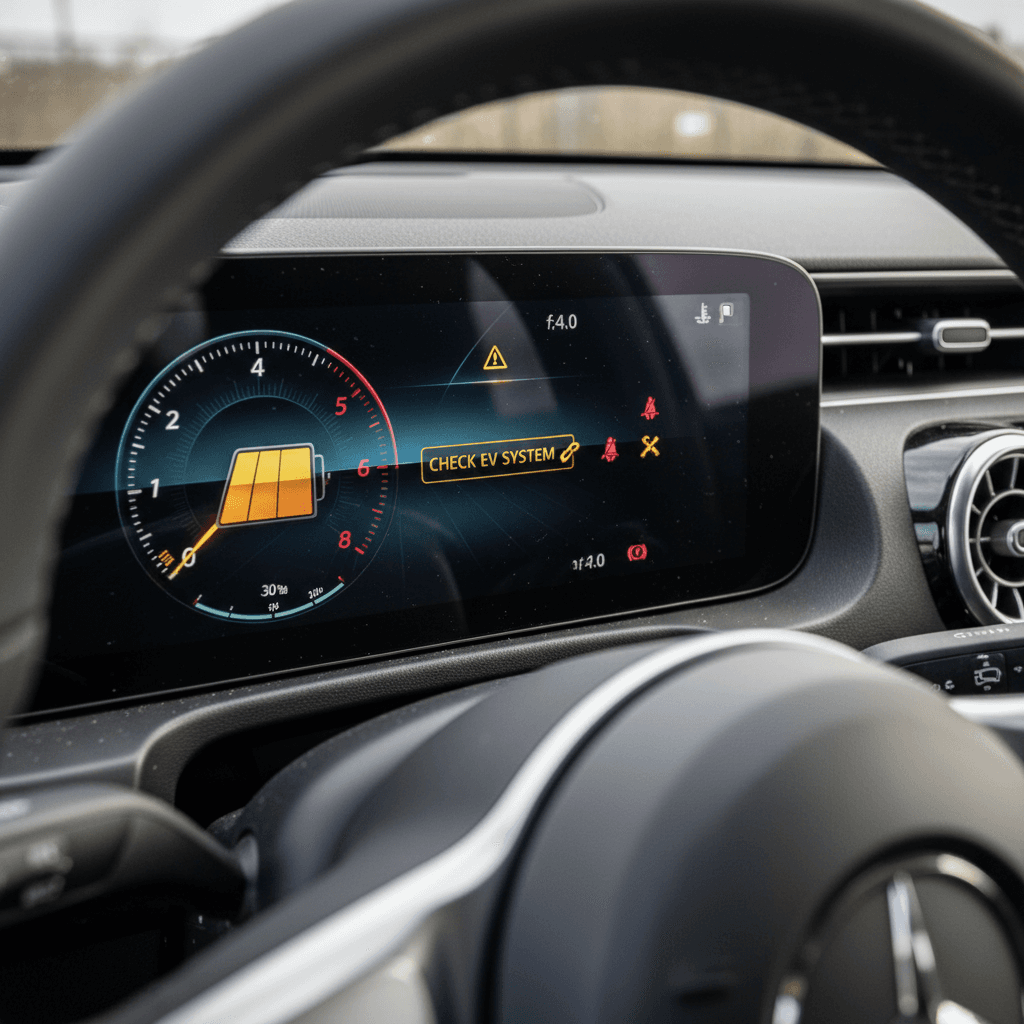
The biggest reliability story around the EQB so far has nothing to do with squeaks or infotainment glitches. It’s the high‑voltage battery. Earlier EQB model years (2022–2024) have been subject to NHTSA safety recalls related to potential internal battery failures and fire risk, with software updates and other corrective actions ordered for affected vehicles.
- Certain 2022–2024 EQB 250, 300 4MATIC and 350 4MATIC vehicles have been recalled because their high‑voltage batteries could fail internally and, in rare cases, lead to a fire or sudden loss of drive power.
- Owners were instructed to limit charge levels (for example, to 80% state of charge) until a battery‑management‑system (BMS) software update or other repair was completed.
- There have also been hardware‑related campaigns on specific batches of batteries or bus bars in the pack, as Mercedes has refined suppliers and manufacturing over time.
For shoppers, the important part isn’t memorizing recall codes. It’s understanding that the EQB’s reliability story is tightly tied to its battery. A vehicle that has had all recall work completed and shows no repeat high‑voltage faults is in a very different risk category from one still waiting on repairs or repeatedly throwing battery warnings.
Don’t ignore open recalls
Common Mercedes EQB problems seen so far
Because the 2025 EQB is part of the same basic generation that launched for 2022, you can learn a lot by looking at issues already surfacing on 2022–2024 models. Patterns from Recharged’s own coverage and owner reports tend to cluster in a few buckets.
Typical EQB problem areas reported on 2022–2024 models
Not every EQB will experience these, but they’re the issues most often mentioned by owners and service departments.
| Area | What owners report | How serious is it? | What to look for when shopping |
|---|---|---|---|
| High‑voltage battery | Warnings about reduced power, charging limits, or BMS faults; in rare cases, battery replacement under warranty. | High | Scan for battery codes, confirm all battery recalls and software updates are complete, and review any history of battery‑related repairs. |
| Charging behavior | AC charging sessions that stop randomly, trouble initiating DC fast‑charging, or slower‑than‑expected charging after software updates. | Medium | Test both Level 2 and (if possible) DC fast‑charging during your test drive. Ask the seller where they normally charge and whether they’ve had repeat issues. |
| Driver‑assist systems | Lane‑keeping, adaptive cruise, or other ADAS features that throw intermittent errors or temporarily shut off. | Medium | On a long test drive, intentionally use driver‑assist features, then scan for any stored fault codes even if no current warning is displayed. |
| Infotainment & software | Glitchy screens, frozen camera views, incorrect Mercedes Me app status, or random error messages. | Low–Medium | Cycle through key functions: camera views, Bluetooth, navigation, profile settings, and app connectivity. Make sure software updates are current. |
| Noises & trim | Rattles, suspension clunks, or wind noise that are more annoying than catastrophic. | Low | Drive on rougher roads and at highway speeds with the radio off. Confirm previous attempts to fix persistent noises. |
Use this list as a checklist during a pre‑purchase inspection or test drive.
Not every EQB is a problem child
How the 2025 EQB compares to other luxury EV SUVs
Reliability is relative. The 2025 Mercedes EQB competes with small to midsize luxury EV SUVs like the Tesla Model Y, Audi Q4 e‑tron, Volvo XC40 Recharge/C40, Genesis GV60 and others. None of these are 1990s‑Camry simple; all are software‑heavy, first‑ or second‑generation EVs.
Where the EQB may lag
- Brand reliability: Mercedes has generally trailed brands like Lexus and Toyota in recent reliability rankings, and its EQ‑branded EVs haven’t changed that narrative yet.
- Battery headlines: The EQB has had more high‑voltage battery‑related recall attention than some rivals, which can be unsettling for shoppers.
- Dealer experience: Owner anecdotes frequently mention inconsistent EV expertise at traditional Mercedes stores, which can make diagnosing complex issues slower.
Where the EQB holds its own
- Long‑term battery warranty: Coverage is competitive with class leaders, which helps offset some risk if a pack defect shows up.
- Shared platform: The EQB is based on the GLB, which gives it a more familiar mechanical base than some clean‑sheet EVs.
- Real‑world usability: Owners often praise day‑to‑day comfort, packaging, and Mercedes‑grade cabin quality, when the car is behaving itself.
When the EQB makes sense
Warranty coverage for the 2025 Mercedes EQB
Mercedes backs the EQB with a combination of new‑vehicle and battery warranties that are broadly in line with the rest of the EV market. Exact terms can vary slightly by model year and market, but U.S. vehicles typically include:
- A new‑vehicle limited warranty covering most components for 4 years or 50,000 miles.
- Separate high‑voltage battery coverage generally stretching to around 8 years or 100,000–125,000 miles against defects and excessive capacity loss, subject to specific conditions in the warranty booklet.
- Corrosion, roadside assistance, and emissions‑related coverages layered on top, depending on state.
Why the battery warranty matters so much
Shopping used? How to judge a 2025 (or earlier) EQB
If you’re cross‑shopping a used 2025 Mercedes EQB against other EVs, the playbook is a little different from buying a used gas GLB. You’re not just asking “Does it run and drive?”, you’re asking, “How healthy is the battery and electronics ecosystem that keeps this thing moving?”
Used EQB reliability checklist
1. Pull a full recall and campaign history
Run the VIN through official recall tools and ask the seller for documentation showing which EQB battery and software campaigns have been completed. Open or repeatedly re‑opened high‑voltage issues are a major caution flag.
2. Request complete service records
Look for patterns. A single visit for a minor software update isn’t alarming. Multiple visits for the same charging or battery fault, even if “fixed”, warrant a deeper look or walking away.
3. Inspect battery health, not just range
Range estimates on the dash can be misleading. A proper <strong>battery health report</strong> that looks at state of health (SOH), cell balance, and fast‑charging behavior gives you a much clearer picture of long‑term reliability.
4. Test charging in the real world
If possible, plug the EQB into both a Level 2 station and a DC fast charger before you buy. Watch for fault codes, locked connectors, or sessions that randomly stop.
5. Stress‑test driver‑assist and infotainment
On your test drive, spend time with adaptive cruise, lane‑keeping, parking sensors, cameras, and the Mercedes Me app. Glitches here are rarely dangerous, but they’re a leading source of frustration and repeat service visits.
6. Confirm warranty and CPO coverage
For a used 2025 EQB, see how much factory warranty remains and whether the car is sold as Certified Pre‑Owned. Extra coverage can be worth real money on an early‑generation EV.
Walk‑away scenarios
How Recharged evaluates Mercedes EQB reliability
At Recharged, every used EV we list, including the Mercedes EQB, comes with a Recharged Score Report, which goes deeper than a traditional pre‑purchase inspection. That matters even more on a model where the public “reliability rating” is still a moving target.
What goes into a Recharged Score on an EQB
Beyond a simple reliability number
Verified battery health
Trouble‑code & recall review
Fair market pricing
Ready to find your next EV?
Browse VehiclesYou can shop entirely online, trade in your current car, and arrange nationwide delivery, or visit our Experience Center in Richmond, VA if you prefer to see and drive an EQB in person. Either way, the goal is the same: make the reliability picture as transparent as possible before you buy.
2025 Mercedes EQB reliability FAQ
Frequently asked questions about 2025 EQB reliability
Bottom line: Is the 2025 Mercedes EQB a risky bet?
The honest answer is that the 2025 Mercedes EQB is neither a guaranteed headache nor a guaranteed home run. It’s an early‑generation luxury EV from a brand that’s still climbing the reliability learning curve, and it carries the shadow of earlier battery‑related recalls. The absence of a neat, one‑number 2025 EQB reliability rating doesn’t mean the data isn’t there, it just means you have to look a little harder.
If you’re willing to do that work, verifying recalls, scrutinizing service histories, and insisting on a real battery health report, the EQB can be a comfortable, practical, and good‑looking electric family hauler. If you’d rather not play detective, working with an EV‑focused retailer like Recharged, where every vehicle comes with a Recharged Score and expert support from trade‑in to delivery, is one of the safest ways to get EQB practicality without rolling the dice on reliability.