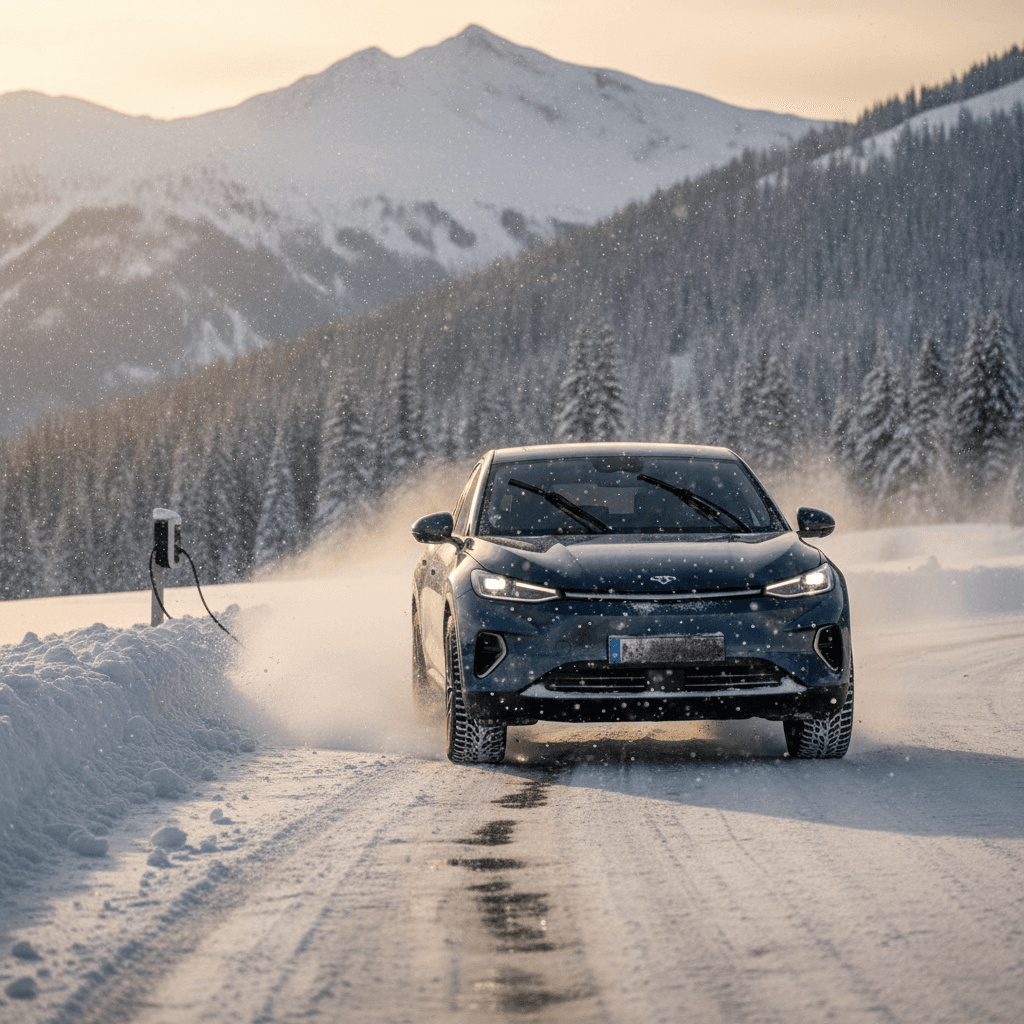
If you live where snowplows are a season, not a machine, you’ve probably wondered whether an electric car can really handle winter. The good news: the best electric cars for snow and ice are not only competent, they’re often calmer and more controllable than gas SUVs, if you choose the right one and set it up correctly.
Quick takeaway
Why EVs can actually be great in snow
Electric cars start with a few built‑in winter advantages. The heavy battery is mounted low in the chassis, so the center of gravity is near your knees. That makes an EV naturally stable on slick roads, less tippy, less prone to weight transfer shenanigans when you hit the brakes or a patch of ice. And because electric motors can adjust torque hundreds of times per second, a good traction control system can meter power to each wheel much more precisely than a traditional engine and transmission.
- Instant, finely controlled torque makes it easier to pull away smoothly on packed snow or ice.
- A low center of gravity helps the car feel planted instead of top‑heavy in quick maneuvers.
- Cabin heat is available even at idle, no waiting for an engine to warm up before defrosting.
- Remote pre‑conditioning lets you warm the battery and cabin while the car is still plugged in.
The catch
How cold impacts EV range and charging
Where winter does hurt is range and charging speed. Batteries are like people: they’re happiest at room temperature. In freezing conditions, the chemistry inside the cells slows down, and the car spends extra energy heating both the pack and the cabin. Large real‑world studies have found that modern EVs typically retain around 80% of their rated range in freezing weather, roughly a 20% hit on average, with some models doing better and some worse.
What winter really does to EV range
Fast charging also slows down in the cold. Even if the charger says 250 kW, your car may initially sip at a fraction of that until the battery warms up. The best winter EVs fight back with smart pre‑conditioning: they automatically heat the pack before you arrive at a DC fast charger or before you leave the house on a frigid morning, cutting both range loss and charging time.
Range rule of thumb
Winter EV must-haves: what really matters
Key features for snow and ice
If you see these on the spec sheet, you’re on the right track.
All-wheel drive (AWD)
Dual‑motor or advanced AWD systems do more than just spin all four wheels. The best ones can actively shuffle torque front to rear and side to side, helping the car pull itself around a slick corner instead of plowing straight on.
Ground clearance & geometry
Look for at least 7–8 inches of clearance if you regularly see deep snow, plus short overhangs so you don’t push a snowplow of slush ahead of the bumper.
Heat pump & winter package
A heat pump dramatically cuts energy use for cabin heat. Add a cold‑weather package, heated seats, wheel and mirrors, and you can stay warm while using less range.
Tires & traction aids
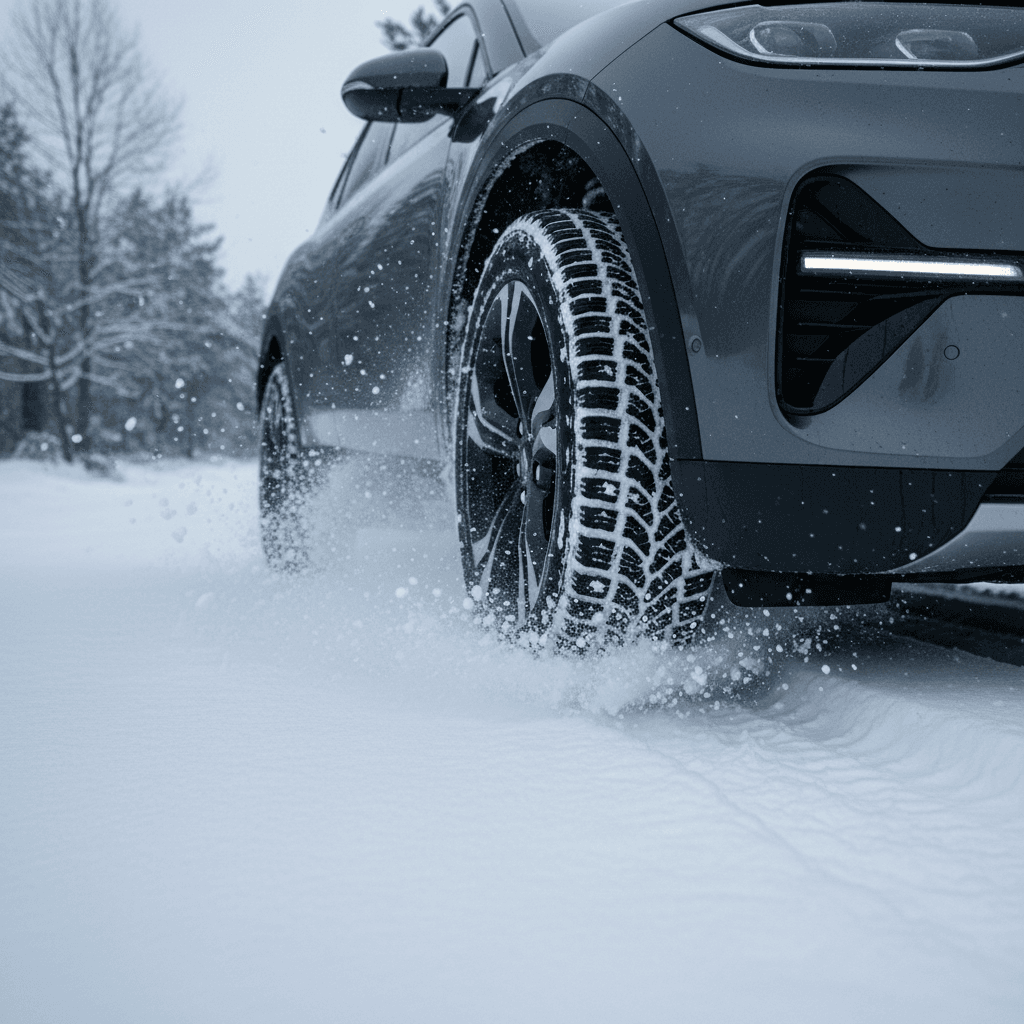
Your AWD system is only as good as the rubber touching the road. Dedicated winter tires can shorten stopping distances on ice by car‑lengths compared with all‑seasons. Snow modes, hill‑descent control and off‑road settings are big bonuses if you live on an unpaved or hilly road.
Software & driver assistance
Good stability control and ABS tuning can make the difference between a graceful slide and a YouTube moment. Many newer EVs also offer snow‑tuned drive modes that soften throttle response and favor higher gears to keep things calm on slick surfaces.
Best electric cars for snow and ice in 2025
There’s no single “perfect” winter EV, but a few models keep bubbling to the top in independent cold‑weather tests thanks to their traction, efficiency and thoughtful winter engineering. Here are standouts you’ll actually want to drive into a February nor’easter.
Standout electric cars for snow and ice (2025)
These models combine strong winter traction with smart thermal management and useful ground clearance.
| Model | Drive | Why it’s great in winter | Best for |
|---|---|---|---|
| Volvo EX30 Twin Motor AWD | AWD | Scandinavian tuning, fast battery warm‑up, strong traction control | Snow‑belt commuters who value safety and comfort |
| Tesla Model Y Long Range AWD | AWD | Excellent winter efficiency, quick pre‑conditioning, high ground clearance for an EV | Families who road‑trip in all seasons |
| Hyundai Ioniq 5 HTRAC AWD | AWD | Efficient heat pump, 800‑V fast charging, stable ride in deep snow | Drivers mixing highway trips with ski‑town weekends |
| Ford Mustang Mach‑E AWD | AWD | Composed in real snowstorms, good stability tuning, available snow mode | Suburban drivers who want SUV practicality with sharp handling |
| Subaru Solterra / Toyota bZ4X AWD | AWD | Deep Snow/Mud and Snow/Dirt modes, hill descent control, outdoorsy ride height | Rural drivers and mountain‑town residents |
| Kia EV6 AWD | AWD | Strong cold‑weather charging, low center of gravity, efficient heating system | Sporty drivers who still need winter confidence |
| Hyundai Kona Electric (latest gen) | FWD / AWD* | Small, efficient, excellent winter energy use; AWD available in some markets | City drivers who prioritize efficiency over size |
| Tesla Model 3 Long Range AWD | AWD | Proven winter performer with quick pre‑conditioning and strong regen | Enthusiasts who want a low, sure‑footed sedan rather than an SUV |
Always check the exact trim: not every version of a model gets AWD or a heat pump.
About winter rankings
Best used EVs for cold climates
If you’re shopping used, as many smart buyers do, winter performance is about finding the right trim and the right history, not just the right badge. You want a car that started life with a competent winter setup and has a battery that’s aged gracefully.
Used EVs that shine in snow and ice
These models have strong cold‑weather reputations and are common on the used market.
Tesla Model Y Long Range AWD
One of the few crossovers that can combine excellent winter range with a roomy cabin. Look for Long Range AWD trims with the heat pump and cold‑weather package (heated seats and steering wheel).
Hyundai Kona Electric
Deceptively capable in winter thanks to its efficiency and compact size. Later‑model years with a heat pump and updated thermal management hold onto a large share of their rated range in cold weather.
Ford Mustang Mach‑E AWD
Well‑balanced chassis, good stability control tuning and available snow modes. On the used market it can be strong value in snow‑belt states, especially with the dual‑motor setup.
On a used EV, battery health matters more in winter. A pack that’s already lost a big chunk of capacity will feel doubly compromised when the temperature drops and it gives up another 20–30%. This is exactly why Recharged pairs every vehicle with a Recharged Score battery health report, so you can see how much real‑world capacity is left before you commit.
Why a winter test drive matters
Shopping checklist for a winter-ready EV
10 things to check before you buy
1. Confirm AWD or appropriate drive layout
If you live where snow is serious, prioritize <strong>dual‑motor AWD</strong>. In milder climates, a front‑drive EV on real winter tires can be perfectly adequate, but rear‑drive on all‑seasons is a tougher sell.
2. Look for a factory heat pump
Heat pumps use much less energy than simple resistive heaters. That means more remaining range for the same comfort level. Many newer EVs include one, but on some models it’s part of a specific trim or package.
3. Check for a cold-weather package
Heated seats, steering wheel, mirrors and sometimes a heated wiper area let you run the cabin a little cooler and still feel warm, saving range on long winter drives.
4. Review ground clearance
If your commute includes unplowed roads or deep ruts, look for <strong>7–8 inches or more</strong> of clearance and short front and rear overhangs so you’re not pushing a snowplow of slush.
5. Inspect tires, and budget for winters
Most used EVs are sold on all‑season tires. In snow country, assume you’ll buy a dedicated winter set. Factor that into your budget just like you would floor mats or roof bars.
6. Ask about battery health
Range loss from age plus range loss from cold can add up. A verified battery report, like the Recharged Score, shows how the pack has actually aged in the real world.
7. Confirm pre-conditioning features
You want the ability to <strong>pre‑heat the cabin and battery while plugged in</strong>. That keeps you comfortable and preserves range for the actual drive, not for thawing ice from the windshield.
8. Check charging speed in the cold
Read real‑world owner reports for winter charging times. Some EVs maintain strong DC fast‑charging performance in low temps; others get painfully conservative unless you pre‑condition.
9. Look at driver‑assist tuning
Adaptive cruise, lane‑keeping and stability control all behave differently in snow. If possible, test these systems in bad weather and be sure you like how they intervene, or back off.
10. Consider your local charging network
If you’re planning winter road trips, map out <strong>high‑speed chargers</strong> along your usual routes. Shorter winter range is a non‑issue if there’s a reliable DC fast charger every 60–80 miles.
Tips to make any EV better in snow
Even if you’re not driving a Nordic‑tuned Volvo or a rally‑bred Subaru EV, there’s a lot you can do to turn a regular electric car into a solid winter companion. Most of it is the same advice that’s been keeping Canadians alive for generations, just adapted to a battery pack and some software menus.
- Install quality winter tires on their own wheels so seasonal swaps are easy.
- Keep your battery between roughly 20% and 80% in deep cold to protect longevity and preserve performance.
- Use pre‑conditioning on shore power so you leave with a warm cabin and pack.
- Dial back highway speeds 5–10 mph in storms; the range savings are enormous.
- Turn up seat and steering‑wheel heaters and turn the cabin temperature down a notch.
- Carry a real snow brush, small shovel and charging‑cable gloves so you’re not wrestling a frozen connector bare‑handed.
What not to do in an EV blizzard
How Recharged helps winter drivers
Choosing the right hardware is step one. Choosing the right example of that hardware is step two, and that’s where Recharged comes in. Every used EV we list includes a Recharged Score battery health report, built from diagnostics and real‑world data, so you’re not guessing how that pack will behave on a 10°F morning.
Transparent battery health
Winter exposes weak batteries. Our diagnostics look beyond the dash estimate to quantify remaining capacity and pack health, so you know whether the car will still feel comfortable after a 20–30% winter hit.
If you’re comparing two similar AWD crossovers, that extra transparency can be the difference between buying the one that still feels new and the one that feels tired in January.
End‑to‑end, winter‑aware shopping
Recharged offers financing, trade‑in options, instant offers and nationwide delivery, so you can buy a winter‑ready EV from your couch. Our EV specialists can help you weigh ground clearance, heat‑pump availability and local charging infrastructure, not just color and wheel size.
Prefer to kick the tires in person? Visit our Experience Center in Richmond, VA, and talk through your snow‑belt use case with an EV‑savvy human before you decide.
Winter EV FAQ
Frequently asked questions about EVs in snow and ice
Bottom line on EVs in snow and ice
Electric cars aren’t allergic to winter. In many ways they’re better behaved in snow and ice than their gas counterparts, with calmer power delivery and a reassuringly low center of gravity. The trick is matching the right EV to your climate and roads, then giving it the tools, tires, heat pump, pre‑conditioning, to do its best work.
If you’re shopping used, focus less on hype and more on the cold‑weather fundamentals we’ve covered: AWD, clearance, winter hardware and a healthy battery. That’s exactly the lens Recharged uses when we evaluate and list vehicles, pairing every car with a transparent Recharged Score battery report and specialist guidance. Get those basics right, and an EV will carry you through the worst weeks of winter with quiet confidence, and warm fingers.