If you’re considering a 2025 Hyundai IONIQ 6, you’re probably hearing two storylines: glowing owner satisfaction and worrying posts about charging failures and recalls. The truth falls in between, and that’s exactly what this 2025 Hyundai IONIQ 6 reliability rating guide is designed to unpack for you.
Why reliability matters more with EVs
2025 IONIQ 6 reliability rating at a glance
Key 2025 Hyundai IONIQ 6 reliability signals
On paper, the 2025 Hyundai IONIQ 6 looks like a strong bet for reliability. It rides on Hyundai’s E‑GMP platform, which is shared with the IONIQ 5 and Kia EV6, and it pairs above‑average early quality scores with an aggressive 10‑year / 100,000‑mile EV battery warranty. At the same time, early‑build cars have seen some high‑profile issues, particularly around the Integrated Charging Control Unit (ICCU) and a charging‑port door recall, that savvy shoppers should understand.
Bottom line in one sentence
How J.D. Power and others rate the 2025 IONIQ 6
Let’s start with the formal numbers that most shoppers mean when they search for the 2025 Hyundai IONIQ 6 reliability rating.
- J.D. Power’s 2025 data shows the IONIQ 6 earning roughly **76 / 100 for Quality & Reliability**, an above‑average showing for a mass‑market EV.
- In the 2025 J.D. Power U.S. Electric Vehicle Experience (EVX) Ownership Study, the IONIQ 6 is **highest‑ranking mass‑market battery‑electric vehicle**, scoring strongly for driving experience and overall satisfaction.
- Consumer‑survey sources like Consumer Reports have not yet built a deep multi‑year reliability history for the IONIQ 6, so long‑term projections remain cautious rather than conclusive.
- Hyundai’s own marketing leans hard on owner‑satisfaction scores and the long warranty, but that doesn’t replace real‑world defect data.
What “76 / 100” really means
What the reliability ratings don’t tell you
Scores from J.D. Power and similar firms are based largely on the **first 90 days to first few years of ownership**. That’s helpful, but it doesn’t fully answer the questions you probably care about most: Will a 2025 IONIQ 6 strand you, and what does it cost to fix when something goes wrong?
What the scores capture
- Initial build quality issues (rattles, misaligned panels, software bugs).
- Early component failures reported in the first year or two.
- Owner satisfaction with ride, noise, charging speed, and value.
What they often miss
- Less‑common but serious failures like ICCU failures that disable the car.
- How long a repair takes if parts are on back‑order.
- Differences in dealer EV expertise from one store to another.
This is why digging into specific IONIQ 6 issues and Hyundai’s warranty support matters, especially for used‑EV buyers.
Don’t ignore service quality
Common 2023–2025 IONIQ 6 issues to watch for
Because the 2025 IONIQ 6 is closely related to 2023–2024 models, you should think of reliability in terms of the **whole launch generation**, not just a single model year. Here are the themes showing up most often in owner reports and technical bulletins so far.
Most frequently discussed IONIQ 6 reliability concerns
Not every car is affected, but you should know what to ask about
ICCU failures (charging control)
The Integrated Charging Control Unit (ICCU) manages AC and DC charging. A small but noticeable minority of owners report:
- Sudden loss of DC fast‑charging capability.
- Warning lights and reduced or no charging at Level 2.
- Cars needing flatbed towing to the dealer.
Hyundai has updated parts and software over time, but you’ll want to confirm campaign work on any 2023–2025 car.
Charging‑port door issues
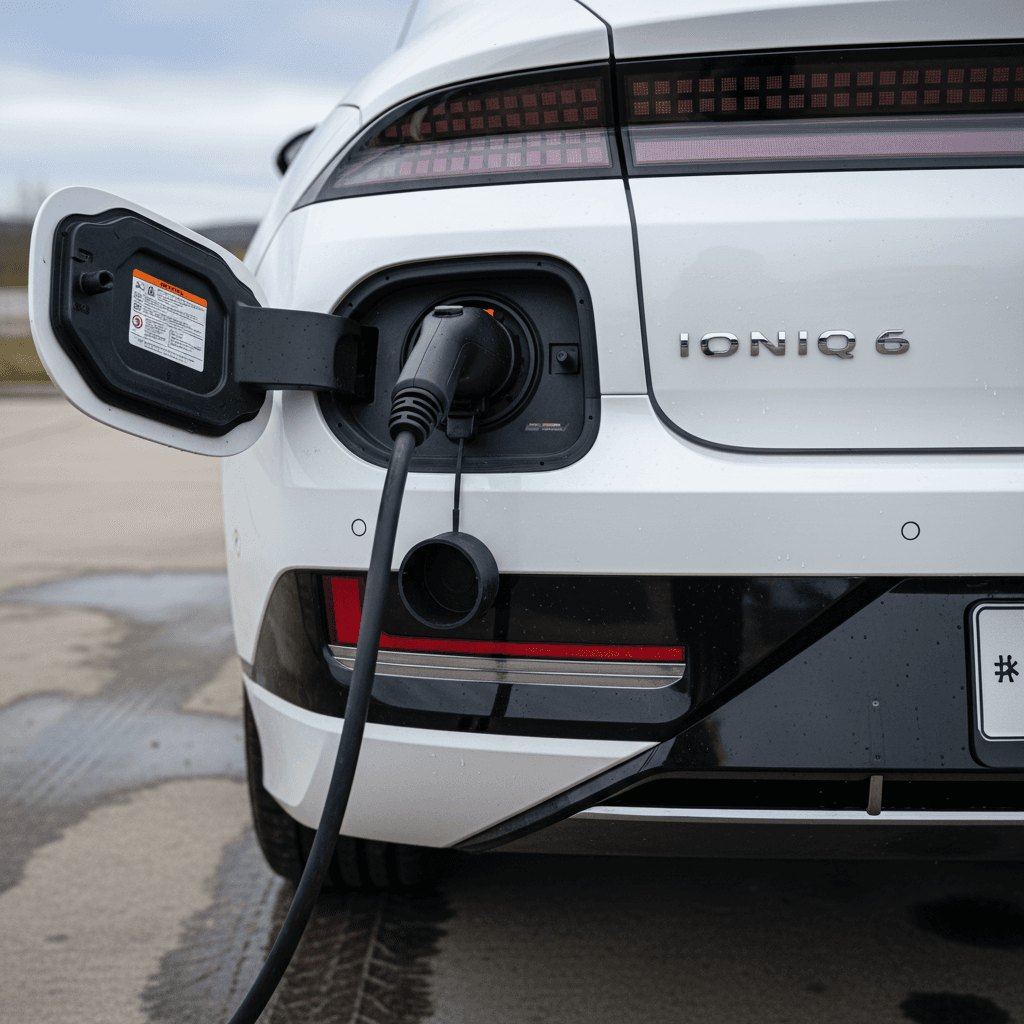
Some IONIQ 6s built for the 2023–2025 model years were recalled because the charge‑port door could detach or fail to latch properly.
On its own this is more annoyance than catastrophe, but it’s a clear example of a design detail still being ironed out on an otherwise modern EV platform.
Software & infotainment quirks
Owners have reported occasional glitches such as:
- Frozen infotainment screens or laggy navigation.
- Random warning chimes without clear cause.
- Occasional need for hard reboots.
Most of these are resolved with software updates, but not all dealers proactively apply them.
Cold‑weather range & charging
Like most EVs, the IONIQ 6 sees significant winter range loss. Some owners also report slower‑than‑expected fast‑charging in very cold temperatures.
These are usually behavior and climate issues rather than defects, but they can feel like reliability problems if you’re not expecting them.
Build quality odds and ends
A minority of owners mention:
- Trim rattles over rough pavement.
- Wind noise around mirrors or doors.
- Minor paint or panel‑gap inconsistencies.
These are typical of many new models in the first few years and are often fixed under basic warranty.
Dealer EV learning curve
Perhaps the biggest wildcard isn’t the car, but the support network. Some Hyundai stores now have dedicated EV techs and quick turnaround; others are still learning.
This can mean the difference between a one‑week and a multi‑month repair on the same issue.
Red‑flag scenario
Recalls affecting the 2023–2025 Hyundai IONIQ 6
Hyundai has issued several recalls that touch the IONIQ 6 between the 2023 and 2025 model years. Not all of them are catastrophic, but you should confirm that any car you’re considering has had the work completed.
Selected recalls involving the Hyundai IONIQ 6
Always run the VIN through the NHTSA database or a Hyundai dealer for the latest campaign list.
| Issue | Model years affected (approx.) | Risk | Typical fix |
|---|---|---|---|
| Charging‑port door may detach or not close properly | 2023–2025 | Port door can open while driving, potentially detach; mostly a nuisance but not ideal in weather or car washes. | Inspection of charge‑port door and hinge; replacement of components if necessary. |
| ICCU / charging‑system campaigns | Primarily early‑build 2023–2024, some 2025 depending on production | Loss of DC fast charging or reduced AC charging; in rare cases vehicle may become undriveable until repaired. | Software updates, replacement of ICCU or related components where necessary. |
| Assorted software / safety‑system updates | 2023–2025 | Inconsistent behavior of driver‑assist or warning systems; not usually a mechanical failure. | ECU reprogramming to apply updated calibration. |
Recall campaigns can change over time. Use this table as a starting point, not a complete list.
How to check a 2025 IONIQ 6 for open recalls
Warranty coverage on the 2025 Hyundai IONIQ 6
Hyundai’s warranty is a major reason many shoppers are comfortable with a relatively new EV like the 2025 IONIQ 6. Understanding what is, and isn’t, covered will help you judge how much risk you’re actually taking on.
2025 Hyundai IONIQ 6 key warranty coverages
Coverage applies to original owners; details can change, so confirm specifics before purchase.
Basic bumper‑to‑bumper warranty
5 years / 60,000 miles (typical recent Hyundai terms).
Covers most non‑wear items on the car, electronics, interior components, many sensors, excluding routine maintenance items and damage.
EV battery warranty
10 years / 100,000 miles Hybrid/Electric Battery Warranty for defects in materials or workmanship.
This is your safety net against major battery failures, though normal capacity loss over time is treated differently than outright defects.
Powertrain limited warranty
10 years / 100,000 miles powertrain coverage on many components originally installed by Hyundai.
On an EV, this includes the electric motor, reduction gear, and related drive components rather than a traditional engine.
Maintenance & roadside assistance
Hyundai typically offers 3 years / 36,000 miles of complimentary scheduled maintenance on new vehicles, plus roadside assistance coverage.
That can soften the impact of any early‑life defects while you’re still getting used to EV ownership.
Warranty fine print to read carefully
How the IONIQ 6’s reliability compares to other EVs
In a market that now includes Tesla, Ford, GM, Hyundai‑Kia, and several newer brands, the IONIQ 6 lands in a **healthy middle‑to‑upper tier** for early reliability. It’s not as battle‑tested as long‑running Tesla models, but it also hasn’t seen the volume of headline‑grabbing failures that plagued some early EVs.
2025 IONIQ 6 vs. other popular EVs (reliability snapshot)
This comparison blends published scores with observed owner‑report trends as of early 2025.
| Model | Early‑life reliability picture | Notable strengths | Common concerns |
|---|---|---|---|
| Hyundai IONIQ 6 | Above‑average J.D. Power scores; limited long‑term data but mostly positive owner feedback so far. | Excellent fast‑charging, long warranty, efficient highway range. | ICCU / charging‑system failures for a minority of owners, charge‑port door recall, inconsistent dealer EV expertise. |
| Hyundai IONIQ 5 / Kia EV6 | Similar platform with a longer track record; mixed but improving reliability picture. | Shared parts and knowledge base with IONIQ 6; strong charging and performance. | A higher volume of ICCU and charging‑related complaints in earlier model years. |
| Tesla Model 3 | High EV experience ratings; more mature powertrain; mixed build‑quality scores. | Massive charging network, strong software support, big owner community. | Panel alignment, paint quality, squeaks/rattles; out‑of‑warranty repairs can be costly. |
| Ford Mustang Mach‑E | Decent early‑life reliability with several recalls and software campaigns. | Comfortable ride, SUV practicality, improving software over‑the‑air. | Battery‑contact and software issues in early years; some charging hiccups persist. |
Use this as a directional guide, individual vehicle condition and service history matter more than brand stereotypes.
Where the IONIQ 6 shines
Used 2025 IONIQ 6 reliability checklist
Shopping used is where reliability questions really matter. A 2025 IONIQ 6 coming off a short lease can be a tremendous value, or a headache, depending on how it was driven and serviced. Here’s how to stack the odds in your favor.
Pre‑purchase reliability checklist for a 2025 Hyundai IONIQ 6
1. Pull a full service and recall history
Ask for dealer service records and a VIN‑based recall report. You want to see completed software updates, ICCU‑related campaigns (if applicable), and prompt responses to any warning‑light complaints.
2. Inspect the charging port and test charging
Open and close the charge‑port door several times; check for smooth operation and good alignment. Then test Level 2 charging and, if possible, a DC fast‑charge session to confirm stable charging speeds and no errors.
3. Scan for warning lights or stored faults
During a pre‑purchase inspection, have a technician scan the car for stored diagnostic trouble codes. Even if the dash is clear, hidden charging or battery‑management faults can be early warning signs.
4. Evaluate battery health and real‑world range
Compare the car’s displayed range at a known state of charge with original EPA estimates. Significant unexplained loss may point to heavy fast‑charging use or other issues. At Recharged, this is captured in our <strong>Recharged Score</strong> battery health report.
5. Check for water intrusion and underbody damage
Look around seals, the charge port, and the trunk for moisture or staining. Inspect the underbody for scrapes or impacts that could affect high‑voltage components or aero panels.
6. Test all driver‑assist and infotainment features
Ensure adaptive cruise control, lane‑keeping assist, parking sensors, cameras, and the infotainment system all behave consistently. Many owners live with flaky features instead of fixing them, and you don’t want to inherit that frustration.
Leverage EV‑specific diagnostics
When a 2025 IONIQ 6 is a smart buy
So where does all of this leave you as a shopper? The 2025 Hyundai IONIQ 6 is best viewed as a **high‑potential EV with a few specific reliability watchpoints**, rather than a problem child or a sure thing.
Good reliability bet if…
- You find a car with clean history, no recurring charging complaints, and documented software updates.
- You have a Hyundai dealer nearby with clear EV experience and parts support.
- You plan to keep the car mostly within the warranty window and value low running costs over many years.
Think twice or shop alternatives if…
- Your nearest Hyundai store has a poor reputation for EV service or long wait times.
- You’re considering a car that’s already had multiple ICCU or charging‑system repairs.
- You can’t afford downtime if a rare but major electrical issue sidelines the car for weeks.
How Recharged can help you de‑risk the decision
Ready to find your next EV?
Browse VehiclesFAQ: 2025 Hyundai IONIQ 6 reliability rating
Common questions about 2025 IONIQ 6 reliability
The 2025 Hyundai IONIQ 6 delivers a compelling mix of efficiency, comfort, and cutting‑edge EV tech, backed by one of the strongest warranties in the segment. Its reliability rating is encouraging, but not yet written in stone. If you pair a clean vehicle history with careful inspection, up‑to‑date recalls, and a service network you trust, or lean on a platform like Recharged that does this legwork for you, the IONIQ 6 can be a smart, confidence‑inspiring EV choice for the next decade.