If you own, or are thinking about buying, a 2025 Hyundai Ioniq 6, you’ve probably heard about recalls tied to charging issues and the charge port door. This guide pulls together the latest 2025 Hyundai Ioniq 6 recalls list, explains each campaign in plain English, and shows you how to check your VIN so you don’t miss a free safety fix.
Snapshot: 2025 Ioniq 6 safety record
Overview: How many recalls affect the 2025 Ioniq 6?
Public recall databases show that the 2025 Hyundai Ioniq 6 is covered by at least two major U.S. safety recalls so far, both of which also affect earlier model years. On top of that, there are software campaigns and technical service bulletins that dealers may perform alongside recall work. For you, the key is knowing which campaigns apply to your specific VIN and making sure they’ve all been performed.
2025 Hyundai Ioniq 6 recalls at a glance
2025 Hyundai Ioniq 6 recalls list (quick summary)
Current 2025 Ioniq 6 recalls (U.S.)
Use this table as a starting point, then verify details with your VIN on NHTSA.gov or Hyundai’s recall lookup page.
| Recall focus | Typical NHTSA / Hyundai ref.* | Model years affected | Main symptom or risk | Basic remedy |
|---|---|---|---|---|
| ICCU / 12V charging fault (loss of drive power) | Often referenced as Hyundai campaign 282 (ICCU) | 2023–2025 Ioniq 6 | Possible warning lights, reduced power, or loss of motive power if ICCU fails | Dealer software update plus inspection and repair or replacement of ICCU and related components |
| Charging port door panel detaching | Commonly grouped under a 2023–2025 Ioniq 6 charge‑port door recall | 2023–2025 Ioniq 6 | Charge port door panel may loosen or detach, creating a road‑debris hazard | Inspect and replace or repair charge port door hardware |
| Digital instrument cluster display blanking** | Digital cluster software recall affecting multiple Hyundai EVs, including Ioniq 6 in some builds | Primarily 2025 builds in certain production ranges | Cluster may temporarily go blank, hiding speed and warning lights | Instrument cluster software update; in some cases, panel replacement |
Recall list is current as of April 10, 2026. Always confirm against official databases before you act.
Important disclaimer
ICCU / loss‑of‑power recall: what’s going on
The highest‑profile Hyundai EV recall in recent years centers on the Integrated Charging Control Unit (ICCU). This component manages DC fast charging and, critically, charges your 12‑volt battery from the high‑voltage pack. On affected Ioniq 6 vehicles built on the E‑GMP platform, the ICCU can become damaged and stop keeping the 12‑volt system healthy. When that happens, you may see multiple warning lights, the car may enter reduced‑power mode, or, in worst cases, lose drive power altogether.
- Covers 2023–2025 Ioniq 6 (and sibling models like Ioniq 5 and some Genesis EVs).
- Often listed by Hyundai as campaign 282 for Ioniq 6 owners in the U.S.
- Triggered by reports of EVs losing motive power due to 12‑volt charging failures.
- Applies whether or not you’ve already had earlier software campaigns, Hyundai has expanded this recall over time.
What you might notice before an ICCU failure
What dealers do for the ICCU/ICCU fuse recall
When you bring a 2025 Ioniq 6 in for this recall, a Hyundai dealer will typically perform a control‑unit software update and inspect the ICCU, related fuses, and wiring. If they see signs of overheating or damage, they’ll replace the ICCU and any affected components at no cost to you. Many owners also get a fresh 12‑volt battery if testing shows it’s been stressed by the prior fault.
Owner tip: get it done early
Charging port door panel recall: panels detaching
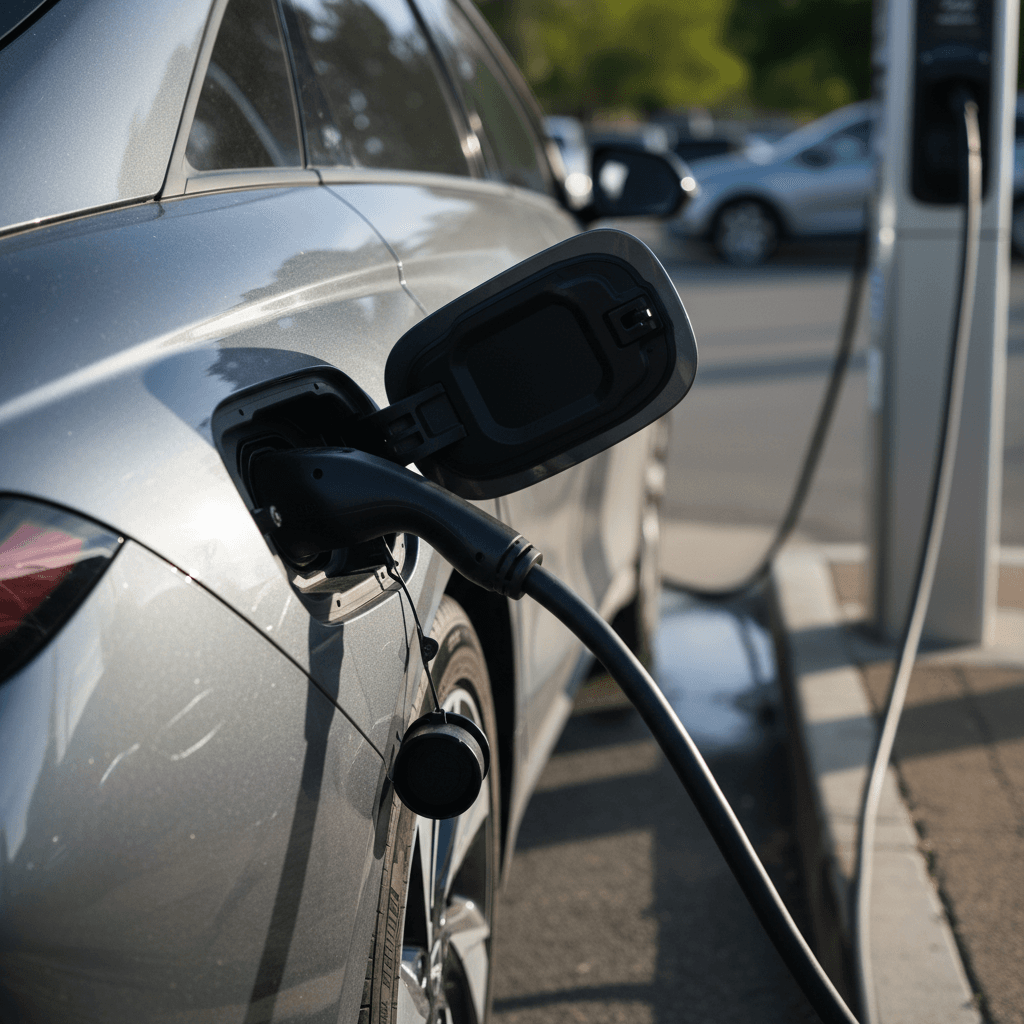
A second, smaller, but very visible, issue is the charging port door panel recall. On some 2023–2025 Ioniq 6 vehicles, the plastic exterior panel over the charge port can loosen or detach while driving. That can turn the panel into road debris for vehicles behind you and leaves your charge port more exposed to the elements.
- Impacts select 2023–2025 Ioniq 6 builds, not every single car.
- Risk is mostly cosmetic and nuisance, but flying trim is still a safety concern.
- Hyundai recalls affected vehicles for inspection and replacement of the charge‑port door assembly or hardware.
- In some cases, owners first notice the panel sitting crooked, not fully latching, or rattling.
Good news for owners
Digital instrument cluster recall: blank displays
Hyundai and other automakers have also faced software bugs in digital instrument clusters. For some late‑build 2024 and 2025 Hyundai EVs, including certain Ioniq 6 units, the instrument panel can temporarily go blank. That means you might lose visibility into critical information like vehicle speed, warning symbols, and gear selection.
- Primarily a software issue in the digital cluster module.
- May affect select 2025 Ioniq 6 vehicles depending on build date and software version.
- Fix is usually a quick software update; in rare cases, the panel itself might be replaced.
- Like other recalls, the remedy is free and typically performed alongside any other open campaigns.
Why a blank cluster matters
How to check if your 2025 Ioniq 6 has open recalls
Recall coverage can vary by build date, factory, and even individual options. Two 2025 Ioniq 6 sedans that look identical in the showroom may not have the same open campaigns. That’s why the only reliable way to know your status is to run your VIN through official tools.
Step‑by‑step: Confirming recall status on your 2025 Ioniq 6
1. Locate your 17‑digit VIN
You’ll find it on the driver’s‑side dashboard plate (visible through the windshield), on the driver’s‑door jamb label, and on your registration or insurance cards.
2. Check NHTSA’s recall lookup
Go to NHTSA’s online recall lookup tool, enter your VIN, and review the list of <strong>open</strong> recalls. If nothing appears, your car either isn’t in the affected population or all recalls have already been completed.
3. Run the VIN on Hyundai’s campaign site
Hyundai’s owner portal and campaign lookup page sometimes show additional service actions or regional campaigns. Enter the same VIN there and note any open items or service campaigns beyond federal recalls.
4. Call your Hyundai dealer’s service department
Ask a service advisor to pull your VIN history. Confirm that key campaigns, especially the ICCU/ICCU fuse recall and the charge‑port door recall, show as "completed" with dates and repair order numbers.
5. Save recall documentation
After the work is done, keep repair orders and recall completion letters with your service records. These documents matter for resale value and give peace of mind to future buyers.
6. Repeat periodically
New recalls can launch months or years after you buy the car. Make it a habit to check your VIN at least once or twice a year, or when you hear about new Ioniq 6 campaigns in the news.
What recalls mean for real‑world reliability & warranty
Recalls can spook shoppers, especially when they involve loss of drive power. But they also show an automaker responding to problems. For the 2025 Ioniq 6, the ICCU recall and associated software updates are Hyundai’s way of hardening the charging system for the long haul.
How recalls can help you
- Free upgrades: Updated software and redesigned hardware on Hyundai’s dime.
- Extended coverage: Some issues, like horn or electrical components, have had their warranty coverage quietly extended after campaigns.
- Stronger resale story: A complete recall record shows the car has been kept up to date.
Where you still need to be cautious
- Dealer variation: Not every dealer has the same EV experience; ask how often they work on Ioniq 6s.
- Repair downtime: ICCU repairs can sideline a car for days if parts are back‑ordered.
- Out‑of‑pocket items: Recalls are free, but unrelated wear items uncovered during the visit may not be.
Know your EV warranty coverage
Buying a used 2025 Hyundai Ioniq 6? Checklist
If you’re shopping a used 2025 Ioniq 6, recalls turn into a negotiation tool. A well‑documented car with all campaigns completed is worth more, and will usually be less stressful to own, than an identical car with mystery history.
Key recall‑related checks for used 2025 Ioniq 6 shoppers
Use these as talking points with the seller or dealer.
Recall completion proof
Ask for service records showing the ICCU campaign, charge‑port door recall, and any cluster updates are complete. Look for line items referencing ICCU, campaign 282, or similar wording.
Test‑drive behavior
During your drive, watch for warning lights, reduced power, stumbles when accelerating, or any odd behavior at low state of charge. Those can hint at unresolved ICCU or high‑voltage issues.
Charging and 12‑V health
If possible, plug into a DC fast charger and observe charging behavior. Ask the seller if they’ve ever had a dead 12‑volt battery or needed ICCU‑related repairs.
Used 2025 Ioniq 6 due‑diligence steps
1. Run the VIN through NHTSA and Hyundai
Before you even visit the car, use the recall lookup tools to see what’s open or completed. Screenshot the results for your records.
2. Physically inspect the charge port door
Look for misalignment, loose hinges, or scraping marks that suggest a prior failure. Ask whether the charging‑port door recall has been done and, if so, when.
3. Ask specifically about ICCU work
Has the car ever lost drive power or needed an ICCU replacement? If yes, request invoices showing what was replaced and whether it was part of a recall.
4. Review the software update history
Many recall fixes arrive as software or firmware updates. Confirm that the cluster, powertrain, and charging modules have current software according to the dealer.
5. Negotiate around missing recall work
If recalls are open, you can ask the selling dealer to complete them before delivery, or price in the time and hassle you’ll spend getting them done later.
6. Consider an independent EV inspection
A shop that regularly works on Hyundai/Kia EVs can spot subtle clues that something still isn’t right, even after recall work.
How Recharged handles Ioniq 6 recalls and battery health
At Recharged, we see recalls as part of the story, not the whole story. When we evaluate a 2025 Hyundai Ioniq 6 for our marketplace, we look at recall completion, real‑world reliability, and battery health together so you get a cleaner picture of the car you’re buying.
- Every Ioniq 6 we list gets a Recharged Score Report with verified battery health and detailed charging history insights where available.
- We check recall status by VIN and work with sellers to complete open safety campaigns before a vehicle is delivered whenever possible.
- Our EV‑specialist team can walk you through ICCU history, charging behavior, and what various Hyundai campaign codes actually mean in practice.
- If you’re trading in or selling your Ioniq 6 through Recharged, we help surface recall and service information so buyers feel confident and you get fair market value.
Shop used EVs with fewer surprises
Ready to find your next EV?
Browse Vehicles2025 Hyundai Ioniq 6 recalls FAQ
Frequently asked questions about 2025 Ioniq 6 recalls
Bottom line: should 2025 Ioniq 6 recalls scare you off?
The 2025 Hyundai Ioniq 6 sits in a familiar EV story line: an advanced platform with excellent comfort and efficiency, tempered by charging‑system recalls that require real attention. The ICCU and charge‑port door campaigns are issues you should take seriously, but they’re also fixable, with remedies that Hyundai must provide at no cost.
If you’re already an owner, your best move is simple: check your VIN, schedule any open recall work, and keep documentation. If you’re shopping used, lean on recall history, a thorough test drive, and independent battery‑health data to separate the well‑sorted cars from the problem children. And if you’d rather not decode that on your own, a marketplace like Recharged, with built‑in battery diagnostics, transparent pricing, and recall‑aware inspections, can make the 2025 Ioniq 6 a lot less of a gamble.