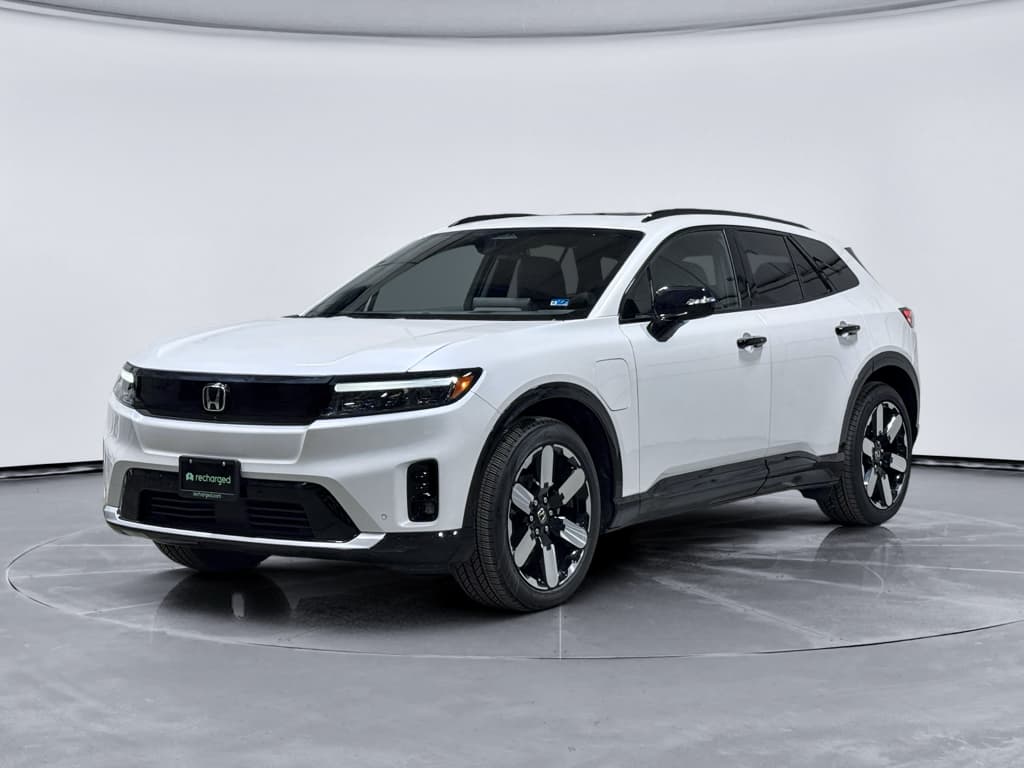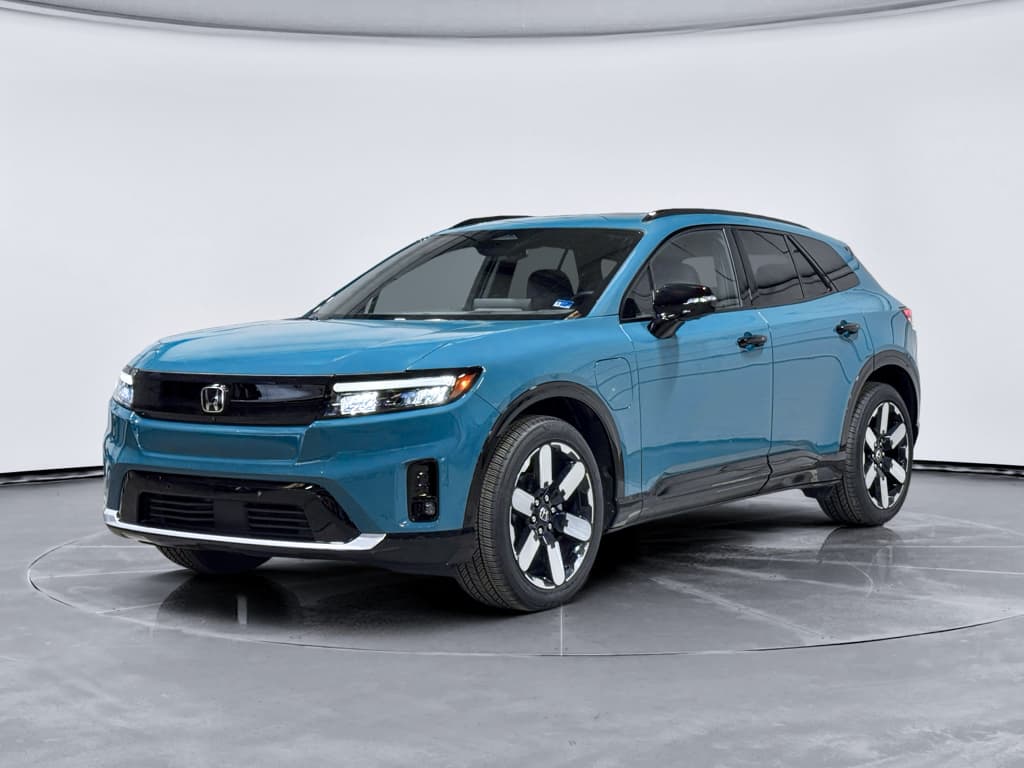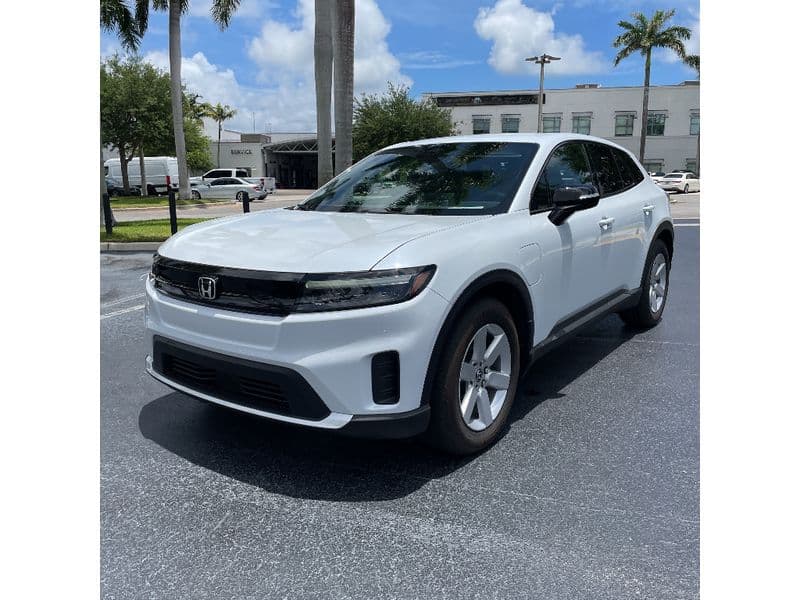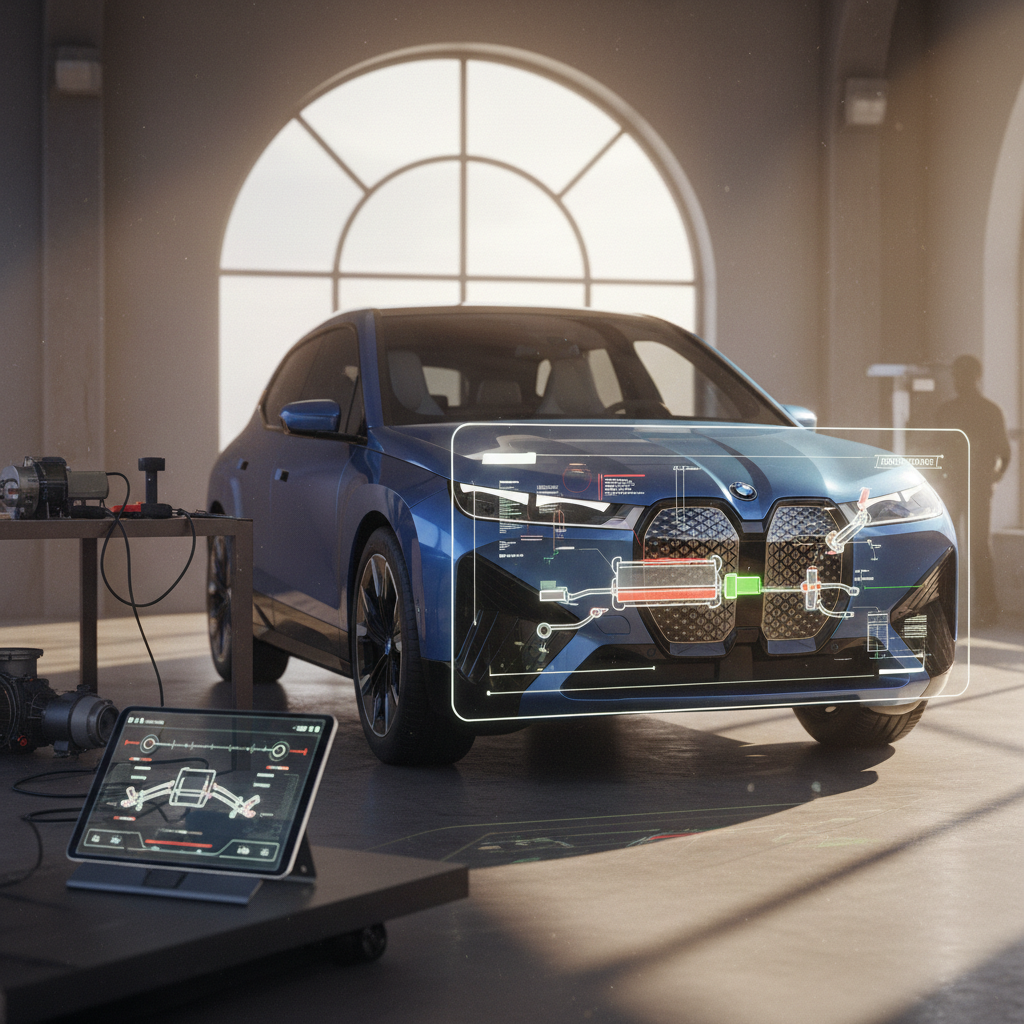
The spec sheet for the 2025 Honda Prologue promises up to 308 miles of EPA-rated range. That’s the headline. But if you’re actually planning a road trip, or thinking about buying a new or used Prologue, you don’t drive the brochure, you drive the battery. This 2025 Honda Prologue range test deep-dive pulls together independent testing, EPA data, and real-world results to show what you can realistically expect in the city, on the highway, and in bad weather.
Key range numbers at a glance
2025 Honda Prologue range overview
2025 Honda Prologue range & battery basics
Every 2025 Honda Prologue rides on the same 85‑kWh battery pack sourced from GM’s Ultium hardware, with a usable capacity right around 83 kWh. Front‑wheel‑drive EX and Touring trims post the best range at 308 miles. Add the second motor for all‑wheel drive and you’re at 294 miles for EX/Touring or 283 miles for the heavier, big‑wheel Elite. Those are healthy numbers for a mid-size electric SUV, firmly in the ballpark of the Hyundai Ioniq 5, Kia EV6, and Ford Mustang Mach‑E.
On paper, then, the Prologue is exactly what it needs to be: an honest 300‑mile EV, as long as you pick the single‑motor car and drive like a lab technician. In the real world, though, speed, temperature, elevation, and how you charge will pull those numbers down. That’s where range testing really matters.
EPA range vs real-world results
What the EPA says
- 308 miles – single‑motor FWD EX & Touring.
- 294 miles – dual‑motor AWD EX & Touring.
- 283 miles – dual‑motor AWD Elite with 21-inch wheels.
- Energy use works out to roughly 2.8–3.1 mi/kWh including charging losses.
These figures come from the EPA combined cycle, which mixes low‑speed city driving with steady‑state highway work and mild weather.
What testers are seeing
- Independent highway testing of a 2024 Elite AWD returned about 240 miles at typical 70 mph freeway speeds.
- That translated to roughly 22.2 kWh/100 km (about 3.0 mi/kWh) in mixed driving for one Canadian review, solid, but not magical.
- Extrapolating from those numbers, a realistic mixed‑use range for AWD trims is 230–260 miles depending on temperature and terrain.
The 2025 model year brings small efficiency gains, but drivers should still expect a gap between window-sticker promises and highway reality.
The Prologue isn’t being dishonest; it’s just being graded on the same generous curve as the rest of the class. The EPA test cycle is kinder than a Midwestern interstate in February. If you treat the 308‑mile rating as an upper bound and plan your life around something closer to 230–260 miles, you’ll be a happier owner.
Don’t plan your trip on the EPA number
How the Prologue behaves on the highway
Highway range is where the truth comes out, and here the Prologue is more steady cruiser than long‑legged grand tourer. In independent U.S. testing of the 2024 Elite AWD, a constant‑speed highway loop produced about 240 miles before the pack was effectively exhausted, roughly 85% of its 283‑mile EPA figure. That ratio is typical: aero drag climbs with the square of speed, and the Prologue is a bluff‑faced SUV weighing north of two and a half tons.
- At 65 mph on a mild day, AWD owners can reasonably expect 250–260 miles from 100% to essentially empty.
- At 70–75 mph, that usable window shrinks toward 220–240 miles depending on wind, grade, and wheel/tire choice.
- Single‑motor FWD models stretch things by roughly 10–15%, so think more like 260–280 miles at 65 mph in good conditions.
- The Elite’s 21‑inch wheels and wider tires add both weight and rolling resistance, which is why it posts the shortest range of the lineup.
The 80–10 rule for highway legs
City & mixed-driving range: what to expect
If the highway exposes an EV’s weaknesses, the city flatters its strengths. In urban and suburban duty, think 35–55 mph with lots of stopping and starting, the Prologue recovers energy aggressively through its adjustable regenerative braking. That’s where its official numbers in the low‑to‑mid 300‑mile range are closest to reality.
Realistic day-to-day range estimates
What most Prologue owners are likely to see in normal use
Urban commuting
Short trips, mostly below 50 mph, moderate climate.
- FWD: 260–300 miles per full charge.
- AWD: 240–270 miles per full charge.
- Plenty of range to charge a few times per week.
Suburban mix
Blend of surface streets and 55–65 mph highways.
- FWD: about 240–270 miles.
- AWD: about 220–250 miles.
- Efficiency close to EPA combined ratings.
Highway-heavy commute
Daily 70+ mph interstate stretches.
- FWD: expect 210–240 miles.
- AWD: expect 200–220 miles.
- Plan to charge more often in winter.
In other words, if your life looks like errands, school runs, and occasional freeway hops, the Prologue’s range is going to feel generous. It’s only when you start stacking long days of high‑speed driving that the margins thin out.
Battery pack, efficiency and weather impact
Under the floor sits that 85‑kWh lithium‑ion pack, with roughly 83 kWh accessible to the driver. Honda’s own numbers translate to about 2.8–3.1 miles per kWh on the EPA combined cycle, including charging losses. That’s solidly competitive for a mid‑size SUV: not a hyper‑efficient champ, but certainly not a hog. Real‑world testing in mixed conditions has produced figures around 22.2 kWh/100 km (about 3.0 mi/kWh), which tracks with the official ratings once you back the charging losses out.
- In mild weather (50–75°F), expect the Prologue to hit or slightly beat its EPA efficiency in city driving.
- In cold weather (below freezing), range can drop by 20–30% thanks to cabin heating and denser air; preconditioning while plugged in helps.
- In very hot conditions, aggressive A/C use and fast driving will also chip away at range, though typically not as dramatically as winter does.
- Big wheels and winter tires are a range tax: if you live in a snowbelt state, budget accordingly.
Cold-weather reality check
Charging speeds: home and DC fast charging
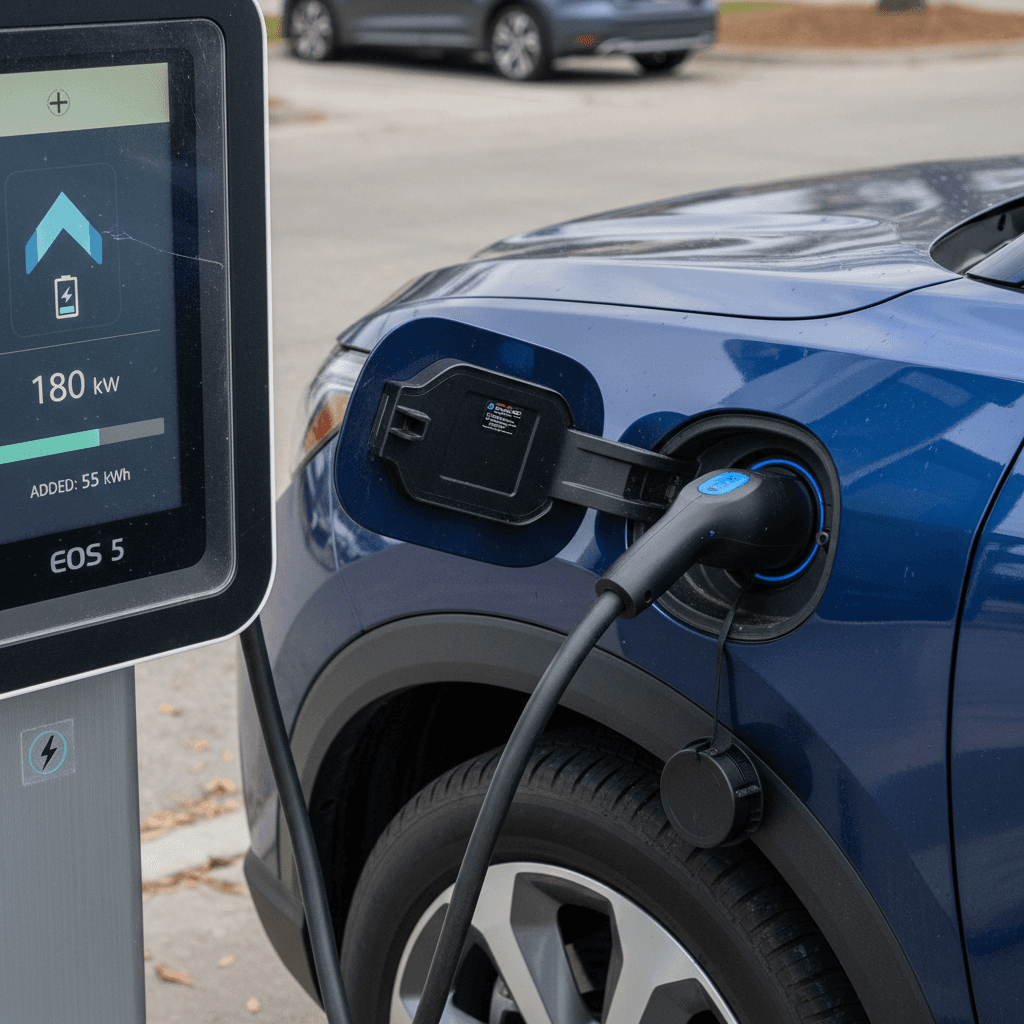
Range only matters if you can reliably and quickly put it back. On that front, the 2025 Prologue is competent rather than headline‑grabbing. Its onboard AC charger tops out at roughly 11.5 kW, and Honda quotes about 34.1 miles of range added per hour on a 240‑volt Level 2 connection. That means a full 0–100% overnight in a bit over eight hours on a properly sized home charger.
Charging the 2025 Honda Prologue
How long it really takes to refill the pack
Level 1 (120V wall outlet)
Emergency only.
- Roughly 2–3 miles of range per hour.
- Full charge can take 60–70 hours from empty.
- Fine for topping off a small daily commute.
Level 2 (240V home or public)
The Prologue’s sweet spot.
- Up to 11.5 kW / ~34 mi of range per hour.
- 0–100% in roughly 8–9 hours.
- Ideal for overnight charging at home.
DC fast charging
For road trips and quick top‑ups.
- Peak around 150–155 kW.
- Honda quotes about 35 minutes from 20–80%.
- Expect roughly 60–65 miles added in 10 minutes under ideal conditions.
Pair the right home charger with your Prologue
Tesla Supercharger access for Prologue owners
For 2025, one of the most important range stories isn’t what’s in the battery but what’s on the map. Honda has joined the stampede toward Tesla’s North American Charging Standard (NACS), which means Prologue owners in the U.S. and Canada can tap into a big chunk of the Supercharger network.
- Honda sells a branded CCS‑to‑NACS adapter that lets Prologue and Acura ZDX owners use thousands of Tesla Superchargers across North America once access is enabled for their accounts.
- You can locate compatible Superchargers via the Prologue’s built‑in Google Maps app, with deeper Tesla‑specific control still handled through the Tesla app while the software integrations catch up.
- Stations equipped with Tesla’s Magic Dock hardware don’t require your own adapter at all, the converter is built into the pedestal and locks onto the handle when you select a non‑Tesla vehicle in the Tesla app.
What Supercharger access means for range
How the 2025 Prologue compares to rivals
2025 Honda Prologue range vs key rivals
EPA combined range figures for comparable trims of popular electric SUVs.
| Model | Battery (kWh) | Drive | EPA range (mi) | Highway-tested real range* |
|---|---|---|---|---|
| Honda Prologue FWD | 85 | FWD | 308 | ~260–270 |
| Honda Prologue AWD | 85 | AWD | 294 / 283 | ~230–250 |
| Hyundai Ioniq 5 (77.4 kWh) | 77 | RWD/AWD | 260–303 | ~240–270 |
| Ford Mustang Mach‑E (ER) | 91 | RWD/AWD | 250–320 | ~240–280 |
| Tesla Model Y Long Range | 75 | AWD | 310–330 | ~280–300 |
Numbers are approximate and can vary by wheel size and options, but they illustrate where the Prologue lands in the pack.
The 2025 Prologue doesn’t win the range war, that honor still goes to the Tesla Model Y, with its slipperier shape and lower consumption, but it also doesn’t embarrass itself. Relative to the Hyundai Ioniq 5 and Mustang Mach‑E, its numbers are entirely respectable, especially considering the generous cabin space and comfortable ride tuning.
Range isn’t the only metric that matters
Road-trip usable range and planning tips
Planning a road trip in a Honda Prologue
1. Start with a 70–80% planning window
Don’t plan your legs from 100% to 0%. For battery health and sanity, assume you’ll run the Prologue between about <strong>10% and 80%</strong> on DC fast charging. In an AWD model at highway speeds, that’s roughly <strong>160–200 real miles</strong> per leg in decent weather.
2. Adjust for season and terrain
Use a bigger safety margin in winter or on mountainous routes. Add <strong>25–30% extra time and charging stops</strong> if you’re driving through sustained cold or climbing big grades with bikes or a cargo box on the roof.
3. Map CCS and Supercharger options
Use apps like PlugShare, A Better Routeplanner, and the Prologue’s built‑in Google Maps to highlight both <strong>CCS and Tesla Supercharger</strong> options (with adapter). More options mean less stress if a site is full or offline.
4. Prefer 20–60% charging hops
DC fast charging slows dramatically above about 60–70% state of charge. If chargers are plentiful, it’s often faster overall to <strong>stop more often and charge less each time</strong> than to dead‑stick it to 90% at every station.
5. Watch speed and climate control
Driving 80 mph with the A/C or heater cranked is a range killer. Dropping to <strong>70 mph</strong> and using seat and wheel heaters instead of blasting cabin heat can save meaningful miles on the edge of a long leg.
6. Know your SoC buffers
Every EV driver eventually learns what “5%” feels like. Spend some time locally running the pack down to <strong>10–15%</strong> so you’re comfortable using that buffer on road trips rather than panic‑charging at 40%.
Buying a used Honda Prologue: range checklist
Because the Prologue is relatively new, most examples on the used market will still have low miles and plenty of battery warranty left. That’s great news, but you still want to buy with your eyes open. Range is a function of both chemistry and history: how the previous owner charged, where the car lived, and which trim you’re looking at.
Questions to ask the seller
- Is it FWD or AWD, and which trim (EX, Touring, Elite)?
- What’s the typical daily commute and charging pattern been?
- Has the car lived in an extremely hot or cold climate?
- Does it come with a Level 2 home charger or just the portable cord?
- Has DC fast charging been the primary charging method, or only for trips?
How Recharged helps
When you shop a used Prologue through Recharged, every vehicle comes with a Recharged Score Report that includes:
- Verified battery health diagnostics, not just a dash readout.
- Charging history patterns where available.
- Fair‑market pricing that reflects range and condition.
- Expert EV‑specialist support to help you understand how much real‑world range you can expect based on your driving.
We can also help with trade‑ins, financing, and nationwide delivery, so you can buy the right Prologue without leaving your couch.
FAQ: 2025 Honda Prologue range and testing
Frequently asked questions about 2025 Honda Prologue range tests
Bottom line: is the 2025 Prologue’s range good enough?
Look past the brochure and the 2025 Honda Prologue reveals itself as a solid, honest‑to‑goodness 250‑mile EV in the real world. The FWD trims flirt with 300 miles if you drive gently, the AWD versions deliver 220–250 miles in mixed use, and the charging curve is good enough that a coffee stop can genuinely buy you another couple of hours on the road. It doesn’t rewrite the range rules, that job still belongs to Tesla, but it also doesn’t force you into awkward compromises.
If your life is a mix of commuting, weekend trips, and the occasional interstate slog, the Prologue’s range is simply not the limiting factor. The more important questions are whether you like the cabin, trust Honda’s dealer network, and can live with the slightly slower DC charging compared with the sharpest tools in the drawer. For many shoppers, especially on the used market, a well‑priced Prologue with a clean Recharged Score battery health report, transparent pricing, and expert EV support from Recharged is exactly the kind of quiet, rational choice that makes electrification feel boring, in the best possible way.