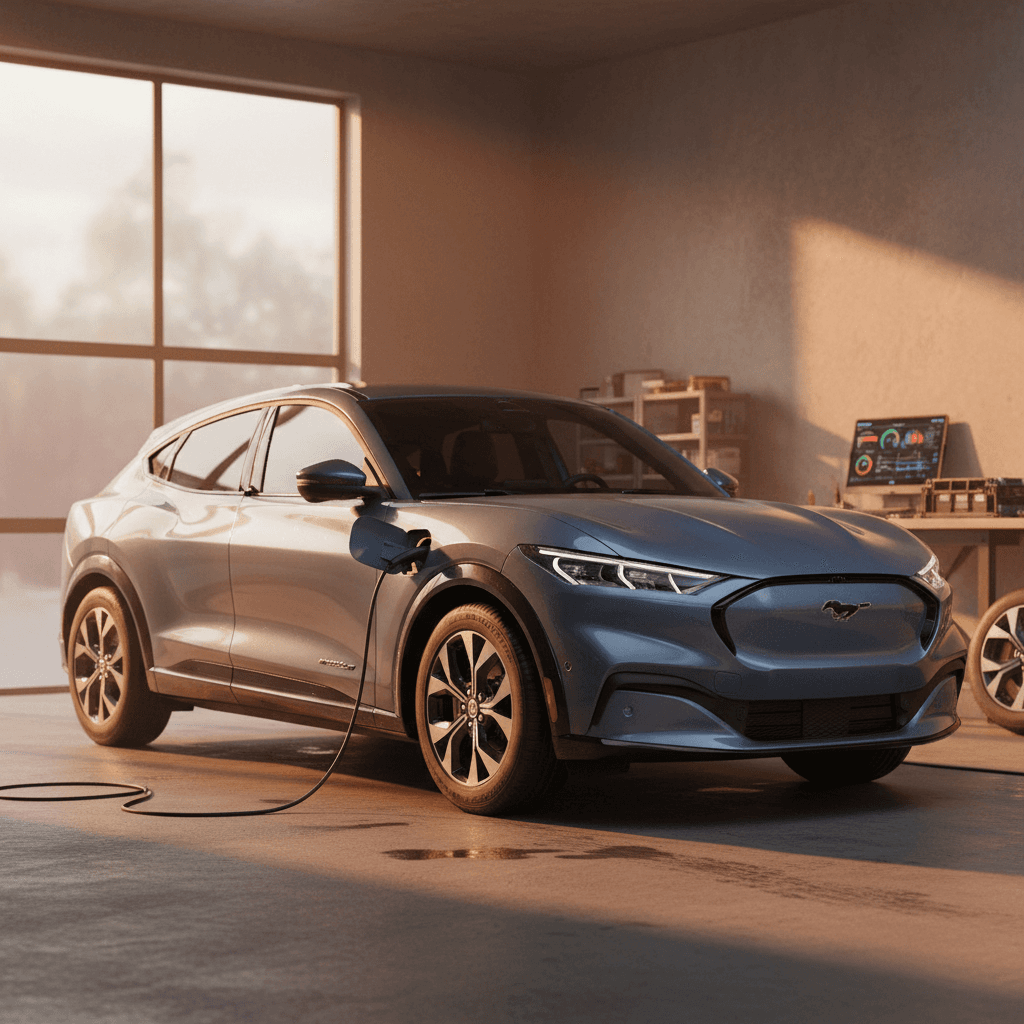
You don’t buy a 2025 Ford Mustang Mach-E because you’re terrified of risk. You buy it because you want some personality in your EV, something with a pulse. The question is whether that pulse comes with too many palpitations: software gremlins, recalls, expensive out-of-warranty fixes. Let’s unpack how 2025 Ford Mustang Mach-E reliability really looks, and what it means if you’re considering one new or used.
Quick reliability snapshot
Is the 2025 Mustang Mach-E reliable?
On paper, the 2025 Ford Mustang Mach-E lands in the “better-than-average EV, but not flawless” zone. Independent testing organizations now rate the Mach-E as more reliable than the average new car, particularly the 2024–2025 refresh, which benefits from several rounds of hardware and software updates that address early teething issues.
Mustang Mach-E reliability at a glance
If you’re coming from Toyota-land, where cars seem to run for 20 years on vibes and 5W‑30, the Mach-E will feel a bit more… digital. When things misbehave, it’s often software, sensors, or modules, not pistons and gaskets. The good news is that many fixes arrive over the air (OTA), and Ford has been reasonably aggressive about updating the platform. The bad news is that you need to pay attention to recall notices and software prompts, not just oil-change stickers (which you no longer have).
How to quickly gauge a Mach-E’s reliability
How 2025 Mustang Mach-E reliability compares to other EVs
Versus Tesla Model Y
- Body & build: The Mach-E generally avoids the notorious panel-gap comedy of early Teslas, with solid paint quality and quieter cabins.
- Software: Ford’s Sync-based system is less polished than Tesla’s OS and can be slower and buggier after updates.
- Service: Traditional dealer network can be a blessing (more locations) or a curse (wildly variable expertise with EVs).
Versus Hyundai Ioniq 5 / Kia EV6
- Hardware reliability: The Korean twins have built a reputation for excellent drivetrains and strong reliability once recall work is done.
- Charging: Ioniq 5/EV6 can DC fast charge faster in ideal conditions, but Mach-E charging performance is now broadly competitive.
- Long-term unknowns: All three are relatively young nameplates, so their 10+ year durability is still being written in real time.
Broadly, a 2025 Mach-E sits mid‑pack in EV reliability: better than many first‑gen efforts, not as bulletproof as the best hybrids or some Korean EVs. Your individual experience will hinge heavily on build quality of your specific car, how up-to-date its software is, and whether key recalls have been addressed.
2025 Mustang Mach-E recalls and software issues
Because the 2025 Mustang Mach-E shares its platform and electronics with earlier years, its reliability story is inseparable from Ford’s recall history. The good news: most of the scary-sounding issues have well‑defined fixes. The bad news: you need to confirm they’ve actually been done.
Key recalls affecting 2024–2025 Mustang Mach-E
Always run the VIN through NHTSA or Ford’s recall tool, but these are the big ones most 2025 shoppers should know about.
| Issue | Model years affected | What can happen | Typical fix |
|---|---|---|---|
| Electronic door latches | 2021–2025 | Rear passengers, especially children, can be trapped if doors won’t unlock when the 12V battery is low. | Software update to powertrain and diagnostic modules; in some cases module replacement at dealer. |
| Integrated park module | 2024–2026 | Vehicle may not stay securely in Park, increasing rollaway risk. | Software update for the park module, delivered OTA or at a dealer. |
| Windshield wiper motor | 2023–2024 (some 2025 builds may share parts) | Wipers can fail, reducing visibility in rain. | Dealer inspection and replacement of wiper motor if necessary. |
| Rear‑view camera software | 2021–2025 (various Ford models incl. Mach‑E) | Camera image may freeze or fail to appear when reversing. | Infotainment software update, sometimes OTA, sometimes at dealer. |
Recall campaigns hit safety-critical systems, but most are resolved with software or simple component replacements.
Don’t ignore “minor” software recalls
Ford’s strategy has been to push as many of these fixes as possible via over‑the‑air updates. That’s convenient, but it also means some owners hit “Remind me later” into oblivion. When you’re evaluating a 2025 Mach-E, especially a used one, verification is everything: service records, OTA update history, and a clean recall report should all be part of the deal.
Common 2025 Mustang Mach-E problems to watch for
Most common Mach-E trouble spots
Not every car has these issues, but these are the patterns that keep showing up in owner reports and surveys.
Charging quirks
Some owners report intermittent charge faults: the car stops charging mid‑session, won’t start a session on certain DC fast chargers, or throws error messages despite a healthy battery.
Often resolved by software updates, a new charge-port door, or updated communication modules.
Glitchy infotainment
The large portrait screen is the Mach‑E’s stage, and occasionally its villain. Frozen screens, laggy responses, and wireless CarPlay/Android Auto hiccups are commonly cited complaints.
Most are resolved by reboots and updates, but persistent failures can require module replacement.
Electrical accessories
Issues like random warning lights, non‑functional USB ports, or misbehaving driver‑assist systems crop up in owner surveys.
Again, this is an EV that lives and dies by software; clean diagnostic scans matter.
- Occasional squeaks and rattles from the hatch area or panoramic roof on rough roads.
- Bumpy ride on GT and performance variants with larger wheels, more a comfort issue than a failure, but frequently mentioned.
- Range estimates that swing more dramatically than some rivals in cold weather, even with the new standard heat pump.
What’s notably *not* failing
Battery life and charging reliability
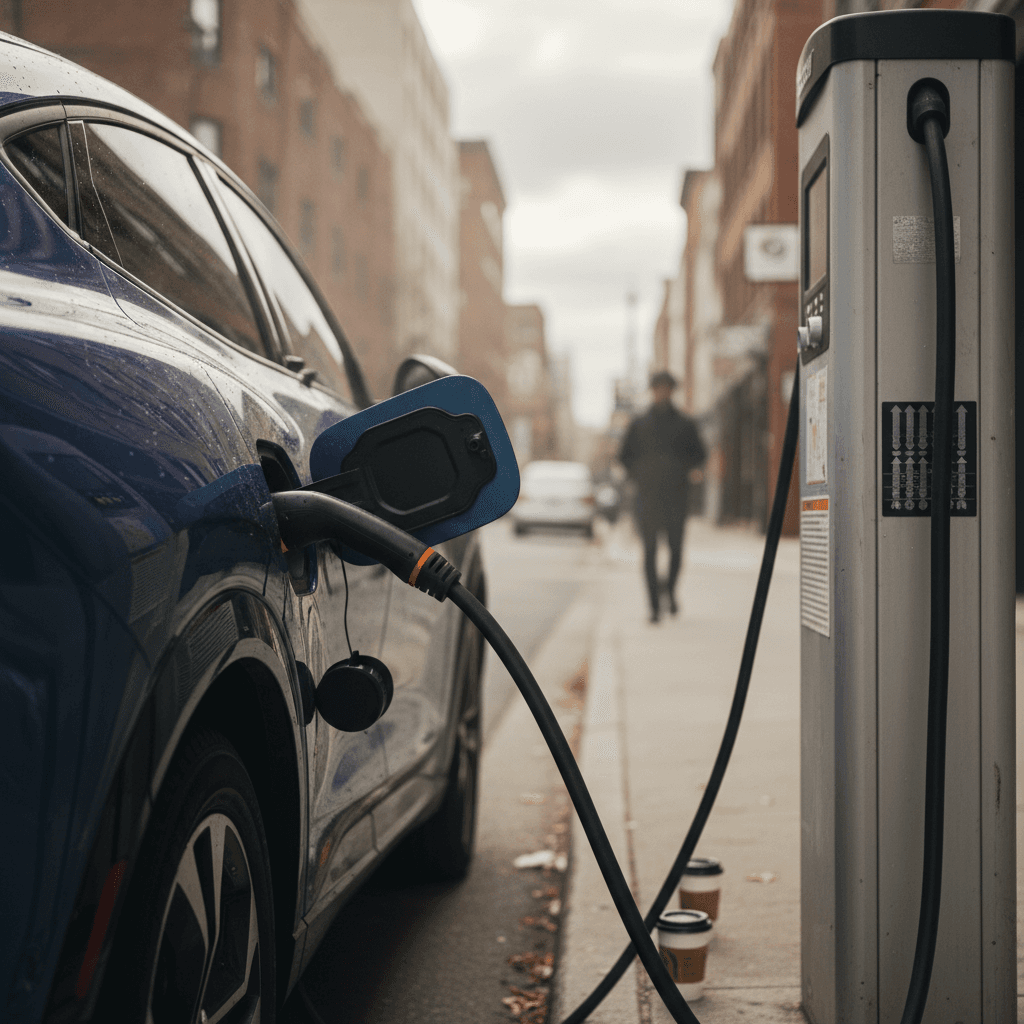
The Mach-E’s battery pack is the car’s beating, lithium-ion heart. The 2025 model uses essentially the same pack architecture as earlier years, but benefits from refined thermal management and, crucially, a standard heat pump on all trims to improve cold‑weather efficiency.
Mustang Mach-E battery & charging reliability facts
What matters most for long-term ownership.
Battery warranty & degradation
- Coverage: Ford covers the EV battery for 8 years or 100,000 miles, including excessive capacity loss.
- Real‑world degradation: Early‑build owners commonly report modest capacity loss over the first 3–4 years, typically not enough to materially affect daily usability.
- Use case matters: Heavy DC fast‑charging and frequent 100% charges can accelerate wear, as with any EV.
Charging reliability
- Home charging: Generally drama‑free on a quality Level 2 charger with a dedicated circuit.
- Public DC fast charging: Occasional handshake issues with certain networks are more often the station’s fault than the car’s, but owners experience them as “my car won’t charge.”
- Future proofing: Ford’s shift to NACS access (Tesla Supercharger compatibility) improves trip reliability when equipped with the proper adapter and software support.
How Recharged helps on battery health
Ownership experience: what actual drivers report
Scan owner reviews of recent Mach-Es and a pattern emerges: when the car behaves, people love it. Ride comfort, quietness, and performance earn high marks; the pain points usually live in the spaces between the car and Ford’s support ecosystem.
What owners rave about
- Comfort & refinement: Many drivers describe the Mach‑E as quieter and more comfortable than expected, with a real luxury‑adjacent feel on the highway.
- Performance: Even non‑GT trims feel properly quick. GT and Performance Edition models will rearrange your internal organs on demand.
- BlueCruise: Hands‑free highway driving earns consistent praise when it works properly and is kept up‑to‑date.
What owners complain about
- Dealer support: Some dealers are still catching up on EV training, leading to long diagnostic times and parts delays.
- Software polish: Occasional bugs after OTA updates, slow boot times, and glitchy phone‑as‑key behavior.
- Charging ecosystem learning curve: New EV owners sometimes underestimate the importance of home Level 2 charging and compatible public networks.
“Great looking car with terrible management from top to bottom. If you value your time, look elsewhere.”
That’s one end of the spectrum. At the other end are owners calling it the best vehicle they’ve ever had. Reliability, for the Mach‑E, isn’t a single score so much as a distribution, many trouble‑free cars, some unlucky software cases, and a handful of nightmare experiences when the support chain breaks down.
2025 Mach-E vs older model years for reliability
How Mach-E reliability has evolved by model year
Later years benefit from running changes and recall fixes, making them safer bets for used buyers.
| Model year | Reliability trend | What improved | What still lingers |
|---|---|---|---|
| 2021 (launch) | Below average | Critical early hardware and software bugs have mostly been identified and addressed. | Residual fear around early‑build battery and charging issues; more likely to have had multiple recall visits. |
| 2022 | Improving | Software updates stabilize charging and driver‑assist systems; some hardware changes. | Still more complaint‑prone for infotainment and electrical accessories than later cars. |
| 2023 | Average to above average | Fewer new issues; Ford leans harder on OTA fixes and better dealer procedures. | Some recalls (wipers, camera) still in play; experience depends heavily on service history. |
| 2024 | Above average | Major reliability ratings improve; platform feels more mature. | Body hardware and lock‑related recalls appear; software polish still uneven. |
| 2025 | Above average (projected) | Standard heat pump, refined controls (column shifter), further software maturation. | Shares ongoing recall campaigns; true long‑term durability still being written. |
Shopping used? Knowing the generation story matters more than the exact odometer reading.
Sweet spot for used buyers
Reliability checklist for buying a used Mustang Mach-E
Used Mach-E reliability checklist
1. Run the VIN for open recalls
Use NHTSA’s recall tool or Ford’s owner site to verify that <strong>all campaigns (locks, park module, camera, wipers)</strong> have been completed. If a seller can’t show proof, treat it as a pending repair cost and a safety concern.
2. Get a real battery health report
Don’t rely on guesswork or a salesman’s “it still gets good range.” Ask for a <strong>diagnostic battery health report</strong>. If you’re buying through <strong>Recharged</strong>, this comes baked into the <strong>Recharged Score</strong> so you can see usable capacity and charging behavior up front.
3. Inspect charging behavior
Test both <strong>AC Level 2 charging</strong> and, if possible, a <strong>DC fast charge session</strong>. The car should start and maintain a session without repeated errors. Walk away from vehicles with unexplained charge faults.
4. Exercise every door and latch
From the outside and the inside, open and close all doors multiple times. Pay special attention to rear doors and child locks, given the Mach‑E’s electronic latch recall history.
5. Hard‑reset the infotainment & test features
Reboot the main screen and verify that <strong>backup camera, Bluetooth, CarPlay/Android Auto, driver‑assist (BlueCruise, lane‑keeping), and climate controls</strong> all behave as expected. Lag and occasional glitches are one thing; repeated failures are another.
6. Check for water leaks, wind noise, and rattles
Inspect door seals, the tailgate, and (if equipped) the panoramic roof for water marks or musty smells. A short highway drive will reveal excessive wind noise or hatch rattles that can be costly or annoying to chase.
7. Review service history for repeated complaints
Multiple visits for the <strong>same charging, lock, or electrical issue</strong> can signal a problem that hasn’t truly been solved. Ask for warranty repair invoices, not just verbal assurances.
8. Confirm home-charging readiness
If you’ll be charging at home, make sure your electrical panel can support a 240‑V circuit and that you understand the cost. Pairing a Mach‑E with a proper Level 2 charger is one of the biggest reliability upgrades you can give yourself.
Red flags that should make you walk away
FAQ: 2025 Ford Mustang Mach-E reliability
2025 Ford Mustang Mach-E reliability FAQs
Should you buy a 2025 Mustang Mach-E?
If you want an EV with some personality, and you’re willing to live with the realities of a software‑heavy car, the 2025 Ford Mustang Mach-E is a compelling choice. Its reliability story is no longer a red flag; it’s a series of asterisks. You need to understand the recall history, verify battery and charging health, and buy from someone who can show you data, not just a freshly detailed paint job.
For many drivers, especially those pairing home Level 2 charging with a sane commute, a well‑vetted 2025 Mach‑E will feel as dependable as any modern crossover, just quicker, quieter, and cheaper to run. And if you’re shopping used, a platform like Recharged can stack the odds in your favor with Recharged Score battery diagnostics, transparent pricing, expert EV support, and nationwide delivery, so the biggest surprise after you buy isn’t a warning light, it’s how uneventful your day‑to‑day driving becomes.