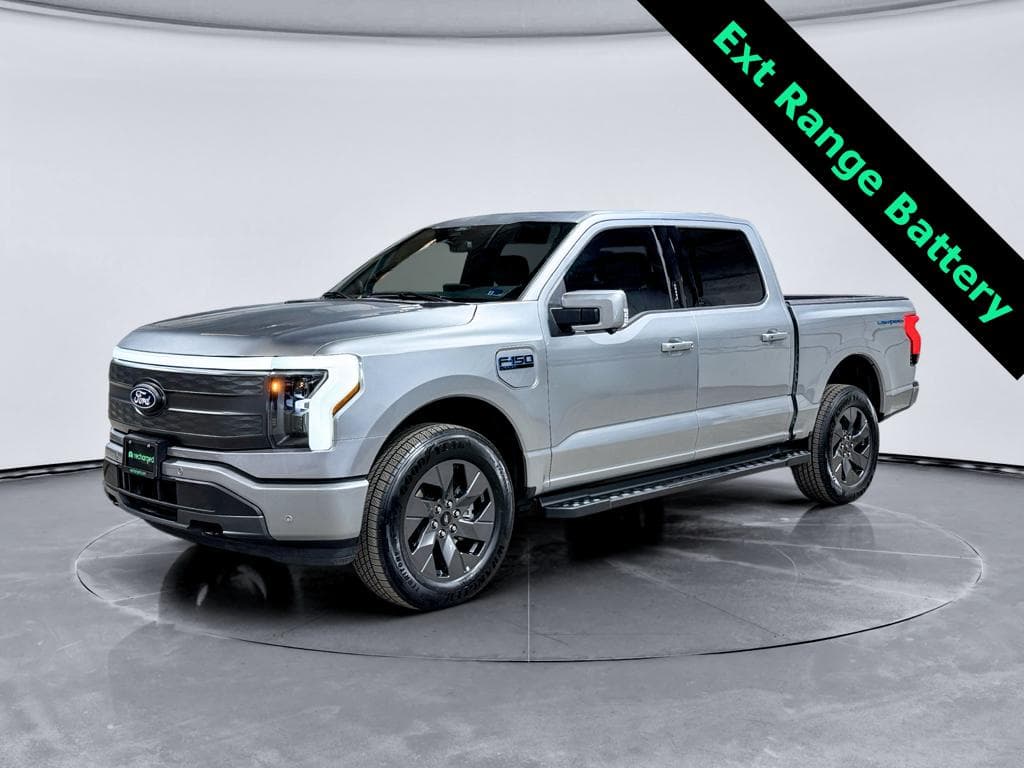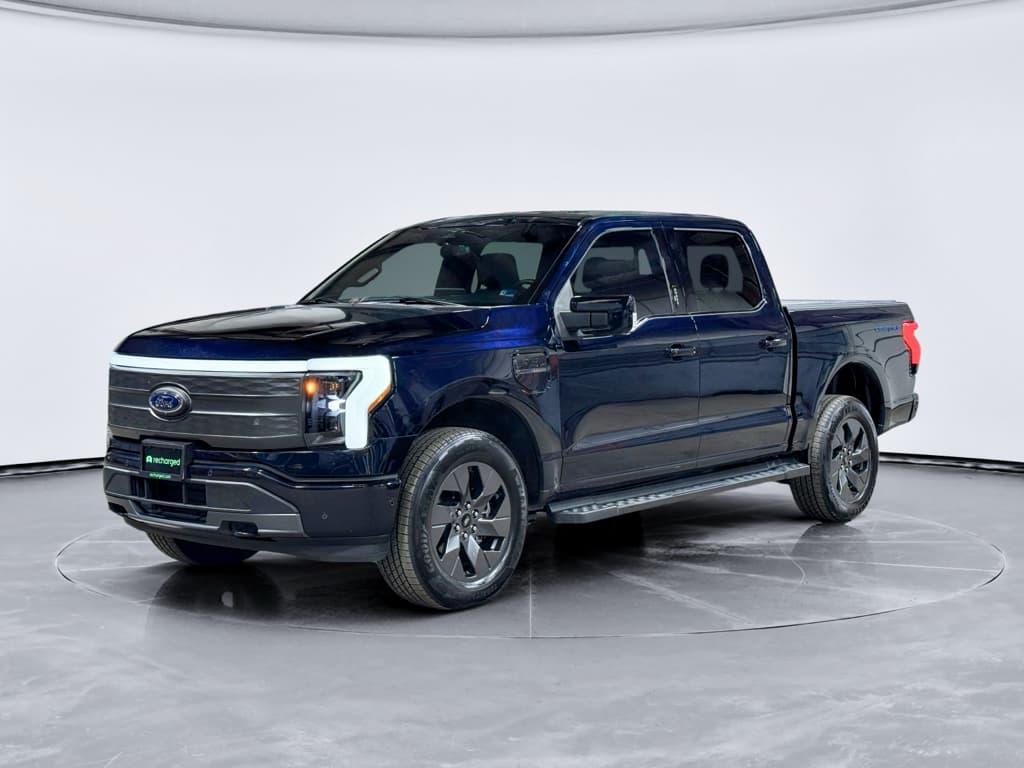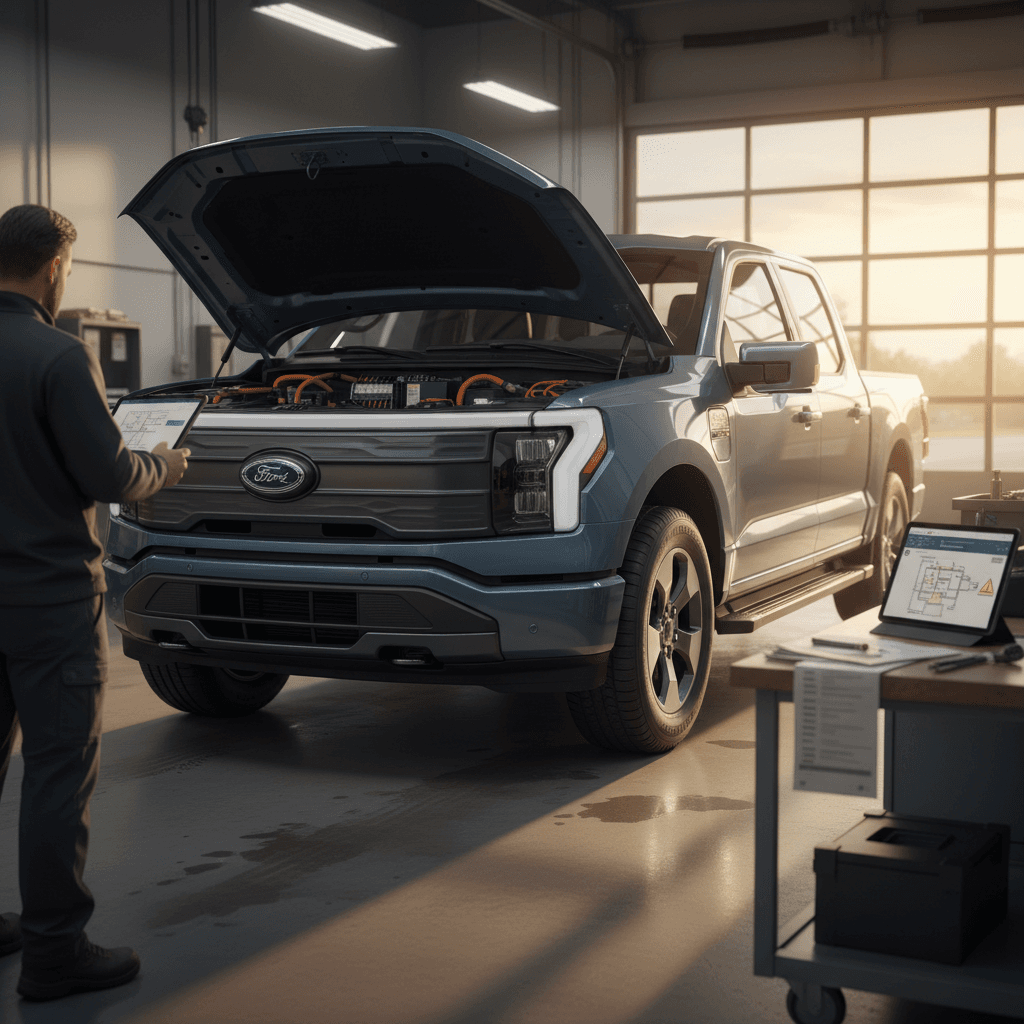
If you own or are considering a 2025 Ford F-150 Lightning, keeping up with recalls isn’t optional, it’s part of owning a complex, early‑generation electric truck. This guide pulls together every major 2025 F-150 Lightning recall we know about today, explains what each one actually means on the road, and shows you how to shop for a used Lightning with confidence.
First things first
Overview: 2025 F-150 Lightning recalls at a glance
Ford’s decision to discontinue the F-150 Lightning after the 2025 model year doesn’t mean support stops. In fact, the truck is wrapped up in several recall campaigns that span multiple model years (2022–2026 in some cases). For 2025 F-150 Lightning owners, three campaigns matter most:
- A suspension recall tied to potentially loose upper control arm ball joint fasteners (select 2023–2025 trucks).
- A large rollaway‑risk software recall involving the integrated park module on 2022–2026 F-150 Lightning trucks.
- A tiny but serious brake fluid leak recall that affects only a handful of 2025 trucks built with an incorrect repair procedure.
On top of those, there are earlier high‑voltage battery recalls that mostly focus on 2022–2024 trucks but are important context if you’re shopping used and comparing different model years.
Key recall stats for F-150 Lightning owners
Quick 2025 Ford F-150 Lightning recalls list
Here’s a simplified 2025 F-150 Lightning recalls list. Exact NHTSA campaign numbers and Ford internal codes can vary, but this is how they break down for most owners and shoppers:
Known 2025 F-150 Lightning recalls
High‑level snapshot of recall campaigns that include 2025 model year F-150 Lightning trucks.
| Recall focus | Model years involved | Approx. 2025 units | Primary risk | Typical fix |
|---|---|---|---|---|
| Upper control arm / suspension hardware | 2023–2025 | Subset of 2025 trucks | Loss of alignment or, in worst case, loss of control | Inspect and torque or replace control arm hardware |
| Integrated park module rollaway risk | 2022–2026 | All affected 2025 trucks with this module | Vehicle may not fully engage Park and could roll away | Software update to integrated park module |
| Brake fluid leak (tiny batch) | 2025 only | 5 trucks (per early reports) | Reduced braking performance, increased crash risk | Inspect and replace affected brake components |
| High‑voltage battery cell defect | 2022–2024 | 0 direct 2025 units, but relevant history | Thermal event / fire risk in rare cases | Battery module inspection and replacement where needed |
Always confirm campaign applicability with a VIN lookup; not every 2025 Lightning is included in every recall.
Don’t assume your truck is covered (or not)
Upper control arm / suspension recall (2023–2025 trucks)
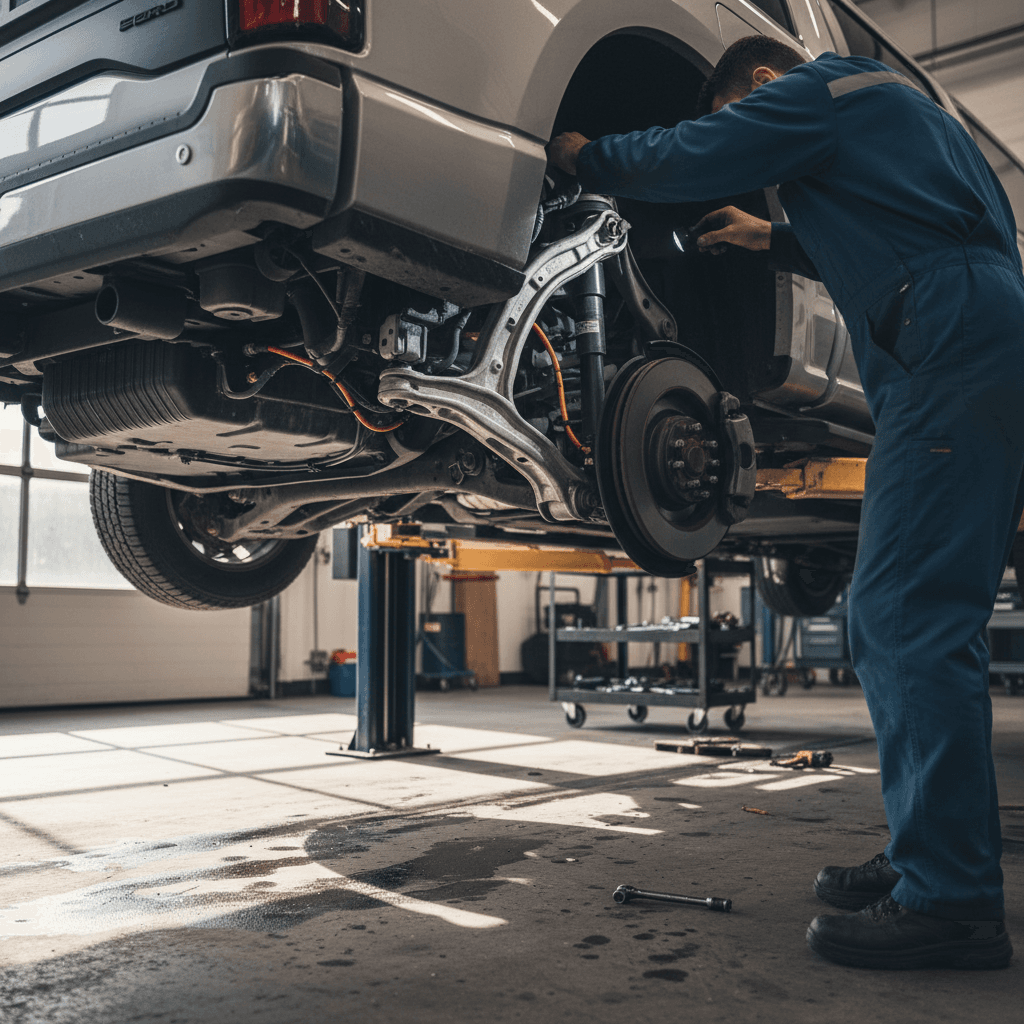
In mid‑2025, Ford announced a safety recall for select 2023–2025 F-150 Lightning trucks related to front suspension hardware. The concern is a loose or missing upper control arm ball joint nut, which could affect alignment and, in the worst case, steering control.
What owners might notice
- Clunking or knocking noises from the front suspension.
- Uneven tire wear or the truck pulling to one side.
- Steering that feels inconsistent, especially over bumps.
Why NHTSA treats it seriously
If the ball joint separates because the nut backs off or was never properly installed, the driver could lose control of the front wheel. That’s a low‑probability but high‑consequence failure, exactly the kind of thing safety recalls are designed to address before it happens.
Dealers inspect the front upper control arm ball joint nuts on both sides. If torque and visual inspection are within spec, they simply re‑secure them. If there’s any sign of movement or damage, the affected components are replaced. All of this should be covered at no cost under the recall.
Used‑truck shopping tip
Rollaway risk: Integrated park module software recall
The largest campaign touching the 2025 F-150 Lightning is a software‑driven recall for the integrated park module. Ford found that under certain conditions, the system that commands the transmission to lock in Park might not fully engage, even though the shifter indicates Park.
This recall spans roughly 2022–2026 F-150 Lightning trucks, along with other Ford EVs and hybrids. For Lightning owners, the practical risk is straightforward: if the park mechanism doesn’t fully engage and you don’t set the parking brake, the truck could roll away after you exit.
Understanding the integrated park module recall
What it is, how risky it is, and what Ford does about it
What’s affected
The software logic in the integrated park module that controls how the truck actually engages Park.
It’s not about the shifter knob, it’s about the control unit that does the work behind the scenes.
Real‑world risk
In rare cases the truck may appear to be in Park but isn’t fully locked. If you don’t use the parking brake and the truck is on a slope, it could roll.
That’s why Ford and NHTSA treat this as a safety recall, not a convenience issue.
How it’s fixed
Ford applies a software update to the integrated park module. Depending on your build, this may be done over‑the‑air (OTA) or at a dealer.
Once installed, the module uses more robust logic to verify Park engagement.
Until the recall is done
Brake fluid leak recall for a small batch of 2025 trucks
One of the more obscure but serious campaigns is a brake‑system recall affecting only a tiny number of 2025 F-150 Lightning trucks, reports mention as few as five vehicles. In that batch, an incorrect repair procedure at the factory could have damaged a brake component and caused a slow brake fluid leak.
- Soft or spongy brake pedal feel.
- Longer stopping distances.
- Dashboard warnings related to the brake system.
Again, the odds that any given 2025 Lightning you’re cross‑shopping lands in this exact group are vanishingly small. But if it does, the fix is straightforward: the dealer inspects the affected brake lines or components and replaces anything that doesn’t meet spec, then bleeds the system and verifies proper operation.
Good news for shoppers
High‑voltage battery recalls: what’s specific to 2025?
A lot of Lightning headlines in 2024–2025 focused on high‑voltage battery recalls. Ford recalled tens of thousands of 2022–2024 trucks after finding a manufacturing defect in some battery cells that was linked to a handful of fires. For used‑truck buyers, that understandably raises questions.
Where 2025 fits in
The major battery‑cell recall campaigns publicly documented so far center on 2022–2024 model years. The key issue was a defect in certain cells from a particular supplier and production window.
By the time the 2025 model year rolled around, Ford had already halted production once, changed processes, and was actively working through battery fixes on earlier trucks.
What to look for anyway
- Battery‑related recall entries in the truck’s VIN history.
- Documentation of module replacements or extended testing.
- Evidence that prior owners followed Ford’s guidance about charge limits during recall campaigns.
Even when a specific 2025 build isn’t in a battery recall, you still want to understand how its battery has been treated.
How Recharged handles Lightning battery health
How to check your 2025 Lightning for open recalls
Because recall coverage is VIN‑specific, not just model‑year‑specific, the most important thing you can do, whether you already own a 2025 Lightning or you’re about to buy one, is to run a recall check on that exact truck.
Step‑by‑step: Verify recall status on a 2025 F-150 Lightning
1. Locate the full 17‑digit VIN
You’ll find the VIN on the lower driver’s‑side windshield, the driver‑door jamb, and in digital documents like the title or insurance card. If you’re shopping online, request a clear VIN photo from the seller.
2. Check Ford’s official recall page
Go to Ford’s recall lookup and enter the VIN. This will show any <strong>open Ford campaigns</strong> that still need attention, including safety recalls and sometimes customer satisfaction programs.
3. Cross‑check with NHTSA
Use the NHTSA recall lookup tool as a second source. It pulls directly from manufacturer filings and will list <strong>federal safety recalls</strong> tied to that VIN.
4. Ask for dealer service records
For a used 2025 Lightning, ask for printouts or PDFs showing recall work was completed. You’re looking for repair orders that reference campaign codes and spell out what parts were changed or what software was updated.
5. Confirm in‑vehicle and app messages
On current Ford EVs, some recalls or field actions may also trigger alerts in the instrument cluster or FordPass app. Make sure there are no outstanding warnings that contradict the paper trail.
Pro move for serious buyers
What these recalls mean if you’re shopping used
From a used‑EV market perspective, 2025 is a strange model year for the F-150 Lightning. It’s the last year of production, built against a backdrop of battery recalls, a suspension campaign, a massive park‑module update, and Ford’s decision to exit the BEV pickup space in favor of extended‑range hybrids.
How recalls affect value
- Open safety recalls can limit a dealer’s ability to sell the truck and often push motivated sellers to discount.
- A Lightning with all recall work documented completed can be more attractive than one that never got called in, even if both were technically eligible.
- Some buyers will avoid early‑generation EV trucks entirely, which can create good value for shoppers who are more comfortable with the tech and risk profile.
What savvy buyers should do
- Target trucks with full service and recall histories, ideally from one Ford dealer over time.
- Scrutinize battery‑related history on 2022–2024 trucks, and still ask about it on 2025s.
- Budget time to have a Ford dealer perform any remaining recall work immediately after purchase.
If you’re buying through a marketplace like Recharged, you benefit from pre‑screening, documented battery health, and transparent pricing that already factors in recall history.
How Recharged de‑risks used Lightning purchases
Recalls vs service campaigns: why the difference matters
Reading Lightning forum threads, you’ll see owners talk about recalls, TSBs, CSPs, and various “field actions” in the same breath. For shoppers, it’s important to understand the differences, especially on a truck that’s seen several of each.
How Ford uses different campaign types on the F-150 Lightning
Not every fix is a safety recall, but all of them matter when you’re buying used
Safety recalls
Legally mandated when there’s a defect tied to safety. Repairs must be performed free of charge and remain available long‑term.
Examples for 2025 Lightnings include the integrated park module update and the suspension hardware campaign.
Customer Satisfaction Programs (CSPs)
Voluntary programs where Ford addresses an issue that isn’t strictly a safety defect but could affect reliability or owner satisfaction.
These usually have time and mileage limits and are easy to miss if prior owners didn’t visit the dealer.
Technical Service Bulletins (TSBs)
Instructions sent to dealers describing known issues and approved fixes. TSBs are not recalls, they guide how to repair something if it happens, but don’t obligate Ford to call every truck in.
Why this matters on a discontinued model
FAQ: 2025 Ford F-150 Lightning recalls
Common questions about 2025 F-150 Lightning recalls
Bottom line: Should recalls scare you off a 2025 Lightning?
Recalls on early EVs can look intimidating in headline form, and the 2025 F-150 Lightning is no exception. But when you zoom in, you’re mostly looking at targeted fixes for specific risks, loose suspension hardware, a park‑module software bug, a handful of bad brake repairs, rather than a fundamentally unsafe platform.
If you understand which campaigns apply to a given VIN, make sure the work is done, and verify battery health with objective data rather than guesses, a 2025 Lightning can still be a compelling used electric truck. And if you’d rather not untangle all of this on your own, working with a specialized marketplace like Recharged, where every vehicle includes a Recharged Score battery health report, fair‑market pricing, and expert EV support, lets you focus on finding the right truck instead of chasing paperwork.