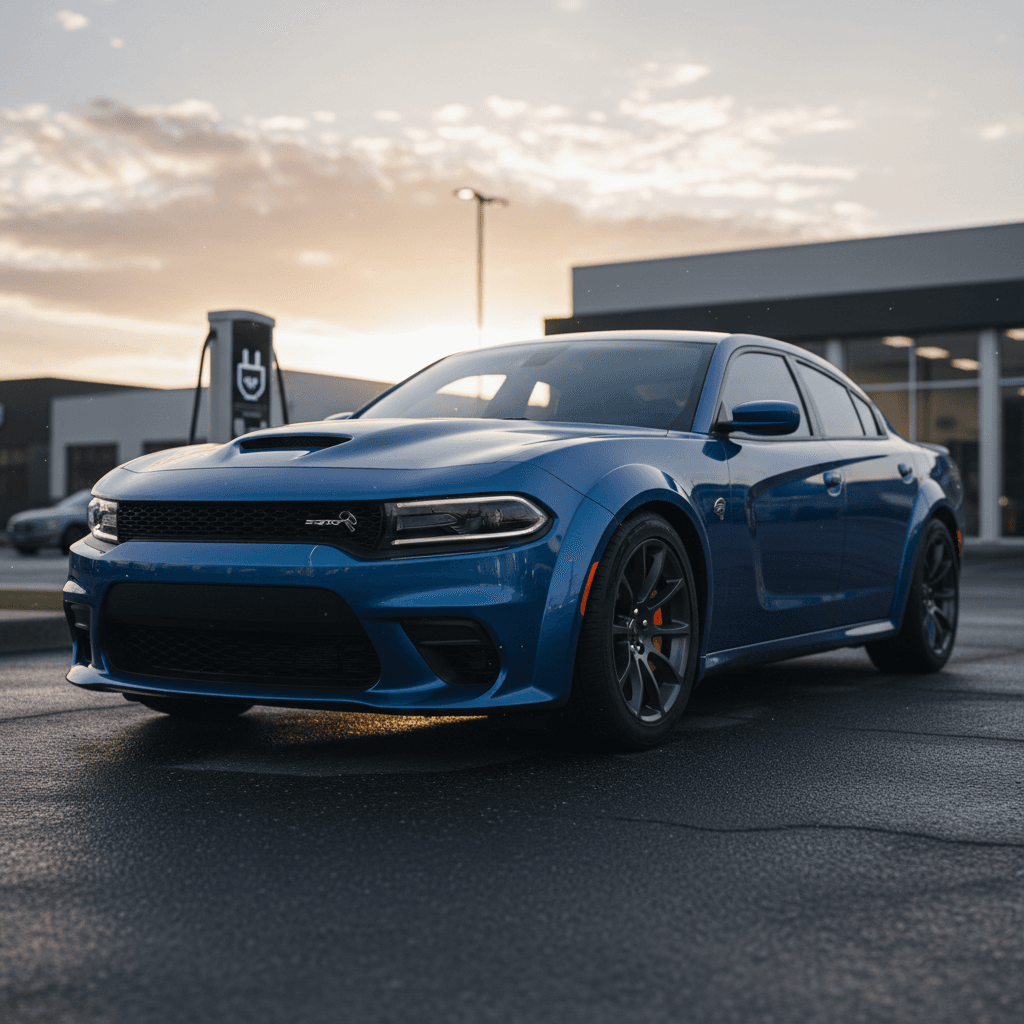
The 2025 Dodge Charger Daytona is the first production electric muscle car to wear the Charger badge, and one of the most controversial EVs on the market. It promises classic Dodge attitude with dual-motor all-wheel drive, up to an estimated 670 horsepower, and a simulated exhaust note loud enough to rattle the garage door. If you’re trying to decide whether this new-era Daytona belongs in your driveway, or on your future used-EV shopping list, this guide walks you through what matters: trims, range, charging, driving feel, and real-world ownership.
Quick context
2025 Dodge Charger Daytona at a glance
Key numbers for the 2025 Charger Daytona
At a high level, the Charger Daytona is a dual-motor, all-wheel-drive liftback that looks like a classic two-door muscle car but packages like a modern EV hatchback. Two trims launch first, R/T and Scat Pack, with four-door versions following. Both use the same large battery; the real differences are power, performance upgrades, and how aggressively they’re tuned.
Shopping tip
Trim levels, power, and pricing
For 2025, the Charger Daytona lineup is simple: R/T as the “base” performance EV and Scat Pack as the headline car. Dodge layers on factory-backed over-the-air upgrades called Direct Connection Stage kits and a temporary Power Shot boost feature that unlock extra horsepower for short bursts.
2025 Dodge Charger Daytona R/T vs Scat Pack
Key specs and pricing for the two main Daytona trims based on current public information.
| Trim | Drivetrain | Horsepower (max w/ kit) | 0–60 mph (est.) | Battery | Approx. Range | Indicative MSRP* |
|---|---|---|---|---|---|---|
| Daytona R/T | Dual-motor AWD | Up to ~496 hp | ~4.7 seconds | 100.5 kWh | Roughly mid‑200s to low 300s miles | Low–mid $60,000s |
| Daytona Scat Pack | Dual-motor AWD | Up to ~670 hp | ~3.2–3.3 seconds | 100.5 kWh | Roughly low–mid 200s miles | Upper $60,000s–low $70,000s |
Always confirm final MSRP and EPA figures with a dealer or window sticker, numbers here are based on early production and pre-production estimates.
About the numbers
Performance upgrades that change how the Daytona feels
From software flashes to launch-control toys, Dodge leans into its tuner roots, just digitally this time.
Direct Connection Stage kits
Dodge sells factory-backed Stage 1 and Stage 2 software upgrades that temporarily boost peak horsepower when conditions are right. They’re purchased digitally and tied to your car’s VIN, similar to paid performance unlocks in other EVs.
Power Shot boost
A steering‑wheel button unleashes a brief extra jolt of power, think of it as a factory nitrous button for the EV age. It’s time‑limited, then cools down before you can hit it again.
Track-focused hardware
Scat Pack models add upgraded brakes, tires, and cooling, plus modes like Line Lock and Launch Control for actual drag‑strip use. That hardware matters just as much as the headline horsepower number.
Watch your options sheet
Range, battery, and charging performance
Underneath the retro bodywork, the 2025 Charger Daytona rides on a 400‑volt architecture with a 100.5‑kWh lithium-ion battery. That’s a big pack by EV standards, but Dodge also leans hard into performance, so range is solid but not class-leading.
Estimated range & efficiency
- Daytona R/T: Tuned for more efficiency, with estimates that can push into the 300‑mile ballpark in ideal conditions.
- Daytona Scat Pack: Much stronger motor tuning and grippier rubber, so you’re realistically shopping in the low‑ to mid‑200‑mile range if you drive it like a muscle car.
- City vs highway: Like many EVs, expect better range in stop‑and‑go than at higher freeway speeds.
Charging speeds
- Peak DC fast charge: Around 183 kW on a compatible DC fast charger.
- 20–80% time: Dodge quotes just over 25–30 minutes under ideal conditions.
- Level 2 home charging: Up to 11 kW onboard; a 240‑volt Level 2 charger can take you from near‑empty to a healthy state of charge in roughly 6–7 hours.

Home charging is your superpower
Driving experience, sound, and tech
On the road, the 2025 Dodge Charger Daytona tries to answer a tricky question: how do you make an EV feel like a classic muscle car? The answer is violent acceleration, a deliberately dramatic chassis tune, and a Fratzonic Chambered Exhaust system that pipes a synthesized roar outside the car based on throttle and speed.
What it’s like to drive a Charger Daytona
Muscle car drama, EV torque, and some very modern tech.
Instant shove
Both trims deliver that familiar EV party trick: instant torque. The Scat Pack in particular hits 60 mph in the low‑3‑second range, out‑muscling many older V8 Hellcats.
Synthetic exhaust sound
Dodge routes artificial sound through an external system so bystanders hear more than just tire noise. You can tweak volume and, if you’d rather fly under the radar, turn it down.
Modern cockpit
You get large digital displays, around 10.25 inches for the cluster and 12.3 inches for the central touchscreen, with Uconnect 5, wireless Apple CarPlay/Android Auto, and multiple performance pages to monitor temps, power flow, and more.
Daily-driving manners
- Ride quality: Firm but not punishing in comfort modes, especially on smaller wheels.
- Noise: Very quiet with sound system toned down; add Fratzonic and the car suddenly feels closer to a traditional muscle car.
- Visibility & size: Wide, low, and imposing, parking sensors and cameras are your friends in tight city lots.
Track and drag-strip behavior
- Line Lock & Launch Control: Built-in features make it much easier to repeat quick launches without cooking hardware.
- Thermal management: Repeated hard pulls on track can heat up any performance EV; Dodge has tuned the Daytona for short, intense runs rather than full track‑day abuse.
Where it shines
How the Daytona compares to the gas Charger SixPack
Dodge has already confirmed that gas-powered SixPack Chargers, using a turbocharged inline‑six, are arriving right on the Daytona’s heels. That means you’ll soon be able to choose between electrons and gasoline within the same body shell.
Charger Daytona (EV)
- Power: Dual‑motor AWD, up to roughly 670 hp with factory software upgrades.
- Running costs: Electricity is typically cheaper per mile than premium gas if you can charge at home.
- Feel: Instant torque, low center of gravity, and relatively quiet, unless you turn up the synthetic exhaust.
- Pros: Future‑proof in emissions‑regulated cities, strong acceleration, smooth daily driving.
- Cons: Range and charging time limitations on long road trips, heavier curb weight.
Charger SixPack (gas)
- Power: Turbo inline‑six with around 420–550 hp depending on trim.
- Running costs: You’re paying for premium fuel plus more frequent maintenance (oil, plugs, etc.).
- Feel: Traditional sound and shifting, lighter weight, and easier refueling anywhere.
- Pros: Classic muscle experience, quick fills on long trips, simpler for some buyers to live with.
- Cons: Higher fuel costs, more moving parts to wear, less future‑proof as emissions regulations tighten.
Future used-market angle
Ownership costs, practicality, and daily use
Sticker price is only part of the Charger Daytona story. Over five years, your real costs will come from depreciation, insurance, electricity vs fuel, and maintenance. Early cost-of-ownership analyses suggest the Daytona isn’t cheap to run, but it’s also not wildly out of step with similarly quick performance cars, especially if you can keep insurance under control and charge cheaply at home.
What it costs to live with a 2025 Charger Daytona
The big-ticket items you should run the numbers on before you sign.
Depreciation
Performance EVs can depreciate faster than mainstream crossovers, especially if incentives or big discounts appear later. Buying slightly used can often save you a five‑figure chunk versus MSRP.
Insurance & taxes
High horsepower plus a relatively high MSRP can push insurance premiums up. Get quotes with VINs before you commit, and don’t forget state EV fees or credits.
Electricity & maintenance
Electricity is generally cheaper per mile than gas, and EVs skip oil changes, exhaust, and many engine services. You’ll still pay for tires, brakes, cabin filters, and occasional software or hardware updates.
Interior space & practicality
- Body style: Liftback design offers a large rear hatch, making it more practical than a traditional sedan trunk.
- Seating: Comfortable for four adults; five in a pinch. The roofline is lower than a crossover, so very tall rear passengers may feel the roof.
- Cargo: Plenty for weekend bags, small furniture, or track-day gear.
Weather & traction
- Standard AWD: Big advantage over rear‑drive muscle cars in rain or snow.
- Winter tires: A must in colder climates, factory performance tires are not winter‑friendly.
- Cold-weather range: As with all EVs, expect some range drop in winter. Preconditioning while plugged in can help.
Cold-climate owners, take note
Who the 2025 Charger Daytona really fits
The Charger Daytona isn’t trying to be a Model 3 replacement or a family crossover. It’s a statement car aimed at a very specific buyer: someone who loves traditional muscle but is either ready, or required, to go electric, and wants something more emotional than a quiet luxury EV sedan.
Best-fit buyers for the 2025 Charger Daytona
If you recognize yourself here, the Daytona should be on your shortlist.
Muscle fans in transition
You grew up loving Chargers and Challengers but don’t want to spend the next decade fighting EV mandates, or fuel bills. The Daytona lets you keep the attitude while plugging in.
Suburban & exurban commuters
If you can charge at home and drive mostly within a metro area, the Daytona’s range and performance make sense. You’re not living at DC fast chargers.
Weekend performance drivers
You want something wild for backroads, the occasional strip night, or car meets. The Scat Pack’s numbers make it a conversation starter even among old-school V8 owners.
Who should probably skip it
Buying tips for a 2025 Charger Daytona (new or used)
Whether you’re eyeing a new build slot or planning to wait a couple of years for prices to soften on the used market, going in with a plan will save you money and headaches. Here’s a practical checklist to use with any dealer, or marketplace like Recharged when these start appearing as used EVs.
Essential checklist before you buy a Charger Daytona
1. Decide how much performance you’ll actually use
Be brutally honest: if you’re rarely flooring it, a Daytona R/T may feel just as quick as you need and deliver better usable range. The Scat Pack is intoxicating, but you pay for that speed in price, insurance, and efficiency.
2. Lock in home charging
Before signing paperwork, confirm where and how you’ll charge. If you need a 240‑volt outlet or a Level 2 wall unit installed, get quotes from a licensed electrician so you can include that cost in your budget.
3. Compare real monthly costs, not just MSRP
Ask for an out‑the‑door price, then add insurance quotes, estimated electricity costs, and any EV state fees. Some buyers find that a lightly used EV, bought through a marketplace that checks battery health, delivers much better value than a brand‑new build.
4. Understand software‑based upgrades
If you’re paying for Direct Connection Stage kits or other software unlocks, clarify whether they stay with the car if you sell, how they affect warranty coverage, and how updates are delivered.
5. For used shoppers: demand a battery health report
When 2025 and 2026 Charger Daytonas start hitting the used market, treat the battery pack like an engine. A platform like <strong>Recharged</strong> provides a <strong>battery health score</strong>, charge history insights, and fair‑market pricing so you aren’t guessing about degradation.
6. Test the sound and drive modes
Spend time in Comfort, Sport, and the loudest Fratzonic settings before you buy. Make sure the persona the car takes on at full volume is something you’ll enjoy living with, not just a party trick for the first week.
How Recharged can help when these hit the used market
2025 Dodge Charger Daytona FAQ
Frequently asked questions about the 2025 Dodge Charger Daytona
Bottom line: Is the 2025 Charger Daytona worth it?
If you want a quiet, efficient commuter, the 2025 Dodge Charger Daytona is overkill. But if you want an electric muscle car that looks outrageous, launches like a roller coaster, and still offers the day‑to‑day usability of a modern EV, it’s one of the most interesting choices on the market right now. As gas SixPack Chargers arrive and early Daytona buyers start to churn, keep an eye on the used market, especially through EV‑focused retailers like Recharged that can show you battery health, pricing fairness, and long‑term costs at a glance. That’s where the Charger Daytona has a real shot at becoming not just a conversation piece, but a genuinely smart performance EV buy.