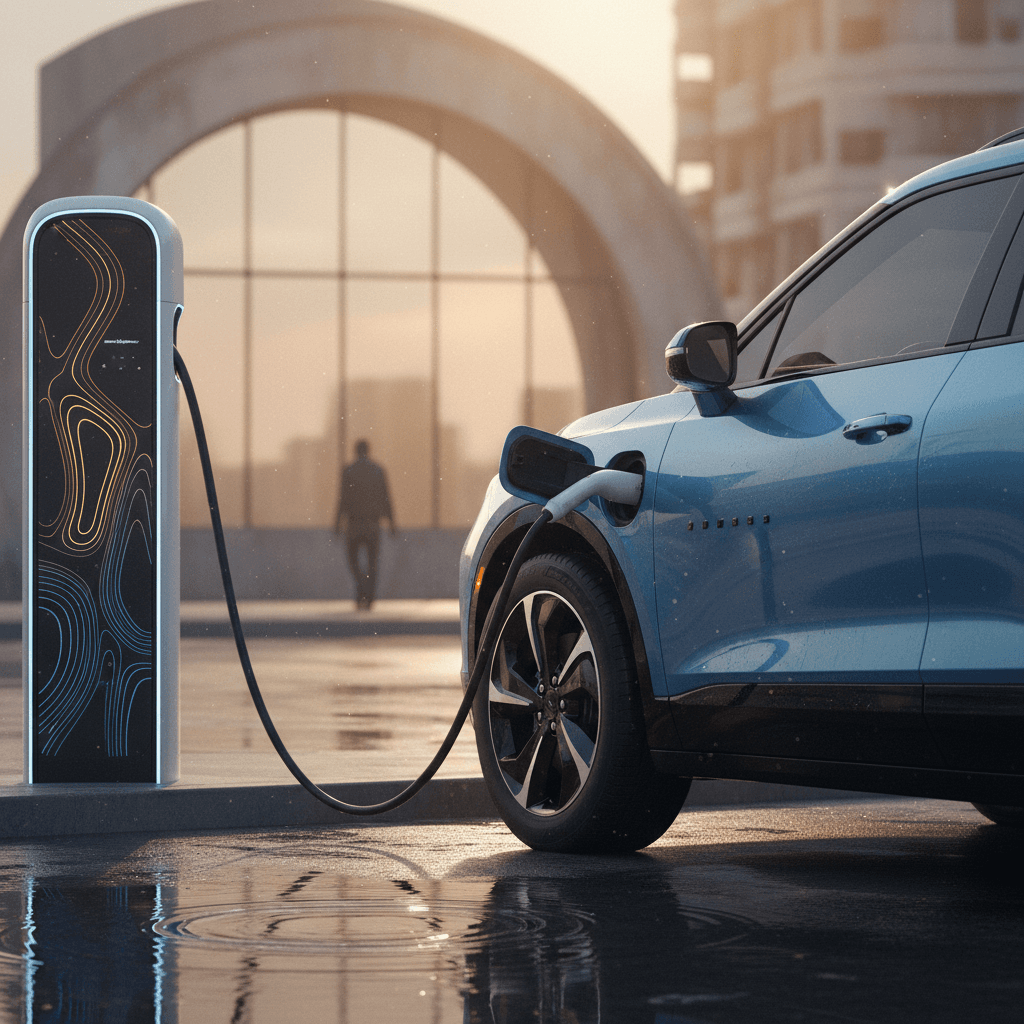
The 2025 Chevy Blazer EV is General Motors’ most extroverted electric SUV: sharp suit, big numbers on paper, and a badge that conjures up trail dust and tailgates. In reality, it’s a high-style Ultium-based family EV with serious range and charging capability, shadowed by software drama and recalls. If you’re cross‑shopping a Tesla Model Y, Hyundai Ioniq 5, or Ford Mustang Mach‑E, or eyeing a used Blazer EV at a discount, this review will walk you through the triumphs, the trouble spots, and whether it’s the right EV for you.
What this review covers
2025 Chevy Blazer EV at a Glance
Key 2025 Chevy Blazer EV Numbers
On paper, the Blazer EV is compelling: up to roughly 324 miles of range in its best configuration, strong DC fast‑charging performance, and an SS performance model with over 600 hp. In practice, the story is more complicated, trim choice matters enormously, and GM’s early‑run software and recall woes still cast a long shadow over the 2025 model year.
Powertrain, Range & Trims
Blazer EV Powertrains in Plain English
Same body, very different personalities depending on battery and driven wheels.
LT AWD
Who it’s for: Families who want all‑weather traction without performance pretensions.
- Dual‑motor AWD
- ~85 kWh battery
- EPA range around high‑270s (mi)
RS AWD & (former) RS RWD
Who it’s for: Style‑conscious buyers who want more punch and range.
- AWD: same ~85 kWh pack, ~279 mi EPA
- RWD (discontinued for 2026): 102 kWh pack, low‑320s miles EPA
SS AWD
Who it’s for: Straight‑line thrill‑seekers.
- Dual‑motor performance AWD
- 102 kWh battery
- Quoted 615 hp, 650 lb‑ft, ~303 mi range
For 2025, most buyers will encounter the dual‑motor AWD setup paired with an ~85‑kWh battery in LT and RS trims, good for roughly 279 miles of EPA‑rated range and 0–60 mph in about six seconds. It’s brisk enough, and the range is competitive with the thicker middle of the segment.
The more exotic configurations use a larger ~102‑kWh Ultium pack. The RS RWD variant, now quietly killed for 2026, stretched range into the low‑320‑mile bracket and bumped power to roughly 340 hp. The range‑performance sweet spot, though, is the Blazer EV SS: dual motors, 615 hp and 650 lb‑ft of torque, 0–60 in a claimed 3.4 seconds, and about 303 miles of range when you’re not constantly abusing the throttle.
Range reality check
Approximate 2025 Blazer EV Range & Performance by Configuration
Exact EPA figures vary slightly by wheel size and options; think in ballparks, not absolutes.
| Trim / Drivetrain | Battery (approx.) | Power (approx.) | 0–60 mph (sec) | EPA Range (mi, est.) |
|---|---|---|---|---|
| LT AWD | 85 kWh | 288 hp | ~6.0 | ~279 |
| RS AWD | 85 kWh | 288 hp | ~6.0 | ~279 |
| RS RWD (’24/early ’25, limited) | 102 kWh | 340 hp | ~5.7 | Low 320s |
| SS AWD | 102 kWh | 615 hp | 3.4 | ~303 |
Use this as a directional guide when comparing to other EV SUVs.
Charging: Home, Public and Tesla Superchargers
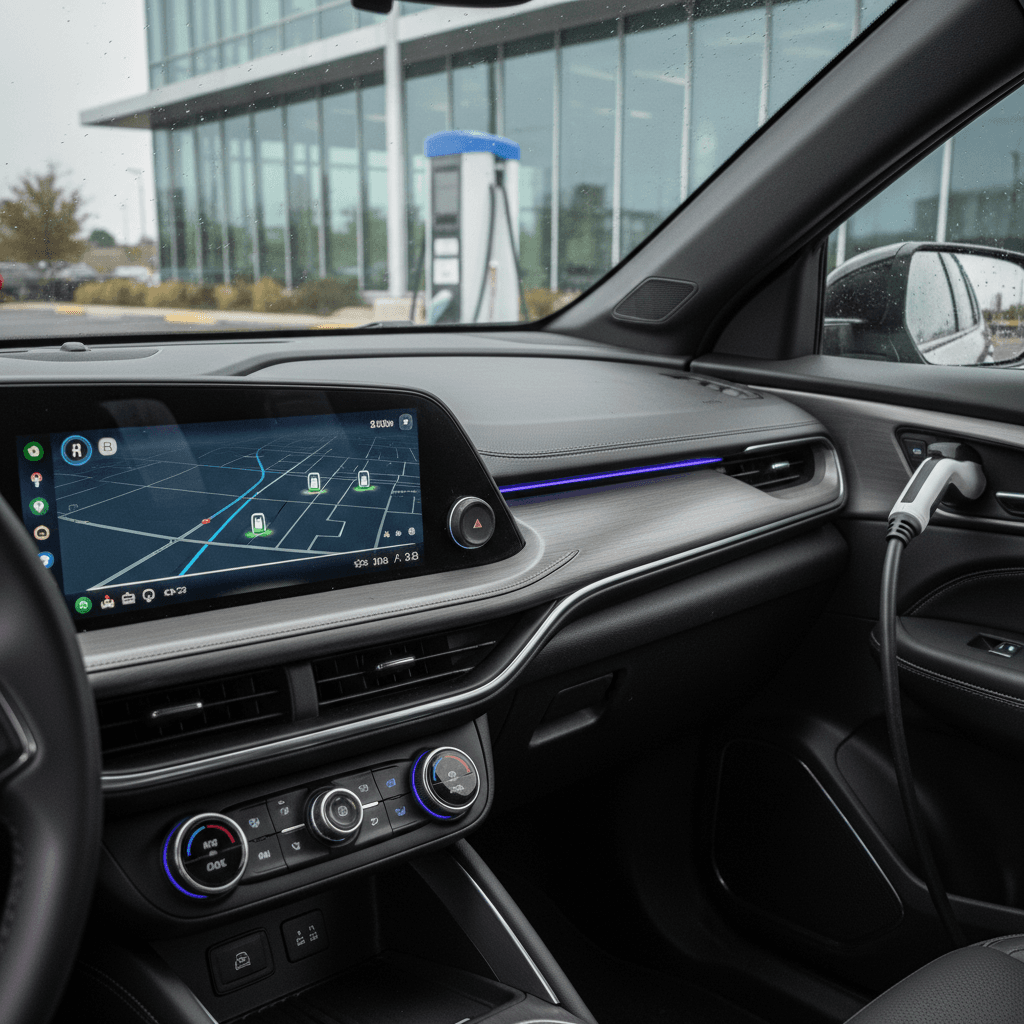
If you live with an EV every day, charging matters more than 0–60 times. Here the Blazer EV largely delivers. Every trim gets an 11.5 kW onboard AC charger, which is the sweet spot for modern home Level 2. On a 48‑amp circuit, you can realistically go from low state‑of‑charge to full overnight, even with the bigger 102‑kWh pack.
What charging a Blazer EV actually feels like
1. Home Level 2 (11.5 kW capable)
On a properly installed 240‑volt, 48‑amp charger, expect roughly 25–30 miles of range added per hour. That means a near‑empty large pack can be replenished in about 10 hours, perfect for overnight.
2. Public AC at work or shopping
Many public Level 2 stations top out below the Blazer’s 11.5 kW capability. In the real world you might see 6–7 kW at older installations, translating to 12–18 miles of range per hour.
3. DC fast charging (up to 190 kW)
With ideal conditions, Ultium hardware lets the Blazer EV peak around 150–190 kW. Chevrolet claims roughly 68–80 miles of range in 10 minutes depending on battery size and drivetrain.
4. Using Tesla Superchargers
With the right adapter and access credentials, owners have successfully pulled strong charge rates on Tesla V3/V4 Superchargers, often holding 100+ kW well into the mid‑state‑of‑charge range.
5. Road‑trip cadence
In practice, you’re looking at about 30–40 minutes on a fast charger to go from 10–80% if you arrive warm and low. That’s comfortably competitive with other non‑Tesla EV SUVs.
Mind the fine print on fast charging
On-Road Performance and Driving Impressions
Everyday LT / RS models
The volume Blazer EVs, the LT and RS with dual‑motor AWD, feel confident and quick rather than overtly sporty. Power comes on smoothly; there’s enough shove to merge and pass without drama, but the SUV’s near 3‑ton curb weight is always in the background.
Steering is light and accurate but not chatty. Body motions are well‑controlled, and the long wheelbase gives the Blazer EV a planted, almost luxury‑car stride on the highway. Big wheels and low‑profile tires can make sharp urban impacts feel a bit thumpy.
Blazer EV SS: the wild child
Drop into the SS and the Blazer EV finally lives up to its extroverted sheetmetal. Wide Open Watts mode uncorks super‑sedan acceleration; it will embarrass V8 muscle cars off the line while remaining eerily quiet.
There’s more grip, more brake, and more theater, but also more cost, both at purchase and eventually in tire replacement. If you don’t routinely use that performance, the SS is overkill relative to the RS AWD.
Ride & refinement sweet spot
Interior, Space and Tech
Step inside and the Blazer EV presents as a kind of electric Camaro crossover: big circular air vents, an angled dash, and a dramatic center console dominated by a large touchscreen. It’s visually busy but undeniably distinctive in a segment rife with anonymous tablets‑on‑dashboards.
Interior Pros and Cons
Where the Blazer EV delights, and where it doesn’t.
Bold, modern cockpit
The wraparound dash and ambient lighting make the cabin feel special at night. It’s a more characterful place to sit than many clinical EV interiors.
Space & practicality
Five passengers fit comfortably, with generous rear legroom. Cargo space is competitive with other midsize EV SUVs, though there’s no front trunk to brag about.
Ergonomics & visibility
Some controls are buried in menus, and the low‑slung windshield plus thick pillars can create glare and reduce forward visibility, especially driving into the sun.
Infotainment reality
Reliability, Recalls and Ownership Headaches
Here’s where the 2024–2025 Blazer EV story gets uncomfortable. GM didn’t just stumble out of the gate; it tripped over the podium. Early Blazer EVs were hit with serious software bugs and recalls, including issues with unintended parking brake activation, door latches, charging faults, and various driver‑assist malfunctions. The company even paused sales for a time to sort out the mess.
- Parking brake harness and wiring recalls, including a secondary recall to fix an incorrect replacement part on a small batch of 2024–2025 vehicles.
- Owner complaints about random forward‑collision‑braking events and inconsistent adaptive cruise performance.
- Intermittent charging failures where DC fast‑charge sessions wouldn’t initiate or would stop mid‑session.
- Infotainment glitches: frozen or blank center screens, audio dropouts, and unresponsive climate controls.
What this means if you’re buying used
2025 Blazer EV vs Model Y, Ioniq 5 and Other Rivals
How the 2025 Blazer EV Stacks Up
Approximate comparisons for mid‑trim models with similar equipment.
| Model | Max Range (mi) | Peak DC Charge | 0–60 mph (quickest trim) | Notable Strength |
|---|---|---|---|---|
| Chevy Blazer EV | ~303–324 | Up to 190 kW | 3.4 sec (SS) | Style, performance SS, Ultium architecture |
| Tesla Model Y Long Range | ~330 | ~250 kW | ~3.5–4.8 sec | Supercharger network, efficiency, software maturity |
| Hyundai Ioniq 5 | ~303 | Up to 235 kW (800V) | ~4.4 sec | Ultra‑fast charging, design, warranty |
| Ford Mustang Mach‑E | ~320 | 150 kW | ~3.5 sec (GT) | Road manners, brand cachet |
| Nissan Ariya | ~289 | 130–150 kW | ~5.1 sec | Comfort, refinement |
Use this table to frame your short‑list, not as a spec‑war scoreboard.
Where the Blazer EV shines, and where it doesn’t
Who the 2025 Blazer EV Actually Suits
Is the Blazer EV a Match for You?
Great fit for you if…
You want a <strong>stylish midsize EV SUV</strong> that doesn’t look like every other anonymous crossover in the Whole Foods parking lot.
You can install (or already have) a <strong>Level 2 home charger</strong> and will do 80–90% of your charging at home.
You’re open to a <strong>slightly less proven EV</strong> in exchange for strong performance and a potentially attractive used‑market price.
You’re comfortable confirming recall work, software versions, and doing a thorough pre‑purchase inspection.
Probably not for you if…
You’re allergic to early‑adopter drama and want the most <strong>trouble‑free EV experience</strong> available today.
You rely heavily on public charging and need an absolutely bulletproof fast‑charging ecosystem.
You prefer minimal‑drama dealership experiences; Chevy’s EV learning curve at the retail level is still uneven.
You’re cross‑shopping only on monthly payment and don’t value the Blazer EV’s styling or performance over cheaper, simpler options.
Buying a Used Blazer EV: What to Watch For
Because of its rocky launch, the Blazer EV is already showing up on the used market with steeper‑than‑average discounts. That can be an opportunity, if you’re careful. This is where a transparent marketplace like Recharged, with verified battery health and recall checks, earns its keep.
Used Blazer EV Checklist
1. Verify recall and software status
Ask for a printout of all completed and open recalls tied to the VIN. Confirm that critical items, parking brake harness, door latches, charging‑system updates, have been addressed with the correct parts and latest software.
2. Get battery health data, not just range guesses
Ultium packs are designed for longevity, but you still want objective data. At Recharged, every EV gets a <strong>Recharged Score battery report</strong>, so you can see pack health, fast‑charge history, and real‑world range expectations.
3. Test charging in the real world
If possible, plug into both Level 2 and a DC fast charger before committing. Watch for sessions that fail to start, error messages, or wildly fluctuating charge rates.
4. Stress‑test driver‑assist and infotainment
On the test drive, repeatedly engage adaptive cruise and collision‑avoidance features on a variety of roads. Cycle through infotainment functions, Bluetooth, navigation, and climate controls to look for freezes or restarts.
5. Inspect tires, wheels and suspension
The SS and big‑wheel RS trims are heavy and fast; they can be hard on tires and suspension bushings. Look for uneven tire wear, curbed wheels, and clunks over bumps.
6. Price against the risk profile
A discounted Blazer EV can be a smart buy if you walk in with eyes open. Use Recharged’s <strong>fair‑market pricing</strong> tools to make sure the discount properly reflects the model’s recall history and software reputation.
Where Recharged helps
Ready to find your next EV?
Browse Vehicles2025 Chevy Blazer EV FAQ
Frequently Asked Questions About the 2025 Blazer EV
Verdict: Should You Buy a 2025 Chevy Blazer EV?
The 2025 Chevy Blazer EV is an ambitious, deeply charismatic electric SUV built on genuinely modern hardware. In the right trim, it offers strong range, competitive charging speeds, and a driving experience that ranges from calm and confident to downright feral in SS form. It also carries the baggage of GM’s difficult launch, software hiccups, recalls, and a dealer body still climbing the EV learning curve.
If you’re shopping new and want the safest, simplest choice, there are fewer variables in a Model Y or a Korean 800‑volt rival. But if you’re style‑driven, intrigued by Ultium, and especially if you find a well‑priced, well‑sorted used Blazer EV with documentation, the Chevy can be a rewarding, distinctive alternative to the usual suspects.
That’s where Recharged comes in. With Recharged Score battery health diagnostics, fair‑market pricing analysis, and EV‑specialist guidance through recalls and software, you can let the Blazer EV’s personality work for you, without rolling the dice on its past. Go in informed, and this flawed but appealing electric SUV might be exactly the left‑turn your driveway needs.