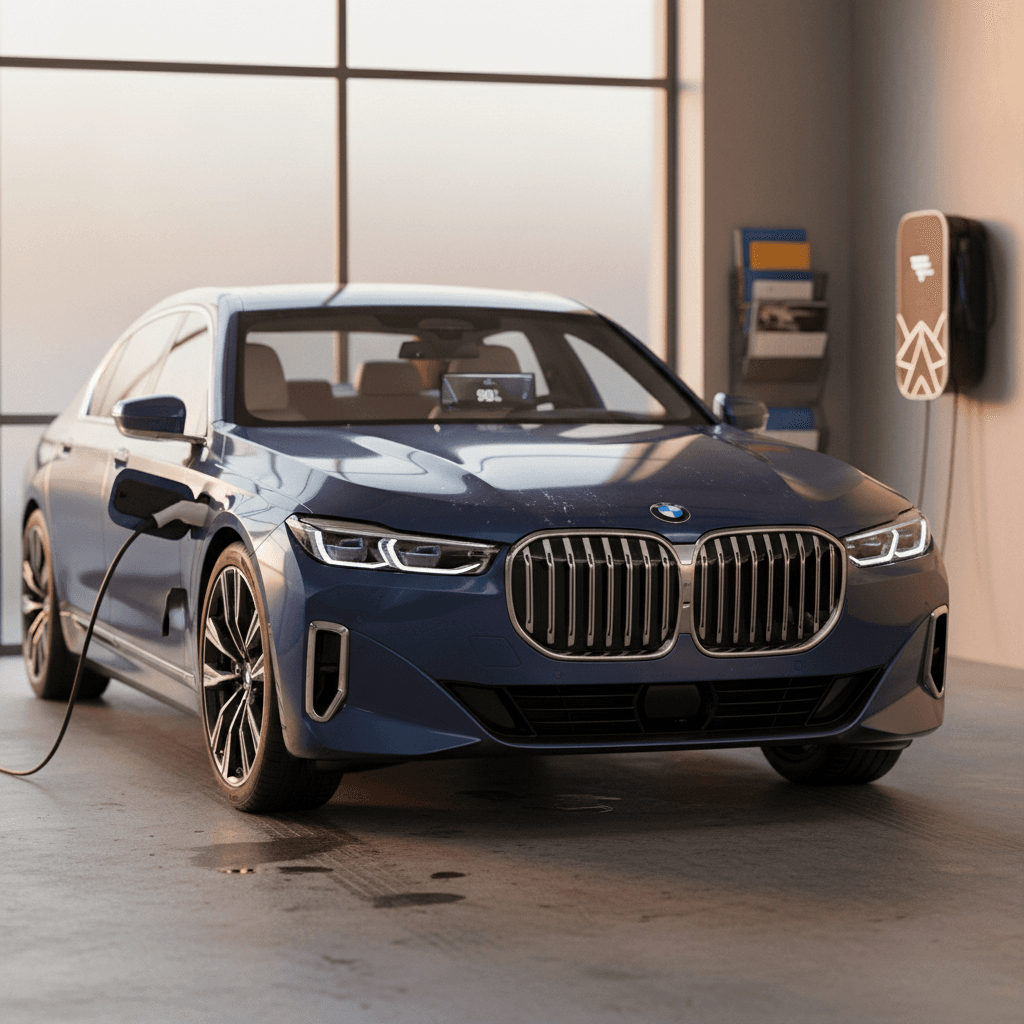
If you’re shopping a flagship luxury EV, the 2025 BMW i7 is probably on your short list. But before you drop six figures on a tech-heavy sedan, it’s reasonable to ask a blunt question: how reliable is the BMW i7 really, especially as it ages or on the used market?
Quick takeaway
2025 BMW i7 reliability overview
The 2025 BMW i7 rides on the same G70 7 Series platform that launched for 2023, so when we talk about 2025 BMW i7 reliability, we’re really looking at data and field experience from the 2023–2025 model years. That’s still early days for a complex luxury EV, but it’s enough to spot patterns.
Early signals on BMW i7 reliability
In other words, the i7 is not a disaster, but it’s not a Lexus either. You’re buying cutting-edge tech with the kind of teething issues we’ve seen across the luxury EV space, especially around software and electronic brake/steering systems, rather than chronic engine or transmission failures.
How reliable are modern BMW EVs?
Because the i7 is still relatively new, it helps to zoom out and look at BMW’s broader EV reliability track record. Recent studies place BMW in the upper-middle tier for long-term dependability compared with other luxury brands. It ranks ahead of Mercedes and Audi but still behind Lexus and Toyota for low problem counts.
Where BMW EVs tend to do well
- Powertrain robustness: Motor and inverter failures are uncommon so far in iX, i4 and i7 models.
- Battery management: Conservative thermal management and charging speeds help protect the pack.
- Chassis and structure: Core hardware (suspension, body, crash structure) has behaved much like BMW’s ICE flagships.
Where owners report problems
- Software bugs: Random error messages, ghost warnings, and occasional “drivetrain malfunction” alerts that clear after a restart.
- Infotainment/iDrive: Freezes, lag, and glitches following over‑the‑air (OTA) updates.
- Electronic ancillaries: 12V systems, sensors and control modules that can sideline the car until reprogrammed.
Think of the i7 as a rolling computer
Known 2023–2025 BMW i7 recalls and campaigns
One of the best windows into BMW i7 reliability is the recall record. Recalls don’t automatically make a car “unreliable,” but they do highlight the types of issues engineers are chasing in the field.
Major i7-related recalls through early 2026
Key safety recalls that have affected 2023–2025 BMW i7 models in the U.S. Always search a specific VIN on NHTSA before you buy.
| System | Issue | Risk/Effect | Typical Fix |
|---|---|---|---|
| Electric drive motor software | Motor control software can shut down the high-voltage system | Sudden loss of drive power | OTA or dealer software update |
| High-voltage battery modules | Improperly assembled cell modules in small batch of packs | Potential loss of power and rare fire risk | Replace specific battery cell modules |
| Integrated brake system | Weld issue in integrated brake control module | Loss of brake assist / ABS / stability control | Replace integrated brake module |
| Steering spindle | Defective steering spindle joint in some 7 Series/i7 builds | Higher steering effort or loss of assist | Replace steering spindle joint |
Recall coverage varies by build date and trim; not every i7 is affected by every campaign.
Don’t assume a 2025 is recall‑free
Common issues reported on the BMW i7
With only a few years of data, the story on 2025 BMW i7 reliability is still being written. But owner reports from early i7s, plus patterns from BMW’s other EVs, point to a few recurring themes.
Most common early i7 complaints
Based on owner anecdotes, service reports, and BMW’s EV track record so far
Random warning cascades
iDrive and screen glitches
12V and charging quirks
Less common but higher‑impact issues
- Loss of power while driving: Usually tied to the electric motor control software recall or to battery module issues; rare, but serious when it happens.
- Brake system faults: Integrated brake unit problems can cause loss of assist or ABS/DSC functionality until the hardware is replaced.
- Steering effort spikes: On affected cars, a bad steering spindle joint can suddenly increase steering effort, prompting a recall campaign.
What this means for a buyer
These patterns don’t mean every i7 will experience them, but they explain why you see some horror‑story posts online: when something goes wrong, it’s often all‑or‑nothing and can immobilize the car.
The good news is that most of these problems are covered by warranty and often fixed by updated software or modules, not full battery pack replacements.
Mechanical robustness is a bright spot
Battery health and long-term durability
Battery reliability is its own category. A luxury EV that runs perfectly but loses 30% of its range in a few years still isn’t a great ownership experience. Fortunately, BMW has played things fairly conservatively with their large packs.
- The i7’s pack is sized generously relative to its usable range, which gives BMW room to keep charge buffers at the top and bottom of the state-of-charge window.
- DC fast charging rates are solid but not as aggressive as the very fastest Korean EVs, which may help long‑term health by keeping cell temperatures in check.
- Real‑world owner reports so far suggest modest degradation in the first 2–3 years, often in the single‑digit percent range, though we don’t yet have data on 8–10 year-old cars.
Understanding BMW’s EV battery warranty
How to protect an i7 battery for the long haul
1. Avoid living at 100%
Use a daily charge limit (e.g., 70–80%) for routine driving and reserve 100% charges for road trips. High state of charge accelerates cell wear.
2. Be smart with DC fast charging
Occasional fast charging is fine, but letting the car bake at a high SOC after repeated fast charges is harder on the pack. If you road-trip frequently, this matters more.
3. Watch for software updates
BMW sometimes tweaks battery management and charging behavior via OTA updates. Keeping the car up to date can improve both reliability and longevity.
4. Get a baseline health check
If you’re buying used, ask for a recent battery health report. At Recharged, every vehicle gets a <strong>Recharged Score</strong> with third‑party verified battery diagnostics so you know how much usable capacity is left.
How the 2025 i7 compares to Tesla and other rivals
You don’t shop an i7 in a vacuum. Its most direct battery‑electric rivals are the Mercedes‑Benz EQS, Lucid Air and higher‑end versions of the Tesla Model S, with some buyers also cross‑shopping the Porsche Taycan and Audi e‑tron GT.
Reliability snapshot: 2025 BMW i7 vs key rivals
High-level view of how the i7 stacks up on reliability expectations within the luxury EV set.
| Model | Reliability profile | Typical pain points | Standout strength |
|---|---|---|---|
| BMW i7 | Upper‑middle among German luxury EVs; decent but not bulletproof | Software glitches, warning cascades, brake/steering recalls | Balanced ride/handling and robust core EV hardware |
| Mercedes EQS | Mixed; some major electronics issues in early builds | MBUX/infotainment bugs, air suspension, interior rattles | Quiet, comfortable highway cruiser |
| Tesla Model S | Powertrain generally robust, but quality variance is high | Fit and finish, screens, suspension components, OTA regression bugs | Supercharger access and strong efficiency |
| Lucid Air | Incredible powertrain, but early‑stage startup issues | Service coverage, software maturity, parts delays | Range and efficiency leader with huge battery tech promise |
| Porsche Taycan | Generally solid but not immune to complex‑EV gremlins | 12V and charging electronics, some coolant leaks | Driving dynamics and build quality |
This table summarizes patterns seen across brands; individual cars can vary widely based on build date, usage and maintenance.
How to read this comparison
Ownership costs, warranty and downtime
Reliability is about more than how often a car breaks; it’s about how painful those breaks are. With the i7, you’re dealing with expensive parts and specialized labor. That matters more as the car ages or if you’re buying one off warranty.
What 2025 BMW i7 reliability means for your wallet
Key cost and downtime considerations
Warranty window
Out‑of‑warranty repairs
Service time & parts
Plan for downtime, not just costs
Reliability tips if you’re considering a used i7
The i7 will be especially interesting as a used luxury EV: massive depreciation, cutting‑edge tech, and plenty of performance. That’s also where reliability decisions matter most, because you’re carrying more of the risk than the first owner.
Used BMW i7 reliability checklist
1. Run a full VIN recall and campaign check
Use the NHTSA database and BMW’s own tools to verify <strong>every recall and service campaign</strong> has been completed. Pay special attention to high‑voltage, brake and steering items.
2. Pull detailed service history
You want to see how often the car has been in for <strong>software reprogramming, warning messages, or electronic repairs</strong>. One or two visits is normal; a thick stack of unresolved tickets is a red flag.
3. Get a professional battery health report
Don’t buy a used i7 based on range estimates alone. At Recharged, every EV gets a <strong>Recharged Score battery report</strong> using independent diagnostics so you can see estimated remaining capacity and fast‑charge behavior before you commit.
4. Test all advanced features thoroughly
Go beyond a quick drive. Test adaptive cruise, lane‑keeping, parking assist, doors, soft‑close, massage seats, audio, doors and trunk. Luxury cars hide a lot of <strong>expensive little failures</strong> in their features.
5. Check charging behavior at home and DC fast
If possible, plug into a Level 2 station and a DC fast charger during your test period. Watch for faults, slow speeds, or the car dropping the session unexpectedly.
6. Consider where you’ll service it
If you’re far from a BMW dealer familiar with EVs, every issue becomes more painful. Factor travel and potential towing time into your reliability risk.
How Recharged evaluates BMW i7 reliability
At Recharged, we take a pretty cold‑eyed view of luxury EV reliability. The reality is that every premium EV on the market today blends brilliant engineering with a lot of software and supplier complexity. The question isn’t “Will anything ever go wrong?” but rather “What goes wrong, when, and how ugly is it for the owner?”
What goes into a Recharged Score for an i7
- Battery health diagnostics: We measure pack capacity, balance between modules, and fast‑charge performance to catch hidden degradation.
- Fault code scan: Deep scan of EV and chassis modules for current and stored trouble codes, especially those tied to HV system, brakes and steering.
- Software & campaign status: Verification that the car is on current software and that applicable recalls/service bulletins have been performed.
- Road test: We look for warning‑light cascades, inconsistent brake feel, steering effort changes and ride/handling anomalies.
Why this matters for BMW i7 buyers
On a car as complex as the i7, many reliability risks are invisible on a casual test drive. A structured inspection and battery report make the difference between buying a depreciated bargain and inheriting someone else’s intermittent nightmare.
If you’re exploring a used luxury EV, including the i7, you can browse vehicles with full Recharged Score reports, financing, and nationwide delivery in a single digital experience.
FAQ: 2025 BMW i7 reliability
Frequently asked questions about BMW i7 reliability
Bottom line: Is the 2025 BMW i7 reliable?
If your mental benchmark for “reliable” is a Lexus ES that never throws a warning light and only sees the dealer for oil changes, the 2025 BMW i7 will not hit that bar. It’s a deeply complex flagship EV with plenty of software, sensors, and comfort tech stacked on top of a solid powertrain and battery. In that context, its reliability so far is actually better than you might expect: major mechanical failures are rare, and the main pain points are software and electronic modules that can usually be fixed under warranty, but sometimes sideline the car for days or weeks.
For a new buyer, that means factoring in some service friction as the price of cutting‑edge tech. For a used buyer, it means being uncompromising about diagnostics: insist on proof that campaigns are complete, that the battery is healthy, and that you’re not inheriting a car with a history of intermittent faults. That’s exactly what Recharged’s Recharged Score reports are designed to surface, so you can enjoy a flagship EV without guessing at its past.