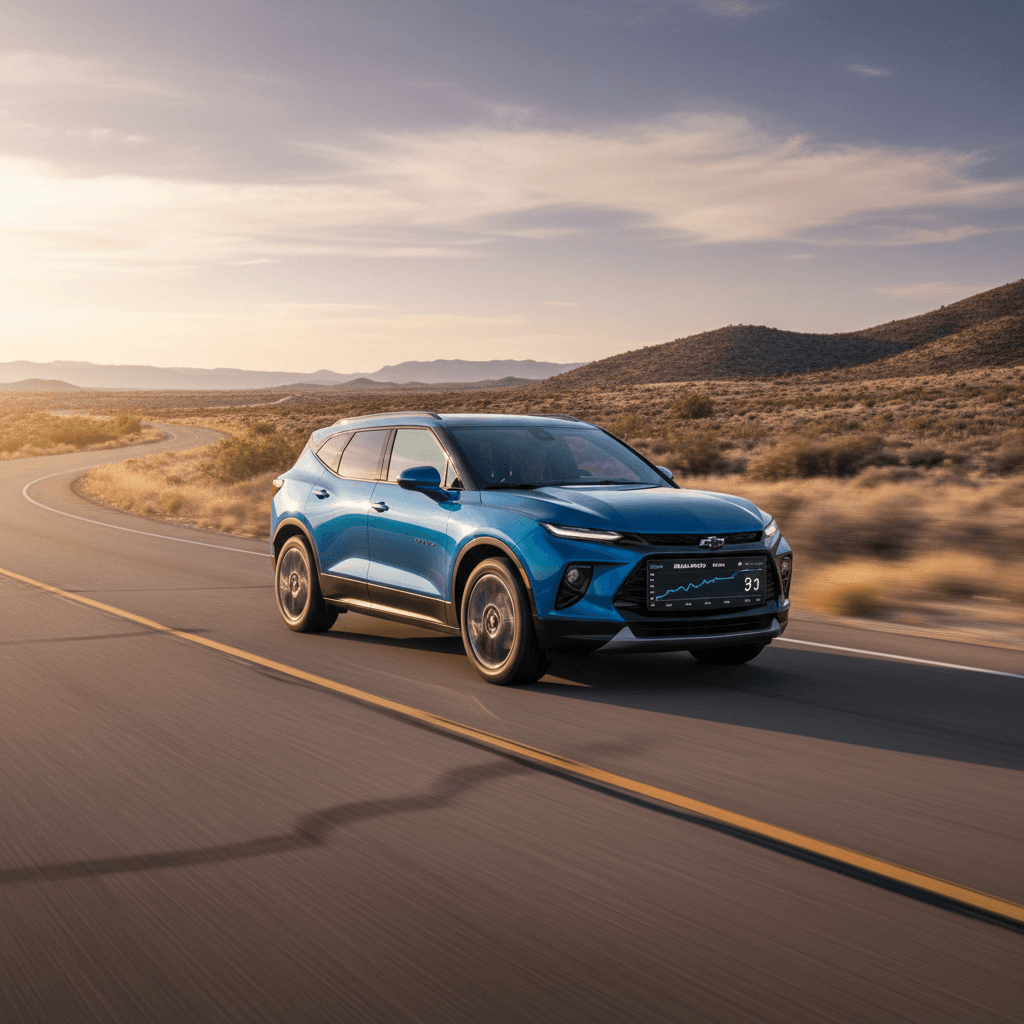
If you’re looking at a 2025 Chevy Blazer EV, the spec sheet promises up to 334 miles of range. But what does that really look like in the real world, on the highway, in winter, or loaded with kids and cargo? This 2025 Chevy Blazer EV range test guide pulls together EPA data, independent tests, and practical EV experience so you know what to expect before you buy, especially if you’re considering a used Blazer EV from a retailer like Recharged.
Quick takeaway
2025 Chevy Blazer EV range overview
The Blazer EV sits in the heart of the midsize electric SUV class, and Chevrolet clearly benchmarked vehicles like the Tesla Model Y, Hyundai Ioniq 5, and Ford Mustang Mach‑E. On paper, the 2025 Blazer EV offers competitive, and sometimes class‑leading, range, especially in RS rear‑wheel‑drive form. But your experience will vary dramatically based on trim, drivetrain, speed, temperature, and how you use climate control.
Key 2025 Blazer EV range and battery stats
EPA vs reality
EPA range by trim, battery, and drivetrain
Chevrolet offers the 2025 Blazer EV in LT, RS, and SS trims, with a mix of front‑wheel drive (FWD), all‑wheel drive (AWD), and, briefly, rear‑wheel drive (RWD) on the RS. Each combination uses one of two Ultium battery packs and carries a different EPA estimate.
2025 Blazer EV EPA range by configuration
Official EPA‑estimated ranges published for the 2025 model year. Availability of some configurations may be limited, and the RS RWD is being phased out after 2025 in favor of FWD and AWD variants.
| Trim | Drivetrain | Battery (usable) | EPA range (mi) | Notes |
|---|---|---|---|---|
| LT | FWD | ~85 kWh | 312 | Best efficiency in LT lineup, lower power |
| LT | AWD | ~85 kWh | 283 | More traction; slight range penalty |
| RS | FWD | ~85 kWh | 312 | Same rating as LT FWD with extra features |
| RS | AWD | ~85 kWh | 283 | Popular spec; balanced performance & range |
| RS | RWD | ~102 kWh | 334 | Longest‑range Blazer EV; limited availability after 2025 |
| SS | AWD | ~102 kWh | 303 | High‑performance; still strong range for the power |
Use this as a starting point, your actual range will depend heavily on speed, temperature, and driving style.
RWD RS is the range hero, while it lasts
Real‑world 2025 Blazer EV range tests
EPA ratings are a useful anchor, but what shoppers really care about is how far a Blazer EV will go at typical U.S. highway speeds. Independent outlets have now put multiple Blazer EV trims through standardized 70–75 mph tests, giving us a clearer picture of real‑world results.
Independent 2025 Blazer EV range test results
What early testing tells us about highway range
LT AWD – ~210 miles at 75 mph
In a controlled 75‑mph highway loop, an LT AWD returned around 210 miles before reaching a low state of charge, roughly 74% of its 283‑mile EPA rating.
This is typical of taller EV SUVs at sustained interstate speeds.
RS AWD – ~200 miles at 75 mph
The RS AWD, wearing larger wheels and stickier tires, delivered about 200 miles on the same 75‑mph test, closer to 70% of its EPA rating.
Wheels, tires, and aero details matter more than most buyers expect.
SS AWD – ~250 miles at 75 mph
Despite its performance focus, the SS AWD with the larger 102 kWh pack has managed about 250 miles in independent 75‑mph testing.
That’s an impressive ~82% of its 303‑mile EPA figure.
These early results line up with what we see across many modern EVs: plan on roughly 70–80% of EPA range for sustained 70–75 mph driving, and more if your trips mix in slower roads, city traffic, or temperate weather.
Mixed city + suburban driving
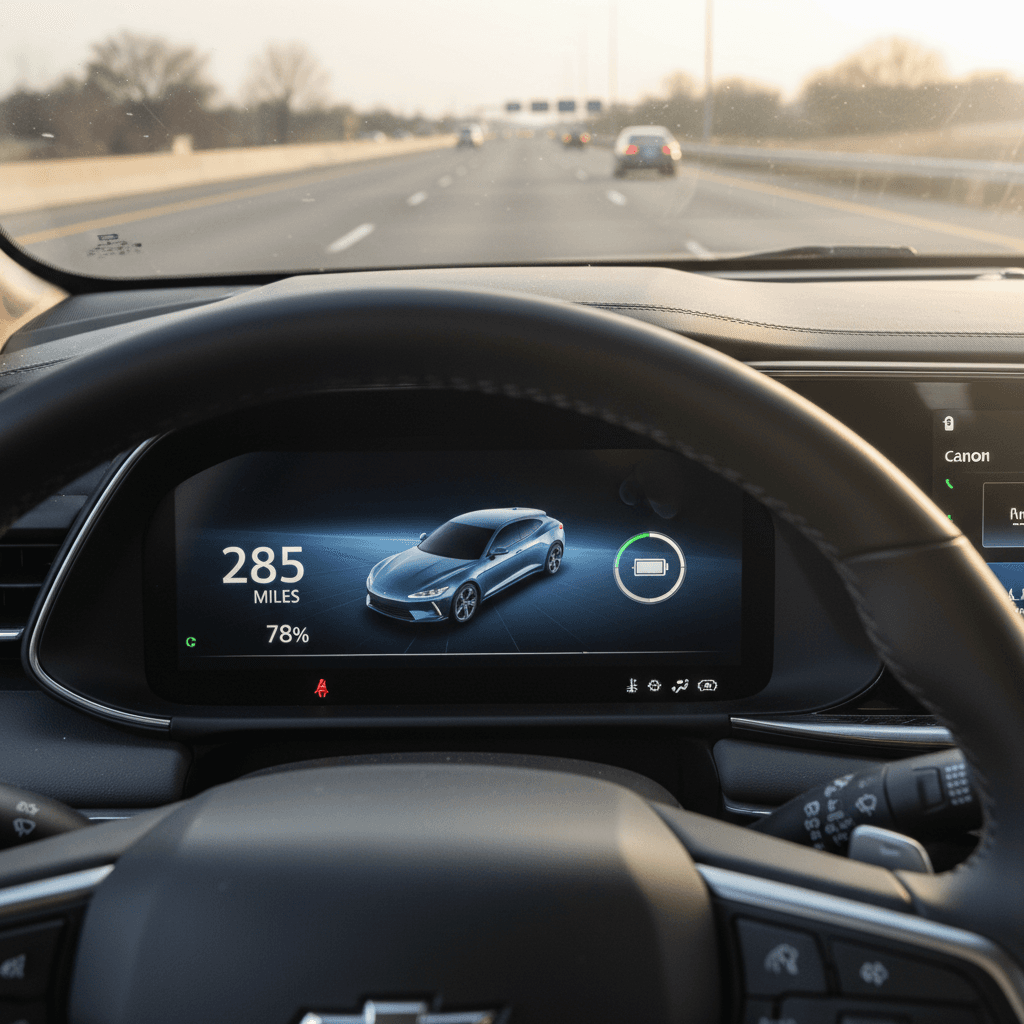
In day‑to‑day use at speeds under 60 mph, many Blazer EV drivers will see efficiency near or slightly above the official MPGe ratings, especially in mild climates. That means:
- RS RWD owners can realistically see 280–320 miles between charges.
- LT/RS FWD drivers may see 250–290 miles.
- AWD drivers are more likely to land in the 220–260‑mile range.
Consistent interstate cruising
On long highway legs at 70–75 mph, air resistance dominates. Expect:
- LT/RS AWD: ~200–220 miles per full charge.
- RS RWD: roughly 240–270 miles in mild weather.
- SS AWD: ~230–260 miles, depending on wheels and driving style.
This is where planning your charging stops becomes crucial, and where tools like route planners and energy‑aware navigation really shine.
How to sanity‑check any range test
City vs highway vs winter range
Like every EV, the Blazer EV is most efficient at moderate speeds and in moderate temperatures. Because there’s no engine waste heat to “recycle,” cold weather has a much bigger impact on range than it does in a gas SUV.
How driving conditions affect Blazer EV range
Three common scenarios and what to expect
Urban/suburban errands
Lots of stops and speeds under 45 mph actually help the Blazer EV, thanks to regenerative braking.
Plan on getting close to EPA range in mild weather, especially with eco drive modes and moderate HVAC use.
70–75 mph highway cruising
This is where range shrinks fastest. Air resistance rises sharply with speed, and there’s little opportunity for regen.
Expect 20–30% less than EPA, more if you’re climbing or driving into strong winds.
Cold‑weather driving
Below‑freezing temps plus cabin heat can cut range by 30–40% on any EV, Blazer included.
Pre‑conditioning while plugged in and using heated seats/steering wheel instead of blasting the HVAC can claw back a noticeable chunk of range.
The winter road‑trip trap
Fast charging, road trips, and charging stops
Range is only half the story on a road trip. The other half is how quickly you can add miles back at a DC fast charger. Here the Blazer EV is competitive but not class‑leading: peak power is strong, but the charging curve tapers sooner than the very fastest Korean and Tesla rivals.
2025 Blazer EV fast‑charging performance basics
In practice, the Blazer EV works best on road trips if you think in energy chunks rather than full charges. Driving from ~10% to ~60–70% and then hopping back on the road keeps you in the sweet spot of the charging curve and minimizes downtime.
Planning road‑trip stops in a Blazer EV
1. Aim for 10–20% arrival SOC
Arriving at a DC fast charger with a low state of charge lets your Blazer EV pull near its peak power, charging fastest when the battery is most depleted.
2. Charge only to 60–75%
Charging to 100% is fine at home but slow on the road. On most Blazer trims, the last 20–30% can double your stop time while adding relatively few highway miles.
3. Think in miles added, not percentage
If a 15‑minute stop adds roughly 90–100 miles of highway range, a series of short, frequent stops is often more efficient (and less tiring) than one long, 0–100% session.
4. Use route‑aware navigation
Built‑in Google Maps and third‑party tools can route you via reliable fast chargers and estimate arrival state of charge based on speed limits, weather, and elevation.
5. Keep speed and climate in check
On marginal legs in bad weather, slowing from 75 to 65 mph and using seat heaters over cabin heat can be the difference between arriving with 15% or in turtle mode.
6. Test your local networks early
Before a big trip, do a shakedown run to the closest 150–350 kW station and note how your Blazer EV behaves on that hardware. Not all stations are created equal.
How the Blazer EV’s range compares to rivals
If you’re cross‑shopping the Blazer EV with other midsize electric SUVs, its EPA range numbers hold their own, and the RS RWD in particular was designed to go after segment leaders. But real‑world experiences and charging behavior paint a more nuanced picture.
2025 midsize electric SUV range comparison
Selected long‑range trims that many Blazer EV shoppers will also consider.
| Model & trim | Drivetrain | EPA range (mi) | Battery size (approx.) | Highway range pattern |
|---|---|---|---|---|
| Chevy Blazer EV RS RWD | RWD | 334 | 102 kWh | Strong; 240–280 mi typical at 70–75 mph |
| Chevy Blazer EV LT/RS AWD | AWD | 283 | 85 kWh | Good; ~200–220 mi at 70–75 mph |
| Chevy Blazer EV SS AWD | AWD | 303 | 102 kWh | Solid; ~230–260 mi at 70–75 mph |
| Tesla Model Y Long Range | AWD | ≈330 | ~82 kWh | Efficient; often 240–270 mi at 70–75 mph |
| Hyundai Ioniq 5 LR RWD | RWD | 303 | 77.4 kWh | Efficient; ~220–250 mi at 70–75 mph |
| Ford Mustang Mach‑E Premium eAWD ER | AWD | ≈320 | ≈91 kWh | Comparable; ~220–250 mi at 70–75 mph |
EPA ranges will shift slightly year to year, but this snapshot shows where the Blazer EV sits among popular alternatives.
Where the Blazer EV shines
How to maximize range in a Blazer EV
Regardless of trim, you have a surprising amount of control over how far your Blazer EV goes on a charge. The same Ultium hardware can behave like very different vehicles depending on how you drive and charge it.
Practical ways to stretch your Blazer EV’s range
Habits that matter more than you might think
Drive smoother, not slower
You don’t have to crawl in the right lane. Simply avoiding full‑throttle launches, anticipating stops, and using one‑pedal or strong regen can trim consumption by 10–20% in city driving.
Watch speed and aero drag
Above ~65 mph, every 5 mph step costs meaningful range. Roof boxes, bike racks, and big wheels all increase drag; at 75 mph you can easily see a 20–30% hit vs. gentle 60‑mph cruising.
Use climate control strategically
Preheat or precool while plugged in, then rely on heated seats and wheel when possible. In cold weather, this alone can restore tens of miles of lost range over a long day.
Quick checklist before a long drive
Check tire pressures
Low tire pressures can sap 5–10% of your range. Set them to the door‑jamb spec (or slightly higher for sustained highway drives) when the tires are cold.
Update software and maps
Range prediction, charging location data, and even efficiency optimizations often arrive via software updates. Make sure your Blazer EV is up to date before a big trip.
Plan conservative first legs
On your first long trip, plan the first leg with a healthy margin. If you arrive with more battery than expected, you can stretch later legs; if you arrive low, you’ve learned an important limit safely.
Use energy screens, not just the gauge
The Blazer’s detailed energy graph and trip readouts can highlight how speed, HVAC, and terrain are affecting consumption in real time, helping you adjust before range becomes a problem.
Think in kWh/100 mi, not just miles
Range considerations for used Blazer EV buyers
Because the Blazer EV is still relatively new, the first wave of used examples will mostly be 2024–2026 models with low to moderate mileage. That’s good news for range: modern Ultium packs are designed to retain most of their usable capacity through the first 8–10 years when cared for reasonably well.
What to look for in a used Blazer EV
- Trim and battery pack: Confirm whether you’re looking at the 85 kWh or 102 kWh pack. An RS RWD or SS will give you noticeably more buffer for road trips.
- Usage history: Vehicles that lived their lives on DC fast chargers won’t necessarily be ruined, but a mix of home Level 2 and moderate fast‑charging is healthiest.
- Software level: Range estimation, charging behavior, and bug fixes often ride on software updates, important for early‑build Blazers.
How Recharged helps de‑risk range
When you buy through Recharged, every used Blazer EV comes with a Recharged Score Report that includes verified battery health, charging history insights, and fair‑market pricing.
That means you’re not guessing whether the previous owner abused the pack or whether the EPA number still reflects reality, you’re looking at data.
You can also work with an EV specialist to sanity‑check whether a particular Blazer EV configuration fits your commute or road‑trip plans before you click buy.
Don’t assume all Blazer EVs have the same real‑world range
Frequently asked questions: 2025 Blazer EV range
2025 Chevy Blazer EV range FAQ
Bottom line: Should you trust the EPA number?
The 2025 Chevy Blazer EV’s EPA ratings, 283 to 334 miles depending on configuration, are a solid starting point, not a guarantee. On real American roads at real American speeds, most owners will see something like 70–90% of those numbers depending on trim, weather, and driving style. The good news is that the Blazer EV offers enough usable range and charging performance for most daily use cases, and the right configuration can be a genuinely capable road‑trip machine.
If you’re shopping new, focus less on the single headline number and more on how you actually drive: commute length, highway vs city split, climate, and access to fast charging. If you’re shopping used, prioritize verified battery health, clear charging history, and a trim that matches your life. That’s exactly what Recharged is built for, combining transparent battery diagnostics, fair pricing, and EV‑savvy guidance so you end up with a Blazer EV whose real‑world range you can count on, not just dream about.