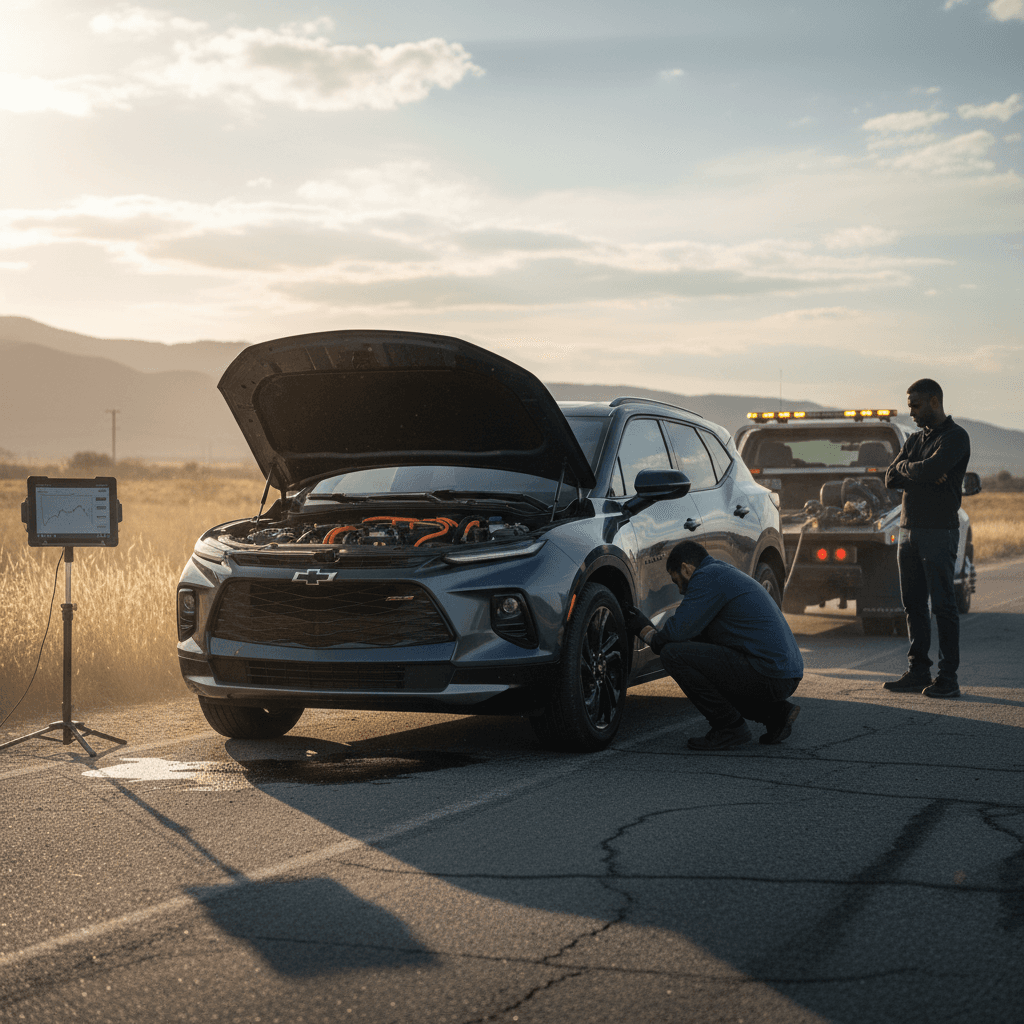
If you’ve been eyeing Chevy’s sporty electric SUV, you’ve probably also heard the chatter about 2025 Chevy Blazer EV problems. Early software glitches, recalls, and mixed owner reviews have made this one of the most talked‑about EVs on the road. The good news: most issues are now well‑understood. The bad news: you still need to shop with your eyes wide open, especially if you’re considering a used Blazer EV.
Quick context
2025 Chevy Blazer EV problems at a glance
What we’re seeing on 2025 Blazer EVs
Let’s separate the noise from the real patterns. Problems on the 2025 Blazer EV tend to fall into five buckets:
- Software and infotainment glitches (navigation, Google Built‑In, OnStar, random warnings)
- Charging quirks and communication errors with some Level 2 and DC fast chargers
- Recalls and service campaigns, including a rear parking brake wiring harness recall in 2025
- Build quality complaints: rattles, wind noise, loose trim, and a few failing plastic panels
- Annoyances: no Apple CarPlay/Android Auto, mediocre audio on some trims, confusing update process
Important if you’re buying used
Background: early stop‑sale and 2025 recalls
To understand 2025 Chevy Blazer EV problems, you have to start a little earlier. Late in 2023, GM briefly halted sales of the Blazer EV after the first batch of vehicles showed serious software issues, including screen failures and DC fast‑charging problems. That stop‑sale applied mainly to early 2024 models, but the fixes and new software builds carried forward into the 2025 lineup.
By mid‑2025, the story had shifted from “don’t buy this” to “GM has largely cleaned this up.” Reviewers who drove 2025 Blazer EVs with the updated software generally reported smooth experiences and strong performance. At the same time, GM announced a major recall for the rear parking brake wiring harness, covering roughly 40,000 Blazer EVs built in Mexico. The harness can be damaged, potentially affecting the rear electronic parking brake. Dealers inspect and replace the harness with a revised part at no cost.
Recalls vs. software updates
Software and infotainment issues on the 2025 Blazer EV
If there’s a single theme tying most Blazer EV problems together, it’s software. Google Built‑In, OnStar, and the vehicle’s control modules all share data, so when one part acts up, weird things start to happen.
Common 2025 Blazer EV software complaints
Most are fixable, but some owners have spent weeks in the shop
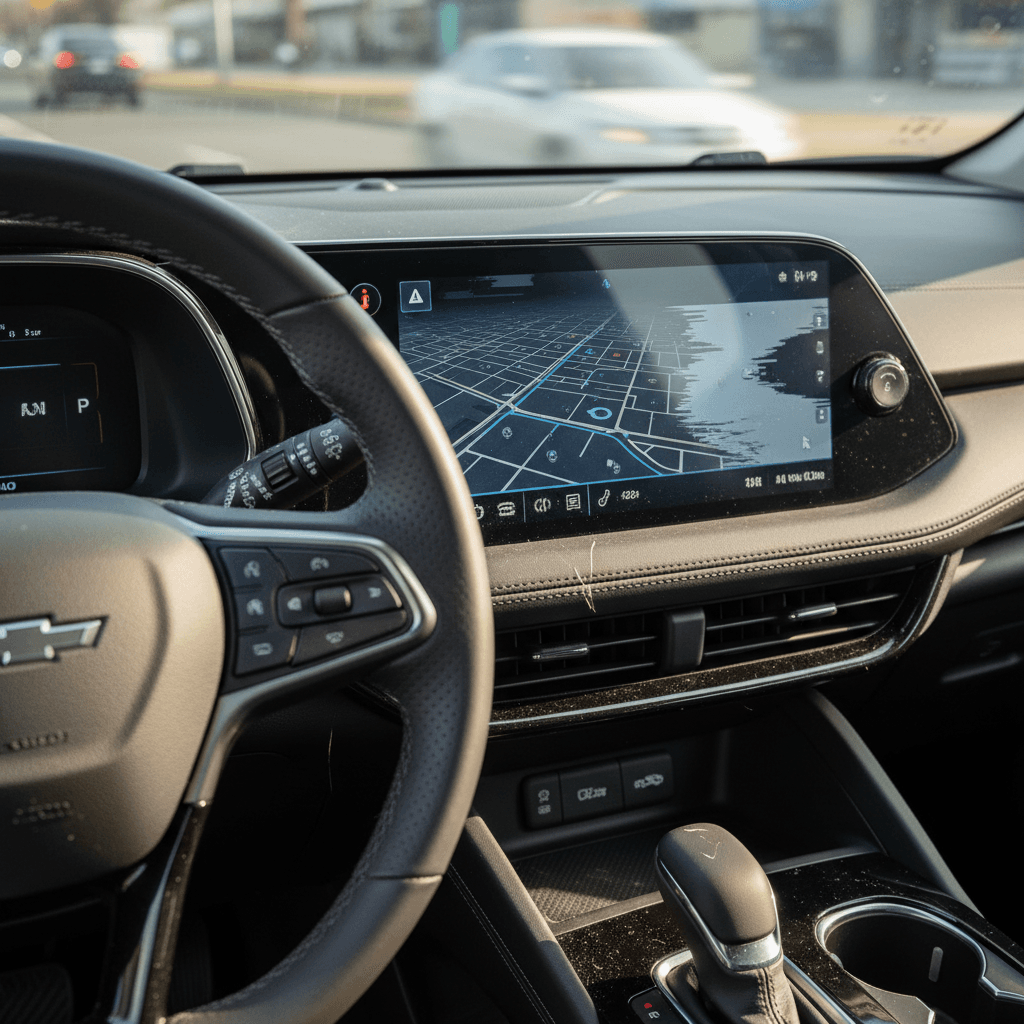
Navigation & Google Maps failures
Several 2025 owners report:
- Built‑in navigation never activating or losing GPS lock
- Trip planning failing to account for charging stops
- OnStar modules needing replacement to restore connectivity
For an EV, no navigation + no trip planning is more than a nuisance, it makes route planning and range management harder.
Screen freezes & camera glitches
Owners describe:
- Infotainment screens freezing or becoming unresponsive
- Rear camera going blue or shutting off intermittently
- System rebooting only after a long shutdown
These issues often improve after a full software update or module reflash at the dealer.
Random warnings & vehicle “restarts”
Some drivers have seen:
- Vehicle turning itself back on after they exit
- Anti‑theft system unexpectedly preventing a start
- Persistent minor glitches after over‑the‑air (OTA) updates
There’s a technical service bulletin (TSB) instructing dealers to perform vehicle‑wide software programming to address many of these quirks.
What to do before you panic
One recurring frustration in owner forums isn’t just the bugs, it’s the update experience. Blazer EVs do get OTA updates, but they’re inconsistent. Some owners see new features (like additional streaming options) while others wait months with no obvious changes, then end up at the dealer anyway for a USB‑based radio or module update.
For tech‑sensitive buyers
Charging and battery-related complaints
On paper, the 2025 Blazer EV charges competitively, with DC fast‑charging rates around 190 kW on higher‑trim models and solid real‑world range. In day‑to‑day use, though, some owners have run into quirks that show up as “2025 Chevy Blazer EV charging problems” in forums.
1. Charger “picky‑ness”
Multiple owners report the Blazer EV is more sensitive to charger quality than other EVs they’ve owned. The pattern looks like this:
- Level 2 public chargers starting then abruptly stopping
- “Unable to charge” or similar messages, while the same station works fine for other EVs
- Failures that mysteriously clear up after an infotainment reboot or after disabling a scheduled‑charging setting
In some cases, the culprit turned out to be an electrical issue on the home side (like a bad breaker causing voltage drop). But the takeaway is that the Blazer EV is less forgiving of marginal hardware.
2. Battery & thermal management hiccups
Battery‑hardware failures haven’t been widespread, but a few owners have reported:
- Faulty valves in the battery cooling system requiring replacement
- Warning lights that disappear and then reappear over several visits
- Long waits for parts tied to the Ultium platform
Once repaired, most drivers report normal behavior, but long parts delays can leave the car sidelined for weeks.
Charging troubleshooting to try first
Build quality, noise, and hardware problems
Walk around a 2025 Blazer EV and it looks expensive and tightly screwed together. Live with one for a few thousand miles, and some owners say the polish fades a bit. Most complaints here are annoying rather than dangerous, but they’re part of the real‑world Chevy Blazer EV problems picture.
Real‑world build and hardware issues
Not every Blazer EV has them, but you should listen for them on a test drive
Wind whistle at highway speed
Drivers describe a sharp whistle above ~45 mph, usually around the driver’s window or A‑pillar. Taping over seals can help find the source; in some cases, the culprit is the lower window seal where the glass wipes past the door.
Rattles & loose interior trim
A handful of owners complain of:
- Headliner creaks on rough pavement
- Door‑panel rattles with the window fully up
- Flimsy‑feeling plastic around the window and B‑pillars
These are fixable, but they chip away at the premium feel.
Exterior plastic panels & covers
A few reports mention small underbody or wheel‑area plastic panels coming loose or even falling off at low speed. They typically cover access points near the rear motor and can be reattached or replaced under warranty.
One more sore spot for some buyers: audio quality. At least one Blazer EV owner with an all‑wheel‑drive model has blasted the stock stereo as thin and muddy, with no factory upgrade path and strict limitations on aftermarket audio changes. Not everyone agrees, but if you care about sound, test the stereo carefully before you sign.
Driving experience: what’s going right
Here’s the twist: when you look past the software drama, many reviewers and owners think the 2025 Blazer EV is a terrific drive. The SS model in particular has been called one of the most entertaining electric SUVs on sale, with around 615 hp, 0–60 mph in the mid‑3‑second range, and real‑world range that can match or slightly beat its EPA estimate when driven sensibly.
- Strong acceleration across the lineup, with the SS in true performance‑SUV territory
- Stable, confident highway manners and well‑sorted ride on most trims
- Good efficiency for the power on tap, especially on steady freeway runs
- Spacious cabin with comfortable seating front and rear
- Super Cruise (where equipped) that rivals or beats most driver‑assist systems outside Tesla’s ecosystem
The hardware story is mostly good
Should you worry about 2025 Blazer EV reliability?
So, is the 2025 Chevy Blazer EV unreliable? The answer is nuanced. Early 2024 buyers absolutely beta‑tested GM’s software. By 2025, many of the worst bugs were fixed, but the ownership experience still depends heavily on whether your particular vehicle has had the right updates, and how capable your local dealer is with EVs.
Reasons not to panic
- Most issues are software‑related and fixable without replacing major hardware.
- There is a clear paper trail of recalls and technical service bulletins that dealers can follow.
- Plenty of 2024–2025 owners report thousands of trouble‑free miles once updates are installed.
- Professional reviewers who drove 2025 models after the big software overhaul generally had positive experiences.
Reasons to be cautious
- Software maturity still lags behind leading EV players, especially around OTA updates.
- Parts and modules, like OnStar units or cooling‑system valves, can be back‑ordered for weeks.
- Owner reports are polarized: some rate it 5/5, others 1/5 based largely on software headaches.
- Dealer EV expertise varies widely; a good EV‑certified dealer makes a big difference.
Think of the 2025 Blazer EV as a great electric SUV with an uneven digital brain. If you’re willing to live with the occasional software quirk, and you have a patient, EV‑savvy service center, it can be a rewarding choice. If you want set‑and‑forget tech and bulletproof updates, you may be happier elsewhere.
Used Blazer EV buyers: problems checklist
If you’re shopping the used market, this is where you can turn Blazer EV history to your advantage. Depreciation plus its rocky launch means you can often get a lot of performance and range for the money, as long as you systematically screen for known 2025 Blazer EV problems.
Used 2025 Blazer EV problems checklist
1. Run a full VIN recall and TSB check
Ask a Chevy dealer to pull recall and technical service bulletin history for that exact VIN. Confirm the rear parking brake wiring harness recall has been done, along with any vehicle‑wide software programming campaigns.
2. Verify software and infotainment behavior
During a long test drive, cycle the infotainment system, Google Maps, OnStar, rear‑view camera, and driver‑assist features. Look for freezes, blue screens, missing GPS data, or the vehicle turning itself back on after you exit.
3. Stress‑test charging at home and public stations
If possible, plug into both a home Level 2 charger and a public station. Watch for sessions that stop abruptly or error messages like “unable to charge.” A one‑time hiccup is annoying; a pattern is a red flag.
4. Listen for wind noise and rattles
Take the SUV to 60–70 mph and listen closely around the driver’s window, doors, and headliner. Any whistling, buzzing, or loose‑panel sounds are worth documenting and negotiating into the price, or asking to be repaired before purchase.
5. Inspect underbody and wheel‑area plastics
Peek around the rear wheels and underbody for loose or missing plastic covers. They’re not catastrophic, but on a young EV they indicate either rough use or incomplete repairs.
6. Evaluate audio and comfort honestly
If you’re picky about sound, live with the stereo on your test drive. There’s no simple factory upgrade on many trims, and GM is strict about aftermarket changes that might affect warranty or resale value.
7. Review service history and parts delays
Ask for printed service records. Long gaps where the car sat for weeks waiting on an OnStar module or cooling‑system valve tell you what kind of patience you’ll need if something else fails later.
8. Get independent EV‑focused insight
Buying from a marketplace like <strong>Recharged</strong> adds a second set of expert eyes. Our <strong>Recharged Score</strong> includes battery health diagnostics, fair‑market pricing, and model‑specific problem checks so you’re not flying blind.
How Recharged helps with Blazer EVs
How recalls and software updates work on the Blazer EV
Part of living with a modern EV is living with updates. With the Blazer EV, it’s especially important to understand how recalls and software updates actually get onto your car.
Recalls vs. software updates on the 2025 Blazer EV
Use this to make sure your Blazer EV, or the one you’re considering, has had the right work done.
| Type | How it’s delivered | Examples | What you should do |
|---|---|---|---|
| Safety recalls | Dealer visit; sometimes combined with software updates | Rear parking brake wiring harness inspection/replacement | Confirm all safety recalls are closed before you buy or take delivery. |
| Service campaigns | Dealer visit, usually free; not always safety‑critical | Vehicle‑wide software programming, updated radio/infotainment software | Ask the service advisor to apply all open campaigns when the car is in. |
| Over‑the‑air (OTA) updates | Downloaded via Wi‑Fi or cellular; requires driver approval | Bug fixes, minor feature additions, tuning for charging or displays | Accept updates when safe to do so. If an OTA fails or is rejected, the car may need dealer intervention. |
| Owner‑requested updates | Dealer visit you specifically request | Infotainment module update, Google Built‑In fixes, camera glitches | If you’re chasing annoying bugs, ask for a full software refresh, not just a quick reset. |
Ask the seller or dealer which of these items have been completed on the specific VIN.
Don’t assume “latest software” means everything
FAQ: 2025 Chevy Blazer EV problems
Frequently asked questions about 2025 Blazer EV issues
Bottom line: is the 2025 Blazer EV worth it?
The 2025 Chevy Blazer EV is a tough vehicle to put in a simple box. On one hand, it’s fast, stylish, and genuinely comfortable, with an electric powertrain that feels fully modern. On the other, it carries real baggage from its rocky launch: recalls, software updates that don’t always stick, and owners who’ve spent more time at the dealer than they ever expected.
If you want an EV that “just works” and you never have to think about software, this might not be your first choice. But if you’re drawn to the Blazer EV’s looks and performance, and you’re willing to do your homework, pull the VIN history, push every button on the test drive, and work with an EV‑savvy seller, the 2025 model can absolutely be worth it.
And if you’d rather not decode all of this alone, that’s exactly where Recharged comes in. Every used EV on our marketplace, including the Blazer EV, comes with a Recharged Score Report covering battery health, pricing, and known trouble spots, plus EV‑specialist support from your first question to the moment the car shows up in your driveway.