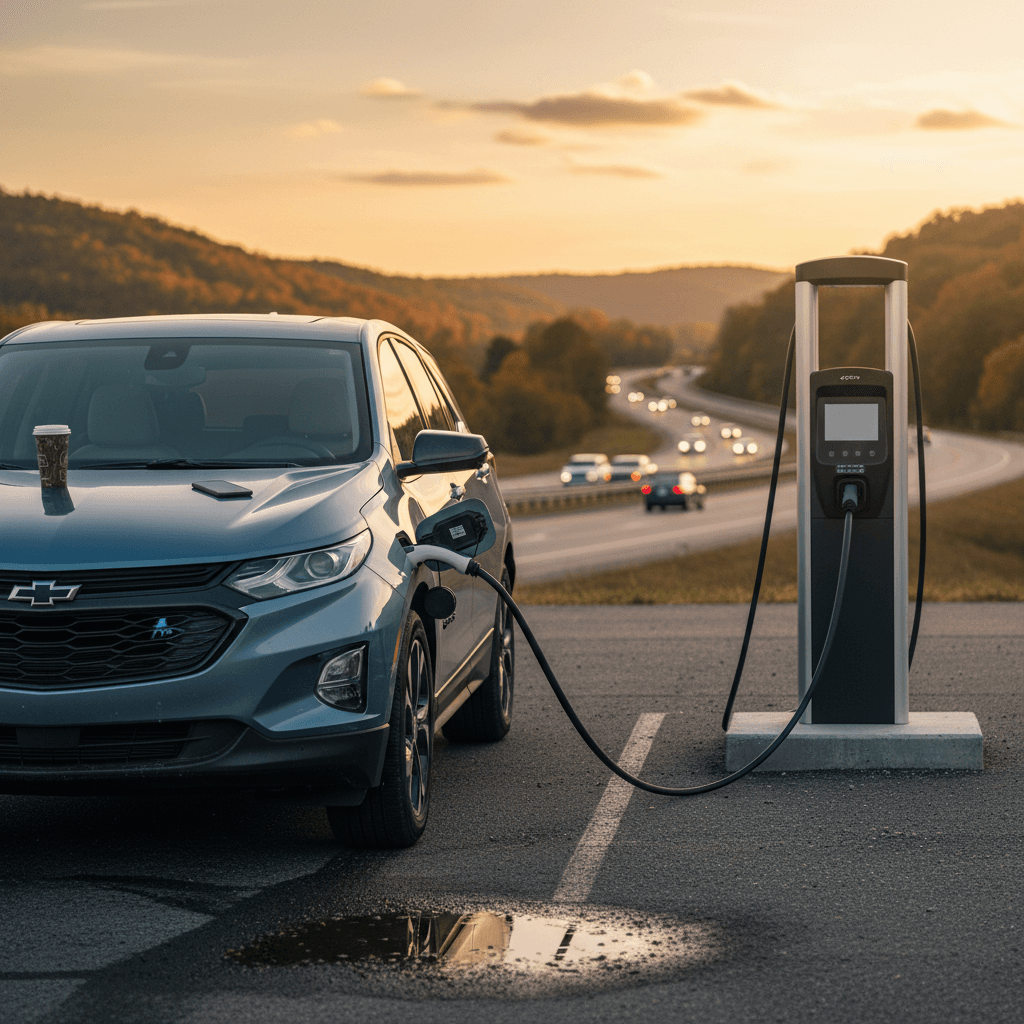
If you’re eyeing a Chevrolet Equinox EV, you’re probably wondering less about 0–60 times and more about whether it can knock out a 400‑mile Saturday without turning you into a charging-station regular. This Chevrolet Equinox EV road trip review focuses on what happens when you leave the city: real‑world highway range, how the DC fast charging curve behaves, and what it actually feels like to live with this compact electric SUV on the open road.
The scenario we’re testing for
Why the Chevrolet Equinox EV matters on the open road
The Equinox EV landed right in the heart of the market: an affordable, compact electric SUV built on GM’s Ultium platform. With available ranges in the mid‑200s to over 300 miles and DC fast charging that can add roughly 70 miles in about 10 minutes under ideal conditions, it’s designed to be the first EV that feels familiar to compact‑SUV families graduating from gas.
Chevrolet Equinox EV road trip numbers at a glance
Specs vs. real life
Chevrolet Equinox EV specs that actually matter for a road trip
Battery, range & drivetrain
- Battery: Ultium pack (roughly mid‑60s to 80 kWh usable depending on trim)
- Range: about high‑200s to low‑300s miles EPA on the most efficient front‑wheel‑drive versions
- Drivetrain: FWD and AWD versions; AWD adds traction but shaves some range
For road‑trippers, the big story is this: even the lower‑range trims can comfortably cover 180–220 highway miles between stops if you plan around 10–15% arrival and 70–80% departure.
Charging hardware & connectors
- AC charging: J1772 inlet for Level 1 & Level 2, compatible with most public Level 2 stations and home chargers
- DC fast charging: CCS1 inlet, ~150–190 kW peak acceptance depending on trim and conditions
- Onboard navigation: GM’s native route planning plus compatibility with popular apps and networks
The Equinox EV doesn’t yet use Tesla’s NACS port from the factory in most trims, so you’ll rely on CCS fast‑charge networks (and future adapters) for now.
Trim choice tip for road‑trippers
Real-world highway range: what we saw vs. the window sticker
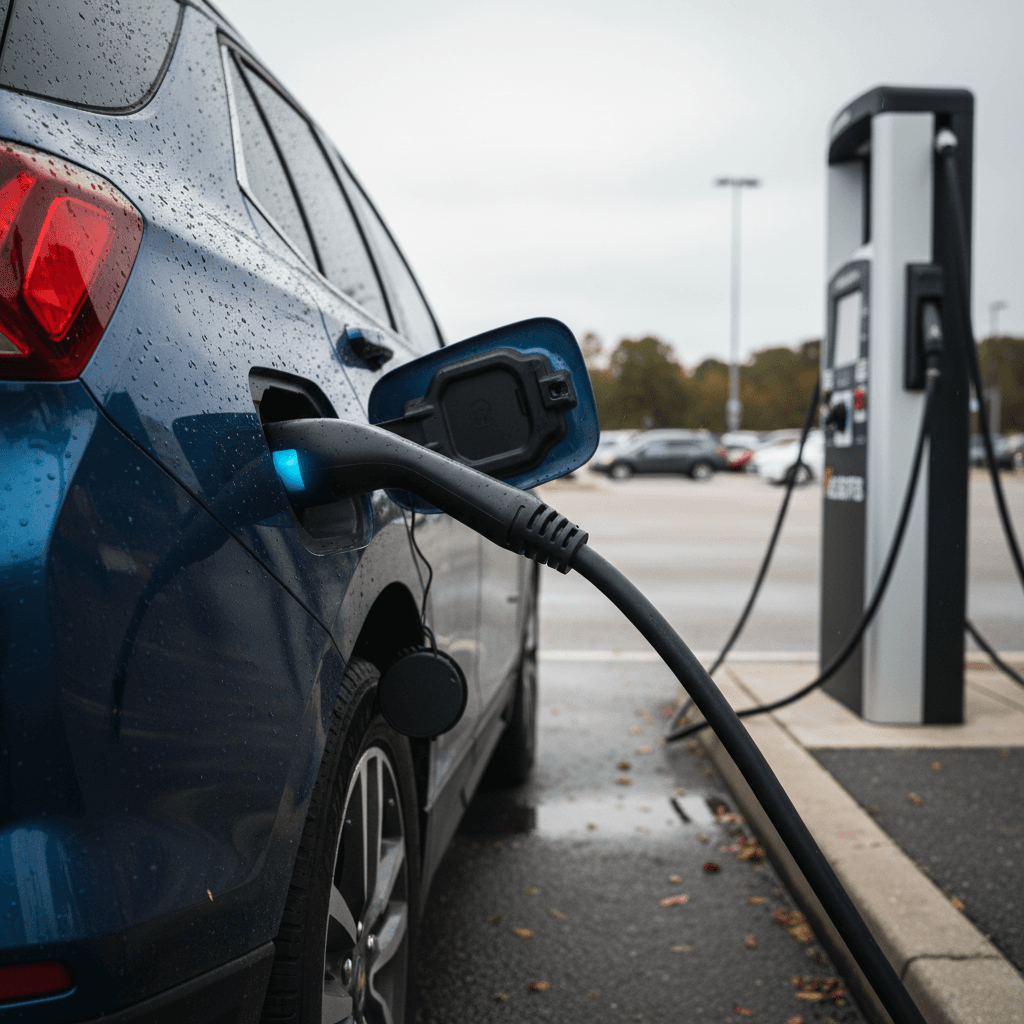
Every EV loses some range at highway speeds, and the Chevrolet Equinox EV is no exception. At a steady 70–75 mph, you’re fighting aerodynamic drag, crosswinds, and climate‑control use. On our mixed‑weather drives, the Equinox EV consistently delivered about 75–85% of its EPA rating when we stayed around 70 mph and managed climate conservatively.
How conditions affect Equinox EV highway range
Same car, very different number on the trip computer
Speed & wind
At 75+ mph, expect your Equinox EV’s effective range to drop noticeably. A stiff headwind on top of that can peel off another 10–15% compared with calm‑day cruising.
Temperature & climate
Cold weather, heater use, and battery preconditioning all nibble at range. In near‑freezing temps, you might see 20–30% less range than the EPA rating, especially on short legs.
Terrain & load
Climbing long grades with a full cabin and cargo will push consumption higher. You earn some of it back on the way down, but on net a mountain leg can feel like your range shrank a size.
A simple planning rule
Quick checklist to stretch Equinox EV highway range
1. Set cruise to 70 mph when you can
Dropping from 75+ mph to about 70 mph smooths out the energy graph and often buys you an extra 15–30 miles over a full charge.
2. Use Eco or similar drive mode
The Equinox EV’s more efficient drive modes soften throttle response and tweak climate use to favor range when the trip really counts.
3. Precondition while plugged in
Warm or cool the cabin while you’re still on the plug. It’s always cheaper, and friendlier to your range, than letting the cabin swing wildly on the road.
4. Pack smart, not tall
Roof boxes and bike racks murder aero. If you can fit it inside, do it. If you must put things on the roof, accept that you’re donating range to the wind gods.
DC fast charging performance: the good, the quirky, and the slow
On paper, the Chevrolet Equinox EV can accept up to roughly 150–190 kW from a DC fast charger, depending on trim. In practice, Equinox owners and independent testers report a familiar pattern: a quick ramp to roughly 90–120 kW on a good charger, a brief peek higher in perfect conditions, then an early taper as state of charge rises. Average power from 10–80% often hovers just under 100 kW, translating to roughly 35–40 minutes for a 10–80% top‑up when everything goes right.
Typical Chevrolet Equinox EV DC fast charging session (real‑world)
Approximate numbers from owner reports and independent tests on healthy chargers, used for planning, not promises.
| Battery % window | Typical power | Time spent | What it’s good for |
|---|---|---|---|
| 10–40% | 90–120 kW | 15–20 minutes | Hard driving between sparse chargers |
| 40–70% | 70–100 kW | 15–20 minutes | Normal highway leg, bathroom + snack stop |
| 70–80% | 50–80 kW | 10–15 minutes | Stretching to the next charger or destination |
| 80–100% | <40 kW | 30+ minutes | Usually not worth doing on a road trip |
Higher‑power hardware doesn’t always equal faster sessions if the Equinox EV’s pack voltage and the charger’s current limits don’t play nicely together.
Why your peak speed may look “slow”
Habits that make the Equinox EV charge faster on trips
1. Arrive at the charger near 10–20%
The Equinox EV charges quickest at lower states of charge. If you keep stopping at 50–60%, you’ll live in the flatter, slower part of the curve.
2. Target 70–80% instead of 100%
That last 20–30% is painfully slow on most EVs. Two shorter stops to ~70–80% are often quicker than one long push to 100%.
3. Favor newer, high‑current stations
Well‑maintained 150–350 kW units from major networks usually outperform aging 50 kW hardware, especially with the Equinox EV’s low‑voltage pack.
4. Precondition the battery when possible
If the car or app allows, start DC fast‑charge preconditioning 20–30 minutes before you arrive. A warm battery accepts higher power.
Watch for network quirks
Planning a road trip in a Chevy Equinox EV
With an honest plan, the Chevrolet Equinox EV is absolutely road‑trip capable. It’s not an Ioniq 5‑style charging rocket ship, but it’s also not the “stop every 90 minutes” horror story some fear. The real trick is marrying its charging personality to a route that plays to its strengths.
Three tools that make Equinox EV trip planning easier
Use more than one source for peace of mind
Built‑in navigation
GM’s built‑in nav can factor in current state of charge and suggest charging stops. It’s a good baseline, especially for owners who don’t want to juggle multiple apps.
Third‑party route planners
Apps and websites designed for EVs let you plug in the Equinox EV’s range, desired arrival % and preferred networks. They often build more realistic, time‑optimized plans.
Network‑specific apps
Electrify America, EVgo and others show station status, pricing and live availability. Before you commit to a stop, check that stalls are up and not all occupied.
Road‑trip checklist for your first long Equinox EV drive
1. Start with a full battery at home
Top off overnight on a Level 2 charger so your first leg is your longest and your first stop is on your terms, not the battery’s.
2. Plan legs of 140–180 miles
For most trims, that keeps you in the quick‑charging sweet spot and leaves buffer for detours, weather, or the occasional out‑of‑service fast charger.
3. Always have a Plan B charger
For each planned stop, identify at least one backup station within 10–20 miles. If you pull in and find a problem, you’ll already know where to point the nose next.
4. Keep kids & passengers in the loop
Show your passengers the charging plan ahead of time. If everyone knows there’ll be a 25‑minute stop every 2–3 hours, the trip feels organized, not chaotic.
5. Bring your Level 1/2 cable
On some trips, a trusted friend’s 240 V outlet or a small‑town public Level 2 can save the day. The Equinox EV’s AC flexibility is your quiet backup plan.
Comfort, cargo and tech: living with the Equinox EV all day
For all the spreadsheet talk about kilowatts and kWh, a road‑trip car ultimately wins or loses on how it treats you after six hours behind the wheel. Here the Equinox EV behaves like a well‑sorted compact crossover: upright seating, good outward visibility, and a cabin that feels modern without burying you in screens.
Where the Equinox EV shines, and where it doesn’t, on long days
The human side of the road‑trip equation
Seats & ride
Supportive front seats, a calm ride on most trims, and predictable steering effort make it easy to stack on miles. It’s not a luxury lounge, but it doesn’t beat you up.
Cargo & practicality
Plenty of space for a family’s worth of bags, strollers and snacks. The flat‑floored EV layout makes loading simple, and the hatch opening is generous.
Infotainment & driver aids
Large central screen, digital cluster, and a healthy mix of driver‑assist features (adaptive cruise, lane keeping on many trims) reduce the grind of long highway days.
The quiet benefit you notice at hour five
Equinox EV vs. other compact EV SUVs on a road trip
If you’re cross‑shopping for a road‑trip‑ready EV, the Chevrolet Equinox EV squares off against the Volkswagen ID.4, Hyundai Ioniq 5/6, Kia EV6 and Niro EV, and a growing list of compact electric crossovers. Each has its own road‑trip personality.
How the Equinox EV stacks up as a road‑trip companion
A high‑level look at road‑trip strengths and weaknesses compared with popular compact EV SUVs.
| Model | Highway range feel | DC fast‑charge speed | Space & comfort | Best for |
|---|---|---|---|---|
| Chevrolet Equinox EV | Solid, especially in long‑range FWD trims | Respectable but not class‑leading; peaks often under 150 kW in real life | Family‑friendly, straightforward, calm | Drivers who value balance and price over flashy performance |
| Hyundai Ioniq 5 / 6 | Strong highway range in many trims | Among the quickest chargers; great 10–80% times | Spacious, airy cabin | Frequent long‑distance drivers who live on DC fast charging |
| VW ID.4 | Comparable to Equinox on most routes | Improved charging on newer models, still mid‑pack | Comfortable ride, roomy back seat | Families who prioritize comfort and VW dealer network |
| Kia Niro EV | Good efficiency, smaller pack | Moderate charging speeds | Tight but usable cabin | Singles or couples who prioritize efficiency over space |
Exact specs vary by trim and model year; this table focuses on the general road‑trip experience rather than every detail.
Where the Equinox EV lands
What to look for if you’re buying an Equinox EV for road trips
If long drives are part of your life, visiting family several states away, kids’ tournaments, national parks, spec‑ing or shopping for the right Equinox EV matters. The difference between a trim that feels relaxed at 75 mph and one that has you watching the state‑of‑charge gauge can come down to a few checkboxes on the original window sticker.
Buying checklist: making your Equinox EV road‑trip ready
1. Prioritize the longest‑range trims
Those extra 20–40 miles of rated range translate directly into longer legs and more flexible stops. If your budget allows, stretch for the configuration with the biggest battery and FWD.
2. Verify DC fast‑charge health and history
On a used Equinox EV, ask for charging history and look for a <strong>battery health report</strong>. At Recharged, every vehicle includes a Recharged Score report that summarizes battery condition and charging behavior, so you’re not guessing.
3. Make sure driver‑assist features are included
Adaptive cruise control and lane‑keeping systems are game‑changers on long interstate stints. Confirm which packages are on the specific Equinox EV you’re considering.
4. Check included charging equipment
Know whether you’re getting only a basic Level 1 cord or a more capable portable Level 2 unit. If not included, factor a home or portable charger into your budget before that first big trip.
5. Test‑sit the back seat and cargo area
If you’re hauling teens or tall adults, put them in the back during your test drive. Load a couple of suitcases to see if the cargo floor and hatch opening work for your real‑world gear.
How Recharged can help
Chevrolet Equinox EV road trip FAQ
Frequently asked questions about road‑tripping in a Chevrolet Equinox EV
Verdict: is the Chevy Equinox EV a good road trip car?
The Chevrolet Equinox EV is not the headline‑grabbing charging champ in its class, but that doesn’t mean it’s a bad road‑trip car. Treated as what it is, a compact electric SUV with honest range, mid‑pack DC fast‑charging, and easygoing manners, it becomes a quietly capable long‑distance partner. Plan legs around 150–180 miles, arrive low, leave around 70–80%, and it will eat up cross‑state drives with the same steady confidence that made the gas Equinox such a hit.
If you’re shopping used, a well‑specced Equinox EV with a healthy battery can be a smart, budget‑friendly way into EV road‑tripping. And if you’d rather not decode battery graphs on your own, Recharged’s Recharged Score, transparent pricing, trade‑in options, financing, and nationwide delivery make it easier to find an Equinox EV that matches the kind of miles you actually drive, whether that’s a weekly out‑of‑state commute or one big summer road trip a year.