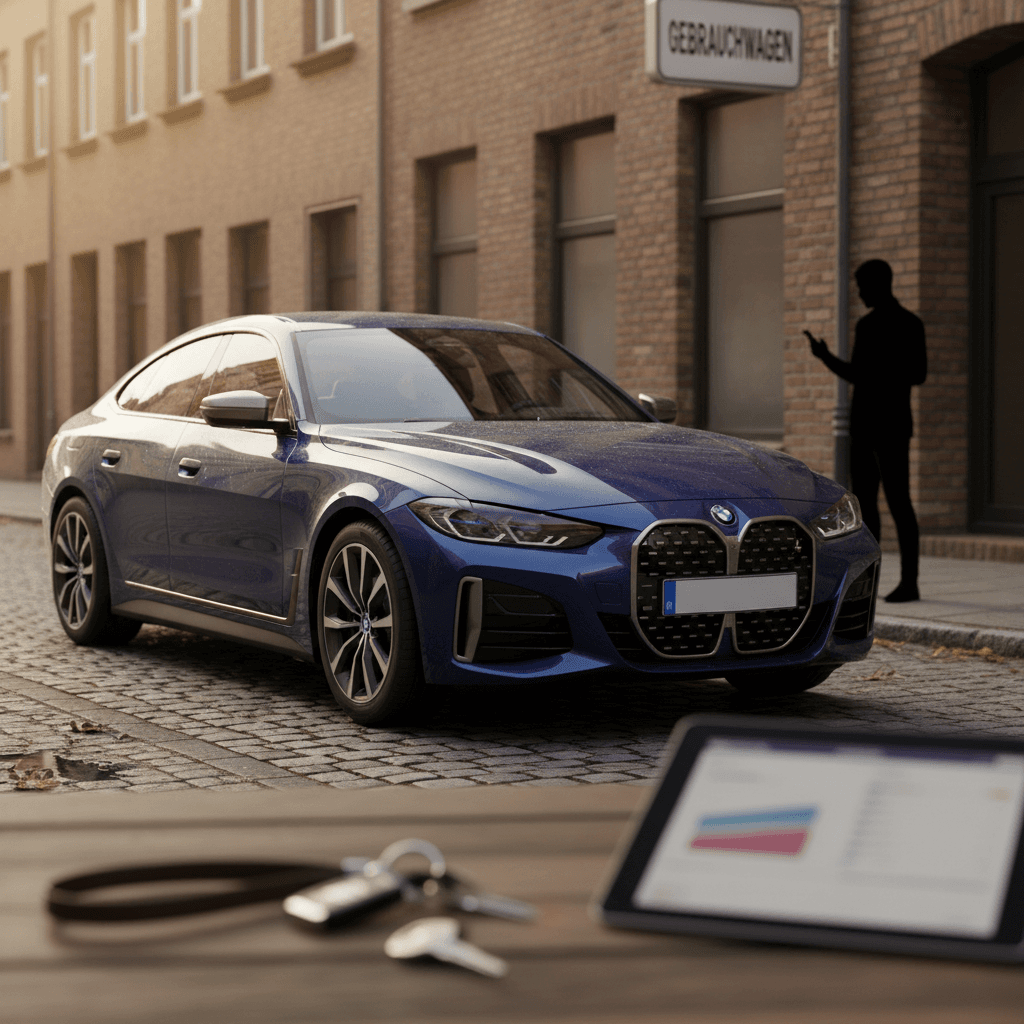
If you’re considering a used 2025 BMW i4, you’re looking at one of the most polished, genuinely enjoyable electric luxury cars on the road. The question isn’t just “is the i4 good?”, it’s whether a used 2025 BMW i4 offers the right mix of range, performance, depreciation, and everyday usability for you.
Where the 2025 i4 fits
Overview: 2025 BMW i4 as a used EV
By the 2025 model year, the BMW i4 had matured past its first‑year teething phase. Software was updated to iDrive 8.5, driver‑assist and charging logic improved versus early cars, and BMW refined the interior trim and interface. For a used buyer, that means you’re getting a car that drives like a traditional BMW yet enjoys the low running costs of an EV.
- Battery‑electric fastback based on the 4 Series Gran Coupe platform
- Multiple powertrains from efficient single‑motor to high‑performance dual‑motor M50
- EPA‑style ranges (based on 2024 data) typically in the mid‑200s to high‑200s miles, depending on wheels and trim
- DC fast‑charging capability suitable for road trips when you plan stops smartly
- Plenty of 2025 cars will be coming off 1–2‑year leases starting late 2026, ideal for used buyers
Used‑buyer sweet spot
Trim levels and specs: what you get in 2025
For 2025, the i4 lineup in the U.S. centers on four trims: eDrive35, eDrive40, xDrive40, and M50. Exact equipment varies by options package, but the basic character of each model is consistent, which matters when you’re comparing used examples.
Key 2025 BMW i4 trims at a glance
Approximate specs based on 2024 EPA data and BMW disclosures; expect minor variation with wheels and options.
| Trim | Drive | Power (hp) | 0–60 mph (approx.) | Battery size (usable, kWh)* | Est. EPA range (mi)* | Typical used buyer profile |
|---|---|---|---|---|---|---|
| eDrive35 | RWD | ~282 | ~5.8 sec | Mid‑60s | ~220–230 | Budget‑minded commuters, first EVs |
| eDrive40 | RWD | ~335 | ~5.4 sec | Low‑80s | ~270–290 | Long‑range highway drivers who don’t need AWD |
| xDrive40 | AWD | ~396 | ~4.4 sec | Low‑80s | ~250–270 | Snow‑belt owners who want strong traction |
| M50 | AWD | ~536 | ~3.7 sec | Low‑80s | ~235–245 | Performance‑oriented drivers, ex‑M3/M4 owners |
Use this as a directional guide; verify exact specs on any used car by VIN.
Specs can vary by wheels and options
Range and charging in the real world
For most U.S. drivers, the 2025 i4’s range is more than sufficient. RWD trims on 18‑inch wheels can realistically deliver around 230–270 miles in mixed driving if you’re not constantly at 80 mph. AWD and M50 variants trade a chunk of range for extra thrust and traction, but still work well as daily drivers and road‑trip cars if you plan stops.
How a used 2025 i4 behaves on the road
Typical real‑world experiences from owners in moderate climates
Daily commuting
For a 30–50 mile round‑trip commute, even the eDrive35 rarely needs more than a twice‑weekly charge. Most owners simply plug in at home overnight on Level 2.
Highway road trips
Plan on charging every 140–190 miles depending on trim, speed, weather, and load. The car’s built‑in route planner and third‑party apps help you aim for 10–20% arrival SOC.
DC fast charging
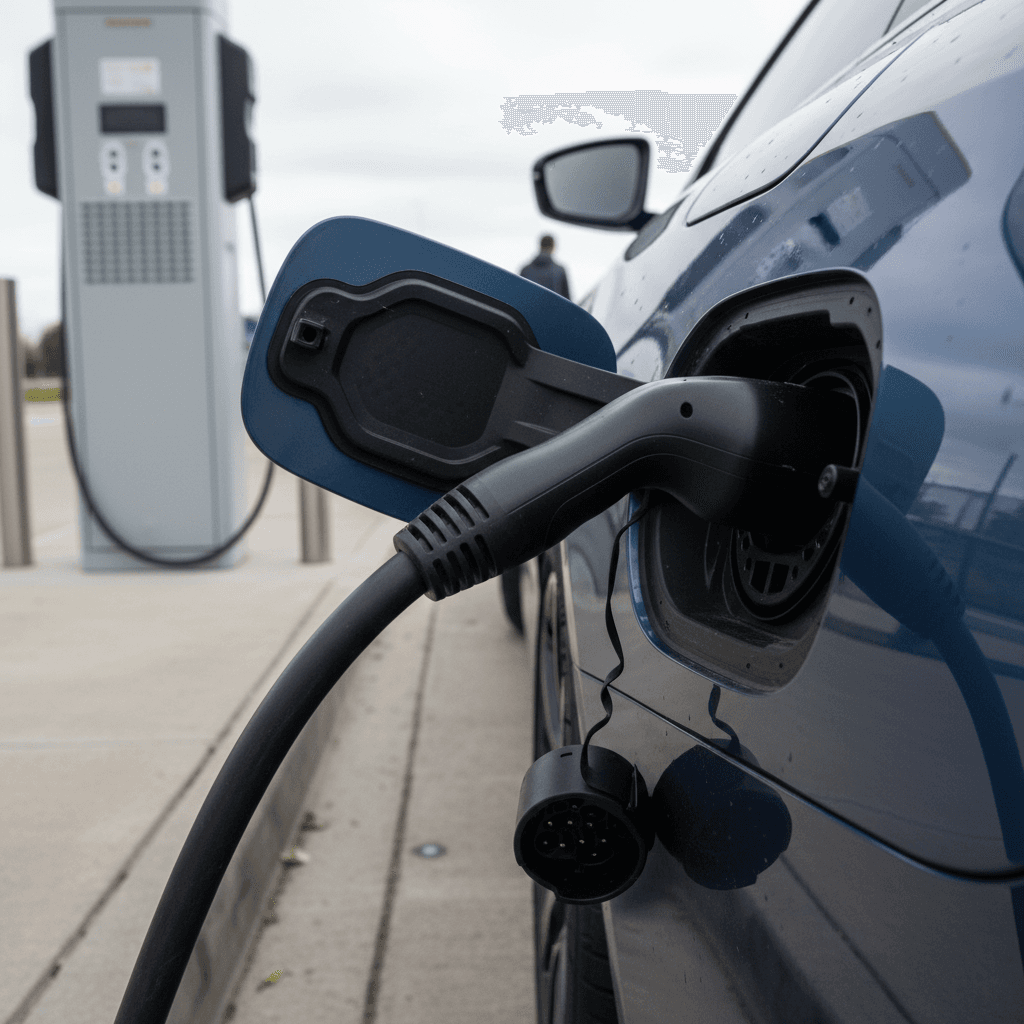
On a healthy pack, the i4 can add meaningful range in roughly 20–30 minutes at a capable DC station. Peak speeds are competitive, but tapering is noticeable beyond ~60–70%.
Charging standards and networks
Driving experience: quiet, quick, and familiar
If you’re stepping out of a 3 or 4 Series, the 2025 i4 feels comfortingly familiar: low seating position, precise steering, and a chassis tuned more for confident speed than isolated float. The big difference is the instant electric torque and the near‑silence at low speeds.
Everyday refinement
- Quiet cabin: Wind and road noise are well controlled by segment standards, especially on 18" wheels.
- Ride comfort: eDrive35/eDrive40 on smaller wheels ride firmly but comfortably; M Sport suspension and 19–20" wheels stiffen things noticeably.
- One‑pedal driving: Adjustable regen lets you choose from coasting‑like behavior to near one‑pedal driving in city traffic.
Performance personality
- eDrive35/eDrive40: Plenty of punch for normal driving and highway passing; feels like a strong six‑cylinder BMW without the shifts.
- xDrive40: Confident, all‑weather speed with brisk 0–60 times in the mid‑4‑second range.
- M50: Genuinely quick in a straight line, with acceleration that rivals traditional M cars in daily use.
A used i4 still feels premium
Interior, tech, and comfort
Inside, the 2025 i4 adopts BMW’s curved dual‑screen setup and iDrive 8.5 software. Materials are generally first‑rate, and most cars on the used market will have popular options like heated seats, a premium audio system, and driver‑assistance bundles. The back seat and trunk are practical enough for small families, but this is still a sleek fastback, not a crossover.
Key interior and tech highlights for used buyers
What to pay attention to when you sit in the car
Curved display & iDrive 8.5
A single glass panel houses both the driver cluster and central touchscreen. Ensure all pixels and touch inputs work correctly and check for any lag or random reboots during your test drive.
Seats & driving position
Sport seats with adjustable bolsters are common and supportive. Verify power adjustments, lumbar, and memory functions, and make sure you can sit low enough if you like a classic BMW feel.
Climate & comfort features
Most 2025 i4s offer heated seats and wheel; some add ventilated seats. Test all climate controls, including pre‑conditioning via the app if the seller will demonstrate it.
Infotainment and software quirks
Depreciation, used pricing, and value
The BMW i4 follows the typical luxury EV pattern: steep depreciation in the first 2–3 years, then a more gradual curve. That’s frustrating for first owners but good news for you if you’re shopping used.
How the BMW i4 holds value
By late 2026 and into 2027, you can expect a solid supply of 2025 i4s coming off leases with mileage in the 15,000–30,000 range. Pricing will depend heavily on trim, options, and local incentives but will generally undercut a comparably equipped new i4 by a comfortable margin.
Which 2025 trims make the best used buys?
Reliability, battery health, and known issues
The i4 is built on a mature BMW platform, and early reliability data for the series has been reasonably encouraging. Electric powertrains tend to be simpler than gas drivetrains, so most issues you’ll read about revolve around software, electronics, or individual components, not motors or battery packs failing en masse.
- Battery packs in early i4s have generally shown modest degradation when driven and charged normally.
- Consumer and owner‑survey data has rated the i4 above average for overall reliability among luxury EVs, with particular praise for the drivetrain.
- Most recalls and service campaigns so far have been firmware or component‑specific and can be addressed by a BMW dealer at no cost to you if still open.
- Common owner complaints focus on infotainment quirks, intermittent driver‑assist warnings, and occasional charging‑station compatibility frustrations, issues shared with many modern EVs.
Battery and high‑voltage repairs are expensive
What to check on a used 2025 BMW i4
Because the 2025 i4 is still a relatively new EV, many examples will look and feel fresh. Don’t let that lull you into skipping a thorough evaluation. Here’s a structured way to approach your inspection and test drive.
Used 2025 BMW i4 buyer checklist
1. Confirm battery health and fast‑charge history
Ask for any available battery health reports, DC fast‑charging history, and software‑update records. Ideally, use a third‑party diagnostic or a platform like the Recharged Score to see current usable capacity and charging behavior rather than relying on guesswork.
2. Verify remaining warranties
Check in‑service date and mileage. BMW’s high‑voltage battery warranty in the U.S. typically covers 8 years/100,000 miles from first registration, so a used 2025 i4 bought in 2027–2028 should still have plenty of coverage left if mileage is reasonable.
3. Inspect wheels, tires, and brakes
M50 and cars with performance packages often see more spirited use. Look for uneven tire wear, curb rash on 19"/20" wheels, and any brake vibration on test drive. Replacing performance tires on 20" wheels isn’t cheap.
4. Test every tech feature
Pair your phone, test Apple CarPlay/Android Auto, run the navigation, adjust the driver‑assist settings, and cycle drive modes. Watch for repeated error messages, frozen screens, or non‑functional features.
5. Look for accident or flood history
Pull a vehicle history report and inspect panel gaps, overspray, and underbody corrosion. EVs and flood damage are a particularly bad combination; walk away from anything with water‑damage history.
6. Check charging behavior in person if possible
If the seller agrees, plug into a Level 2 or DC fast charger before purchase. Confirm the car initiates charging promptly, holds a stable rate, and doesn’t throw charging‑system errors.
How Recharged helps with used‑EV due diligence
Ready to find your next EV?
Browse Vehicles2025 BMW i4 vs. other used luxury EVs
If you’re shopping a used 2025 i4, chances are you’re also considering alternatives like the Tesla Model 3/Model Y, Polestar 2, Hyundai Ioniq 6, or Mercedes‑Benz EQE. Each has strengths; the i4 happens to occupy a comfortable middle ground between traditional sport sedan and cutting‑edge EV.
How a used 2025 BMW i4 stacks up
High‑level comparison for typical used‑EV shoppers; specifics vary by exact trim and options.
| Model | Key strengths | Potential downsides for some buyers |
|---|---|---|
| BMW i4 (2025) | Classic BMW driving feel, high‑quality cabin, strong performance, good highway manners | Less rear headroom than a crossover; CCS fast‑charging instead of native NACS plug; firm ride on big wheels |
| Tesla Model 3 (similar year) | Excellent DC fast‑charging network access, strong efficiency, simple interior | Build‑quality variability, minimalist cabin not to all tastes, more road noise vs. i4 |
| Polestar 2 | Distinctive design, solid build quality, Google‑native infotainment | Tighter rear seat, smaller dealer network, some trims with shorter range |
| Hyundai Ioniq 6 | Very efficient, strong warranty, rapid 800‑V charging architecture | Less premium badge and interior than BMW, styling is polarizing |
| Mercedes‑Benz EQE sedan | Quiet, plush ride, luxury‑first cabin | Heavier feel, less sporting character, higher purchase price in many cases |
Use this to frame test drives; then decide which personality best fits your life.
Who should favor the i4 over rivals?
FAQ: used 2025 BMW i4
Frequently asked questions about buying a used 2025 BMW i4
Bottom line: should you buy a used 2025 i4?
If you want a luxury EV that still feels like a driver’s car, a used 2025 BMW i4 deserves to be on your short list. It offers strong performance, real‑world range that suits most U.S. commutes and road trips, and an interior that feels properly premium. Depreciation works in your favor as a second owner, while BMW’s battery warranty and improving software support help manage long‑term risk.
The key is to buy intelligently: verify battery health, confirm charging behavior, scrutinize options and wheels, and make sure you understand the warranty timeline. Partnering with an EV‑focused retailer like Recharged, with its Recharged Score Report, EV‑specialist support, and digital buying experience, can turn what might feel like a complex decision into a straightforward, confident purchase.