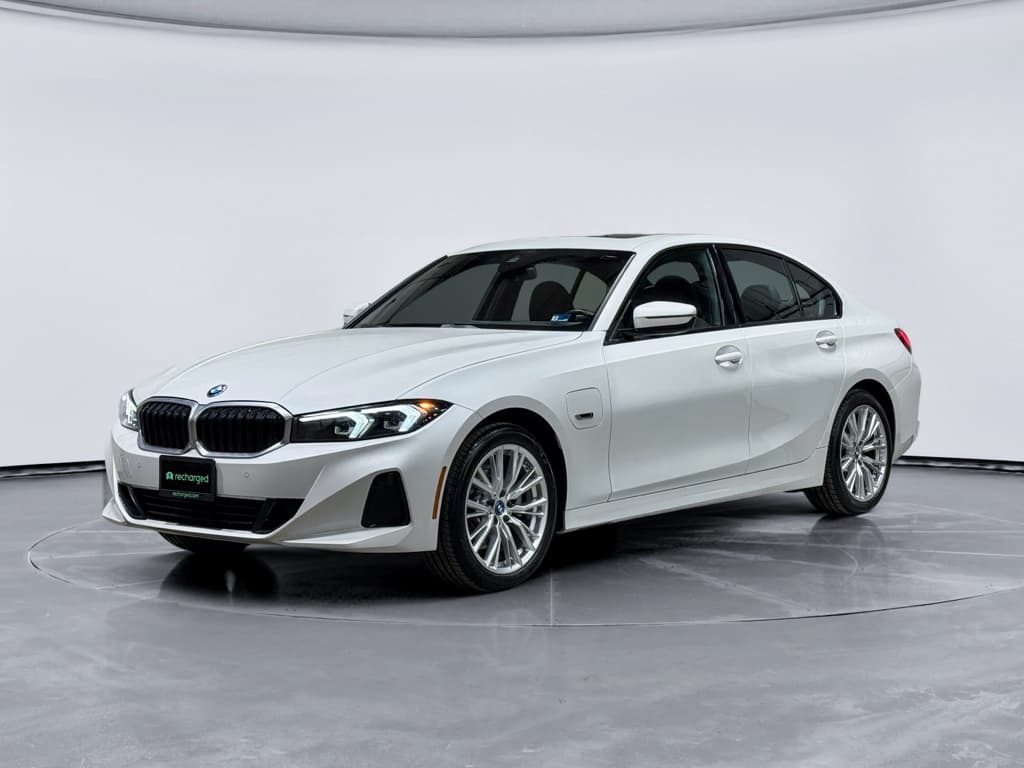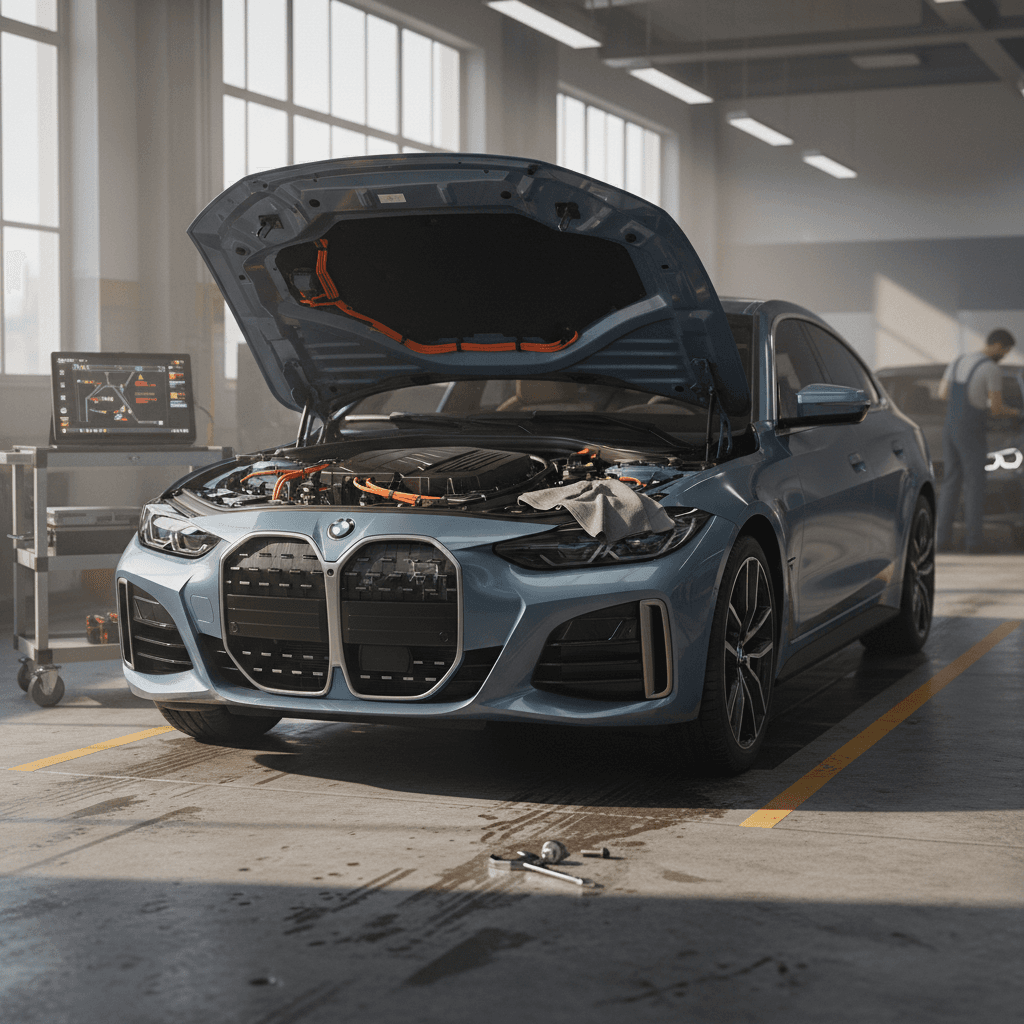
If you’re eyeing a 2025 BMW i4, you’ve probably seen the same headlines everyone else has: battery recalls, software bugs, and the occasional horror‑story post from an owner stuck on the shoulder. The reality is more nuanced. Most 2025 i4s are quick, quiet, and drama‑free, but there are a few problem areas worth understanding, especially if you’re shopping used.
First, the good news
Overview: How Worried Should You Be About 2025 BMW i4 Problems?
2025 BMW i4 Problem Snapshot
Put simply, the 2025 BMW i4 is not a problem child, but it’s not flawless either. The serious issues fall into three buckets: 1. High‑voltage drive motor software that can cause loss of power (covered by a recall). 2. Battery module and high‑voltage safety recalls affecting a small slice of vehicles. 3. Annoying but livable software and infotainment glitches around iDrive, profiles, and over‑the‑air updates. Your job as an owner, or shopper, isn’t to memorize campaign numbers. It’s to spot warning signs quickly and make sure any open recalls or known problems are already addressed before they become yours.
Don’t ignore “minor” warnings
Big-Ticket Issues: Recalls and Safety Problems on the 2025 BMW i4
Let’s start with the stuff that can leave you on the side of the road, or, in the worst cases, presents a safety risk. For the 2025 i4, that’s primarily high‑voltage drive and battery‑related recalls. Even if you bought your car new and trust your dealer, you should still verify that every recall has been completed.
Key 2025 BMW i4 Recalls to Know
This is a high‑level guide, not a substitute for running your VIN on NHTSA.gov or with a BMW dealer.
| Issue | What Can Happen | Which 2025 i4s Are Affected? | Typical Fix | Cost to Owner |
|---|---|---|---|---|
| Electric drive motor software fault | High‑voltage system can shut down while driving, leading to sudden loss of propulsion | Select 2022–2025 i4 models with specific electric drive software builds | Dealer reprograms electric drive motor control software; sometimes combined with other control unit updates | $0 (safety recall) |
| High‑voltage battery module assembly issue | Stress in a battery module frame can cause shutdown of the HV system and, in rare cases, raise fire risk | A very small number of 2022–2025 i4s built with suspect modules | Inspect and replace affected battery modules; in extreme cases, replace the full pack | $0 (safety recall) |
| Assorted electrical/structural campaigns | Water ingress, sensor faults, minor structural items that can affect crash protection or operation | Varies by build date and trim; more common on early production cars | Hardware replacement, sealing, or re‑routing harnesses | $0 (safety recall) |
Recall details evolve over time. Always confirm the latest status with BMW or NHTSA.
Red‑flag behavior: what to park for
Quick Checklist: Has Your 2025 i4 Had Its Recalls Done?
1. Run the VIN on NHTSA.gov
Type your full VIN into the NHTSA recall lookup. If any campaigns show as open, screenshot the page and bring it to your dealer.
2. Ask the service advisor for a printout
BMW dealers can pull a key‑read report that shows all open and completed campaigns. Ask for copies for your records, especially if you’re buying used.
3. Confirm software version after updates
After a recall reflash, verify that the software version in your iDrive matches what’s noted on the repair order. It’s your proof that the work was done.
4. Keep recall paperwork with your title
Future buyers, and lenders, love documentation. It proves the car’s safety work is up to date and can help your resale value.
Warning Signs While Driving: Power, Steering, and Braking
One advantage of modern EVs is that they’re pretty chatty. When something’s not right, the car usually tells you. Still, it helps to know what’s worth a same‑day call to BMW and what can wait for your next service visit.
Common Drivability Symptoms on the 2025 i4, and What They Mean
Not every quirk is a crisis, but these are the ones to pay attention to.
Sudden loss of power
Feels like: Instant drop to limp mode or no acceleration.
- Could be related to the high‑voltage software recall.
- May trigger warnings like “drivetrain malfunction.”
Fix: Park safely and tow to BMW, this is not DIY territory.
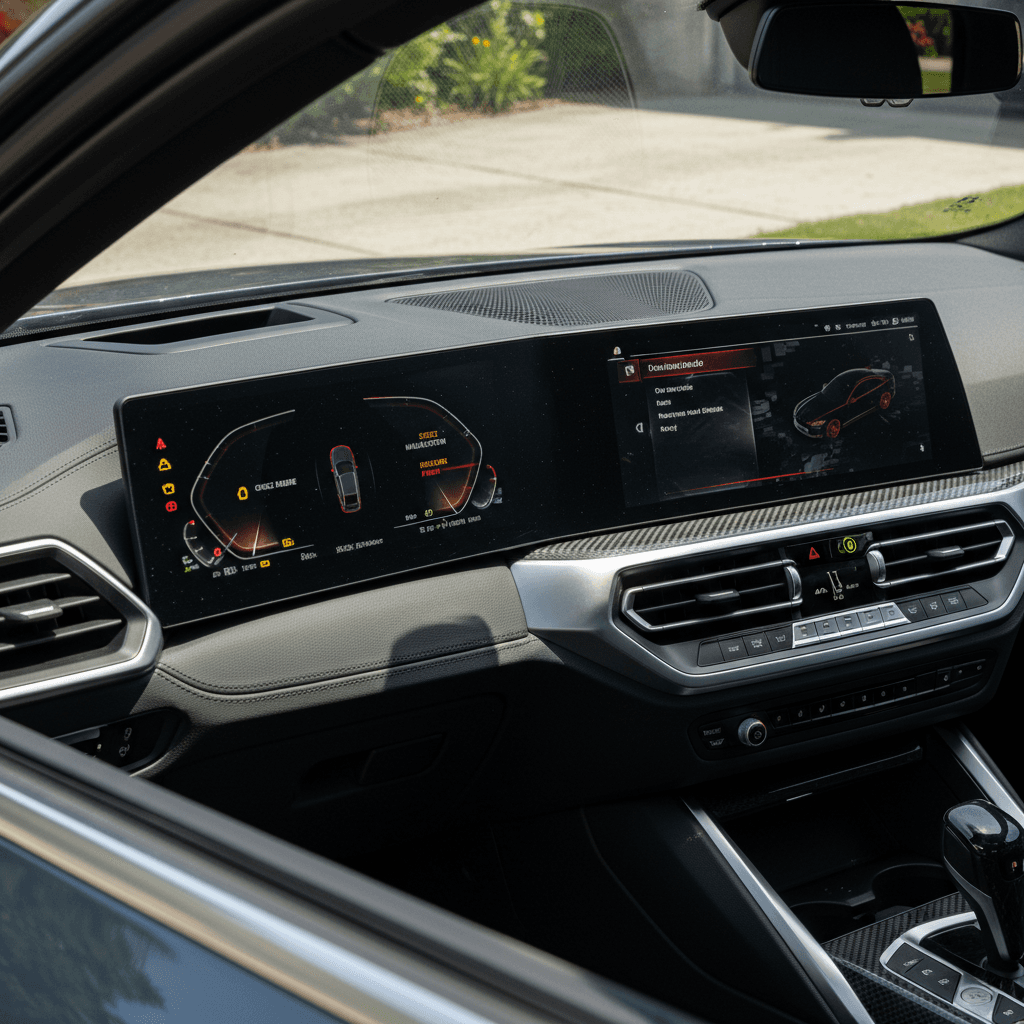
Multiple warning lights
Feels like: Christmas tree dash after a bump or charge.
- Transient faults can clear, but recurring clusters of warnings usually signal a sensor or module issue.
Fix: Note exactly what you see and when. Screenshot the cluster and book a dealer visit.
Steering or brake oddities
Feels like: Intermittent heavy steering, inconsistent brake feel, or pulsing at low speed.
- Most i4s are solid here; problems may point to a failing component, not a design flaw.
Fix: Don’t wait. Have the car inspected before the symptom gets worse.
Capture evidence in the moment
Software and Tech Glitches: The Most Common 2025 BMW i4 Complaints
Ask actual i4 owners what bothers them most and you’ll hear less about motors and more about software quirks. The 2025 model runs BMW’s latest iDrive with heavy reliance on over‑the‑air (OTA) updates, driver profiles, and app integration. When it all works, it’s slick. When it doesn’t, it can feel like the car is trolling you.
- Profile and seat/mirror memory chaos. Guest drivers or a spouse hop in, and suddenly your seat, mirrors, and radio presets are gone or reshuffled.
- Apple CarPlay / Android Auto gremlins. Dropped connections, stuck now‑playing data, or music info that won’t update until you restart the car.
- Updates that stall or fail. OTA downloads that hang partway through, forcing a dealer to “reflash” modules the old‑fashioned way.
- Voice and climate commands that ignore you. Heated seats or climate preconditioning sometimes fail to respond to voice or app requests, then work perfectly the next day.
- Navigation ‘learning’ you didn’t ask for. Route suggestions that fight your preferences, sometimes re‑enabled after a major software update.
The upside: these issues are irritating, not terminal
Easy, at‑home resets
- Reboot iDrive: Press and hold the audio volume button for about 30 seconds until the screen cycles.
- Clean up profiles: Delete unused driver profiles and guest accounts, then re‑pair your primary phone.
- Reset CarPlay/Android Auto: Forget the car on your phone and the phone in iDrive, then set it up fresh.
- Check for pending updates: In iDrive, look for software updates waiting for your approval while parked.
When to involve the dealer
- Persistent failed updates: If an OTA fails more than once, call BMW. A dealer flash can often fix what wireless updates can’t.
- Repeated system crashes: Black screens, total nav failures, or constant reboots deserve professional diagnostics.
- Linked to drivability: Any software bug that coincides with loss of power, braking, or steering feel is a same‑day dealer call.
Battery & Charging Problems on the 2025 BMW i4
BMW’s fifth‑generation EV drivetrain in the i4 has been around long enough that truly catastrophic battery failures are rare. Still, specific charging and battery behaviors worry owners, especially when you’re used to gas cars that either start or don’t.
Battery and Charging Issues You Might See
Most of these are more anxiety‑inducing than actually dangerous.
Charge sessions that stop early
Feels like: Public DC session aborts at 40–60%, or home charging stops overnight.
- Often caused by finicky public chargers or communication timeouts.
- Sometimes linked to software bugs fixed in later updates.
First steps: Try a different station brand, cable, or AC outlet. If it happens across locations, involve BMW.
Range suddenly looks worse
Feels like: You “lost” 20–30 miles of estimated range without changing your driving.
- Short trips, cold weather, and new software can all swing the guess‑o‑meter.
First steps: Track actual miles driven vs. kWh used over a few full charges. If it’s still way off, ask for a battery health check.
Battery or drivetrain warnings
Feels like: Yellow battery/temperature icons after fast charging or hard driving.
- Occasional thermal warnings in brutal heat or when towing are one thing; frequent warnings are not.
First steps: Log when it happens and have the dealer pull thermal and fault logs.
Fast charging vs. battery life
When you’re shopping used, the tricky part is that the i4, like other EVs, reports battery health through its own software, which isn’t always perfectly transparent. That’s where an independent battery health check becomes invaluable.
Where Recharged’s battery data helps
Everyday Wear Items: Tires, Brakes, and Suspensions
If you step out of a 3 Series into an i4, the first thing you’ll notice is torque. The second thing you’ll notice is that torque is hard on consumables. These aren’t “problems” in the recall sense, but they will absolutely show up on your maintenance bills.
What Real‑World Owners Report
- Rapid tire wear. Big torque plus heavy curb weight chews through soft performance tires. Budget for replacements more often than in a comparable gas sedan.
- Alignment sensitivity. Potholes or curb kisses can throw alignment off, leading to feathered inner shoulders on the rear tires. On a rear‑drive eDrive40 or all‑wheel‑drive xDrive40/M50, that gets expensive fast.
- Brake rust and pulsation. Because regen does so much of the work, the friction brakes may not heat up enough to keep rotors clean, especially in wet or salty climates.
- Squeaks and rattles. The i4’s body is generally solid, but the silence of an EV means you’ll hear every little buzz. They’re usually cured with updated clips, pads, or lubricants.
Simple habits that save money
DIY Fixes vs. Dealer Visits: What You Can Actually Solve Yourself
High‑voltage and safety‑critical work on the i4 is not for DIY experimentation. But that doesn’t mean you’re helpless. There’s a clear line between “owner‑friendly fixes” and “key‑fob down, call the flatbed.”
Reasonable DIY territory
- Infotainment resets: iDrive reboots, re‑pairing phones, cleaning up driver profiles.
- Minor trim squeaks: Lubricating door seals with appropriate rubber care products, tightening obvious loose clips or panels (without prying near airbags).
- Tire and wheel care: Monitoring pressures, rotating tires if you have the right tools and know the torque specs.
- Cabin filters and wipers: Straightforward maintenance that keeps the car feeling fresh.
Always dealer (or BMW EV specialist) only
- Anything high‑voltage: Battery, orange cables, inverter, DC‑DC converter, these are strictly no‑touch areas.
- Drivetrain or HV warnings: If the dash mentions drivetrain, high‑voltage, or asks you to pull over, heed it.
- Airbag or ABS lights: These are safety‑system alerts, not cosmetic annoyances.
- Recall work and software campaigns: Let BMW handle them, and keep the paperwork.
Why EV‑certified shops matter
Shopping a Used 2025 BMW i4? How to Avoid a Problem Child
The good news: a well‑cared‑for 2025 i4 can be a fantastic used EV, quick, comfortable, and relatively efficient. The bad news: you can’t test‑drive your way into knowing whether a prior owner ignored recall letters or beat the car up on DC fast chargers every single day.
Used 2025 BMW i4 Buying Checklist
1. Start with the VIN history
Run the VIN through a vehicle history service and NHTSA’s recall lookup. Look for accident history, flood titles, and any open campaigns.
2. Demand service records
A thick folder or digital trail of BMW dealer visits is a great sign. Gaps in the first few years of life, especially around recall periods, are not.
3. Ask for a battery health report
You want more than “it charges fine.” Look for a quantified state‑of‑health estimate and, ideally, a record of how often the car fast‑charged.
4. Test every tech feature
Pair your phone, test CarPlay/Android Auto, try seat memory, voice commands, and navigation. Glitches here aren’t deal‑breakers, but they reveal how the car’s been cared for and updated.
5. Inspect tires and alignment
Uneven inner‑edge wear on the rears or mismatched tires can indicate alignment problems or a hard‑driven life. Factor a fresh set into your budget.
6. Listen over rough roads
On your test drive, seek out a patched or coarse surface at 30–40 mph. Rattles and buzzes are easier to hear there than on a glass‑smooth highway.
Use the CPO label wisely
How Recharged Helps You Avoid Bad 2025 i4s
If you love the idea of a 2025 BMW i4 but not the idea of inheriting someone else’s unsolved problems, this is exactly the gap Recharged was built to fill.
What You Get With a 2025 i4 From Recharged
Less guesswork, more driving.
Recharged Score battery diagnostics
Every i4 we list includes a Recharged Score Report with independent battery‑health testing, charging behavior analysis, and fair‑market pricing insights, so you aren’t relying solely on the car’s own estimates.
Problem and recall screening
We screen for open safety recalls, accident history, and structural red flags. An i4 with an unresolved high‑voltage or structural recall isn’t something we want you to worry about fixing later.
EV‑specialist support & delivery
From trade‑in or instant offer to financing and nationwide delivery, our EV‑specialist team walks you through questions about software updates, range, and charging that traditional dealers often hand‑wave away.
Ready to find your next EV?
Browse VehiclesYou can shop entirely online, or if you’re near Richmond, VA, visit our Recharged Experience Center to see vehicles in person and talk through whether a 2025 i4, or another used EV, actually fits the way you drive.
2025 BMW i4 Problems & Fixes: FAQ
Frequently Asked Questions About 2025 BMW i4 Problems and Fixes
The 2025 BMW i4 isn’t trouble‑free, but it also isn’t the fragile experiment some internet horror stories make it out to be. Treat high‑voltage warnings and recalls with the seriousness they deserve, stay on top of software updates, and budget realistically for tires and alignment, and it can be one of the most satisfying luxury EVs you can own. If you’d rather skip the detective work, a used i4 with a Recharged Score Report, verified battery health, and completed recalls lets you focus on what the car does best: making every commute feel a little bit like a launch run down your favorite on‑ramp.