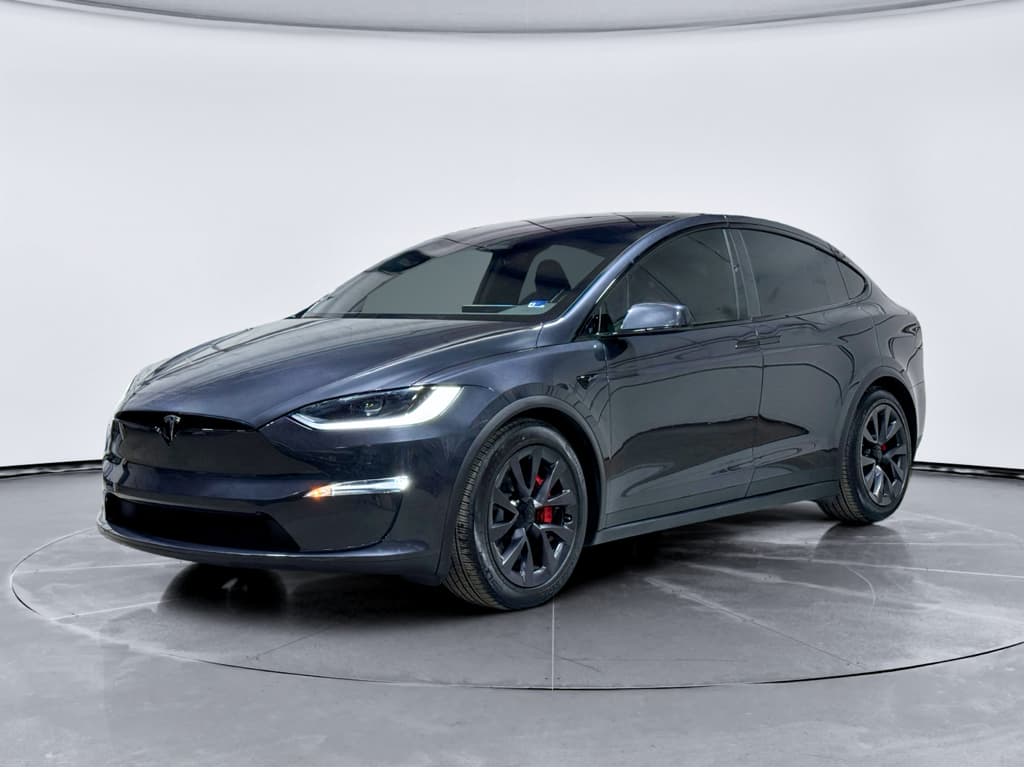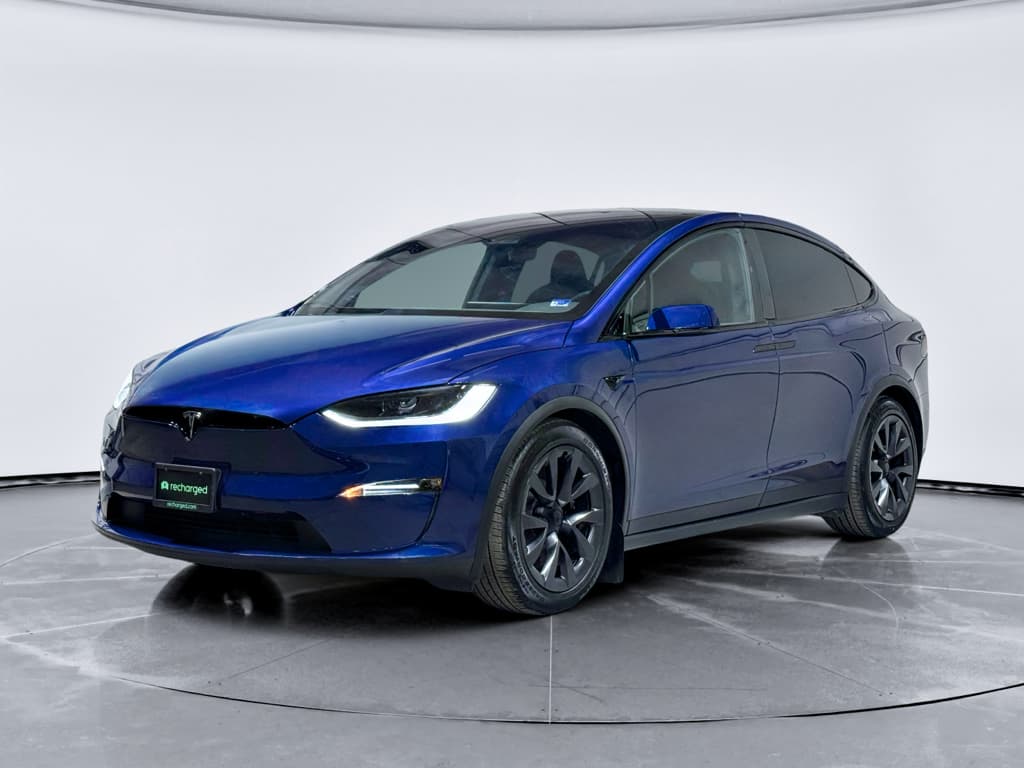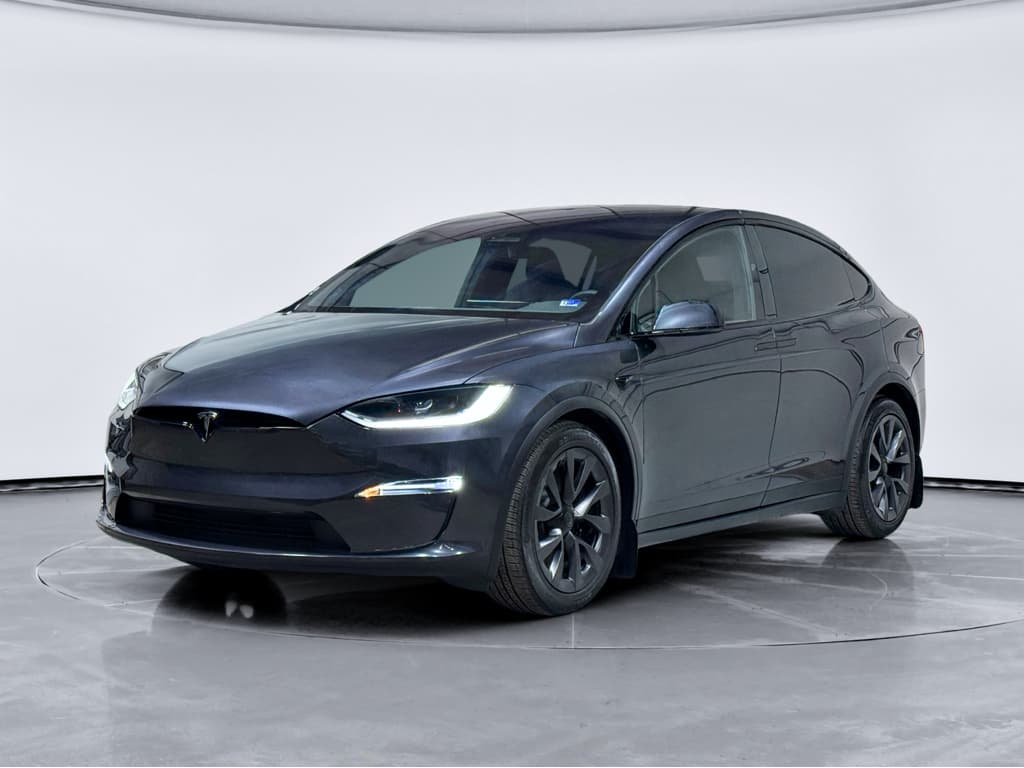
You don’t buy a 2024 Tesla Model X because you love restraint. You buy it because you want a family hauler that can out‑drag a sports car and still knock out a serious road trip without living at a charger. The question is: in the real world, how close does the 2024 Tesla Model X get to its official range numbers, and what should you expect if you’re shopping new or used?
EPA vs real life
Why the 2024 Tesla Model X range test matters
The 2024 Tesla Model X lives at the intersection of speed, size, and range. It’s a three‑row electric SUV with supercar thrust, a roughly 100‑kWh battery, and EPA‑rated range between about 300 and 335 miles depending on trim and wheels. That spec sheet looks heroic, but the physics of a big, heavy SUV punching a hole through the air at 70–80 mph tell a more complicated story.
For shoppers, especially those considering a used EV, range isn’t an abstract bragging right. It dictates how often you stop on family road trips, whether your winter commute is carefree or anxious, and how tolerant you can be of battery degradation over time. That’s why a focused 2024 Tesla Model X range test is far more useful than the number on the Monroney sticker.
2024 Model X range by the numbers
Official 2024 Tesla Model X range figures explained
Before we talk about real‑world results, you need a baseline. For the 2024 model year, the U.S. EPA and Tesla list the Model X lineup roughly as follows (all using the updated, slightly stricter EPA method):
2024 Tesla Model X EPA range & efficiency
Key 2024 Model X trims and their official EPA range estimates. All use a ~100‑kWh battery pack.
| Trim & wheels | EPA combined range | Approx. highway range | EPA efficiency (combined) |
|---|---|---|---|
| Long Range AWD, 20" | 335 miles | ~315–320 miles | ~100 MPGe (≈337 Wh/mi) |
| Long Range AWD, 22" | 322 miles | ~300–305 miles | Slightly higher Wh/mi than 20" |
| Plaid, 20" | 326 miles | ~305–310 miles | ~98 MPGe |
| Plaid, 22" | 300 miles | ~280–290 miles | ~90 MPGe (≈374 Wh/mi) |
Remember: these are combined city/highway figures in ideal test conditions.
Two things to keep in mind with these numbers. First, EPA “combined” range is not a highway test; the cycle mixes low‑speed and city driving, where EVs are most efficient. Second, Tesla (and now the EPA) have updated methodologies over the years, so you can’t always compare an older Model X’s window‑sticker number one‑to‑one with the 2024 car.
Tesla’s optimistic history
How we’d test 2024 Tesla Model X range in the real world
There’s no single “official” real‑world range test, but serious outlets converge on similar methods. If you wanted to reproduce a meaningful 2024 Tesla Model X range test at home, or just understand the numbers you see online, here’s the approach that matters.
Real‑world Model X range test protocol
1. Use a consistent highway loop
Pick a mostly flat highway route you can drive as an out‑and‑back loop. That cancels out wind and elevation. Ideally, test in mild weather (50–70°F) to minimize climate‑control impact.
2. Lock in a true 70–75 mph
Set adaptive cruise at the posted flow of traffic, typically 70–75 mph in the U.S. Avoid big speed swings; aero drag is your main enemy in a Model X.
3. Start around 90–100% charge
You don’t need to go all the way to 0%. Most range tests either run from a full charge down to 10% or project total range from a measured portion, e.g., 90% to 20%.
4. Standardize settings
Use the same drive mode, tire pressure, HVAC setting, and wheel size for each run. Cabin at ~70°F, normal ride height, and ‘Standard’ acceleration are good reference points.
5. Record consumption, not just miles
The Model X’s trip computer reports Wh/mi. That number alongside your usable battery capacity tells you more about efficiency than raw miles alone.
6. Adjust for elevation and temperature
If your route includes big climbs, or you’re testing in heat or cold, make a note. A 20°F winter run with snow tires is a different universe from a calm spring evening.
2024 Model X highway range results: what to actually expect
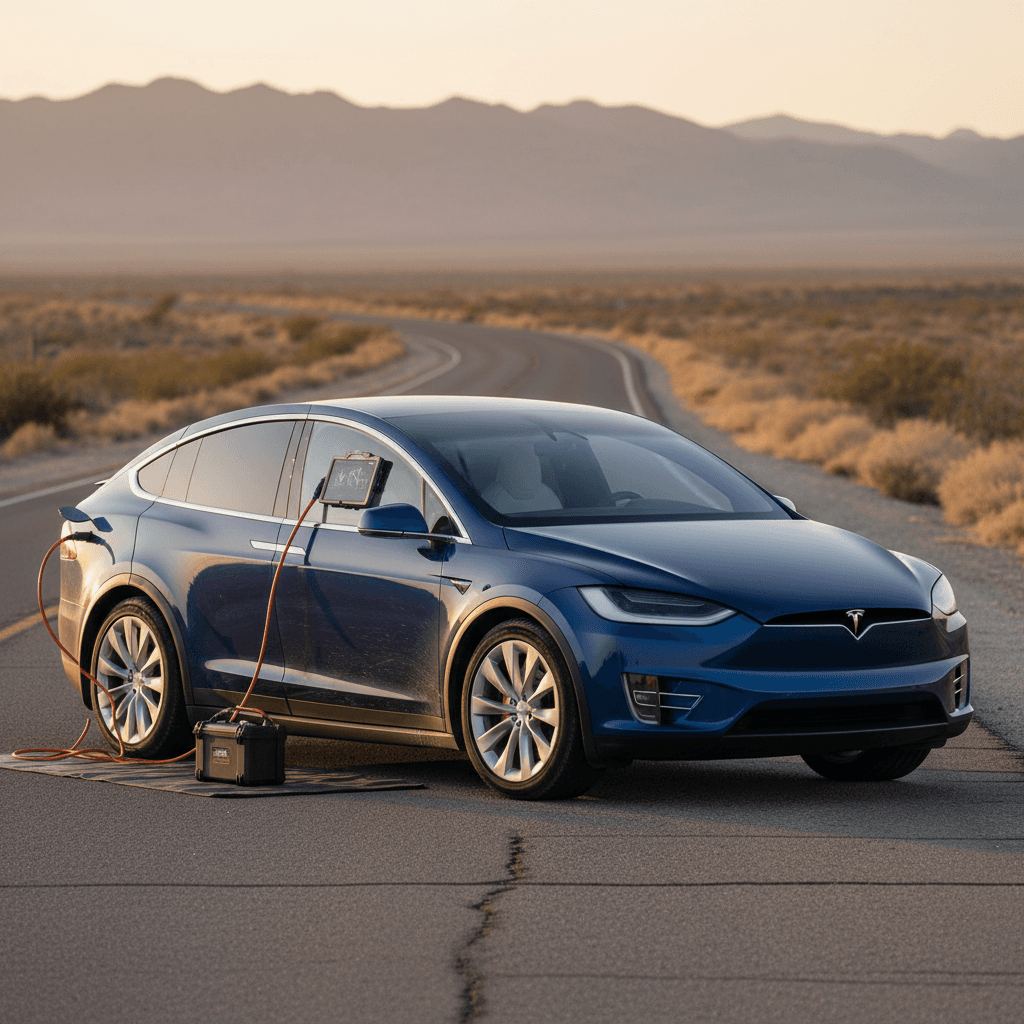
In steady‑state highway testing at 70–75 mph, the 2024+ Model X behaves a lot like the updated 2026 car: expect to see about 80–85% of the EPA figure if conditions are favorable. On a fresh Long Range with 20" wheels, that pencils out to roughly 270–290 miles of honest highway range from a full usable charge in mild weather.
EPA numbers (idealized)
- Assume a gentle mix of city and highway driving.
- Climate control impact is limited or normalized.
- Speeds are lower than real U.S. interstate traffic.
- Battery is new and perfectly healthy.
Highway tests (what you’ll live with)
- 70–75 mph most of the time.
- HVAC running for comfort, not efficiency trophies.
- Wind, temperature, and elevation are all in the mix.
- Expect 10–20% less than EPA, depending on conditions.
On a newer dual‑motor Model X with the improved 352‑mile EPA rating (as tested for 2026), one respected highway test saw about 300 miles at 75 mph. That ~15% haircut is a useful mental model: lop off the optimistic top, and what remains is still a very long‑legged SUV.
Rule of thumb for trips
Long Range vs Plaid, and 20" vs 22" wheels
For 2024, the Model X lineup is essentially two powertrains wrapped in the same falcon‑doored origami: Long Range and Plaid. Both use a roughly 100‑kWh pack. The Plaid simply pours it out faster.
Which 2024 Model X spec goes farthest?
Same body, same battery, different appetites.
Long Range, 20" wheels
EPA: 335 miles
Best pick for range. At 70–75 mph, plan for roughly 270–290 miles in good weather.
Plaid, 20" wheels
EPA: 326 miles
Tri‑motor power trims a few miles off. Real‑world highway range is still solidly in the mid‑200s.
Any 22" wheel setup
EPA: down to 300 miles
The big wheels look fantastic and burn extra range. Expect another 5–10% hit vs 20" wheels at speed.
If you’re chasing maximum range, the hierarchy is simple: Long Range on 20s, then Plaid on 20s, then any of the 22‑inch configurations. The big‑wheel penalty is real: those 22s increase aerodynamic drag and rolling resistance, and their stickier performance tires waste a few more electrons as heat.
The style tax
City, mixed driving, and winter: how the Model X range shrinks
Highway numbers are only half the story. In slower mixed driving, the Model X’s big battery and efficient motors really come into their own. But add extreme temperatures, and the equation changes again.
Typical 2024 Model X Long Range behavior by scenario
Approximate real‑world ranges for a healthy‑battery Long Range on 20" wheels, assuming about 90–95 kWh usable capacity.
| Scenario | Estimated efficiency | Usable range from full | What it feels like day‑to‑day |
|---|---|---|---|
| Mild‑weather city/suburban mix (30–45 mph, lots of regen) | 2.8–3.3 mi/kWh | 280–320 miles | EPA‑like or better; you’ll get bored before it gets low. |
| Mild‑weather mixed commute (40–65 mph) | 2.5–2.9 mi/kWh | 250–280 miles | Comfortable buffer for most U.S. commutes. |
| 70–75 mph highway, fair weather | 2.6–2.8 mi/kWh | 260–280 miles | Road‑trip ready, with charging every 2.5–3 hours. |
| Cold winter, short trips, cabin at 70°F | 2.0–2.3 mi/kWh | 200–230 miles | Big hit from cabin heating and cold battery; pre‑conditioning becomes your best friend. |
| Hot summer, max A/C, 75 mph | 2.2–2.5 mi/kWh | 220–250 miles | Less dramatic than winter, but still trims confidence on long desert stretches. |
These are directional examples, not guarantees. Terrain, wind, load, and temperature all matter.
Why winter hits EVs so hard
Battery degradation and used Model X range expectations
If you’re looking at a used 2020–2024 Model X, the million‑dollar question is: how much range has it lost? Tesla’s large packs tend to degrade slowly in the early years, with many owners reporting on the order of 5–10% capacity loss over the first 100,000 miles when the car is treated reasonably well.
That means a 2024 Long Range rated at 335 miles when new might be effectively a 300‑mile SUV after several years and a lot of Supercharging. That’s still stout, but on long trips it translates to charging every 200–230 miles instead of every 230–260 miles if you’re staying in the comfortable middle of the battery.
How Recharged measures battery health
Ready to find your next EV?
Browse VehiclesUsed Model X range: three buyer profiles
How much degradation matters depends on how you live.
Suburban family hauler
Daily 30–50‑mile errands? Even a Model X that’s lost 15% of its range is overkill. Focus more on comfort, seating, and repair history than squeezing out an extra 20 miles.
Frequent road‑tripper
If you drive 15,000+ highway miles a year, degradation matters more. A 10–15% hit means more Supercharger stops and less flexibility to skip a station.
Business mileage warrior
High daily mileage without time for mid‑day charging? Prioritize the healthiest pack you can find and consider 20" wheels over 22s to stretch range.
How to estimate your own Model X range (in 5 minutes)
Tesla’s percentage gauge and “rated miles” readout are polite fiction. The reliable way to understand your car’s range, or a used Model X you’re test‑driving, is to work backwards from energy usage.
Quick‑and‑dirty range estimate for any Model X
1. Reset a trip meter
On the touchscreen, reset Trip B before a drive that’s at least 20–30 miles and reflects your typical mix of speeds.
2. Drive normally
Don’t hypermile, don’t thrash it. Use the HVAC as you usually would, at your typical speed. The point is to capture your real life, not a lab test.
3. Note distance and Wh/mi
At the end, write down the distance and average Wh/mi. Suppose you see 280 Wh/mi over 40 miles.
4. Estimate usable battery size
Most modern Model X packs have roughly 90–95 kWh of usable energy. Divide that by your Wh/mi figure (as kWh/mi) to get realistic range. Example: 92 kWh / 0.28 kWh/mi ≈ <strong>328 miles</strong>.
5. Apply a safety buffer
You rarely run 0–100% in real life. If you typically cycle between 90% and 10%, multiply by 0.8. In our example: 328 × 0.8 ≈ <strong>260 miles of comfortable range</strong> for your driving style.
Use this when shopping used
Practical range tips for Model X owners and shoppers
- Prefer 20" wheels if you care more about range than stance.
- Keep tires properly inflated; a few PSI low on a 5,000‑plus‑pound SUV is measurable drag.
- Use seat heaters first in winter, they sip power compared with cranking the cabin heat.
- Pre‑condition the cabin and battery while plugged in before cold‑weather drives.
- On road trips, charge from about 10–15% up to 60–70% for the fastest overall travel time.
- Avoid living at 100% or 0% state of charge; the battery is happiest in the middle.
- If you tow with a Model X, assume you’ll cut range roughly in half and plan stops accordingly.
Don’t chase 0%
FAQ: 2024 Tesla Model X range test & ownership
Frequently asked questions about 2024 Model X range
Should you worry about Model X range? Final verdict
The 2024 Tesla Model X is not the range king it appears to be on paper, but it is still a long‑distance athlete. In honest testing, you trade a slice of those glossy EPA numbers for aero drag, family luggage, and real weather, and what’s left is a three‑row rocket ship that can genuinely cover 250+ miles between civilised stops.
If you’re cross‑shopping or hunting the used market, focus less on the headline EPA figure and more on efficiency, wheel choice, and battery health. A Long Range on 20s with a healthy pack is a superb road‑trip partner; a Plaid on 22s with a tired battery is a fast fashion statement with a smaller comfort zone.
This is exactly where a data‑driven marketplace like Recharged earns its keep. Every Model X we list comes with a Recharged Score battery health report, fair‑market pricing, financing options, and nationwide delivery, so you can chase your dream spec without guessing how far it will really go. The EPA number may be fantasy; the way you live with the car doesn’t have to be.