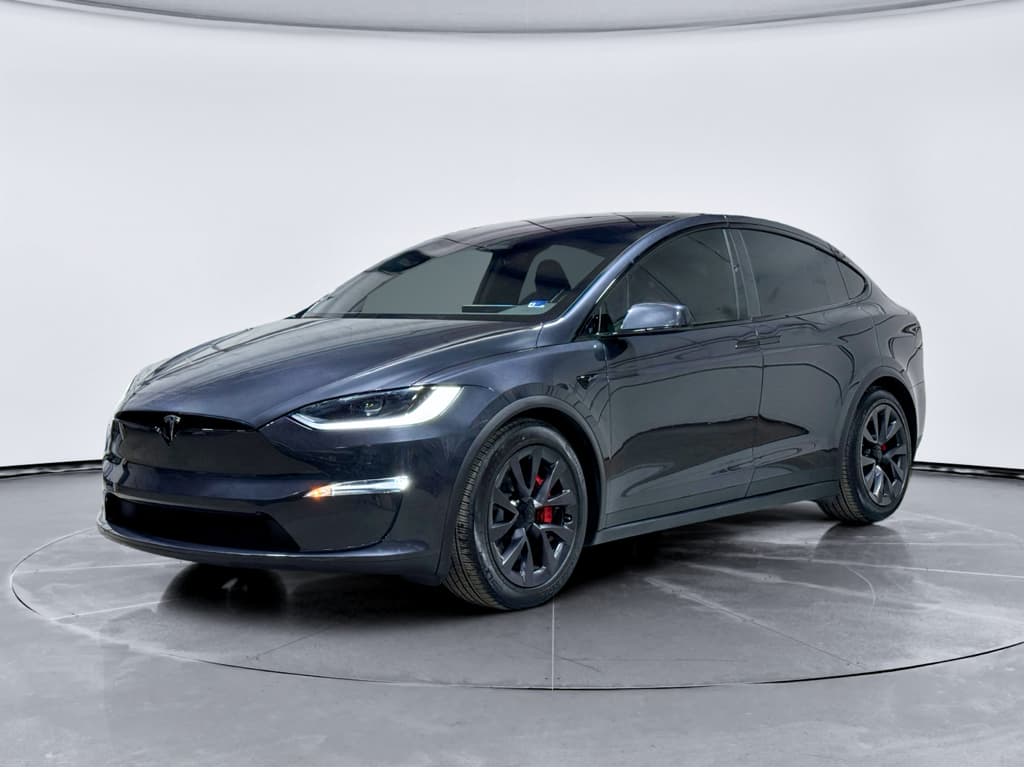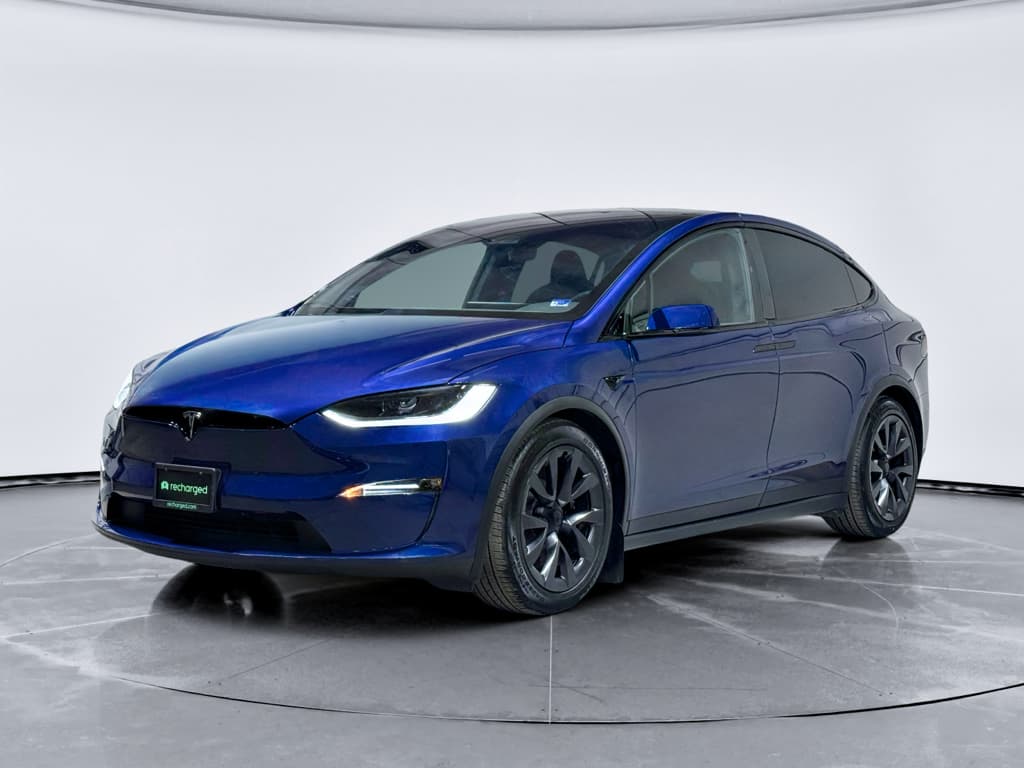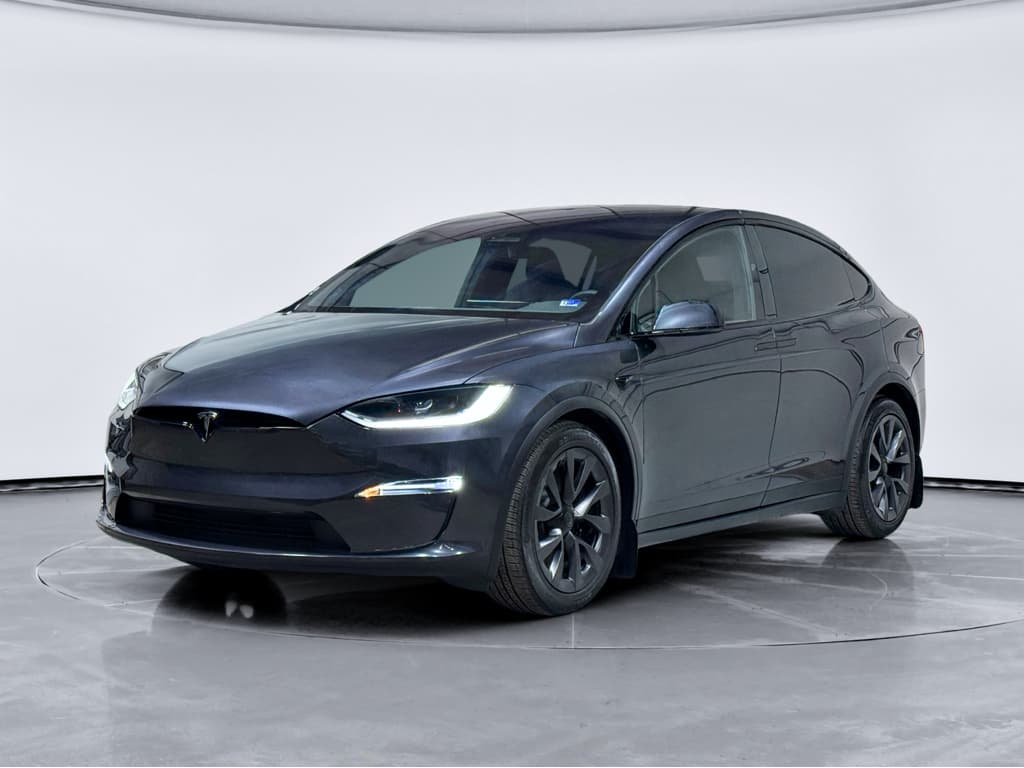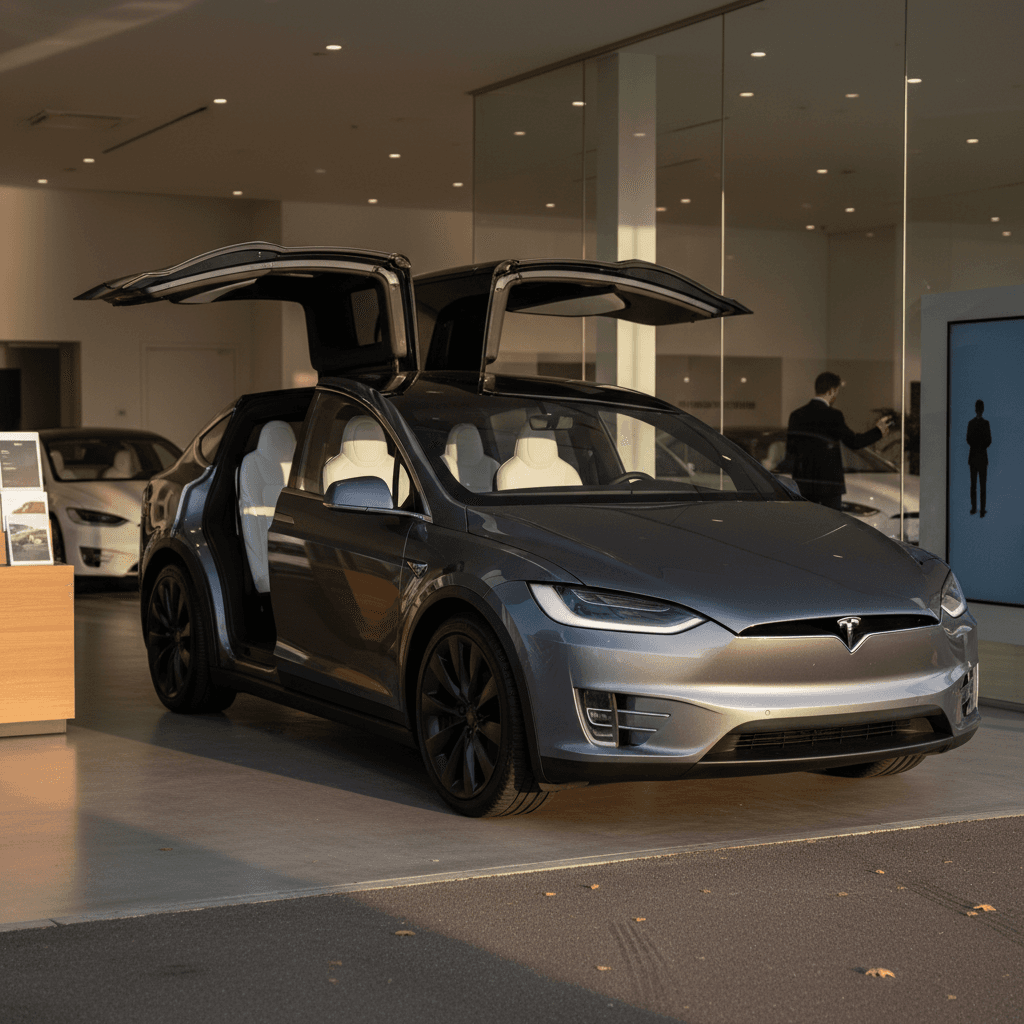
If you’re shopping for a large electric SUV, a 2024 Tesla Model X is probably on your shortlist. It’s one of the few fully electric, three-row luxury SUVs on the market, with dramatic falcon‑wing doors, serious performance, and access to Tesla’s Supercharger network. This 2024 Tesla Model X buying guide walks you through trims, range, pricing, reliability and used‑market realities so you can decide if it fits your family, driving habits and budget.
Model X at a glance
Who should consider the 2024 Tesla Model X?
Great fit if you need space and speed
- Three-row flexibility for families who actually use the third row, or want a huge cargo area with the seats folded.
- All‑weather, all‑wheel drive for snow‑belt states and mountain driving.
- Fast DC charging via Tesla’s Supercharger network makes long road trips realistic.
- You value software and tech (over‑the‑air updates, big touchscreen, advanced driver assistance).
Might not be right for you
- You rarely need more than two rows; a Model Y or other compact SUV may be more cost‑effective.
- Parking and garage space are tight; the Model X is wide and the falcon‑wing doors need overhead clearance.
- You want a plush, traditional luxury interior with buttons and knobs, Tesla’s minimalist cabin isn’t for everyone.
- Your budget is limited; even used 2024 Model X pricing is still firmly in premium SUV territory.
Consider the competition
2024 Model X trims, range and key specs
2024 Tesla Model X core specs (factory ratings)
2024 Model X trims: Long Range vs Plaid
Use this side‑by‑side view to match performance and range to your needs.
| Feature | Long Range (dual‑motor) | Plaid (tri‑motor) |
|---|---|---|
| Drivetrain | Dual‑motor AWD | Tri‑motor AWD |
| Approx. EPA range* | Around 330 miles | Low‑300‑mile range |
| Power & acceleration | Very quick; ~3–3.8 sec 0–60 mph | Supercar quick; ~2.5 sec 0–60 mph |
| Wheels (typical) | 20" standard, 22" optional | 20" or 22" performance‑oriented |
| Seating | Up to 7 seats | Up to 6 or 7 seats, depending on configuration |
| Best for | Long‑range family use, efficiency and comfort | Maximum performance and towing while still family‑friendly |
Key differences between the 2024 Model X trims.
Real‑world range vs. window sticker
Pricing: what a 2024 Model X really costs
Tesla has changed Model X pricing frequently, but for context, new‑vehicle MSRPs for the 2024 model year generally sat in the low‑$80,000s for Long Range and mid‑ to high‑$90,000s for Plaid before options, taxes and destination. When those vehicles hit the used market in 2025–2026, many have already taken a significant first‑owner depreciation hit, which can make them attractive for second owners.
Typical 2024 Model X price bands in today’s used market
How Recharged can help on price
New vs used: which Model X years make the most sense?
Model X generations to focus on
The 2021 refresh is a key cutoff for most shoppers.
2016–2020 (early years)
Tempting prices, but approach with caution:
- Older battery and motor hardware, sometimes lower range.
- More reported issues with doors, trim and electronics.
- Early cars may be near the end of their 8‑year battery warranty.
Great only if pricing is aggressive and condition is documented.
2021–2023 (refresh)
Sweet spot for many buyers:
- Major interior and infotainment refresh starting in 2021.
- Plaid trim introduced with huge performance.
- Better efficiency and updated driver‑assistance hardware.
Often strong value vs. new 2024 while feeling very current.
2024+ (latest tech)
Best if you want the newest:
- Latest software, cameras and driver‑assist tuning.
- Freshest batteries with the most warranty coverage left.
- Typically higher prices, but fewer unknowns.
Ideal for buyers who keep vehicles 5–8+ years.
If you’re shopping used, start with 2021 and newer Model X. That’s when Tesla updated the interior and brought in the Plaid powertrain, which radically modernized the experience compared with earlier years.
For most shoppers in 2026, a lightly used 2024 sits in the middle of this spectrum: you get the refreshed interior and current‑generation tech, plus some depreciation already in the rearview mirror. If you don’t mind being one model year behind the latest window sticker, a 2023 can be even better value so long as you verify battery health, repair history and software status carefully.
Battery health and range: what to expect over time
Battery condition is the single most important variable when you’re evaluating any used 2024 Tesla Model X. Large owner data sets across 2016–2024 Model X packs suggest roughly 10–12% loss of usable capacity by about 100,000 miles with normal charging habits and climate. That means a Long Range originally rated near 330 miles might behave more like a 285–295‑mile SUV at that mileage in mild weather.
How Tesla warranties the pack
Healthy vs. hard‑used battery clues
Check displayed full‑charge range
Ask the seller for a screenshot or in‑person look at the car’s projected range at 100% state of charge. Compare that to original EPA ratings to estimate real‑world degradation.
Review charging habits
Frequent DC fast charging to 100% and sitting at high state of charge in hot climates tends to be harder on packs. Regular Level 2 charging at home with a 70–90% daily limit is easier on them.
Look at mileage in context
A 2024 Model X with 15,000 miles should behave close to new. One with 70,000+ miles can still be a good buy, but only with clear battery‑health data and realistic expectations on range.
Use third‑party diagnostics
Tools like the Recharged Score battery‑health diagnostics give you a <strong>quantitative view</strong> of pack capacity and fast‑charge behavior rather than guessing from the dash alone.
Reliability and known trouble spots
Tesla has steadily improved the Model X, but it’s still a complex vehicle with falcon‑wing doors, air suspension and heavy software dependence. 2024 models generally fare better than early years, yet owner surveys and repair data still show some recurring themes you’ll want to understand before you buy.
Common 2024 Model X concern areas
Not every vehicle has these issues, but they’re patterns worth screening for.
Doors, seals and trim
- Falcon‑wing doors can develop alignment or sensor issues that affect opening and closing.
- Wind noise from frameless windows and door seals is a recurring complaint.
- Careful test drives at highway speeds help you spot these early.
Suspension & tires
- Air suspension components are expensive if they fail out of warranty.
- 22" wheels look great but can accelerate tire wear and be more vulnerable to pothole damage.
- Inspect for uneven wear and listen for clunks over bumps.
Electronics & screens
- Center display and instrument cluster are mission‑critical; reboots or glitches should be rare on a healthy 2024.
- Verify cameras, Autopilot visualization and audio system work flawlessly.
Recalls & campaigns
- Like most modern EVs, the Model X has seen software‑driven recalls fixed via over‑the‑air updates.
- Ask the seller for documentation that all open campaigns have been addressed or will be before delivery.
Don’t skip a professional inspection
Options and features worth paying for
Tesla bundles features differently than traditional automakers; many configurations are essentially software and color choices on top of the base hardware. When you’re comparing 2024 Model X listings, focus less on tiny option codes and more on a handful of big‑impact choices.
- Seating configuration: Six‑seat layouts with captain’s chairs in the second row make third‑row access easier and feel more premium, but seven seats maximize people‑moving. Decide which matters more for your use case.
- Wheel size: 20" wheels ride softer, reduce road noise and help range. 22" wheels sharpen handling and aesthetics but typically cost you range and ride comfort.
- Premium audio: Tesla’s upgraded sound system is a noticeable jump in quality if you care about in‑car audio.
- Driver assistance: Basic Autopilot is common; Enhanced Autopilot or Full Self‑Driving Capability may be installed on some used vehicles. Value them based on how much you’ll actually use lane‑change assist and navigation‑on‑Autopilot, not the original option price.
- Tow package: If you plan to tow (up to 5,000 pounds in many configurations), verify that the vehicle has the factory hitch and wiring rather than aftermarket hardware.
Spec advice from the used market
Charging and road-trip usability
Charging is one of the 2024 Model X’s strongest assets. You get Tesla’s North American Charging Standard (NACS) port and access to a dense Supercharger network, plus straightforward home charging options. Understanding how you’ll recharge day‑to‑day is critical to deciding if an X fits your life.
Home charging
- Most owners install a 240V Level 2 charger (Tesla Wall Connector or compatible third‑party unit) on a 40–60A breaker.
- Expect roughly 25–35 miles of range per hour of charging depending on amperage and wheel size.
- If you can’t install home charging, plan carefully around workplace and public Level 2 options, the X’s big battery really wants overnight juice.
On the road
- Peak DC rates around 250 kW on V3/V4 Superchargers mean 10–80% top‑ups in roughly 25–35 minutes under ideal conditions.
- Tesla’s trip planner in the navigation system automatically routes you via Superchargers with live stall availability.
- In 2024 and beyond, more non‑Tesla networks are rolling out NACS plugs, widening your fast‑charge options further.
Plan around children, not just the battery
Pre-purchase inspection checklist for a 2024 (or newer) Model X
10 items to verify before you commit
1. Confirm build year, trim and options
Double‑check the VIN, build date, Long Range vs Plaid trim and seating configuration match the listing. Make sure any advertised FSD or Enhanced Autopilot is actually enabled in the software.
2. Check battery health and charging history
Request service records or a battery‑health report. At Recharged, every Model X listing includes a <strong>Recharged Score</strong> with pack diagnostics and charge‑rate data so you’re not buying blind.
3. Inspect tires, wheels and brakes
Look for uneven tire wear, curb rash on 20"/22" wheels and remaining tread depth. Check for brake vibration under medium‑hard stops.
4. Test falcon‑wing doors thoroughly
Open and close the doors multiple times in different parking situations. Listen for binding, watch for sensor mis‑reads and verify manual overrides work.
5. Drive at highway speeds
On a test drive, bring the vehicle to 65–75 mph. Listen for wind noise, rattles and suspension clunks, and check that Autopilot engages cleanly if equipped.
6. Verify all screens and cameras
Make sure the center display, instrument cluster, side‑repeater cameras and rear camera all function with clear images and no flickering or ghosting.
7. Scan for software alerts
Check the car’s service menu for any stored alerts or warnings. Ask the seller to fix critical items before purchase, or price them into your negotiation.
8. Assess interior wear
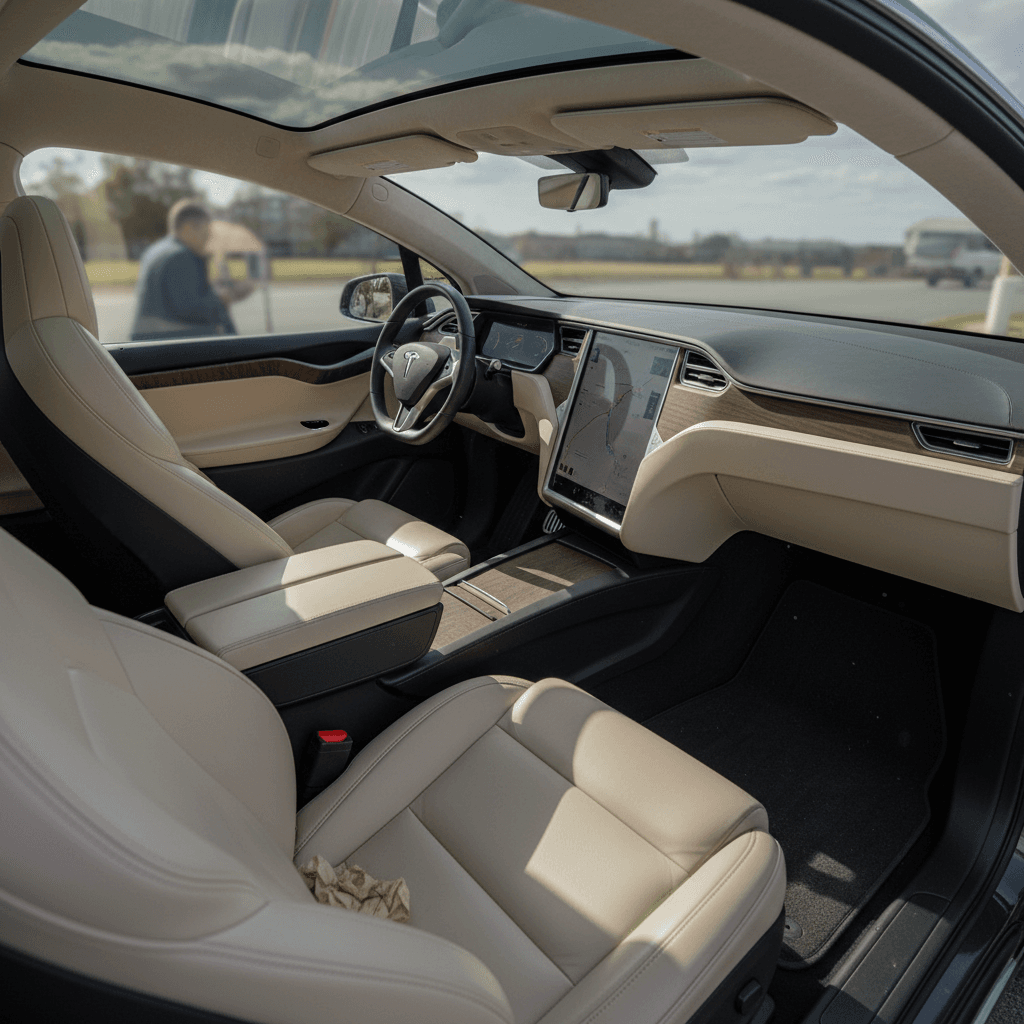
High‑miles 2024s should still look fresh. Pay attention to seat bolsters, steering‑wheel surfaces and touch points. Excess wear may hint at hard use.
9. Review recall status and service history
Ask for a Tesla service history printout or screenshots showing completed recalls and campaigns. Confirm basic maintenance like brake‑fluid checks and cabin‑filter replacements.
10. Confirm included charging equipment
Know exactly what comes with the car: mobile connector, adapters, wall connector, tow hitch cover, extra key cards, floor mats. Replacing missing items can add hundreds of dollars.
Financing, insurance and total cost of ownership
A 2024 Tesla Model X is a six‑figure SUV when new and still a major purchase used. Don’t just fixate on the sale price, build a realistic picture of monthly and long‑term cost. That includes financing, insurance, electricity, tires and potential repairs outside warranty.
Financing and depreciation
- Expect stronger interest rates than you’d see on economy cars; many buyers opt for 60–84‑month terms to manage payment size.
- Depreciation on luxury EVs has been volatile. Recent Model Xs have seen double‑digit percentage drops from MSRP in their first few years, but demand has also shown periods of resilience compared with some rivals.
- Buying slightly used can shift thousands of dollars of early depreciation onto the first owner while you still enjoy a relatively new vehicle.
Insurance and running costs
- Insurance premiums are often higher than gas SUVs because of repair costs and performance. Get quotes on specific VINs before you commit.
- Electricity is usually cheaper per mile than gasoline, but the X’s size and performance mean it’s not the most efficient EV in absolute terms.
- Budget for tires every 25–40k miles, especially on 22" wheels, plus alignment and occasional suspension work as the vehicle ages.
Use pre‑qualification to right‑size your search
Frequently asked questions about buying a 2024 Model X
2024 Tesla Model X buying FAQs
Bottom line: is the 2024 Model X right for you?
A 2024 Tesla Model X is not the cheapest way into an EV, but it’s one of the most capable if you need real three‑row space, long‑distance electric range and cutting‑edge software in a single package. For many shoppers, a well‑specced Long Range model on 20" wheels offers the best balance of comfort, performance, range and cost. The Plaid is icing on the cake for drivers who demand maximum speed and are willing to pay for it.
If you’re ready to move from research to actual vehicles, consider browsing used 2024 Model X listings on Recharged. You’ll see battery‑health data, transparent pricing and third‑party inspections up front, plus options for financing, trade‑in and nationwide delivery. That way, when you finally press the accelerator on your own falcon‑winged SUV, you’ll do it knowing the numbers and the vehicle itself both add up.