If you own, or are eyeing, a 2024 Tesla Model S, you’ve probably heard that Teslas are recalled a lot. That’s technically true, but it’s also deeply misunderstood. This guide walks through the 2024 Tesla Model S recalls list in plain English, explains which fixes happen magically over‑the‑air and which require a service visit, and shows you how to sanity‑check any 2024 Model S you’re thinking about buying used.
First, a reality check
Why the 2024 Model S Has So Many Recalls
Start with this: Tesla dominates U.S. recall statistics because it ships software fixes like a phone company pushes app updates. In 2024 alone, Tesla remedied more than five million recall repairs with OTA software, far more than any other automaker. Instead of dragging you back to the dealer for a new sticker or a reflash, Tesla just pushes a new build to your car overnight.
For the 2024 Model S, that means several “recalls” you see listed for the model year are essentially software patches: text size on warning lights, Autopilot behavior tuning, rear camera behavior, and so on. Others are traditional hardware campaigns, like an airbag part that may need replacement. The trick is telling which is which and confirming the work is done.
Tesla Recalls in Context
Quick 2024 Tesla Model S Recalls List
Here’s a simplified, owner‑friendly 2024 Tesla Model S recalls list. Names are paraphrased for clarity; NHTSA campaigns combine multiple model years, but 2024 Model S vehicles built within each date range are included:
High‑Level 2024 Model S Recall Summary
Major NHTSA recall campaigns that apply to the 2024 Tesla Model S, in plain language. Exact build dates and VIN ranges are defined in each official recall filing.
| Recall theme | What can happen | Typical remedy | Delivery type |
|---|---|---|---|
| Warning telltale text size (24V‑051) | Certain warning icons use text that’s too small, making critical alerts harder to see. | Software update increases text size and legibility. | Over‑the‑air (OTA) |
| Autopilot / FSD supervised behavior | FSD‑equipped cars may not always respond appropriately to certain road conditions, contributing to crash risk. | Multiple software updates adjust how the system recognizes and responds to hazards. | Over‑the‑air (OTA) |
| Unlatched hood detection / hood flying open | The car may not always detect an unlatched front trunk (frunk), increasing the risk that the hood opens while driving. | Software update improves hood‑latch detection logic and warnings. | Over‑the‑air (OTA) |
| Rearview camera / car computer shorting | Certain car computers can experience an overvoltage condition, leading to loss of backup camera and other displays. | First step is a software update; some cars may need computer hardware replaced. | OTA + possible service visit |
| Driver airbag module (24V‑967) | Some Model S vehicles received suspect driver airbag units that might not perform as designed in a crash. | Inspect and, if necessary, replace the driver airbag module. | Service visit required |
| Misc. component and labeling campaigns | Small populations tied to labeling, FMVSS compliance, or low‑volume hardware issues. | Varies by recall; often inspection or small hardware fix. | Usually service visit |
Use this table as a roadmap, then verify details by VIN on NHTSA or Tesla’s site.
Names will look different on NHTSA
Detailed 2024 Model S Recall Breakdown
1. Instrument panel telltale text too small (Recall 24V‑051)
Early in 2024, NHTSA flagged Tesla for instrument panel telltales, essentially small warning icons with text, that didn’t meet minimum size requirements. Tiny font on a warning light might sound petty, but the standard exists for a reason: if you can’t quickly recognize a brake or system fault icon, your reaction time slows down.
Tesla’s fix for the 2024 Model S was straightforward: an over‑the‑air software update that enlarged the text for certain warnings and re‑balanced the cluster layout. The update rolled into builds like 2024.2.x, and if your car is on newer software, you’re almost certainly already covered.
- Risk if ignored: reduced visibility of critical warnings, especially in bright sunlight or for drivers with reduced vision.
- How to tell it’s fixed: your car is on a software version that mentions telltale or cluster text changes in the release notes.
- Owner action: none beyond installing the latest OTA update. No parts are replaced for this one.
2. Autopilot / FSD Supervised safety behavior campaigns
Another large bucket of recalls covering 2016–2024 Model S vehicles, including 2024 builds, focuses on Autopilot and Full Self‑Driving (FSD) Supervised. Federal regulators have been steadily leaning on Tesla to tighten up how the system recognizes and responds to things like stationary vehicles, intersections, and poor visibility conditions.
For owners, these campaigns mostly look like a series of software updates that adjust how the car behaves with Autopilot or FSD engaged, stricter nags, new checks before lane changes, more conservative behavior approaching stop signs and crosswalks. You may notice the car feels slightly more cautious after one of these updates; that’s the recall at work.
Important safety note
3. Hood latch / unlatched hood detection recall
In 2024, NHTSA and Tesla launched a major campaign across roughly 1.8 million vehicles, including the Model S, tied to how the software detects an unlatched hood. The concern: in rare cases, the car might not adequately warn you that the frunk isn’t fully latched, increasing the risk of the hood flying open at speed and blocking your view.
Again, the remedy on modern Teslas is software. The update improves how the latch state is monitored and how aggressively the car warns you before allowing you to drive or continue driving. For a 2024 Model S, this arrives as an OTA update; no wrenches involved.
- If your hood ever looks even slightly raised, stop and confirm it’s fully latched before driving.
- Don’t rely solely on the dash icon; treat any hood warning as urgent, not advisory.
- This is one of those issues where "annoying" warnings are a good thing.
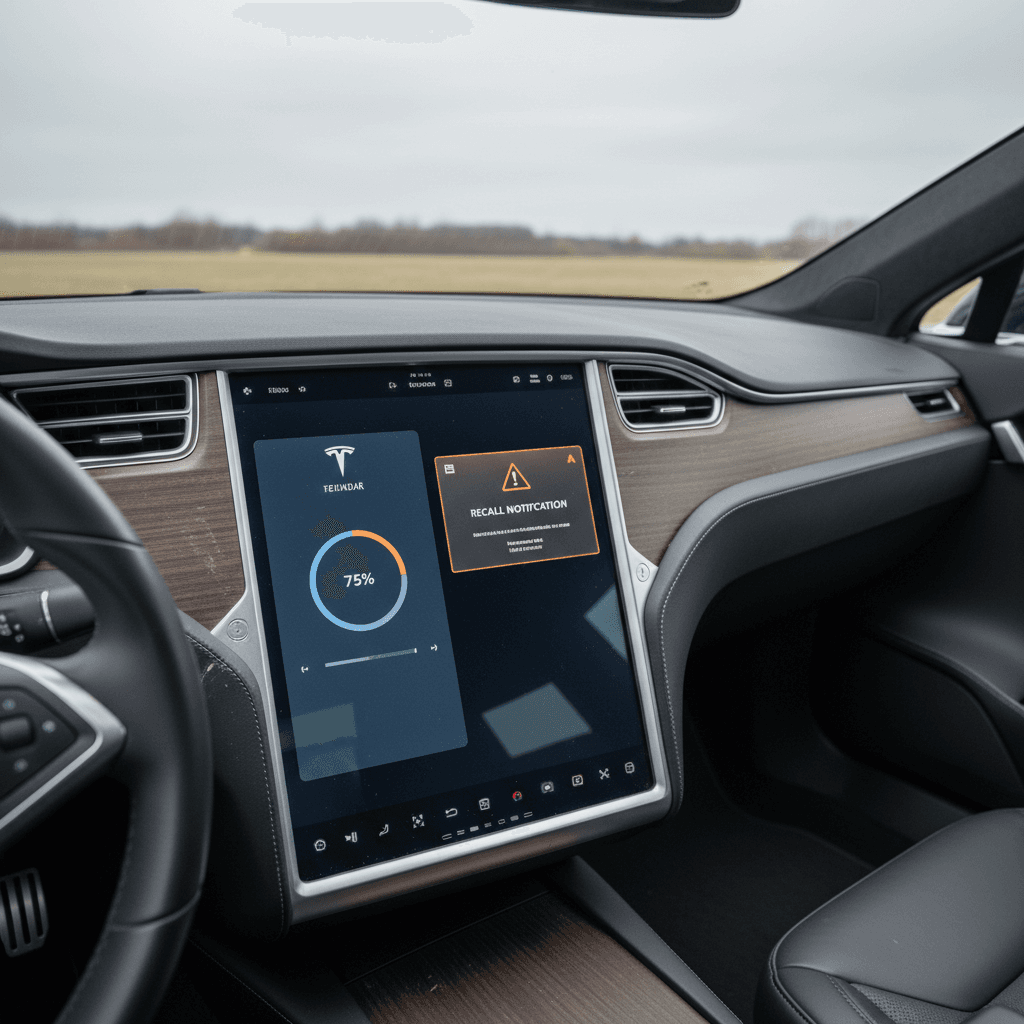
4. Rearview camera / car computer overvoltage
One of the more concrete 2024–2025 campaigns covers a batch of cars, including 2024 Model S sedans, equipped with a specific car computer. Under certain conditions, that computer can experience an overvoltage event. When that happens, you can lose the rearview camera image or other critical display functions, which is a safety issue during reversing or while monitoring surroundings.
Tesla’s remedy has two layers. First, there’s a software update that changes how the computer powers up, reducing the chance of that shorting condition. For vehicles that have already seen symptoms, or fall into a higher‑risk production batch, Tesla can replace the computer hardware at a service center at no charge.
What to watch for
5. Driver airbag module replacement (24V‑967)
Unlike the software‑heavy campaigns above, recall 24V‑967 is an old‑fashioned hardware concern. NHTSA’s filing covers 2021–2025 Model S and Model X vehicles built in a specific date range that may have received suspect driver airbag units from a particular supplier batch. The risk is simple and serious: in a crash, an out‑of‑spec airbag might not deploy correctly.
Tesla’s job here is to identify the affected VINs, inspect the airbag module, and replace it if your car received a suspect part. For a 2024 Model S, this is a service‑center visit recall, not an OTA fix. You’ll get notifications in the app and by mail if your car is in the population.
- You shouldn’t be charged for airbag inspection or replacement related to this recall, it’s a safety campaign.
- If you’re shopping used, ask the seller for service records that show this recall as completed if the car is in the affected VIN range.
- If in doubt, run the VIN through NHTSA and Tesla, then call a Tesla service center to confirm airbag status.
6. Smaller labeling and compliance recalls
Finally, there are the tiny campaigns that rarely make headlines: misprinted labels, documentation not perfectly aligned with federal standards, or low‑volume part issues. These still show up when you look up the 2024 Model S on recall trackers and can pad that “6 recalls” line item, but they’re usually the least consequential in day‑to‑day driving.
For these, Tesla may simply update documentation in your digital owner’s manual, apply a new label during a future service visit, or carry out a quick inspection when the car is already in the bay for something else. Don’t ignore them, but don’t panic either.
Software vs. Hardware Recalls on the 2024 Model S
Software‑only recalls (most common)
- Fixed by over‑the‑air (OTA) update while the car is parked.
- Examples: warning text size, hood‑latch detection logic, many FSD/Autopilot changes.
- No parts replaced; nothing to sign at a service center.
- Show up in your Tesla app and release notes when the update installs.
Hardware or mixed recalls
- May start with an OTA patch, but still require inspection or parts replacement.
- Examples: driver airbag module recall, certain car‑computer replacements.
- Usually require a scheduled visit to a Tesla service center or mobile service.
- Completion is recorded as a repair order in your car’s service history.
The upside of OTA recalls
How to Check if a 2024 Model S Has Open Recalls
Whether you already own a 2024 Model S or you’re cross‑shopping used examples on Recharged, you should treat a recall check like you would a pre‑purchase inspection. The good news: it’s fast, free, and you can do most of it from your phone.
Step‑by‑step: Checking a 2024 Model S for open recalls
1. Grab the full 17‑digit VIN
If you’re shopping used, ask the seller for a photo of the registration, title, or windshield VIN plate. On Recharged listings, the VIN is already documented and tied into our Recharged Score battery and safety report.
2. Run the VIN through NHTSA
Go to NHTSA’s official recall lookup and enter the VIN. The tool will show any <strong>open</strong> safety recalls that still need attention. If it says “0 unrepaired recalls,” you’re starting from a good place.
3. Check Tesla’s own recall and service page
Log into a Tesla account that has the car associated, or ask the seller to share screenshots from their Tesla app. Tesla’s support site and app will list recall campaigns and whether they’re completed.
4. Compare with software version
On the car’s screen, open Software > Details. If the build is significantly older than what owners commonly report online for 2024 Model S, it may be missing OTA recall fixes, especially if the former owner disabled automatic updates.
5. Ask for service history
For hardware recalls like the driver airbag campaign, ask for Tesla service invoices showing the recall number and “performed” or “completed.” Recharged includes this kind of documentation review as part of our intake process for used EVs.
6. Confirm again after purchase
Once the car is in your Tesla account, run the VIN through NHTSA and check the Tesla app one more time. It’s a five‑minute double‑check that closes the loop.
What Recalls Mean If You’re Buying a Used 2024 Model S
Here’s the part that trips up a lot of shoppers: seeing “6 recalls” next to the 2024 Tesla Model S on a reliability site does not automatically make it a bad used‑car bet. In the Tesla universe, a high recall count often just means the manufacturer is actively tuning the car in public.
How to think about recalls when cross‑shopping a used 2024 Model S
Separate healthy software iteration from red‑flag neglect.
Positive: actively updated
A car that’s current on software recalls is effectively safer and smarter than the day it left the factory. Treat a well‑updated 2024 Model S as a positive sign, not a blemish.
Neutral: many recalls on paper
High recall counts per model year are normal for Tesla right now, because every safety‑driven software adjustment is filed as a recall. Focus on whether they’re done, not how many there are.
Red flag: open, ignored recalls
What should worry you is a used car that’s behind on updates or has open hardware campaigns (like airbag or steering‑related work) that were never completed.
At Recharged, we bake this into our process. Every Tesla we list, including the 2024 Model S, gets a Recharged Score Report that covers battery health, fair‑market pricing, and major safety items. Part of that score is confirming recall status and documenting any outstanding campaigns so you’re not inheriting someone else’s homework.
Negotiation tip
Staying Safe After Recall Repairs
A recall fix is not the end of the conversation. It’s the new baseline. Especially with a car as software‑defined as the 2024 Model S, you want an ongoing routine for updates and safety checks.
Post‑recall habits for a safer 2024 Model S
Keep automatic updates turned on
Unless you’re deeply into beta‑testing builds, let the car install stable OTA updates as they arrive. Most recall remedies are bundled into normal releases.
Read the release notes, not just the version number
After a big update, skim the release notes on the center screen. Tesla often calls out recall‑related changes to warning behavior, Autopilot, or camera systems.
Re‑test basic safety functions
After camera or driver‑assist recalls, check that your backup camera image appears promptly, that warnings trigger as expected, and that nothing feels obviously broken or erratic.
Treat driver‑assist like Level 2, always
Even with recall‑driven improvements, Autopilot and FSD are still Level 2 driver‑assist systems. Hands on the wheel, eyes on the road, attention fully engaged.
Re‑run a VIN check once a year
New campaigns can appear later in a car’s life. Make it a habit to pull your VIN on NHTSA’s site annually, the same way you’d schedule a tire rotation.
How Recharged can help
2024 Tesla Model S Recalls FAQ
Frequently Asked Questions About 2024 Model S Recalls
If there’s a theme to the 2024 Tesla Model S recalls list, it’s this: you’re buying a car that behaves more like a rolling smartphone than a static appliance. That means more recall bulletins on paper, but also faster fixes and a safer car, provided you keep it updated and pay attention to the details. Whether you already own a 2024 Model S or you’re browsing used examples, treat recall checks as part of routine maintenance. And if you’d rather have someone decode the alphabet soup for you, a used Model S bought through Recharged comes with battery health data, fair‑market pricing, and recall status all under one roof.