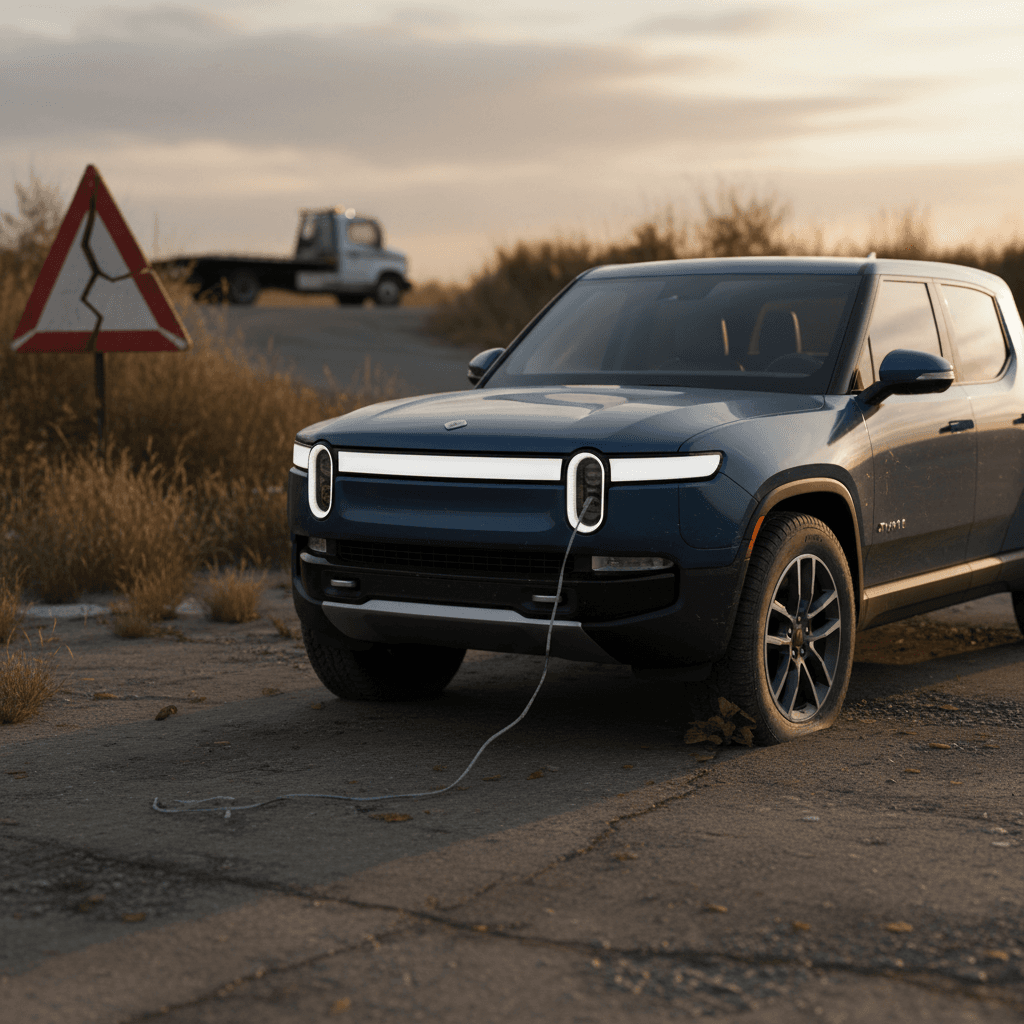
If you’re eyeing a 2024 Rivian R1T, you’ve probably seen a mix of glowing reviews and Reddit horror stories. Searches for “2024 Rivian R1T problems” keep climbing as more trucks hit real roads, not just press fleets. The truth lands somewhere between those extremes: the R1T is a standout electric pickup, but reliability and refinement still look more like a young startup than a 50‑year‑old truck brand.
Important context
Overview: How worrying are 2024 Rivian R1T problems?
Let’s start with what you actually care about: Will a 2024 R1T be a problem child or a solid daily driver? Across owner forums and service anecdotes, you see three broad themes:
- A noticeable minority of trucks have repeated service visits (suspension, rattles, software).
- Many owners report smaller nuisances rather than catastrophic failures: squeaks, misaligned panels, infotainment hiccups.
- Plenty of 2023–2024 R1T owners report 10,000–20,000+ miles with only recalls and routine service.
In other words, the 2024 R1T is not an undriveable lemon by default, but it also isn’t yet at Lexus‑level bulletproof reliability. You’re trading some early‑generation quirks for a truck that drives and feels far more special than most half‑tons.
R1T problem themes at a glance
Big-picture reliability: Patterns across R1T model years
Because the 2024 R1T shares most hardware and software with 2022–2025 trucks, looking at broader R1T trends is fair game. Owner reports highlight a few persistent themes:
R1T problem patterns that matter for 2024 buyers
What shows up repeatedly in owner stories
Suspension & half-shafts
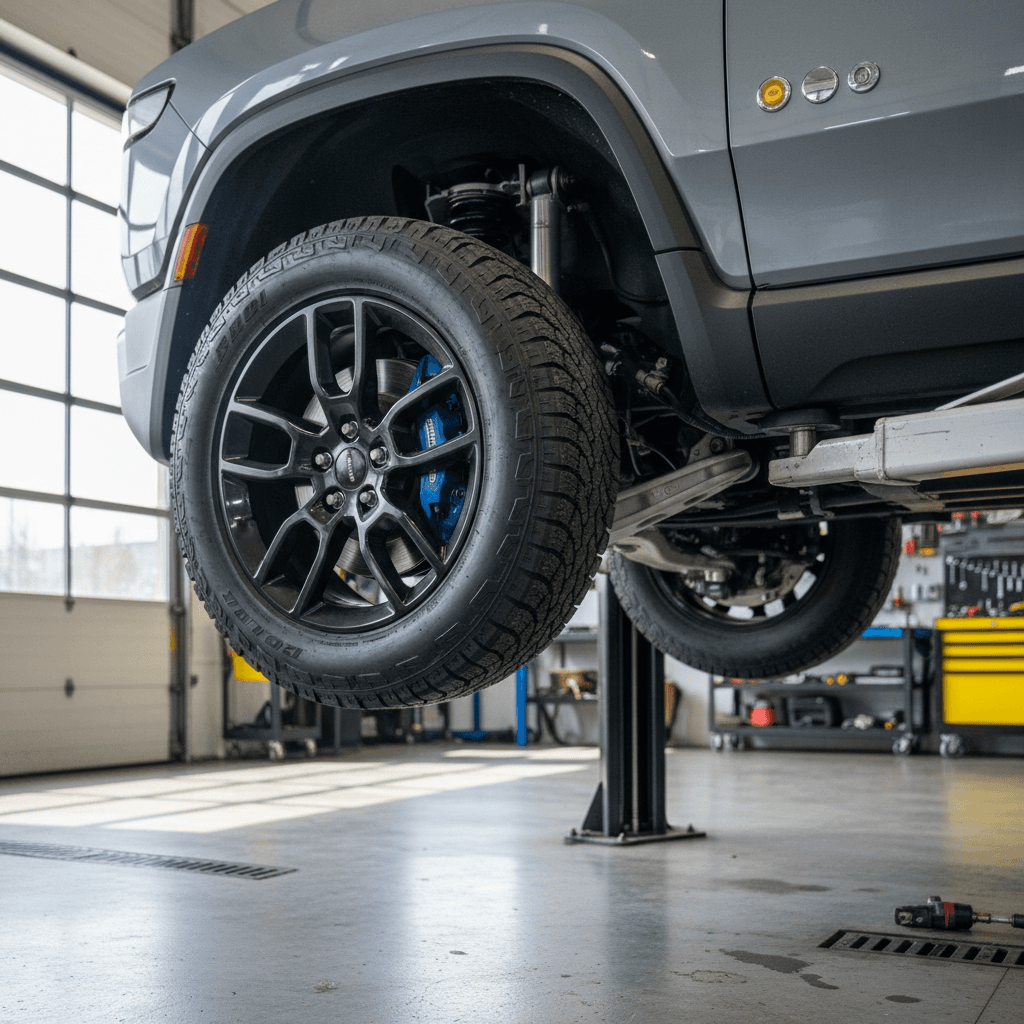
Clunks, clicks and front suspension noises are among the longest‑running complaints. Some owners have had multiple half‑shaft replacements or front damper work after 30,000–50,000 miles.
Software and screens
Frozen center displays, slow boots, and buggy updates show up in multiple threads. In some cases, Rivian replaced the entire display or performed deeper software repairs after repeated update failures.
Build quality & NVH
Panel gaps, paint flaws, and door/headliner rattles are common gripes for a truck at this price. Many get fixed under warranty, but multiple trips to the service center aren’t unusual for pickier owners.
At the same time, you also see owners with a year of driving and 10,000–15,000 miles who report nothing beyond recalls, a 12‑volt battery swap, or routine visits. Reliability is uneven: if you get a good one, it can be excellent; if you land on the wrong side of the quality‑control curve, you’ll learn your service advisor’s first name quickly.
Most common 2024 Rivian R1T problems owners report
When you filter for 2023–2024 R1T owner posts, a few types of issues keep recurring. Not all are unique to 2024, but they’re highly relevant if you’re shopping that model year.
1. Front suspension noise & half-shafts
By far the most talked‑about mechanical complaint on R1 trucks is front suspension clunking or clicking, often traced to half‑shafts, jounce lines, or dampers. Owners describe noises when turning at low speeds, going over speed bumps, or transitioning from acceleration to regen.
In some cases, Rivian replaces half‑shafts, wheel bearings, or other front‑end components. Others mention service bulletins related to jounce lines and updated parts for noise reduction.
Why it matters: It’s mostly a refinement and longevity concern, not an immediate safety issue, but repeated suspension work can be frustrating on a nearly new truck.
2. Rear suspension & toe-link recall exposure
In early 2026, Rivian announced a recall for roughly 19,600 R1T/R1S vehicles (2022–2025 model years) where rear suspension service before March 10, 2025 may have left toe‑link joints improperly reassembled. The risk: a separated rear toe link that can affect control.
A 2024 R1T that has already seen rear‑end service could be in that population. The recall fix is straightforward, replace hardware using updated procedures, but you’ll want to confirm it’s been done.
What to do: Always run a VIN recall check and ask for documentation of any rear‑suspension work on a used 2024 R1T.
3. Rattles, creaks & trim issues
Plenty of owners praise the R1T’s design but complain it doesn’t feel as buttoned‑down as a luxury SUV. Recurring themes include:
- Headliner, door-panel, and dash rattles, sometimes introduced after earlier repair work.
- Misaligned body panels around the roof/windshield or tailgate.
- Wind noise that seems high for a $70k+ vehicle.
Most of this is fixable under warranty, but you may be trading time for silence.
4. HVAC, water leaks & compressors
There are scattered reports of A/C compressor failures and water intrusion around the driver’s floor area. In some stories, replacing the affected components and sealing up the area resolved things, but it often meant multi‑day service visits.
Those are still relatively low‑volume issues compared with suspension and software gripes, yet they’re worth checking during a pre‑purchase inspection, especially on a truck that’s lived in heavy rain or snow country.
Not every truck has these issues
Recalls that can affect a 2024 Rivian R1T
Rivian has issued several recalls that span multiple model years. A 2024 R1T you’re considering may be covered by more than one campaign. The good news: Rivian leans heavily on over‑the‑air (OTA) updates for software fixes, and hardware recalls are performed free at service centers.
Key recalls that may touch a 2024 R1T
Always verify recall completion by VIN before you buy.
| Recall theme | What’s affected | Model years noted | Why it matters |
|---|---|---|---|
| Rear suspension toe-link service | Vehicles that had rear suspension work before March 10, 2025 | 2022–2025 R1T/R1S | Improper reassembly of rear toe-link joint could impact control; hardware replaced with updated procedure. |
| Driver’s seat belt wiring | Portion of R1 fleet in U.S. | Multiple R1 model years | Faulty cable could cause the belt not to perform correctly in a crash; hardware inspection and possible replacement. |
| Front turn signal lamps | Trucks built between late April 2024 and mid‑May 2025 | Primarily 2025, but late‑build 2024s may be close | Defective front turn signals may not illuminate, reducing visibility; lamps replaced if faulty. |
| Advanced driver-assistance software (Highway Assist) | Hands‑free highway‑assist software on certain newer trucks | Mainly 2025 R1T/R1S | Misidentifying lead vehicles can increase crash risk; OTA software update issued. |
Recall scope here is directional; check official databases for the truck you’re considering.
Smart move when buying used
Software bugs & update glitches on the 2024 R1T
Rivian’s software‑heavy approach is a double‑edged sword. The R1T gets frequent OTA updates with new features and fixes, but that also means you’re living on the cutting edge of code, and sometimes it shows.
Typical software issues R1T owners talk about
Annoying, not usually trip‑ending, but they matter
Frozen or laggy center screen
Owners report the main display freezing, especially while running navigation and Bluetooth audio together. In some cases, the lower climate area locks up in hot weather until the system reboots.
Updates that stall or "pass with errors"
Some trucks struggle with OTA updates: downloads stall at high percentages, fail multiple times, or complete with errors that require service intervention and deeper software repairs.
Glitchy audio & UI behavior
Laggy audio, delayed touch response, or random UI quirks after major updates are recurring complaints. Often, a full sleep cycle or later update improves things, but it’s part of the ownership experience.
The silver lining on software
Battery, range & charging complaints
Mechanically, high‑voltage battery failures on R1T are still rare in public reporting. Most battery‑related complaints fall into three buckets: perceived range loss, higher‑than‑expected consumption, and occasional charging hiccups.
- Owners who step out of efficient sedans or hybrids are often surprised by how quickly a big, boxy, 835‑hp pickup burns kWh at 75–80 mph.
- Some describe using far more indicated miles than driven miles on the highway, especially with big off‑road tires, a loaded bed, or roof‑rack gear.
- A subset reports temporary AC or DC charging issues (failing to initiate sessions, slow charge rates) that later traced back to software, a faulty inverter, or station‑side problems.
That doesn’t mean you should ignore range and charging on a 2024 R1T; it means you should test how the specific truck behaves rather than assuming the window sticker tells the whole story.
Range expectations check
Fit, finish & noise: What feels "un-luxury"
One of the sharper criticisms you see from R1T owners is that build quality doesn’t always match the sticker price. Common comments include rattles, squeaks, and trim issues that feel out of place in a $70,000–$100,000 vehicle.
- Door panels or pillars that develop rattles over rough roads.
- Headliner buzzes that only show up at certain speeds or temperatures.
- Misaligned exterior trim that needs repainting or refitting after replacement.
These aren’t typically safety problems, but they’re the sort of thing that makes the difference between a truck that feels solid for 10 years and one that always sounds a bit like a test mule. If you’re buying used, a long test drive over imperfect pavement is your best friend.
What this means if you’re shopping for a used 2024 R1T
Put all of this together and you get a clear picture: a 2024 Rivian R1T can be an outstanding used EV truck if you choose carefully and verify that early‑life issues have been sorted.
Pros and cons of a used 2024 Rivian R1T
How the problem areas stack up in the real world
Why it’s still compelling
- Incredible performance and off‑road capability.
- Strong towing numbers for an EV truck.
- Modern tech and UI that improve via OTA updates.
- Most early manufacturing bugs fixed under warranty by first owner.
Where to be cautious
- History of suspension noise and repairs.
- Software quirks if updates have repeatedly failed.
- Rattles/creaks that signal build‑quality issues.
- Open recalls or incomplete service records.
Your job as a used‑EV shopper is to separate the well‑sorted trucks from the problem children. With the right inspection and data, that’s very doable.
Pre-purchase checklist for a 2024 Rivian R1T
Inspection checklist: 2024 R1T problem hotspots
1. Road‑test the suspension thoroughly
On a long test drive, listen for clunks, clicks, or pops from the front end when turning slowly, going over speed bumps, and transitioning between acceleration and regen. Mild road noise is normal; sharp mechanical sounds are not.
2. Ask for all suspension and alignment records
Request invoices or service history showing any half‑shaft, damper, control‑arm, or toe‑link work. Verify that any relevant rear‑suspension recall has been completed and documented.
3. Stress test the software and screens
Start with a cold boot if possible. Run navigation, Bluetooth audio, and climate together for a while. Pay attention to freezes, reboots, or lag. Ask the seller whether any OTA updates have repeatedly failed or required service intervention.
4. Inspect for water leaks and HVAC issues
Lift the driver’s floor mat and feel for dampness or staining. Run the A/C and heat on a variety of settings and listen for odd noises from the compressor or vents. Make sure the system changes temperature and mode promptly.
5. Scan for rattles and build issues
Drive over rougher roads and expansion joints at different speeds. Listen for interior rattles from the doors, pillars, or headliner. Walk around the truck looking for panel misalignment, paint defects, and uneven gaps, especially near the windshield and roof.
6. Verify charging behavior
If possible, plug into both AC Level 2 and a DC fast charger. Confirm that charging starts reliably, the stated power level looks reasonable for the state of charge, and no random fault messages appear.
7. Run a full recall and warranty check
Use the VIN to pull recall status and ask a Rivian service center, or a used‑EV retailer like Recharged, to confirm remaining warranty coverage and any major prior repairs.
How Recharged can help
Ready to find your next EV?
Browse VehiclesHow Recharged evaluates used Rivian R1Ts
Because Rivian is still a young brand, used R1Ts can be all over the map, some pampered, some pushed hard, some with long service histories. At Recharged, we try to take the guesswork out of that.
Battery, charging & software health
- Battery diagnostics: We measure usable capacity versus original spec and check for imbalance that could hint at future issues.
- Charging behavior: We confirm the truck charges properly on Level 2 and verify no active high‑voltage or inverter faults.
- Software status: We check for pending updates, error histories when accessible, and confirm core functions (navigation, driver‑assist, climate) behave as expected.
Mechanical & build-quality review
- Suspension and steering: Our inspectors listen for the classic R1T clunks and clicks, check for uneven tire wear, and look for fresh suspension hardware that may signal prior repairs.
- Water intrusion: We check floor areas, seals, and under‑carriage for moisture or corrosion.
- Interior & trim: Rattles, panel fit, and general NVH are scored so you know whether the truck feels tight or a bit loose.
Those findings roll into the Recharged Score you see on each listing, alongside fair‑market pricing and financing options. If you have questions about a specific R1T, EV‑specialist guides can walk you through the report before you commit.
FAQ: 2024 Rivian R1T problems & ownership questions
Frequently asked questions about 2024 Rivian R1T problems
Bottom line: Should you worry about 2024 R1T problems?
You should think about 2024 Rivian R1T problems the same way you’d think about any first‑generation luxury truck from a young brand: the highs are very high, and the lows are mostly about time in the shop, not catastrophic failures. Suspension noises, rattles, and software quirks are real, but they’re also increasingly well‑understood and often fixable under warranty.
If you want a truck that feels unique, quick, and genuinely fun to drive, a well‑vetted 2024 R1T is still one of the most interesting used EV buys on the market. The key is doing your homework, test‑driving with a critical ear, checking recalls, and leaning on objective data like a Recharged Score battery‑health report instead of seller promises. Do that, and you can enjoy everything that makes the R1T special while keeping the problem list as short as possible.