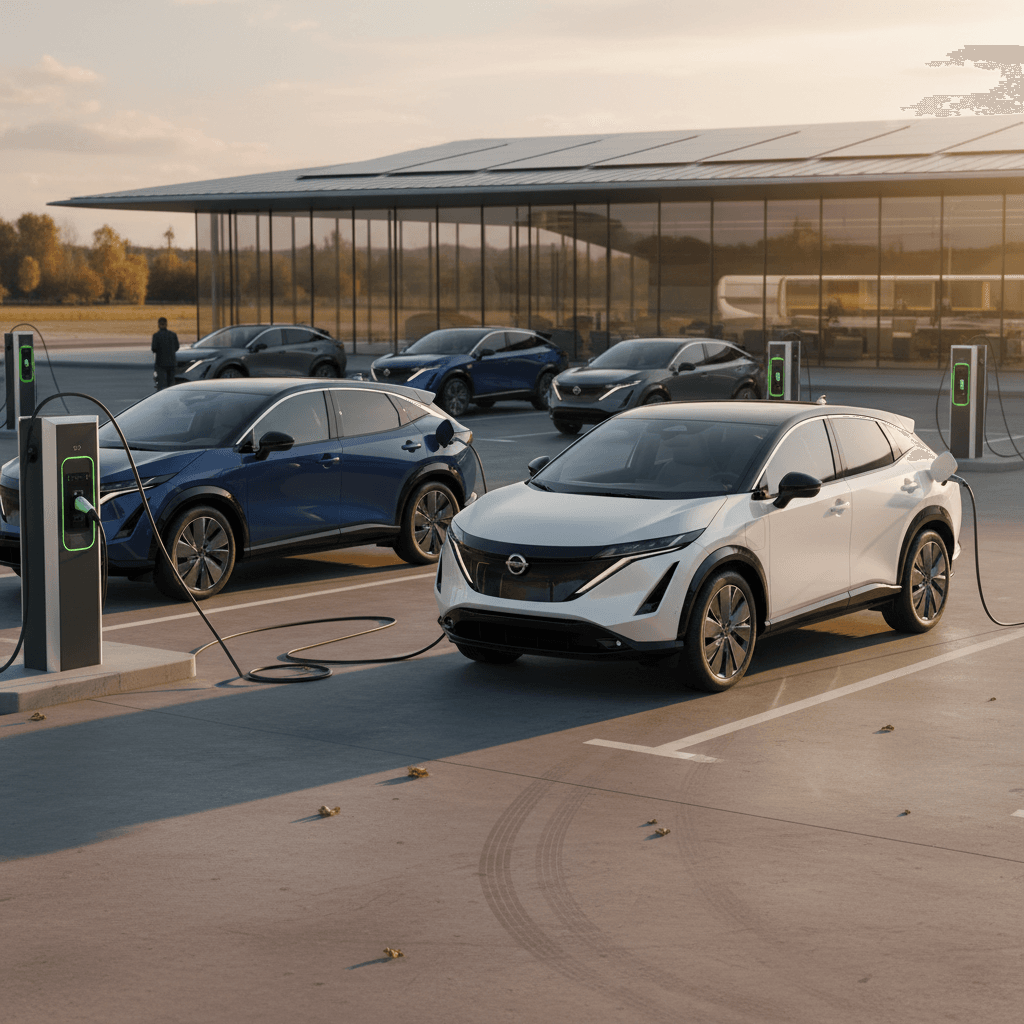
If you like the idea of a quiet, comfortable electric SUV but don’t want something shouty or tech‑bro minimal, the 2024 Nissan Ariya should be on your short list. This buying guide breaks down trims, range, charging speeds, comfort, reliability and used‑market pricing so you can decide which 2024 Ariya (if any) actually fits your life and budget.
Quick take
Is the 2024 Nissan Ariya a good fit for you?
Great fit if you want…
- Comfort and quiet over aggressive handling.
- A long‑range EV SUV (up to roughly 300 miles EPA‑rated depending on trim).
- A cabin that feels more Lexus‑lite than tech lab, with warm materials and ambient lighting.
- Available all‑wheel drive (e‑4ORCE) and strong acceleration when you need it.
- A used‑EV option that’s dropping quickly in price compared with original MSRP.
Might not be ideal if you…
- Rely heavily on DC fast charging and want the absolute quickest road‑trip stops.
- Need maximum cargo space; Ariya’s interior packaging is just OK for its footprint.
- Prioritize one‑pedal driving (Ariya has strong regen but no true one‑pedal mode).
- Care most about sharp handling or track‑day performance.
- Need to tow more than about 1,500 pounds.
Shopper tip
Battery sizes, range and real-world efficiency
2024 Nissan Ariya range snapshot
Nissan offers the 2024 Ariya with two battery sizes: a smaller pack around 63 kWh usable and a larger pack around 87 kWh. Most trims in the U.S. pair the smaller pack with front‑wheel drive and the big pack with either FWD or Nissan’s dual‑motor e‑4ORCE all‑wheel drive.
2024 Ariya battery and range overview (approximate EPA ratings)
Exact figures vary slightly by trim and wheel size, but this gives you a realistic ballpark when you’re cross‑shopping.
| Battery | Drivetrain | Typical EPA Range | Best Use Case |
|---|---|---|---|
| 63 kWh | FWD | ~205–224 miles | Budget‑friendly commuter, shorter trips |
| 87 kWh | FWD | ~289–304 miles | Maximum range, long‑distance driving |
| 87 kWh | e‑4ORCE AWD | ~257–272 miles | All‑weather traction with still‑solid range |
Use this as a starting point; always confirm the specific trim’s official EPA rating.
Mind the wheel size
In Recharged’s own range testing of the Ariya, highway efficiency is competitive for a two‑row electric SUV. You’re not getting Hyundai Ioniq 5 or Tesla Model Y levels of road‑trip thrift, but you’re also not dragging around the mass and frontal area of a three‑row behemoth. For most U.S. commuters, either pack will easily cover a full day’s driving on a single charge; the real decision is whether you want that larger pack for winter, heavy HVAC use, and fewer public‑charging stops.
2024 Nissan Ariya trims and drivetrains explained
Key 2024 Ariya configurations to know
Exact trim names vary (Engage, Venture+, Evolve+, Empower+, Platinum+), but you can think in terms of drivetrain and battery first, then feature level.
FWD + 63 kWh (value choice)
Typically badged as Engage or similar entry trim.
- Lowest price in the lineup.
- Adequate range for most daily driving.
- Best if you mostly charge at home and don’t road‑trip constantly.
FWD + 87 kWh (range leader)
Often carrying “Venture+” or “Evolve+” style names.
- Longest range Ariya variants, brushing 300 miles EPA.
- Good blend of efficiency, comfort and price.
- Ideal if you road‑trip but don’t need AWD.
e‑4ORCE AWD + 87 kWh (performance & traction)
Badged as Evolve+ e‑4ORCE, Empower+ e‑4ORCE, Platinum+ e‑4ORCE, etc.
- Dual‑motor all‑wheel drive and brisk acceleration.
- Slightly shorter range than FWD 87 kWh versions.
- Best for snow‑belt drivers or anyone who wants more punch.
Feature highlights as you move up the ladder
Simplified 2024 Ariya trim shopping map
Use this table to narrow down which general configuration fits your budget and needs before you obsess over exact Nissan trim names.
| Config | What You Get | Who It Suits Best |
|---|---|---|
| Entry FWD 63 kWh | Smaller battery, cloth or basic synthetic seats, simpler audio, fewer luxury touches. | Price‑sensitive shoppers, lower annual mileage, households with other vehicles for road trips. |
| Mid FWD 87 kWh | Big battery, good feature content, usually the range sweet spot. | Single‑car households, suburban commuters, frequent weekend trips. |
| AWD 87 kWh e‑4ORCE | Most performance and traction, most features in higher trims. | Snow‑belt drivers, power‑hungry EV fans, people cross‑shopping luxury compact SUVs. |
Pricing is indicative and varies by market, incentives and whether you’re shopping new or used.
Charging: home, public DC fast charging and road trips
Charging is where a lot of Ariya research gets muddled. On paper the 2024 Nissan Ariya’s maximum DC fast‑charging rate of 130 kW doesn’t look impressive next to 200–350 kW rivals. In practice, the Ariya’s charging curve, how consistently it holds higher power, means 10–80% fast‑charge times can be closer to the class average than the headline numbers suggest.
- Level 2 AC charging at home: about 10.5 hours from 10–100% for the 63 kWh pack and roughly 14 hours for the 87 kWh pack on a 240‑volt, 40‑amp Level 2 station.
- DC fast charging: roughly 20–80% in about 35–45 minutes on a capable 150 kW public charger, assuming a warm battery and good conditions.
- The Ariya does not have the ultra‑high peak rates of some Korean or Tesla competitors, but it avoids the dramatic early spike and drop‑off those cars show, which can make planning a bit more predictable.
Important charging caveats
Charging questions to answer before you buy
1. Where will you charge most?
If you can install or already have a 240‑volt Level 2 charger at home, the Ariya’s slower DC fast‑charging isn’t a big deal. If you mainly rely on public fast‑chargers, especially for longer trips, you’ll feel those extra minutes.
2. How often do you road‑trip?
A few long drives a year? The Ariya’s ~35–45 minute 20–80% sessions are probably fine. Weekly 500‑mile highway slogs? You may want to compare real‑world stop times against quicker‑charging rivals.
3. Do you understand charging etiquette and planning?
Sticking to 10–80%, pre‑conditioning the pack when possible, and avoiding the slowest legacy chargers makes a bigger difference than the 130 kW spec alone.
4. Are you okay living under 80% day‑to‑day?
Like most modern EVs, the Ariya’s battery will be happiest spending most of its life between roughly 20% and 80%. That’s easier to live with if you get the bigger pack.
Home charging & Recharged
Comfort, interior space and tech features
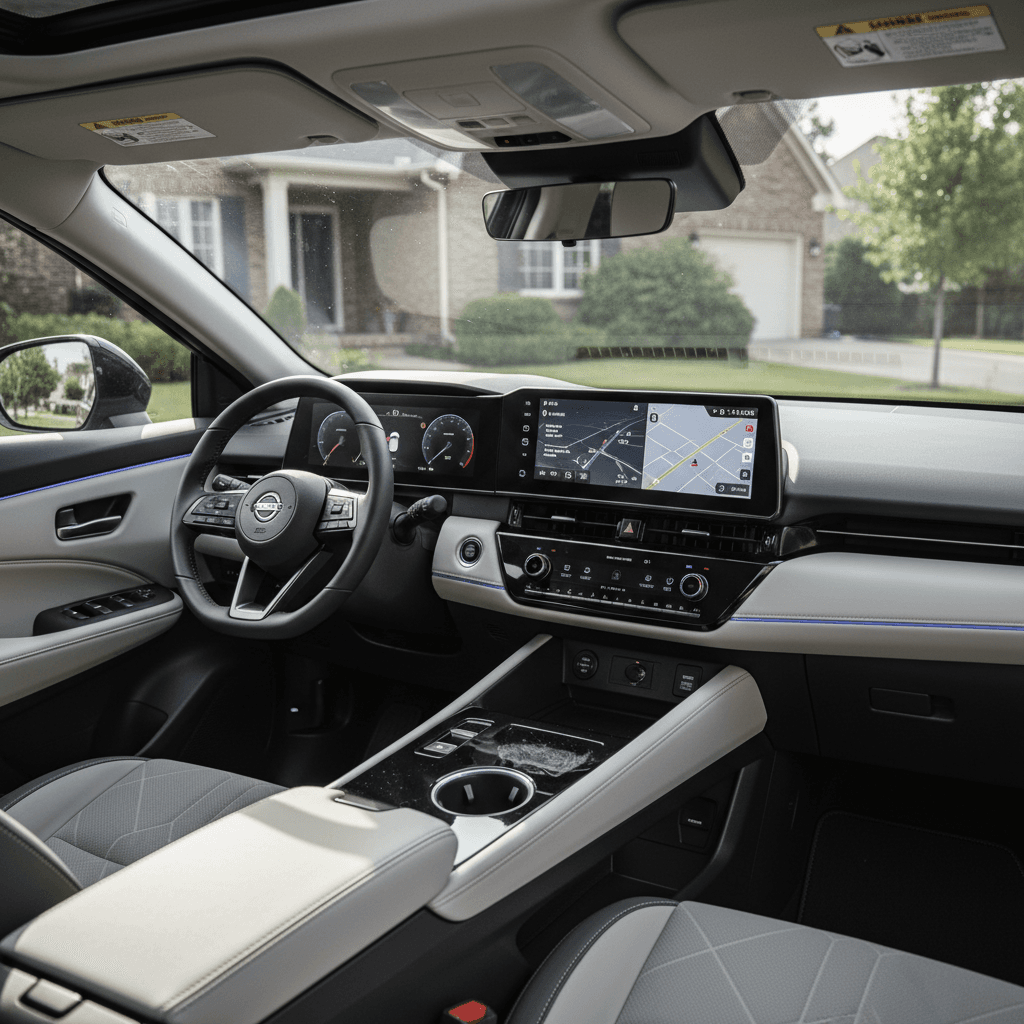
If there’s one area where the 2024 Nissan Ariya punches above its weight, it’s ride comfort and cabin ambiance. Reviewers consistently praise the Ariya for prioritizing quietness, materials and an overall relaxed vibe over sharp, sporty handling. Think of it as the anti‑Tesla: still modern and tech‑forward, but warmer and more conventionally “premium.”
Interior strengths and trade‑offs
The Ariya feels more luxurious than many mainstream EV rivals, but there are compromises.
Where the Ariya shines
- Quiet cabin with extensive sound‑deadening and smooth power delivery.
- Materials that look and feel a cut above many direct competitors.
- Available power center console that slides to adjust driving position and rear space.
- Dual‑screen cockpit with simple, legible graphics and a learning curve that’s gentler than many luxury brands.
- Comfortable seating and supportive front chairs for long stints.
Where it falls short
- Interior and cargo space are only average for the Ariya’s footprint.
- No true one‑pedal driving, which some EV drivers love.
- Some touch‑sensitive controls can be finicky with gloves.
- If you want a super‑minimal aesthetic, this isn’t it.
Driver-assist and safety
Reliability, warranty and day‑to‑day ownership
Because the Ariya is still a relatively new model, long‑term reliability data is limited. Early owner feedback is mixed: many report totally drama‑free ownership, while a smaller group has experienced more serious issues, from traction‑motor replacements to electrical problems, than you’d expect from a mainstream Nissan. That doesn’t make the Ariya a bad bet, but it does mean you should pay attention to warranty status, recall history and pre‑purchase inspection when shopping, especially used.
- Battery and EV system warranty is typically 8 years/100,000 miles for defects and excessive degradation, similar to most rivals.
- Bumper‑to‑bumper coverage is shorter (often 3 years/36,000 miles), so many 2024s will still be in basic warranty for a while if you’re buying used.
- Routine ownership is straightforward: no oil changes, but you still have brake fluid, cabin filters, coolant for the battery thermal system, and tires to think about.
- Like every EV, the Ariya is harder on tires than a gas Rogue thanks to instant torque and weight, budget accordingly.
How Recharged de-risks a used Ariya
New vs. used 2024 Ariya pricing and value
One under‑appreciated twist in the Ariya story is how quickly values have softened. Launch‑era MSRPs pushed close to or into luxury territory; by the 2024 model year, Nissan had already trimmed pricing, and the used market has taken an even bigger bite. Recent data shows late‑model used Ariyas often listing in the mid‑$20,000s to low‑$30,000s depending on trim, mileage and region, deep discounts from original sticker.
What this means for your wallet
Tax credits & incentives
Step-by-step: how to choose the right Ariya
Ariya buying checklist
1. Set your real range target
Write down your longest regular drive and add a 30–40% buffer for winter and degradation. If that number is under ~150 miles, the 63 kWh pack is fine. If it’s higher, or you crave fewer charging stops, lean toward the 87 kWh pack.
2. Decide on FWD vs e‑4ORCE AWD
If you live in a mild‑climate metro area and don’t drive hard, FWD is usually enough and more efficient. If you see a lot of snow, drive in the mountains, or just prefer more confident acceleration, e‑4ORCE AWD is worth the range trade‑off.
3. Prioritize features, not just badges
List the features you truly care about (360° camera, heated seats, panoramic roof, premium audio, etc.) and filter trims by those, not by marketing names alone. You may find a mid‑trim 87 kWh FWD that hits your must‑haves without paying for every luxury extra.
4. Inspect battery health and fast‑charging behavior
On a used Ariya, review a <strong>battery health report</strong> and, if possible, do at least one supervised DC fast‑charge session to confirm the car behaves normally. Recharged’s battery‑health diagnostics and road‑test process are designed to catch outliers before you buy.
5. Run the total cost of ownership
Compare monthly payment (or cash outlay), energy costs, insurance, and likely maintenance against your current vehicle or alternatives like Tesla Model Y, Hyundai Ioniq 5 or VW ID.4. Sometimes a slightly more expensive purchase price pays back through lower energy and maintenance over time.
6. Plan your charging setup in advance
Before you take delivery, line up a 240‑volt outlet or wallbox, confirm parking logistics, and map out your first few public fast‑charging options using apps like PlugShare or Chargeway. The smoother your first month, the happier you’ll be with the switch to electric.
2024 Nissan Ariya buying FAQ
Frequently asked questions about buying a 2024 Nissan Ariya
Bottom line: when the Ariya makes the most sense
The 2024 Nissan Ariya isn’t the fastest charger, the quickest EV, or the most spacious SUV on the market, and that’s fine. Its real strengths are comfort, refinement, and a now‑attractive value equation on the used market. If you want a calm, upscale‑feeling electric SUV that can comfortably handle daily commuting and regular road trips, and you’re willing to accept a few extra minutes at fast‑chargers, the Ariya absolutely deserves a test drive.
If you decide a 2024 Ariya is right for you, or you’re still comparing it against other EVs, Recharged can help you find a vetted used Ariya, verify battery health with a Recharged Score Report, arrange financing and trade‑in, and deliver it to your driveway. That way, you spend less time decoding spec sheets and more time actually enjoying your next electric road trip.