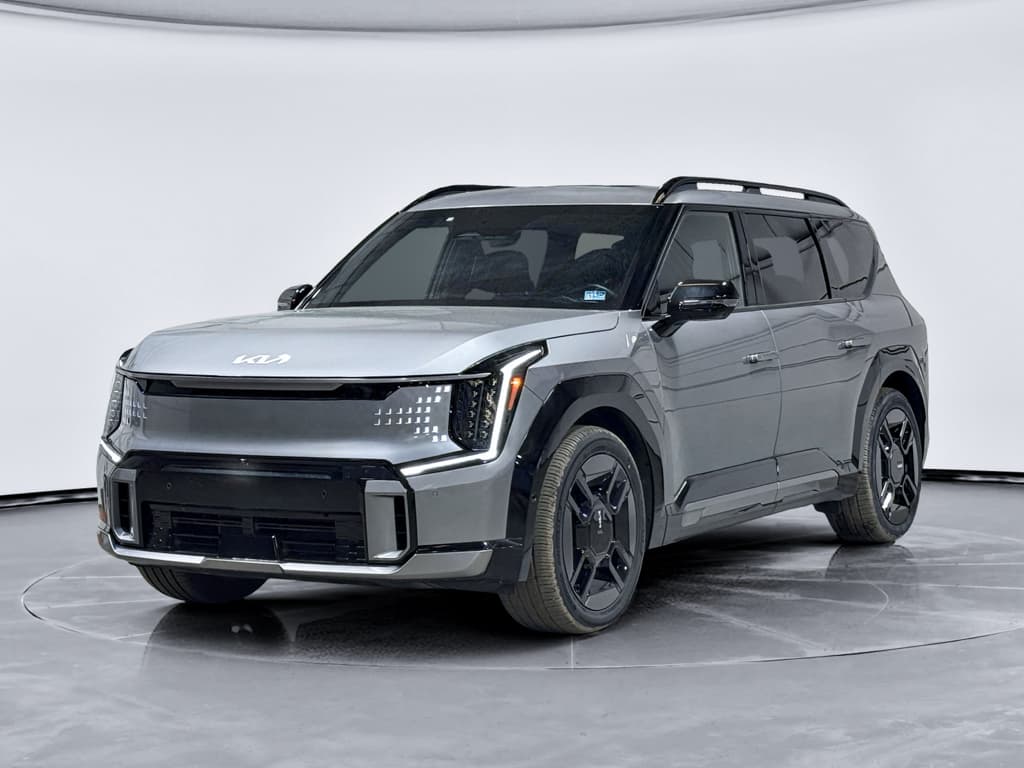
Search interest in “2024 Kia EV9 problems” has spiked for a reason: this is Kia’s first three-row EV built on a new platform, launched hard and fast into a very competitive market. When a vehicle is this new, early reliability issues, recalls, and software bugs are inevitable, and if you’re thinking about buying a used EV9, you absolutely want to understand the pattern of problems that’s emerging.
Short answer
Why 2024 Kia EV9 Problems Matter, Especially If You’re Buying Used
When a brand-new EV hits the market, the first model years are effectively a rolling beta test. With the 2024 Kia EV9, Kia stacked a lot of complexity into one package: a new body style, advanced driver-assistance tech, sophisticated thermal management, DC fast charging, and, in North America, support for Tesla Superchargers via a software and network partnership. That’s a lot of moving pieces that all have to play nicely together.
For a first owner under factory warranty, early issues are inconvenient but usually fixable. For a second owner shopping used, those same issues can become expensive if you don’t know what to look for: missed recalls, outdated software, misdiagnosed charging problems, or subtle battery health issues. That’s where detailed pre-purchase checks, and tools like Recharged’s Recharged Score battery health report, start to really matter.
2024 Kia EV9 Reliability at a Glance
2024 Kia EV9 Reliability Snapshot
Important context
Most Common 2024 Kia EV9 Problems Reported So Far
Where 2024 Kia EV9 Owners Report the Most Trouble
High-tech SUVs tend to fail in high-tech ways, here’s what’s bubbling to the surface.
Digital displays & clusters
Body & interior hardware
Charging behavior
Beyond those headline trouble spots, owner reports also flag in-car electronics bugs (Apple CarPlay/Android Auto issues, random warning chimes), door and tailgate quirks, and the occasional on-board charger failure on very low-mileage vehicles. None of this is unusual for a first-model-year EV, but it reinforces why you should approach a used EV9 with a structured checklist rather than vibes.
2024–2025 Kia EV9 Recalls You Should Know About
By early 2026, the EV9 has accumulated multiple NHTSA recalls, mostly for software-related defects. If you’re considering a 2024 EV9, you want to confirm that all recall campaigns have been performed, either via dealer service history or by checking the VIN on NHTSA’s website before you sign anything.
Key Kia EV9 Recalls (2024–2025 model years)
This is not an exhaustive list, but it highlights the most relevant EV9 problems for used shoppers. Always run a VIN check for the full recall history.
| Issue / System | Typical Symptom | Fix Type | Risk if Ignored |
|---|---|---|---|
| Instrument cluster screen software error | Cluster may go blank or fail to show required info | Software update (dealer or OTA) | You may lose critical driving information like speed and warnings |
| Smart parking / parking brake logic | Remote Smart Parking Assist may misjudge stopping distance | Software calibration update | Increased low-speed crash risk when using automated parking features |
| Charging session interruption at Superchargers | Session may stop prematurely at Tesla Superchargers | Rear motor controller software update (TSB/OTA) | Inconvenience on road trips, may strand you if you’re counting on a full charge |
| On-board charger malfunction (select vehicles) | EV stops accepting AC charge entirely; DC may or may not work | Component diagnosis and replacement | You may have no way to charge at home until repaired |
Ask the seller for proof that each applicable recall has been completed by an authorized Kia dealer.
Used-buying tip
Charging Problems: Home, Public CCS, and Tesla Superchargers
Charging is where EV ownership either feels invisible, or becomes a constant source of anxiety. The EV9’s hardware is fundamentally capable, but early owners have run into several distinct categories of charging-related problems that you should know about.
- AC home charging that repeatedly stops in cold weather or randomly after a few minutes, especially when using third-party home chargers.
- DC fast charging sessions at certain CCS networks (like specific high-power stations) that taper unusually early or stop with generic error messages.
- Tesla Supercharger sessions on pre-update cars ending unexpectedly due to signal interference between the charger and the vehicle’s power electronics (addressed in later OTA/TSB updates).
- On-board charger failures on a small number of very low-mile EV9s, where the car will no longer accept AC charging at Level 1 or Level 2 at all.
Is it the car or the charger?
When you see “Charging Unsuccessful” or repeated cutoffs, the hardest part is knowing whether the fault lies with the EV9, the charging station, or the cable and settings between them.
- Test a different home EVSE (friend, workplace, public Level 2) to see if the problem follows the car.
- Turn off extra features like “Plug & Charge” or smart-schedule modes and try a basic session.
- In cold weather, expect slower speeds, but not repeated hard stops.
Tesla Supercharger quirks
Kia has already issued an update for EV9s built from late 2023 through early 2025 to address Supercharger session interruptions caused by signal interference in the rear motor control unit.
If a used EV9 you’re eyeing hasn’t had this update, you could see dropped sessions on Tesla hardware until it’s applied, annoying at best, travel-ending at worst. Always check for the relevant TSB or OTA completion before relying on Superchargers for road trips.
Red flag to take seriously
Battery Health, BMS Weirdness, and 12V Failures
The good news is that we’re not seeing widespread high-voltage pack failures in the EV9. The more nuanced reality is that some owners are reporting Battery Management System (BMS) weirdness and 12V battery issues that can still impact your day-to-day experience.
Battery-Related Problems Seen on 2024 EV9s
Not every quirk means a dying pack, but you do need to separate software from hardware.
State-of-charge (SoC) mismatch
Early tapering at DC fast chargers
12V battery and wake-up issues
How to sanity-check EV9 battery health
Software Bugs, OTA Updates, and Infotainment Problems
Like most modern EVs, the EV9 runs on a complex software stack that controls everything from the digital key and fingerprint reader to charging handshakes and instrument clusters. That makes software both a strength and a weakness: many issues can be fixed via over-the-air (OTA) updates, but those issues still affect early owners, and used buyers need to verify that updates have actually been applied.
- Instrument cluster screens freezing or going blank until a restart or update.
- Infotainment lag, random reboots, and intermittent CarPlay/Android Auto connection drops.
- Persistent notification spam, like repeated charge-error emails or chimes, even when the car seems to be operating normally.
- Driver-assistance system behavior changing after updates, requiring owners to relearn settings and behavior.
“The hard part for used buyers isn’t that these bugs exist, it’s telling which vehicles have been fully updated and which are still carrying around a year’s worth of unfixed software baggage.”
Don’t assume OTAs were applied
Buying a Used 2024 Kia EV9: What to Inspect
If you like what the EV9 offers, space, comfort, towing, a genuinely premium feel, but you’re wary of 2024 Kia EV9 problems, your best move isn’t to walk away. It’s to upgrade your due diligence. Compared with a gas SUV, you’re inspecting a battery, a software stack, and a charging experience, not just fluids and brake pads.
Used 2024 Kia EV9 Inspection Checklist
1. Pull the full recall & TSB history
Run the VIN through NHTSA’s database and ask for a <strong>dealer service history printout</strong>. Look specifically for instrument-cluster, charging, and Smart Parking/parking-brake campaigns, and confirm they’re marked as completed.
2. Verify software and OTA status
In the infotainment settings, check that the EV9 is on a <strong>current software version</strong>, that OTA updates are enabled, and that the car has actually received recent updates. Beware of vehicles that appear to be a year or more behind.
3. Test AC home charging behavior
If possible, plug into a <strong>Level 2 charger</strong> for at least 20–30 minutes. Watch for repeated cutoffs, error messages, or excessive fan/relay cycling. If the seller can’t show a normal home charging session, consider that a yellow flag.
4. Try a DC fast charge
A short DC fast-charging session can reveal <strong>abnormal tapering, communication errors, or session dropouts</strong>. You don’t need to go from 10% to 100%; a 20–30% bump is often enough to see how the EV9 behaves.
5. Inspect for interior rattles & seat issues
On a rougher test-drive route, listen for squeaks and rattles and pay attention to <strong>seat stability</strong>. A driver’s seat that moves or flexes noticeably under load needs professional inspection, and may have already been the subject of a complaint.
6. Scan for warning lights & phantom alerts
Cycle through drive modes, driver-assist features, and parking functions. Look for <strong>persistently illuminated warning lights</strong>, recurring alerts, or systems that fail to initialize. These can be symptoms of deeper software or sensor issues.
7. Get a third-party battery health report
Don’t rely on the state-of-charge gauge alone. A proper <strong>battery health assessment</strong>, like the Recharged Score report, can surface cell imbalances, usable capacity, and prior DC fast charging stress that you can’t see from the driver’s seat.
How Recharged Reduces the Risk When You Buy a Used EV9
The EV9 is exactly the kind of vehicle where traditional used-car shopping breaks down. A clean Carfax and nice detail don’t tell you whether the rear motor controller has the Supercharger bugfix, whether the instrument cluster recall was performed, or how healthy the high-voltage pack really is. That’s why Recharged was built specifically around used EVs rather than gas-car assumptions.
Why Shop a Used Kia EV9 Through Recharged?
We’re set up to catch the EV-specific issues that generic dealers and private sellers often miss.
Recharged Score battery health
Recall & software diligence
EV-specialist guidance
Ready to find your next EV?
Browse VehiclesYou can finance, arrange a trade-in or consignment, and even handle paperwork and nationwide delivery entirely online. And if you prefer to see and feel before you buy, Recharged also operates an Experience Center in Richmond, VA where you can talk through EV9 ownership in person.
2024 Kia EV9 Problems: Frequently Asked Questions
2024 Kia EV9 Problems & Reliability FAQ
Bottom Line: Should 2024 Kia EV9 Problems Stop You From Buying?
The 2024 Kia EV9 is a classic first-model-year EV story: ambitious, comfortable, and compelling to drive, but with more software quirks, recalls, and charging frustrations than you’d ideally like to see. Most of the problems we’re seeing are fixable through updates and targeted repairs rather than fundamental design flaws, but only if someone has actually done the work.
If you’re shopping for a used EV9, the smart move isn’t to panic, it’s to get serious about verification. Confirm recall and software status, test charging in the real world, and insist on an objective view of battery health before you commit. When you do that, you can enjoy what the EV9 does well, three-row practicality, strong performance, road-trip capability, without feeling like you’re rolling the dice on an unknown early adopter problem set.
If you’d rather not build that process from scratch, buying through Recharged gives you a head start: every EV9 comes with a Recharged Score battery report, EV-specific inspection, and expert guidance on charging, incentives, and ownership costs. That’s what you want when you’re balancing the upside of a cutting-edge EV with the reality of first-year growing pains.