If you’re looking at a 2024 Kia EV6, you’ve probably heard two very different stories. On one hand, it’s a sharp, fast, efficient EV that owners generally enjoy. On the other, there are headlines about recalls, charging glitches, and sudden loss of power. This guide breaks down the most common 2024 Kia EV6 problems and fixes in plain language, so you know what’s noise, what’s real risk, and what you can do about it, especially if you’re shopping used.
Quick take
2024 Kia EV6 reliability at a glance
How the 2024 Kia EV6 is doing so far
Big picture, the 2024 EV6 slots into the “mostly good, but pay attention” category. High‑voltage batteries and motors have held up well so far. Where the car stumbles is in the supporting electronics: the Integrated Charging Control Unit (ICCU), 12V charging logic, and software that coordinates charging and HVAC. The rest of this article dives into each of those areas and what you can do to protect yourself.
Major 2024 Kia EV6 recalls you should know about
Before getting into individual problems, it’s worth understanding the recall landscape because many “random” failures in owner stories are really symptoms of known issues Kia has already acknowledged.
Key safety actions affecting 2024 EV6 owners
This is a simplified overview. Always run a VIN check at Kia’s site or NHTSA for the latest status.
| Issue / campaign theme | Model years affected | What can happen | Typical dealer remedy |
|---|---|---|---|
| ICCU overheating & 12V charging faults | 2022–2024 EV6 (large population, including many 2024 builds) | Warning lights, reduced power, or complete loss of motive power; AC charging failures | Software update to change ICCU behavior, inspection, and ICCU/fuse replacement if damage found |
| Additional ICCU safety recall (late 2024) | All 2022–2023 and certain 2024 EV6 built through July 22, 2024 | Sudden loss of drive power even on vehicles with prior ICCU campaign work | Additional ICCU‑related software and hardware checks; further component replacement as needed |
| Assorted software campaigns | 2022–2025 EV6 | Charging interruptions, inaccurate 12V monitoring, nav/charger info bugs | Over‑the‑air (OTA) or dealer‑performed software updates for charging, infotainment, and telematics modules |
Some 2024 EV6 vehicles fall under more than one ICCU‑related campaign.
Don’t assume a recall has been done
ICCU failures & loss of power: symptoms, recall, fixes
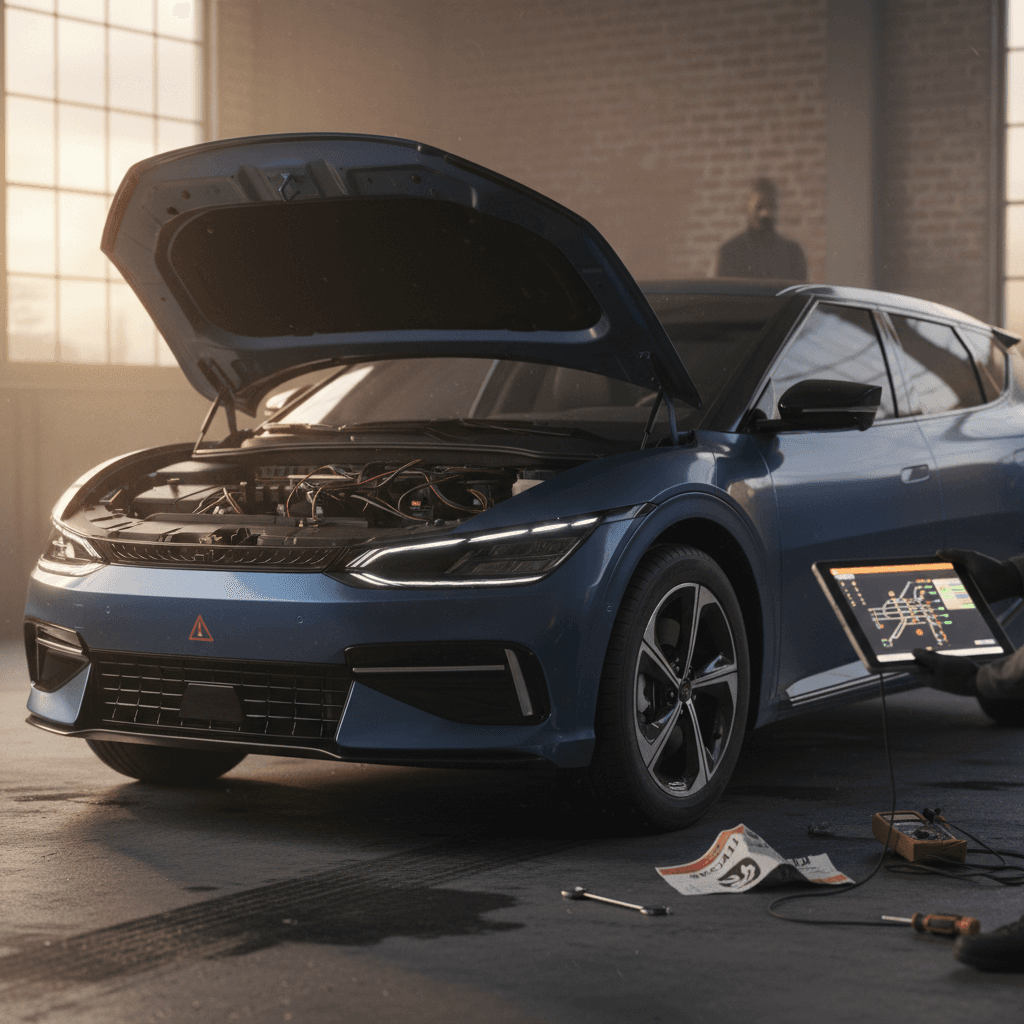
The single most talked‑about problem on early EV6s, and still relevant for many 2024 cars, is the Integrated Charging Control Unit (ICCU). This box manages AC charging and keeps the 12V battery topped up from the high‑voltage pack. When it misbehaves, it can strand you.
- “Charging unsuccessful” messages on Level 2 home chargers or public AC posts, sometimes after a few minutes of charging.
- The car suddenly stops accepting AC charge but still fast‑charges on DC, often an early sign of ICCU trouble.
- Yellow or orange 12V battery indicator in the cluster that comes and goes, then later escalates to multiple warning lights.
- Reduced power or limp‑home behavior, sometimes preceded by a loud pop or clunk and a flurry of error messages.
- In worst cases, sudden loss of drive power at highway speeds, leading to NHTSA complaints and the most serious recalls.
When to stop driving immediately
How dealers typically fix ICCU issues
For 2024 EV6s, the standard playbook has been:
- Run diagnostic tests and inspect ICCU and related high‑voltage fuse.
- Apply the latest ICCU and powertrain software updates if they’re missing.
- If damage or abnormal data is found, replace the ICCU module and often the associated fuse/harness.
- Verify operation with AC and DC charging and clear fault codes.
Some owners have seen their cars fixed with software only; others needed new hardware and spent weeks waiting on parts. If a 2024 EV6 you’re looking at has had an ICCU replacement, that’s not automatically a red flag. In some ways, it can be a plus, as long as the repair was done cleanly and there are no repeat events afterward.
Used‑buyer checklist for ICCU issues
Charging problems on the 2024 EV6 (home AC & DC fast)
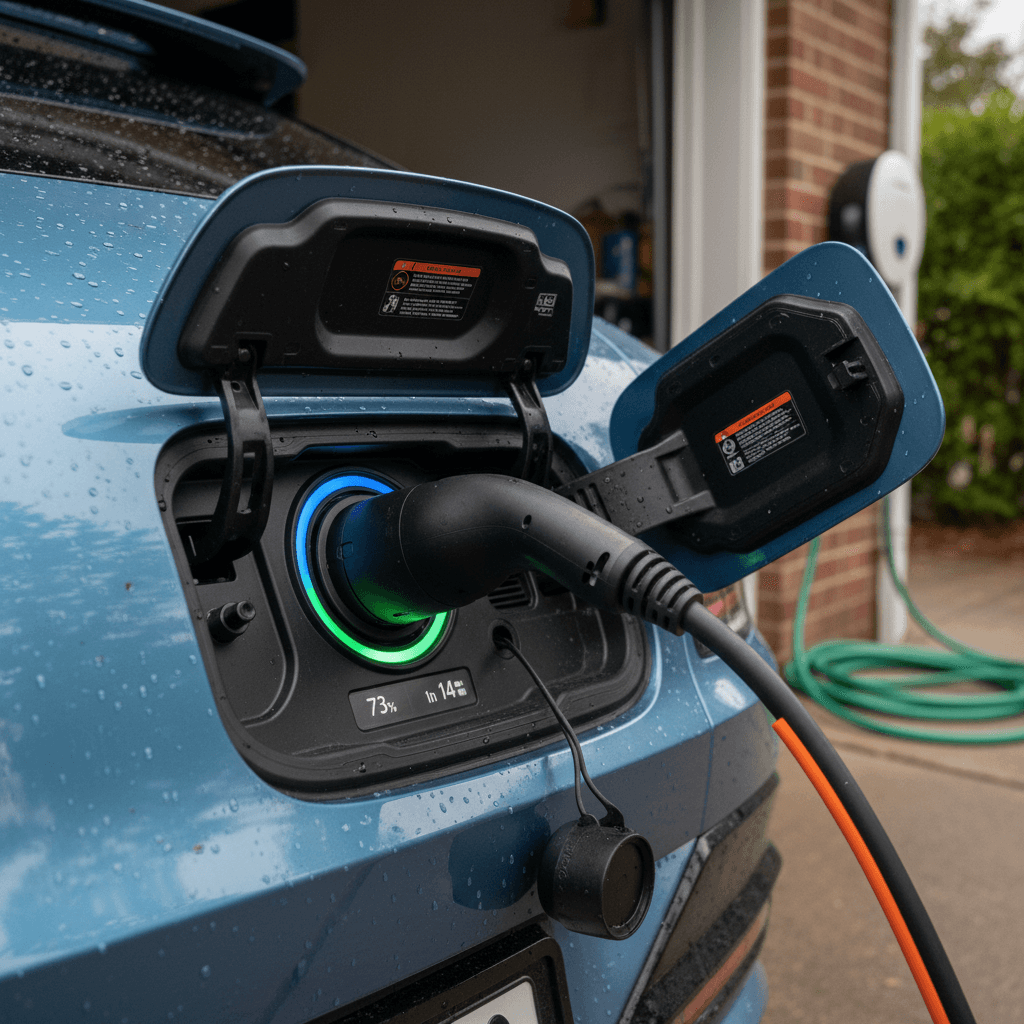
Separate from catastrophic ICCU failures, many EV6 owners report smaller but annoying charging quirks. The 2024 cars benefit from incremental fixes, yet you can still run into handshake issues or sensitivity with certain home setups.
Common 2024 EV6 charging complaints and what to try
Rule out simple causes before assuming a major hardware failure.
Home Level 2 shuts off
Some 2024 owners still see "charging interrupted" messages at home, especially on smart chargers or circuits with sensitive GFCI breakers.
- Try reducing amperage (e.g., from 40A to 32A) in the EVSE settings.
- Disable smart features or schedules in third‑party apps and use only the car’s timer.
- Have a licensed electrician verify the circuit, breaker type, and ground.
Public DC fast session won’t start
A failed handshake between the station and the car is common across many EV brands.
- Unplug, move to another stall on the same site, and try again.
- Restart the charger session entirely from the network’s app.
- If multiple chargers and networks fail, have the car scanned for DC charging fault codes.
AC works, DC doesn’t (or vice versa)
If AC charging works but DC fast won’t start, that narrows the fault away from the high‑voltage battery itself.
- Document which stations fail (brand, power level, location).
- Ask the dealer to check for open software campaigns on charging control and BMS modules.
- Involve the charging network’s support, sometimes their firmware is the culprit.
Use the car as the baseline
12V battery drain and warning lights
Despite having a huge high‑voltage pack, the EV6 still depends on an old‑fashioned 12V battery for basic functions, computers, relays, door locks. On early EV6s, owners reported low‑voltage warnings and no‑start conditions even on relatively new cars. Some of those behaviors carry into the 2024 model year, though less frequently.
- Amber 12V battery icon that appears and disappears while driving or parked.
- Random low‑voltage warning after leaving the car plugged in right after a drive, especially with Aux Battery Saver+ active.
- Car wakes up repeatedly in the driveway due to apps pinging it, slowly draining the 12V.
- After an ICCU failure, the 12V dies outright and the car can’t be shifted out of Park.
How to address 12V issues on a 2024 EV6
Practical steps for 12V battery health
1. Get software fully up to date
Ask the dealer to confirm that all body control, ICCU, and telematics updates have been applied. Several campaigns tweak how the car charges and monitors the 12V system.
2. Replace weak 12V under warranty
If voltage tests low or warnings recur, push for a 12V replacement while the car is under warranty, especially if there’s any ICCU‑related history.
3. Tame third‑party apps
Limit always‑on third‑party apps that constantly wake the vehicle. Set reasonable polling intervals or stick with the official Kia app if you’re seeing frequent wake‑ups.
4. Use Aux Battery Saver+ wisely
If you routinely plug in immediately after parking, be aware that Aux Battery Saver+ plus certain charging routines can expose software edge cases. If you see odd behavior, discuss it with your dealer rather than disabling safety nets blindly.
Don’t ignore that amber battery icon
HVAC & heat pump problems (no heat or weak A/C)
Like a lot of modern EVs, the EV6 uses a heat pump plus electric resistive elements (PTC heater) to manage cabin temperature efficiently. Across the 2022–2025 run, including 2024 cars, owners and independent parts suppliers have called out recurring HVAC issues: weak heat in cold weather, intermittent A/C, or fault codes that disable the system.
- In cold climates, cabin heat takes a very long time to come in, or never gets properly warm.
- Heat works briefly, then the system falls back to cool air; cycling power temporarily fixes it.
- A/C performance drops sharply in high heat, especially after fast‑charging or extended highway runs.
- HVAC errors stored in the car’s memory, pointing to heat pump, valves, or sensors.
What owners can check
- Make sure basic settings (temperature, fan, mode) are correct, sounds obvious, but auto modes can confuse things.
- Listen for the heat pump running outside the car; total silence even in extreme temps can be a clue.
- Note when the behavior happens: only after DC fast‑charging, only below freezing, or randomly?
What dealers typically do
- Check for HVAC‑related technical service bulletins (TSBs) and software updates.
- Run leak and pressure tests on the refrigerant circuit.
- Inspect or replace heat pump components, expansion valves, or the PTC heater if diagnosed faulty.
Road‑trip HVAC sanity check
Infotainment, navigation & Kia Connect bugs
The EV6’s dual screens and connected features are a big part of its appeal, but they’re also a moving target. Over‑the‑air updates in 2024 and 2025 have improved some behaviors and broken others, especially around charger availability in the navigation system and Kia Connect syncing.
- Frozen or laggy infotainment that requires a reboot from the settings menu or by cycling the car.
- Navigation maps that show chargers but not real‑time availability after certain OTA updates.
- Apple CarPlay or Android Auto sessions that drop randomly, especially on older phones or cables.
- Kia Connect app delays: status updates lag behind, or remote commands fail intermittently.
Software reality check
Owner‑level fixes for software annoyances
- Perform a full infotainment reset from the settings menu if glitches become frequent.
- Check Kia’s navigation updater tools and owner portal for any map or head‑unit updates that aren’t OTA.
- Pair phones fresh after a major update and use high‑quality USB‑C or Lightning cables.
- If an OTA update obviously breaks something critical (like charger info), open a case with Kia and document the before/after behavior in writing.
Build quality, wind noise, and trim complaints
Beyond the high‑tech issues, 2024 EV6 owners occasionally mention old‑fashioned fit‑and‑finish quirks. Think of these as typical crossover annoyances rather than EV‑specific defects:
- Wind noise around mirrors or A‑pillars at highway speeds, sometimes fixable with revised seals or trim adjustments.
- Minor rattles from the hatch area or interior panels over rough pavement.
- Weatherstripping or trim pieces that were slightly misaligned from new and later adjusted under warranty.
Why these issues matter less for long‑term risk
Preventive steps: software, charging habits, inspections
With a car like the 2024 EV6, prevention is mostly about staying current on software and avoiding the edge‑cases that stress the charging hardware. You can’t guarantee a trouble‑free life, but you can tilt the odds in your favor.
Simple ways to reduce your odds of major problems
Keep all recalls and campaigns current
At least twice a year, run your VIN through Kia’s recall tool and ask the service advisor to check for open campaigns. Don’t wait for a letter to show up in the mail.
Update infotainment and maps regularly
When the car offers an OTA update, install it when convenient, but skim the release notes and confirm afterward that nav and charging info still behave as expected.
Use sane charging limits and amperage
At home, consider an 80–90% daily limit and avoid running your wallbox at its absolute maximum amperage 24/7. If you frequently trip breakers or see "charging interrupted," step the current down and get the wiring checked.
Document early weirdness
If you see intermittent 12V warnings, odd charging faults, or HVAC glitches, start a log with dates, mileage, and conditions. That written record is gold if the issue escalates and you need warranty support.
Bring receipts, literally
Buying a used 2024 Kia EV6 safely
If you’re shopping a used 2024 EV6, the goal isn’t to find a car with zero history, that’s unrealistic for a modern EV. The goal is to find a car whose issues have been identified early, repaired correctly, and documented well.
What to look for in a used 2024 EV6
Lean into documentation and diagnostics instead of guessing.
1. Clean recall & service history
- All ICCU‑related recalls marked complete.
- Any ICCU replacements or 12V battery swaps clearly documented.
- No repeated "no problem found" visits for the same complaint.
2. Verified high‑voltage battery health
Ask for objective data, not just "it feels fine." At Recharged, every EV6 listing includes a Recharged Score battery health report based on pack diagnostics, so you can compare cars on more than just miles and photos.
3. Charging & HVAC test drive
- Start with a cold car and verify both heat and A/C.
- Do a Level 2 session and, if possible, a DC fast‑charge stop.
- Listen for fans, pumps, and any odd noises around the charge port or under the hood.
4. Transparent seller & expert backup
Work with sellers who will share full service records and allow a pre‑purchase inspection. Recharged adds EV‑specialist support, financing, trade‑in options, and nationwide delivery on top of that, so the process feels a lot less like a gamble.
Recalls and early‑run glitches don’t automatically make a car a bad used buy. The real red flags are unresolved issues and missing documentation.
FAQ: 2024 Kia EV6 problems and fixes
Frequently asked questions about 2024 EV6 reliability
Bottom line: Is the 2024 EV6 a bad bet?
From a distance, the headlines about ICCU recalls and charging failures make the 2024 Kia EV6 look scary. Up close, the story is more nuanced. The core EV hardware, battery pack, motors, fast‑charge capability, has held up well. The headaches tend to live in the layers of electronics and software that sit between you and that hardware.
If you want plug‑and‑forget simplicity and never plan to think about software versions, the 2024 EV6 may not be your ideal match. But if you’re willing to stay on top of recalls, keep software current, and vet a used car carefully, it can be an excellent value compared with newer or more hyped rivals.
That’s where buying from a specialist matters. A platform like Recharged combines verified battery health data, recall and service transparency, EV‑savvy support, and modern financing and trade‑in options into one experience. The result isn’t a perfect EV, those don’t exist, but a far more predictable one, which is ultimately what matters most when you’re putting your money into a high‑tech used car.