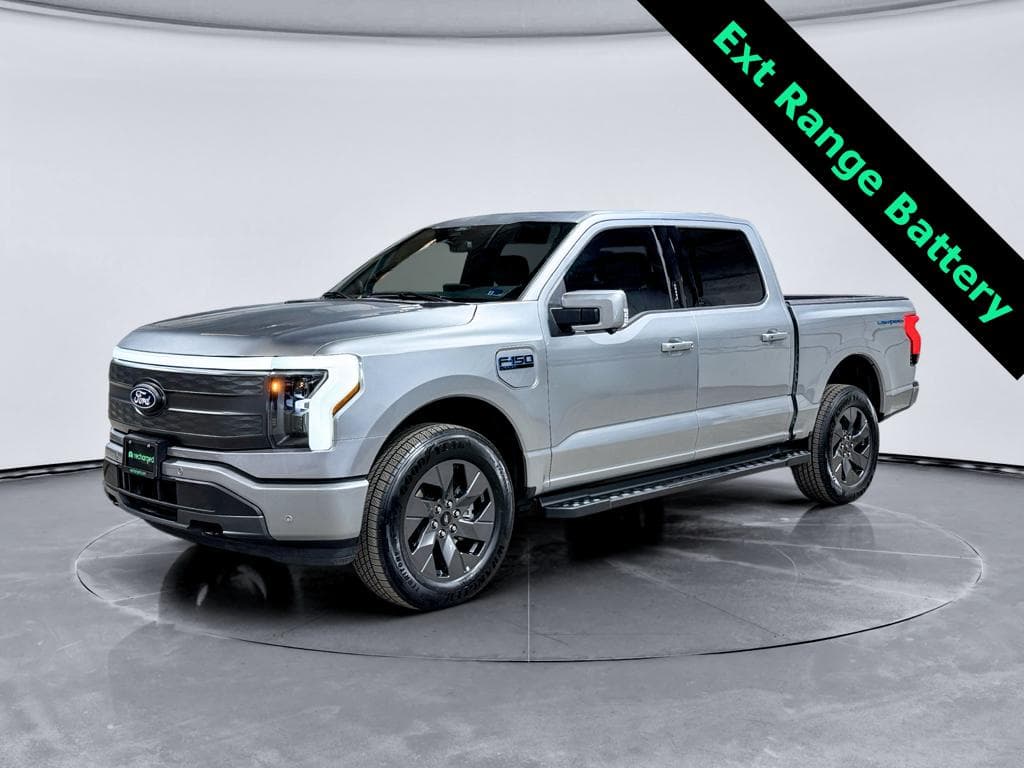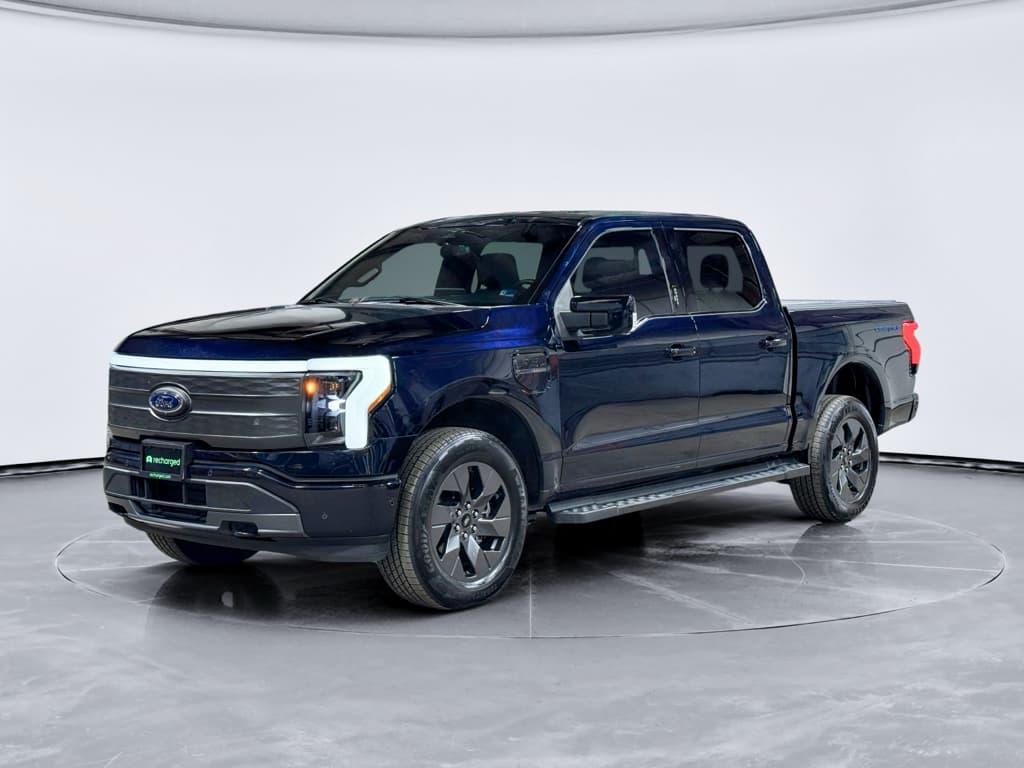
If you’re eyeing a 2024 Ford F-150 Lightning, you’re probably wondering whether the first mass‑market electric pickup is a tough workhorse or an experiment you don’t want to beta‑test. The short answer: the 2024 Ford F-150 Lightning is quick, capable, and useful, but its reliability record is mixed, especially around electronics, suspension, and recent recalls. That doesn’t make it a bad truck, but it does mean you should go in with your eyes open, especially if you’re shopping used.
Where the 2024 Lightning stands today
2024 F-150 Lightning reliability at a glance
2024 Ford F-150 Lightning: reliability snapshot
Those numbers paint a pretty clear picture: the 2024 F-150 Lightning isn’t a reliability disaster, but it’s not a set‑and‑forget work tool either. It behaves like what it is, an ambitious first‑generation electric truck layered on top of Ford’s long‑running F‑150 platform, with all the growing pains that implies.
If you’re buying used
How reliable is the 2024 Ford F-150 Lightning?
Independent testing organizations and owner surveys consistently put the 2024 Ford F-150 Lightning **below average for reliability**. Where traditional gas F‑150s benefit from decades of iteration, the Lightning adds a complex, high‑voltage drivetrain, new software layers, and unique suspension hardware. Those new components are where most of the headaches live.
- Strengths: Smooth, durable-feeling electric powertrain; strong real‑world battery durability so far; fewer traditional engine‑related failures to worry about.
- Weaknesses: In‑car electronics glitches, occasional charging issues, suspension hardware concerns, and multiple recalls, some of which involve safety‑critical systems like the front suspension and park mechanism.
- Reality for owners: Most trucks run day‑to‑day without drama, but you’re statistically more likely to see at least one warranty visit for a non‑trivial issue than you would in a simpler gas F‑150.
Think of it like first‑gen tech
Most common 2024 F-150 Lightning problem areas
Owner surveys and complaint data tend to cluster Lightning problems into a few buckets. You won’t see every issue on every truck, but these are the patterns you should know about before you sign paperwork.
Key problem clusters on the 2024 Lightning
Where owners are most likely to see trouble
In‑car electronics & software
Owners report glitches with the big touchscreen, infotainment reboots, camera or sensor hiccups, and BlueCruise driver‑assist behavior.
- Random system restarts or frozen screens
- Intermittent camera, parking sensors, or alerts
- Occasional connectivity issues with the FordPass app
Most issues are fixed with software updates or module replacements under warranty, but they’re annoying in a six‑figure truck.
Charging quirks
Not a systemic failure, but some 2024 Lightning owners see:
- Inconsistent behavior at certain DC fast‑chargers
- Charge sessions failing to start or stopping early
- Sensitivity to cable/connector alignment
Firmware updates and charger‑side fixes have improved things, but plan for a learning curve if you rely heavily on public DC fast‑charging.
Suspension & steering hardware
Ford has issued recalls for the front upper control arm ball joint nut on 2024–2025 Lightnings. If it loosens, drivers can lose partial steering control.
- Clunking or rattling over bumps
- Steering that feels vague or wandery
- In extreme cases, front wheel failure
This is a serious safety issue but also one that’s addressed via recall, if the work has actually been done.
High‑voltage battery defects (limited build window)
A subset of 2022–2024 trucks built with certain battery arrays are under recall for potential internal battery short circuits that could, in rare cases, lead to a fire.
- Impacted trucks are a fraction of total production
- Fix involves inspecting and replacing suspect battery arrays
- Ford has advised charging to 80% max until repairs are complete
If you’re shopping used, you want a truck that has already had this recall addressed, or is confirmed not affected.
Don’t ignore noises or warning lights
Battery health and range: What we’re seeing so far
Here’s the good news: early high‑mileage results for the F-150 Lightning’s battery are encouraging. One well‑documented owner truck has logged roughly 93,000 miles with about 97% battery health remaining, after plenty of mountain driving, road‑tripping, and mixed charging, mostly at home and rarely to a full 100% state of charge.
What helps Lightning battery longevity
- Frequent home charging on Level 2, instead of living on DC fast‑charging.
- Avoiding 0–100% extremes in daily use; keeping the truck between about 10% and 80% most of the time.
- Letting the truck manage thermal preconditioning before DC fast‑charging in cold or hot weather.
- Software updates that refine battery management and charging profiles over time.
What can hurt range over time
- Constant high‑speed towing near max rating, especially in hot climates.
- Heavy, repeated DC fast‑charging from very low states of charge.
- Always charging to 100% and letting the truck sit full for days.
- Neglecting software updates that improve charging behavior and thermal management.
Battery vs. truck reliability
Major recalls affecting 2024 F-150 Lightnings
Recalls don’t automatically make a truck unreliable, but they do tell you where engineers had to go back and fix something important. The 2024 F-150 Lightning has had several **high‑profile recall campaigns** that every owner or shopper should understand.
Key recall themes for the 2024 F-150 Lightning
Always verify recall status by VIN before buying used.
| Issue | Model years affected (incl. 2024) | What can happen | Typical fix |
|---|---|---|---|
| Front upper control arm ball joint nut may loosen | 2024–2025 | Loss of steering control or wheel failure if the joint separates. | Dealer inspects and replaces the nut and/or knuckle; torque verified under recall. |
| High-voltage battery cell manufacturing defect | 2022–2024 (selected builds) | Potential internal short circuit and increased fire risk in rare cases. | Battery arrays with suspect serials inspected and replaced; owners advised to charge to 80% until fixed. |
| Integrated park module software fault (roll‑away risk) | 2022–2026 | Vehicle may not fully engage Park; truck could roll if parking brake is not applied. | Over‑the‑air or dealer software update to the integrated park module; owners notified by mail. |
| Earlier quality holds and production pauses | Primarily 2023–2024 | Shipments paused while Ford chased unspecified quality issues before delivery. | Factory‑side fixes; trucks released to dealers after passing additional checks. |
Recall details evolve over time; use this table as a roadmap for what to ask about, not a substitute for an official VIN check.
How to check a truck’s recall history
Daily usability, uptime, and ownership experience
Talk to a handful of 2024 Lightning owners and you hear a familiar story: when it’s working, the truck is a joy, effortless torque, quiet cruising, handy frunk, strong towing in its lane. The friction comes from **software weirdness and the occasional dealer visit** that interrupts that honeymoon.
What living with a 2024 Lightning actually feels like
The good, the bad, and the shrug‑worthy
The good
- Instant torque makes the heavy truck feel quick and confident.
- Refined ride and quiet cabin on most surfaces.
- The frunk is genuinely useful for tools, groceries, and valuables.
- Home charging turns every morning into a full "tank" if you have Level 2.
The annoying
- Random infotainment quirks that require a reboot.
- Occasional update‑related downtime or feature changes.
- Spotty DC fast‑charging experiences at some third‑party stations.
- Dealer familiarity with EV diagnostics still varies by region.
The serious
- Suspension recall work you **must** verify on any 2024 truck.
- Battery recall checks on specific build windows.
- Park‑module software updates to avoid roll‑away risk.
- Potential parts wait if major EV components need replacement.
Plan your dealer relationship early
2024 Lightning reliability vs. other electric trucks
Electric pickups as a class are still finding their footing. The 2024 F-150 Lightning, Rivian R1T, and GMC Hummer EV have all battled software bugs, component recalls, or both. The Lightning’s **reliability story is neither the worst nor the best** in this crowd, it lands in the middle, with some important caveats.
Where the Lightning looks better
- Parts and dealer network: Ford’s footprint and parts pipeline are still broader than most EV startups.
- Service familiarity: Many technicians already know the F‑150 platform, even if the EV bits are newer.
- Battery durability: Early long‑mileage examples suggest less degradation than some fear.
Where the Lightning lags
- Electronics polish: Rivian in particular has earned praise for its software experience versus Ford’s legacy‑system feel.
- Recall count: The Lightning has racked up more major recalls than many newer competitors.
- Production confidence: Ford has paused Lightning production multiple times for quality checks and is pivoting future strategy toward hybrids and range‑extended trucks.
Comparing used electric trucks
Should you buy a used 2024 F-150 Lightning?
A used 2024 Ford F-150 Lightning can be a smart buy if you need a capable truck and want to skip gas stations, **but only if you’re picky about the specific truck you bring home**. This isn’t the vehicle to buy sight unseen from a vague listing with no records.
Look for a truck with documented recall work, a clean service history, and a verified battery‑health report. That’s where a platform like Recharged comes in: every EV we list includes a Recharged Score Report with independent battery diagnostics, fair‑market pricing, and an expert to walk you through how this particular Lightning has been driven and charged. If you’re trading in a gas truck, you can also get an instant offer or consignment support to smooth the jump to electric.
Who the used Lightning fits best
- Have reliable home Level 2 charging.
- Do predictable daily mileage, with only occasional heavy towing.
- Live near a Ford dealer experienced with EV service.
- Value quiet, smooth power more than absolute bulletproof simplicity.
Checklist: Shopping a used F-150 Lightning
10 things to verify before you buy a 2024 Lightning
1. Pull a full recall/VIN history
Run the VIN through official recall lookup tools and ask for dealer service printouts. Confirm whether suspension, battery, and park‑module campaigns apply, and whether they’ve been completed.
2. Get a real battery health report
Don’t settle for “it charges fine.” Look for a <strong>measured state‑of‑health (SoH)</strong> report from professional diagnostics, like the Recharged Score battery evaluation.
3. Inspect suspension and listen for clunks
On your test drive, find a bumpy road or speed humps. Any clunking, popping, or wandering steering needs to be addressed before you sign.
4. Test home and DC fast‑charging
If possible, plug into a Level 2 charger and a DC fast‑charger during your evaluation. Confirm the truck starts and maintains charge sessions without random disconnects.
5. Stress‑test the infotainment
Spend 15–20 minutes living with the screens. Pair your phone, use navigation, switch drive modes, and try BlueCruise if equipped. Watch for freezes, reboots, or missing features after updates.
6. Check software and update history
In the settings menus, look for software version info and ask when the last over‑the‑air update was applied. Trucks that have been kept current usually have fewer glitches.
7. Examine tires and brakes
The Lightning is heavy and hard on consumables. Uneven tire wear or grooved rotors may hint at alignment or suspension issues, and future costs.
8. Confirm charging habits with prior owner
If you can, ask how the truck was charged. Mostly home Level 2 and avoiding 100% daily is ideal. A life spent on max‑power DC fast‑charging is harder on the pack.
9. Look underbody for corrosion or off‑road damage
Even electric trucks can get abused. Check for scrapes on battery protection plates, rusty fasteners, or evidence of deep‑water crossings.
10. Compare pricing to condition and equipment
Two Lightnings that look similar online can be very different under the skin. Use condition, battery health, and completed recalls as leverage when you negotiate, or as your signal to walk away.
Let Recharged do the homework
FAQs: 2024 Ford F-150 Lightning reliability
Frequently asked questions about 2024 Lightning reliability
Bottom line on 2024 Lightning reliability
The 2024 Ford F-150 Lightning is a landmark truck: fast, useful, and genuinely capable as a work and family vehicle. It’s also a reminder that first‑wave EV pickups are still ironing out the kinks. Reliability is mixed, solid fundamentals in the battery and motor, but a trail of recalls and electronic gremlins that demand an engaged owner.
If you’re the sort of driver who changes oil on the dot and keeps a folder of service receipts, you’re already the kind of owner the 2024 Lightning needs. Verify recall work, demand proof of battery health, cultivate a good relationship with an EV‑savvy Ford dealer, and consider buying through a marketplace like Recharged that puts all of that information on the table up front. Do that, and the 2024 Lightning can be less of a gamble and more of what it was meant to be: a modern, powerful truck that just happens to run on electrons.