If you’re looking at a 2024 Chevy Silverado EV, especially on the used market, it’s smart to dig into **real‑world problems and reliability** before you sign anything. Early Ultium‑platform trucks like the Silverado EV and GMC Hummer EV are still relatively new, and the first few model years are when patterns start to emerge. This guide pulls together the most common 2024 Chevy Silverado EV problems owners are reporting, how serious they are, and what you should watch for if you’re considering one.
Quick take
Overview: Should You Worry About 2024 Silverado EV Problems?
Early 2024 Silverado EV Reliability Snapshot
The story with the 2024 Silverado EV so far is **high capability with uneven execution**. Some owners have stacked up 15,000–20,000 miles with nothing more than tire rotations and a rattle or two. Others have seen major high‑voltage battery faults at a few thousand miles, or repeated service visits while dealers learn the Ultium platform. That spread isn’t unusual for a first‑generation EV truck, but it does mean you shouldn’t treat a 2024 Silverado EV like a fully debugged mass‑market product yet.
Early adopter risk
How the 2024 Silverado EV Is Different From the Gas Truck
Clean‑sheet Ultium platform
The 2024 Silverado EV shares a name with the gas Silverado, but under the skin it’s a **very different vehicle**. It rides on GM’s Ultium EV truck platform, with a structural battery pack, independent rear suspension, and unique body design. That means:
- Completely different electronics and software stack
- Different suspension tuning and weight distribution
- Different failure modes than the V‑8 trucks (no engines or transmissions, new battery and high‑voltage risks instead)
Trim and tech differences
Most early 2024 Silverado EVs in the U.S. are WT/3WT work trucks and RST First Edition trucks. Problems and complaints differ by trim:
- WT trims: More basic interior, **Apple CarPlay/Android Auto only on some early units**, simpler feature set.
- RST FE: More luxury and performance, but no CarPlay/Android Auto, heavier reliance on GM’s new Google‑based infotainment and connected services.
Understanding which trim you’re looking at is crucial when you interpret owner reports online.
Most Common 2024 Silverado EV Problems Reported So Far
Top 2024 Silverado EV Problem Categories
Patterns emerging from early owner reports and service stories
High‑voltage battery faults
Some 2024 trucks have thrown high‑voltage battery or module codes within the first few thousand miles. In the worst cases, owners have had full battery pack replacements after coolant leaks or isolation faults were detected.
Software & driver‑assist issues
Owners report flaky camera systems, non‑working Super Cruise on certain trucks, odd warning messages, and infotainment bugs that require resets or dealer‑performed software updates.
Charging & user‑experience pain
The truck’s hardware can charge quickly, but GM doesn’t own a nationwide fast‑charging network. Some owners are frustrated by fragmented apps, pricing, and trip planning compared with Tesla.
Beyond those headline categories, there are also **ordinary new‑model teething issues**, rattling headliners, finicky frunk latches, doors not showing as closed on the dash, and occasional electronic gremlins. None of that is shocking in a brand‑new platform, but it reinforces why a careful pre‑purchase inspection matters, especially on a used truck that’s already seen a hard life as a work vehicle or press/demo unit.
Battery and Ultium Platform Issues
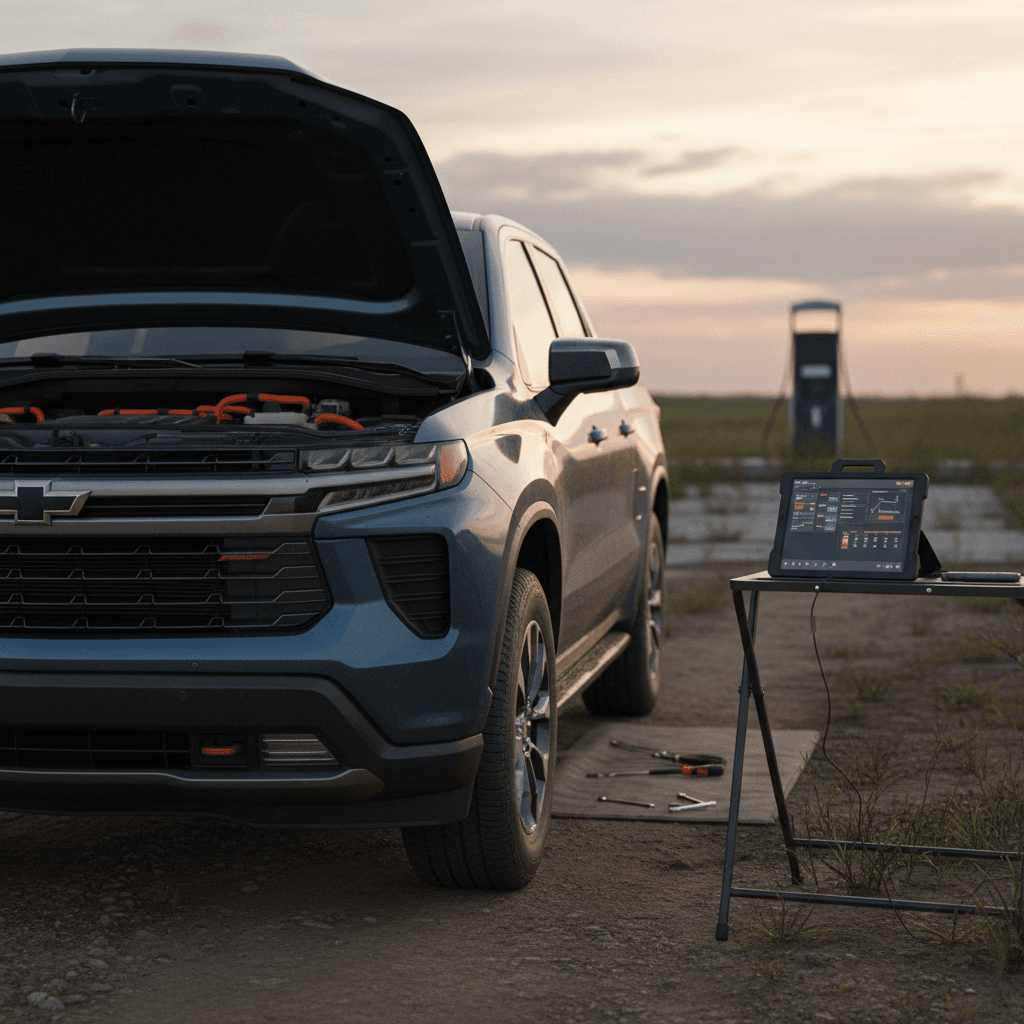
The heart of the Silverado EV is its large Ultium battery pack, and **that’s where the most serious early problems live**. A handful of owners with 2024 Silverado EVs have reported high‑voltage battery pack failures or persistent battery isolation codes in the first 2,500–4,000 miles. In several cases, dealers have told owners the pack had a coolant‑related issue and required full battery replacement under warranty.
- High‑voltage battery fault codes and “reduced power” modes limiting speed to around neighborhood speeds until the truck is restarted or towed
- Battery coolant leaks or internal isolation faults that trigger a no‑drive condition and require pack replacement
- Long waits for replacement packs or specialized EV technicians, sometimes measured in weeks rather than days
- Inconsistent dealer experience, some service departments are still learning Ultium procedures and rely heavily on remote guidance from GM engineering
Why this matters
To be clear, we are not seeing mass battery failures across the fleet. The pattern so far looks like **a small subset of early trucks with serious pack issues**, set against a larger number of owners piling on miles with no high‑voltage drama. But if you’re buying used, you don’t want to gamble: you want to know if *this* specific truck has ever thrown high‑voltage fault codes, had pack work done, or sat at a dealer for weeks awaiting a battery.
Software Glitches and Infotainment Complaints
Like every modern EV, the 2024 Silverado EV is **as much software platform as it is truck**, and that shows up in the complaint pattern. Owners have reported recurring issues with cameras, driver‑assist features, and the new Google‑based infotainment, particularly on RST First Edition trucks.
Common 2024 Silverado EV Software & Tech Complaints
Not every truck has these issues, but they’re recurring themes in owner reports.
| System | Typical Complaint | How It Feels Day‑to‑Day |
|---|---|---|
| Super Cruise | Feature shown as available but won’t activate, or has been disabled pending a software fix. | You paid for hands‑free highway driving but can’t reliably use it. |
| Camera system | Cameras intermittently stop working or show black screens until the truck is restarted. | Losing 360° view when parking or towing is more than an annoyance. |
| Infotainment / map | Navigation map freezes while other functions keep working; requires soft reset. | Feels like using a buggy smartphone, livable, but confidence‑sapping on long trips. |
| Over‑the‑air updates | Updates can take hours or require dealer visits; some dealers are behind on bulletins. | You never quite know if your truck is on the latest software, or if an update will break something. |
Always check for completed software updates and bulletins on any used Silverado EV you’re considering.
Pro tip: verify TSBs and software history
The infotainment differences between WT and RST also matter. Early WT trucks still offered **wired CarPlay and Android Auto**, while 2024 RST First Edition models rely entirely on GM’s Google‑based system. Many new and used buyers are surprised (and disappointed) to discover there’s **no CarPlay at all** in their high‑spec RST, which changes the ownership feel even if it’s not a “defect” in the traditional sense.
Charging Experience and Range Concerns
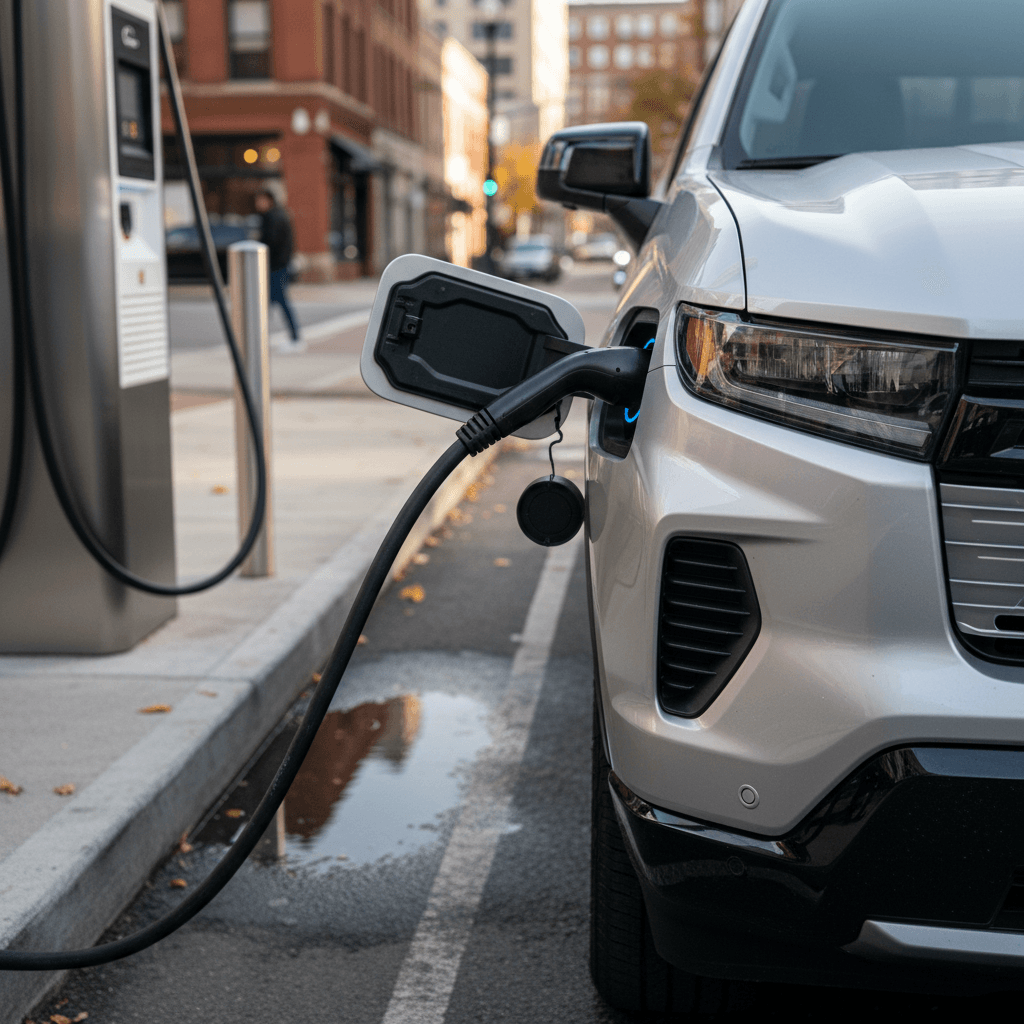
On paper, the 2024 Silverado EV is one of the more capable electric trucks on the market: big battery, strong DC fast‑charging capability, and serious towing potential. In practice, owners’ **charging experiences are all over the map**, not because the truck can’t charge, but because GM is relying on third‑party networks that are uneven in quality and coverage.
Where Charging Problems Actually Come From
Hint: it’s usually not just the truck
Public DC fast charging
- Network reliability varies a lot by region.
- Some owners report multiple apps, confusing pricing, and broken stations.
- Trip planning is less integrated than Tesla’s Supercharger ecosystem, so you do more manual work.
Home charging & expectations
- Out‑of‑the‑box portable cords on 120V will feel painfully slow on such a large battery.
- Without a 240V Level 2 setup, “filling up” from empty can take days, not hours.
- Some owners come from Tesla and perceive this as a step backward even if the hardware is similar.
The hardware is capable, if the infrastructure cooperates
If you’re cross‑shopping a Silverado EV against a Tesla Cybertruck or a Model X, understand that **the truck and the charging network are a package deal**. GM is moving toward broader access to Tesla’s Supercharger network via adapters and NACS ports on future vehicles, but 2024 trucks live in today’s more fragmented environment. That doesn’t make them unusable, but it does mean you should plan a realistic charging strategy before you buy, especially if you tow or drive long distances.
Build Quality, Noises, and Hardware Quirks
The good news: most of the **old‑school truck issues** on the 2024 Silverado EV are more annoying than catastrophic. Owners report headliner rattles, trim pieces that needed replacement, and a front trunk that sometimes refuses to latch without a firm slam. Rear doors on some trucks have needed adjustments to register closed correctly on the dash. All of this is fixable under warranty, but still worth checking before you write a check.
- Interior rattles, especially around the headliner and large interior panels, showing up after a few thousand miles on rough roads.
- Frunk latch sensitivity, some owners have learned a specific technique to get it to latch consistently.
- Door and hatch sensors occasionally failing to recognize a closed door, leading to warning messages until adjusted.
- Ride harshness complaints on certain wheel/tire combinations, especially low‑profile tires on rough pavement.
The flip side: many owners are genuinely happy
What This Means If You’re Buying a Used 2024 Silverado EV
On the used market, the 2024 Silverado EV can be either a smart value play or an anxiety machine. Prices have already softened relative to MSRP on many trims, reflecting both market realities for large EVs and buyer uncertainty about long‑term reliability. That discount is your opportunity, but only if you approach the truck like an **engineering project**, not just a shiny new thing.
Upside of buying used
- Significant discounts vs. original MSRP, especially on higher‑spec RST trucks.
- Early depreciation is someone else’s problem, you capture the value.
- Warranty coverage remains on the battery and electric components, often for 8 years/100,000 miles or more.
- If a truck has already had major battery or software work and is now stable, you may be buying post‑debug.
Downside and risks
- You inherit any unresolved software or battery gremlins.
- Some dealers are still learning how to service Ultium trucks, which can mean long stays for relatively simple issues.
- Carfax and standard inspections don’t tell you much about **battery health** or repeated fault codes.
- Charging reality in your area may not match the brochure, research local networks before committing.
How Recharged Evaluates Used Silverado EVs
Because the stakes are higher with a structural battery pack and complex software stack, Recharged doesn’t treat a used 2024 Silverado EV like “just another truck.” Every Silverado EV we list goes through a **Recharged Score Report**, which is designed specifically to surface the exact issues that don’t show up in a quick test‑drive or standard inspection.
What the Recharged Score Looks For on a Silverado EV
Beyond Carfax and a quick scan with a code reader
Verified battery health
We use specialized diagnostics to assess **state of health**, recent high‑voltage fault codes, pack temperatures, and any history of isolation or coolant‑related battery issues.
Service & TSB history
We review available dealer records and digital footprints for completed **TSBs, recalls, and software campaigns**, so you know if you’re inheriting an up‑to‑date truck or a neglected one.
Real‑world performance
Range and charging behavior are validated under realistic conditions, not just lab numbers, so you understand how the truck actually behaves on the road and at fast chargers.
Ready to find your next EV?
Browse VehiclesWhy this matters for early‑generation EVs
If you decide the Silverado EV is the right fit, Recharged can also help with **financing, trade‑in or consignment of your current vehicle, and nationwide delivery**. The goal is to take some of the uncertainty out of early‑generation EV ownership, without asking you to become your own high‑voltage engineer.
Owner Checklist: Spotting Red Flags Before You Buy
Pre‑Purchase Checklist for a 2024 Silverado EV
1. Ask for battery and high‑voltage service history
Specifically ask whether the truck has ever recorded **high‑voltage battery fault codes, coolant leaks, or isolation issues**, and whether any pack modules or the full pack have been replaced.
2. Confirm software, TSBs, and recalls are current
Have a dealer print out the list of **completed campaigns and service bulletins**. Trucks that are behind on updates are more likely to show weird, intermittent bugs.
3. Test Super Cruise and driver‑assist features
On an RST, verify whether **Super Cruise actually works** on supported highways and whether the cameras are stable. If the seller shrugs off non‑functioning features, assume you’re inheriting the fight.
4. Do a cold start and full‑system check
With the truck off overnight, start it in the morning and watch for warning lights, chimes, or error messages. Cycle the frunk, all doors, windows, and charging port to catch any intermittent sensor issues.
5. Charge at both Level 2 and DC fast charger
If you can, plug into a **240V Level 2** and a **public DC fast charger**. Watch for unexpected disconnects, unusually slow charging, or overheating messages.
6. Listen for rattles and check panel alignment
On a test‑drive over rough pavement, listen for headliner or interior rattles. Inspect body gaps around the frunk, doors, and bed to see if anything suggests prior repairs or poor alignment.
7. Evaluate your local charging ecosystem
Before you buy, map out **real stations you’ll use**, home Level 2, workplace, and highway fast chargers. If you live in a DC fast‑charging desert, a big‑battery EV truck may be more hassle than it’s worth.
FAQ: 2024 Chevy Silverado EV Problems
Frequently Asked Questions About 2024 Silverado EV Problems
Bottom Line on 2024 Silverado EV Reliability
The 2024 Chevy Silverado EV is exactly what you’d expect from GM’s first serious all‑electric full‑size truck: incredibly capable on paper, genuinely impressive when everything works, and occasionally frustrating when the complexity bubbles up as real‑world problems. Some owners will put huge, low‑maintenance miles on theirs. Others will feel like they’re beta‑testing a software platform with a bed attached.
If you’re shopping used, the key is to stop thinking in model‑wide generalities and start focusing on **this individual truck**. Has its battery been healthy? Are the software campaigns up to date? Does the charging behavior match your reality, not a glossy brochure? Answer those questions well, and a 2024 Silverado EV can be a solid value. Skip them, and you’re rolling the dice on one of the most complex vehicles GM has ever built.
Recharged exists to tilt those odds in your favor, with verified battery health, transparent pricing, and EV‑specialist support from your first question to delivery. If you decide a 2024 Silverado EV is the right truck for you, make sure you buy it with eyes wide open and data on your side.