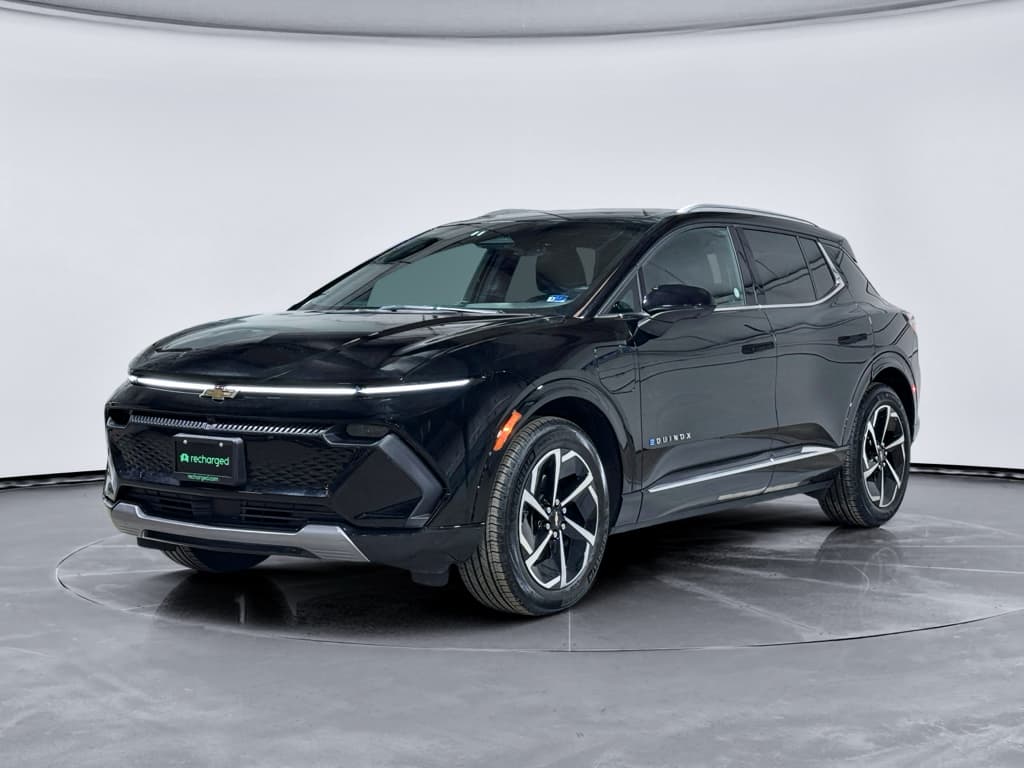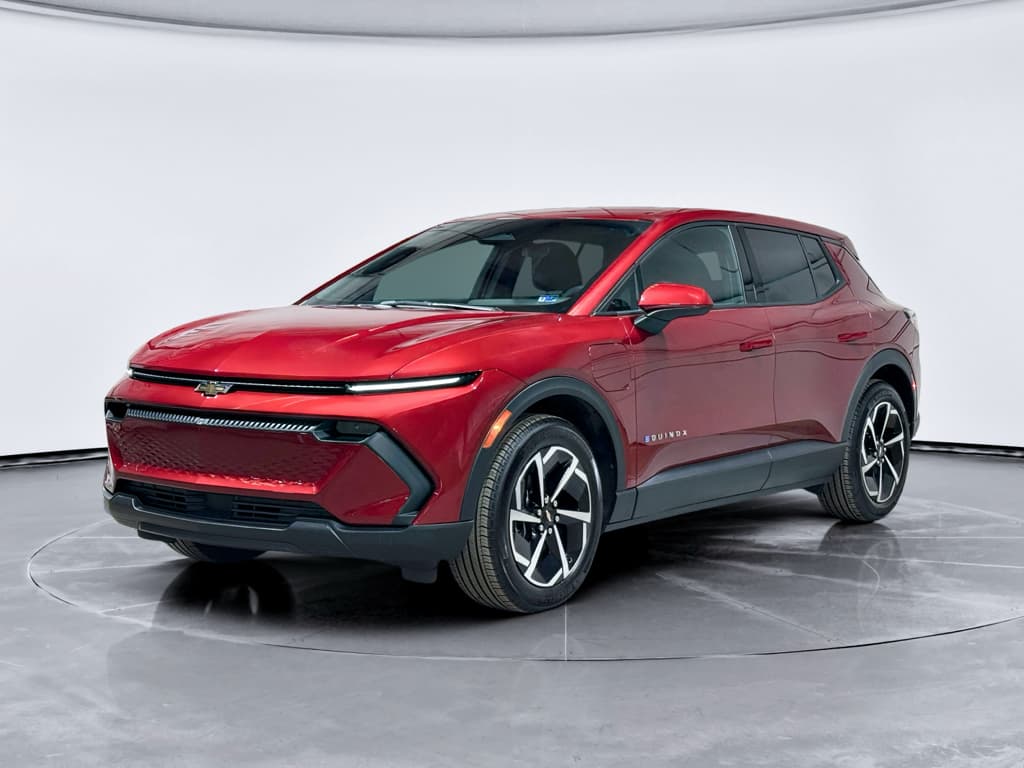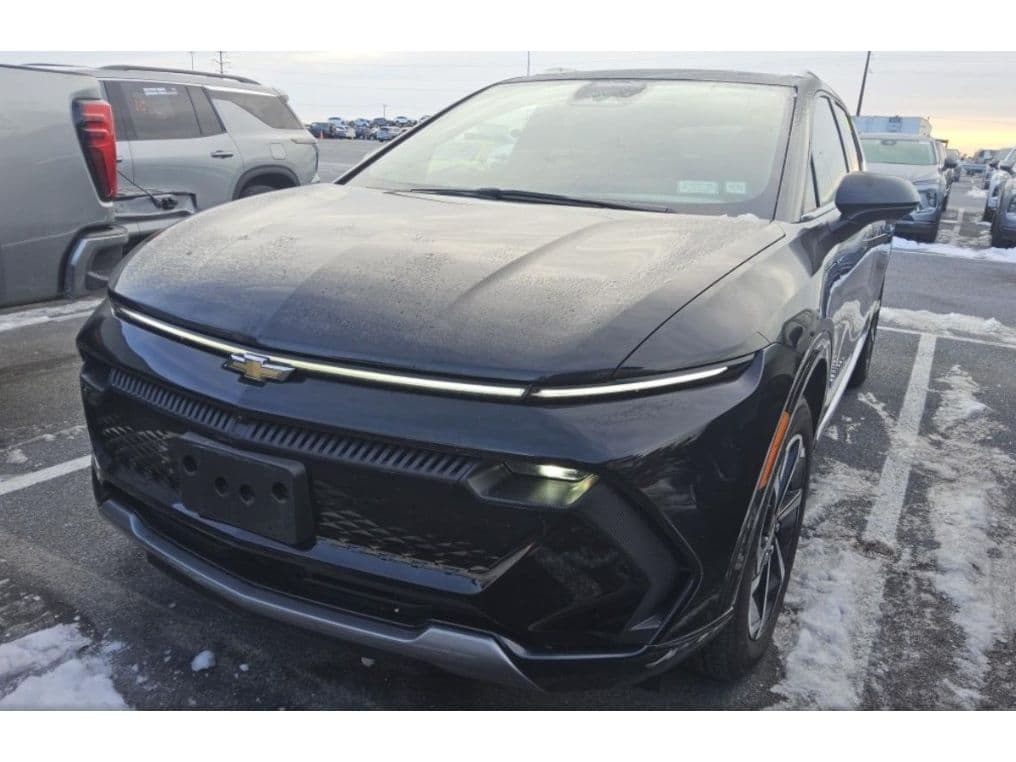
Search for a “2024 Chevrolet Equinox EV reliability rating” and you won’t find a single neat number carved in stone. What you get instead is a very modern story: an appealing, efficient electric SUV built on GM’s new Ultium platform, launched into the world with excellent crash safety, some early software and driver-assistance hiccups, and reliability scores that are still in wet concrete. If you’re eyeing a new or used Equinox EV, you need to understand what’s real risk, what’s social‑media drama, and what you should actually check before you buy.
Read this as a living snapshot
2024 Chevrolet Equinox EV reliability snapshot
2024–2025 Equinox EV at a glance
Because the Equinox EV is new and sold in relatively modest numbers, you won’t yet see the sort of long bar graphs you get for a Toyota RAV4 or Tesla Model Y. Instead, you have to triangulate: early owner satisfaction studies, recall history, forum reports, and the broader track record of GM’s Ultium-based EVs. That picture is mixed but not catastrophic, more “talented rookie with a nagging hamstring” than “injury‑prone bust.”
Key takeaway so far
How the 2024 Equinox EV is rated for reliability today
When shoppers Google a 2024 Chevrolet Equinox EV reliability rating, they’re usually looking for a single score from a name they recognize. The complication is that different organizations are grading different things, at different times, using different data sets.
Who is actually rating the Equinox EV?
Why those little numbers don’t all agree
Consumer & owner surveys
Organizations that buy cars anonymously and survey owners, think big consumer testing groups, are just now publishing their first predicted reliability scores for the Equinox EV. Early reads generally place it below the segment average, dragged down by software complaints and GM’s rocky Ultium rollout.
Road tests & long-term reviews
First‑drive reviews of the Equinox EV have been glowing about ride quality and refinement. Long‑term testers, however, have documented glitches in driver‑assist systems, sporadic error messages and occasional charging communication quirks, issues that matter greatly to reliability ratings even if the car never leaves you stranded.
Government & safety agencies
NHTSA’s job is crash safety, not reliability. Recent Equinox EVs have scored solidly in crash tests, while early recall activity has focused on software behavior in adaptive cruise and braking rather than hardware failures.
What this means for you: you won’t yet find a decade‑long track record, but you can reasonably say the Equinox EV sits in the middle of the pack, behind the most trouble‑free EVs from brands like Lexus or Hyundai, and likely behind stalwarts like the Tesla Model Y, but also not in the penalty box with the very worst offenders of the last few years.
How to interpret early reliability scores
Battery, Ultium platform and long-term durability
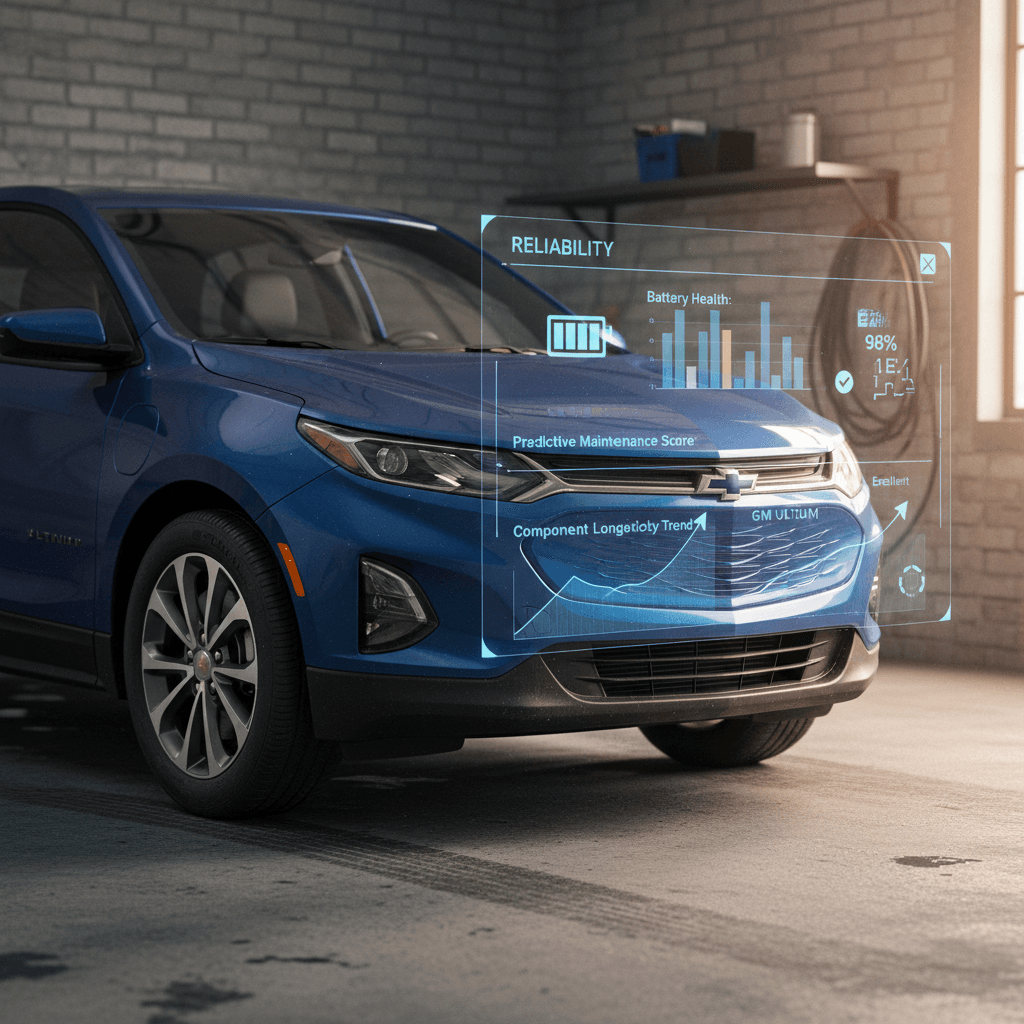
The anxiety lurking behind any EV reliability discussion is simple: “Is the battery going to die on me?” On that front, the Equinox EV has decent DNA. GM’s previous‑generation Bolt EV and Bolt EUV were not Ultium cars, but despite a high‑profile recall over supplier‑related fire risk, they went on to rack up hundreds of thousands of mostly drama‑free battery miles. Ultium is GM’s clean‑sheet follow‑up, aiming for better packaging, more range, and faster DC charging.
- The Equinox EV uses GM’s Ultium battery and drive units, shared in principle with the Cadillac Lyriq and Chevy Blazer EV.
- There have been no widespread reports of Equinox EV high-voltage battery pack failures or severe degradation in the first 2–3 years on the road.
- GM backs the pack with a competitive 8‑year / 100,000‑mile battery warranty (or similar, depending on market), broadly in line with other mass‑market EVs.
- Real‑world range for early front‑wheel‑drive models has aligned reasonably well with EPA estimates in most tests, suggesting the battery management system is doing its job.
Battery health vs software drama
If you’re shopping used, the smarter move is to measure battery health instead of speculating. At Recharged, every used EV we sell, including Ultium‑based models, comes with a Recharged Score battery health report that quantifies remaining capacity and flags abnormal degradation. That’s far more useful than arguing about internet anecdotes.
Software glitches, recalls and driver-assist issues
You can’t talk about Equinox EV reliability without talking about GM’s software learning curve. The Blazer EV, its slightly larger Ultium cousin, infamously endured a stop‑sale in late 2023 over buggy infotainment and charging behavior. GM has spent the last two years pushing big over‑the‑air and dealer‑installed updates across its Ultium lineup, and the Equinox EV both benefits from and inherits some of that drama.
Early issues and campaigns affecting Equinox EV reliability
This isn’t an exhaustive list, but it highlights the types of problems that matter when you’re judging the 2024 Equinox EV’s reliability story.
| Issue type | Model years | What happens | Why it matters | What fixes it |
|---|---|---|---|---|
| Adaptive cruise / braking behavior | Primarily 2024, some early 2025 | In certain scenarios the car may brake unexpectedly or not behave as intended when adaptive cruise is active. | Erodes driver confidence; triggers at least one safety recall / service campaign focused on control software. | Dealer software update to the driver‑assist control module; confirm campaigns are closed. |
| Driver‑assist features inoperative after delivery | 2024–2025 selected builds | Owners report Super Cruise, lane‑keep or adaptive cruise not functioning properly on day one. | Frustrating on a brand‑new car; may require multiple dealer visits while EV techs ramp up. | Dealer diagnosis, recalibration of sensors, and software reloads; sometimes hardware replacement. |
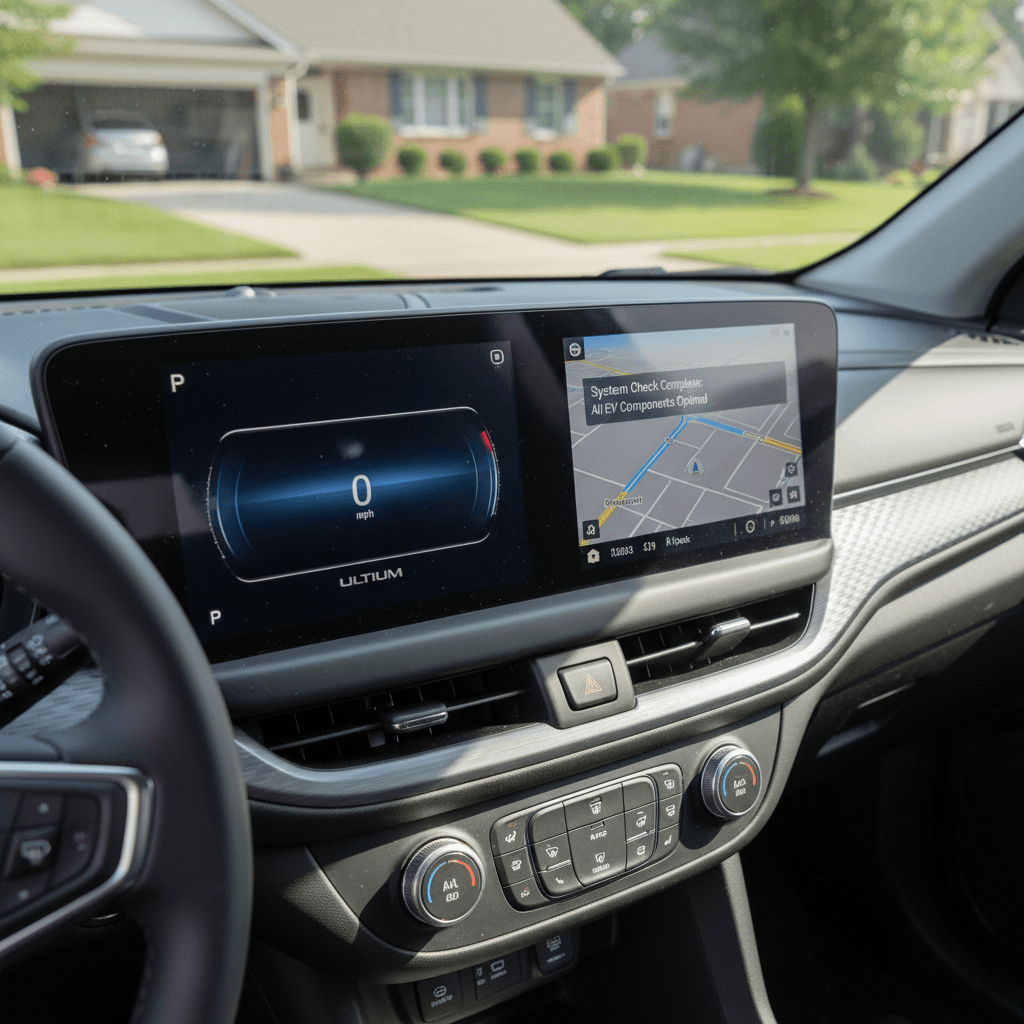
| Infotainment / instrument cluster glitches | 2024–2025 | Frozen screens, intermittent error messages, or incorrect warnings that clear after restart. | Annoying but usually not safety‑critical; hurts perceived quality and survey scores. | Ongoing software updates; make sure vehicle is on the latest version and document repeat issues. |
| Charging communication quirks | 2024–2025 | Occasional failure to start a DC fast‑charging session, or station handshake errors that require unplugging and restarting. | Adds friction to road trips and public charging; echoes similar issues seen on other Ultium EVs. | Software updates to charging modules; in some cases, better behavior after network-side updates. |
Always check a specific VIN in the NHTSA database and with a Chevy dealer for the latest recall and service campaign status.
Don’t ignore software recalls
The pattern, across forums and owner groups, is that once the right campaign is applied and the right software revision is installed, many Equinox EVs settle down into normal‑car duty. The catch is that you often need a dealer that’s actually comfortable diagnosing EVs and not months behind on Ultium work, a real issue in some parts of the country.
Safety ratings vs reliability: two different grades
One bit of confusion in the “Is the Equinox EV reliable?” debate is that shoppers blur crash safety with mechanical and software reliability. They’re not the same animal.
Crash safety: a strong scorecard
- Later‑tested 2025 Equinox EV models have earned 5‑star overall NHTSA ratings, with only a slightly lower sub‑score in one frontal test configuration.
- The Ultium platform’s low battery placement contributes to good rollover resistance and stable handling in emergency maneuvers.
- Standard active safety tech, automatic emergency braking, lane‑keeping, etc., is comprehensive for the class.
Reliability: a more mixed picture
- Safety systems can still be a sore point when software calibration is off, for example, overly sensitive forward‑collision warnings or lane‑keep that wanders.
- Even with five‑star crash scores, frequent warning lights or non‑functional driver assists will drag down any formal reliability rating.
- Owner surveys tend to punish cars harder for annoying tech glitches than for quietly durable hardware they never notice.
Good news beneath the headlines
Owner reports: the good, the bad, the inconvenient
Owner communities for the Equinox EV read like a family group chat: some people happily posting road‑trip photos and efficiency numbers, others deeply frustrated with dealer visits and ghost‑in‑the‑machine warnings. When you’re trying to decode reliability, it helps to separate three threads.
Three flavors of Equinox EV ownership stories
Why the reliability picture feels so contradictory
The smooth-sailing owners
Plenty of drivers report that their Equinox EV has been boringly dependable: charge, drive, repeat. These owners praise the ride quality, quiet cabin, and generous range, often coming from Bolts or gas Equinoxes and seeing this as a big step up.
The glitch-chasing owners
Another cohort lives with intermittent tech gremlins: warning lights that clear after a restart, lane‑keep that needs recalibration, an occasional failed fast‑charge. The car isn’t a lemon, but it feels more like a beta test than a finished appliance.
The genuinely unlucky
A small but real minority has dealt with serious hassles: repeated visits for non‑functional Super Cruise or adaptive cruise, dealer backlogs due to a shortage of EV‑trained techs, or rare no‑start / no‑charge conditions on low‑mileage cars. These are the stories that spread fastest online, and they should be taken seriously, even if they aren’t the norm.
How to read forums without losing your mind
How the Equinox EV compares to other EV reliability
In a vacuum, “Is the 2024 Equinox EV reliable?” is a fair question. In context, the better question is, “Reliable compared to what?” Because almost every automaker launching a clean‑sheet EV platform in the last five years has found new and exciting ways to stumble over software.
Equinox EV vs key compact EV rivals (reliability lens)
A qualitative snapshot based on early owner reports, recalls and independent survey data rather than long‑term 10‑year histories.
| Model | Platform maturity | Common complaints | Reliability reputation as of 2026 |
|---|---|---|---|
| Chevrolet Equinox EV | New Ultium platform | Driver‑assist quirks, dealer EV learning curve, occasional charging and infotainment glitches. | Below segment average in early surveys; not a disaster, but still proving itself. |
| Tesla Model Y | Launched 2020 | Panel alignment, wind noise, sporadic sensor and camera issues, service delays in some markets. | Middling predicted reliability; generally better than GM’s newest EVs but not Toyota‑grade. |
| Hyundai Ioniq 5 / Kia EV6 | E‑GMP platform | Early 12‑volt battery and charging quirks, some software bugs, occasional inverter issues. | Improving; now hovering around segment average or better in many surveys. |
| Volkswagen ID.4 | MEB platform | Infotainment lag, software update hassles, some recall history on high‑voltage components. | Historically below average; later builds improved but reputation lingers. |
| Toyota bZ4X / Subaru Solterra | New EV skateboard | Early wheel‑hub recall, charging speed and availability complaints, conservative software. | Limited sample size but generally closer to Toyota’s solid reliability baseline. |
This table is directional, not an absolute ranking. Individual cars may vary widely depending on build date, software level and how well they were serviced.
If you prioritize a completely drama‑free ownership experience above all else, you may gravitate toward brands with a longer, quieter EV track record. If you like the Equinox EV’s price, styling and range, you’re signing up for a car that’s competitive but not class‑leading on reliability, with its fate tied closely to how fast GM matures its software and dealer training.
What to check if you’re buying a used Equinox EV
For many shoppers, the reliability question becomes most urgent when a low‑miles 2024 Equinox EV pops up at a tempting price. This is where you shift from abstract ratings to specific evidence about the car in front of you.
Used 2024 Equinox EV reliability checklist
1. Run the VIN for recalls and campaigns
Use the NHTSA website and ask a Chevrolet dealer to print a <strong>campaign and recall history</strong> for the VIN. Confirm that any safety recalls, driver‑assist software updates, and major infotainment or charging software campaigns are marked as completed.
2. Ask for a documented software update history
Have the seller provide service invoices showing <strong>which software versions</strong> were installed and when. For Ultium cars, a lot changed between late 2023 and late 2025; you want a car that has been kept current, not one frozen on day‑one code.
3. Verify driver-assist and safety features on a test drive
On your test drive, deliberately exercise <strong>adaptive cruise, lane‑keeping, automatic emergency braking warnings</strong> (safely), and any optional systems like Super Cruise. They should engage and disengage predictably, without spurious warnings or refusal to activate.
4. Inspect battery health and charging behavior
Look at real‑world range at high state of charge and how quickly the car pulls power on a DC fast charger. When you buy through Recharged, you’ll get a <strong>Recharged Score battery health report</strong> and verified fast‑charge behavior instead of guesswork.
5. Look for repeated no-start or no-charge complaints
Scan service records and ask the owner directly about any past <strong>no‑start, no‑charge or stranded</strong> events. A one‑off sensor failure that’s been fixed is one thing; a pattern of unexplained shutdowns is a walk‑away moment.
6. Evaluate the selling dealer’s EV competence
If you’re buying from a Chevy store, talk to the service advisor about <strong>how many Ultium EVs</strong> they regularly work on, how many certified EV techs they have, and what their typical wait time is. A good car plus a clueless dealer is still a bad ownership experience.
Let Recharged do the homework for you
When a 2024 Equinox EV still makes sense
So, after all that, is the 2024 Equinox EV a good bet or a headache waiting to happen? The answer lives in the gray area. It’s not a paragon of bulletproof simplicity, but it’s also not the rolling disaster some YouTube thumbnails would have you believe.
Good fit for you if…
- You want a comfortable, efficient, reasonably priced compact EV with a familiar Chevy badge.
- You’re willing to be attentive about software updates and recalls and don’t mind the occasional infotainment quirk.
- You have access to a competent Chevy EV dealer or independent EV shop, or you’re buying through a curated marketplace like Recharged that vets cars up front.
- You value strong crash safety and a spacious cabin more than having the flashiest badge on the block.
Maybe not the best choice if…
- Your top priority is set‑and‑forget reliability on par with a Camry or CR‑V, and you have limited patience for software updates.
- You live far from a Chevrolet store that’s up to speed on Ultium EVs, making every visit a logistical production.
- You’re deeply sensitive to technology annoyances, if an occasional false warning light would ruin your week, this may not be your car.
- You can comfortably stretch to an EV with a longer, calmer track record in owner surveys.
In other words, the 2024 Equinox EV is a solid EV wrapped in GM’s still‑maturing software ecosystem. Walk into it with eyes open: insist on proof of completed recalls and campaigns, verify that the driver‑assist and charging systems behave as advertised, and pay close attention to battery health if you’re buying used. Do that, and you can end up with a capable, quiet, thoroughly modern compact EV at an attractive price. Skip those steps, and you’re leaving your personal reliability rating up to chance.