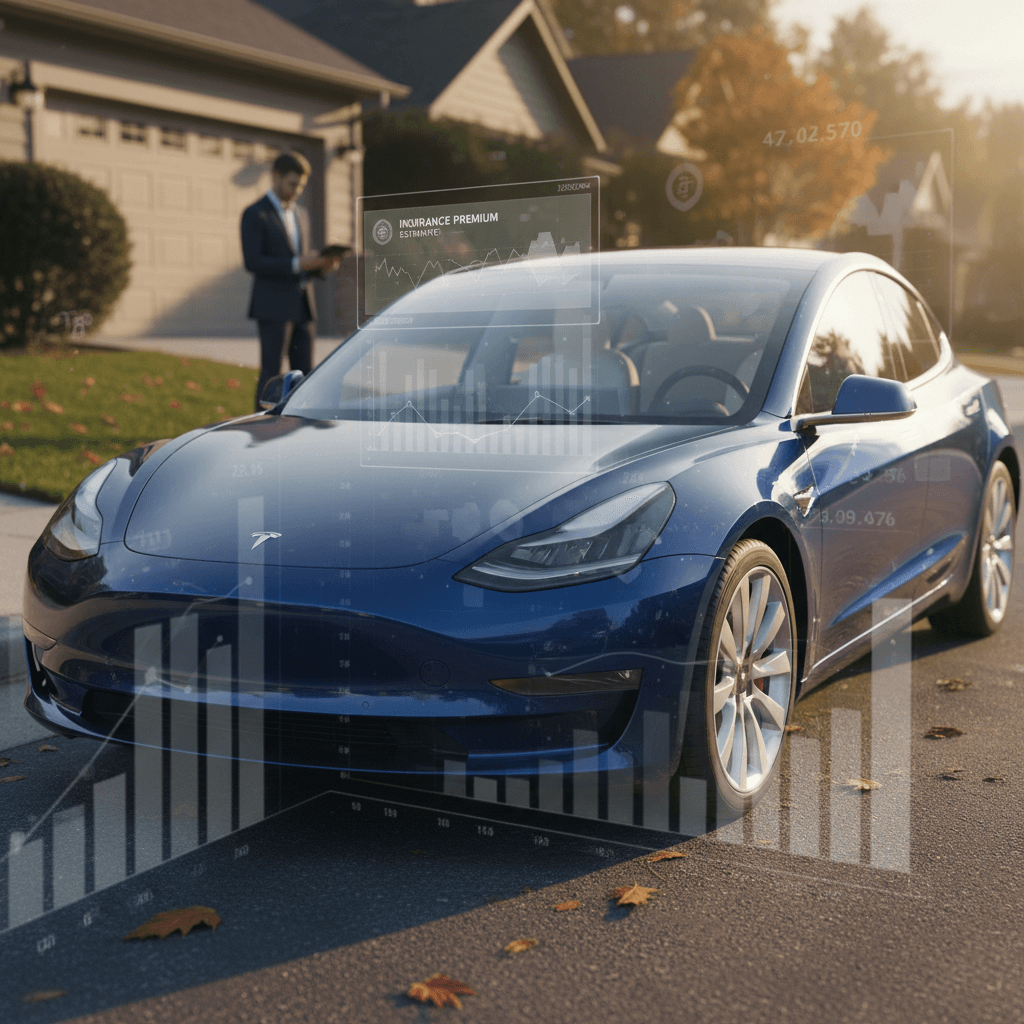
If you’re pricing a Tesla Model 3 in 2026, the **insurance quote may be the biggest surprise**. EV premiums are still higher than for comparable gas cars, and the Model 3 sits on the expensive end of the EV spectrum. Understanding the real Tesla Model 3 insurance cost in 2026, and why it looks the way it does, is crucial before you sign a purchase, lease, or loan contract.
At a glance
Tesla Model 3 insurance cost in 2026: the quick overview
Tesla Model 3 insurance cost snapshot for 2026
Different sources put slightly different numbers on 2026 Tesla Model 3 insurance, but they all agree on one thing: it’s higher than the national average car‑insurance bill. Industry rate trackers and comparison sites that publish Tesla‑specific data show Model 3 averages in the low‑to‑mid‑$3,000s per year for full coverage, with some states comfortably below $3,000 and others pushing well past $4,000 for the same driver profile.
Don’t anchor on Tesla’s “cost to own” headline
How much is Tesla Model 3 insurance per year and per month?
Estimated 2026 Tesla Model 3 insurance costs (U.S. averages)
These ballpark numbers assume a clean‑record 35‑year‑old driver, full coverage, and average credit. Your personal quote can land outside these ranges depending on local risk and your profile.
| Scenario | Estimated annual cost | Estimated monthly cost | How it compares |
|---|---|---|---|
| National average car (all vehicles) | $2,100 | $175 | Baseline for full‑coverage insurance in 2026. |
| Typical Tesla Model 3 (all trims) | $3,400 | $280 | About 20–60% higher than the overall average. |
| Low‑cost states (best cases) | $2,200–$2,600 | $185–$220 | Often rural or Midwestern states with low claim severity. |
| High‑cost states (worst cases) | $4,200–$5,000+ | $350–$420+ | Dense urban markets and states with high repair and legal costs. |
| Performance or “Ludicrous” trims | +$300–$800/yr on top | +$25–$65/mo | More power and higher values raise premiums. |
| Liability‑only (older used Model 3) | $1,100–$1,600 | $90–$135 | Strips out collision and comprehensive; not ideal on newer cars. |
Use this as a directional guide, not a guaranteed quote. Always compare multiple insurers.
Those estimates line up with recent market studies that find EV drivers paying well over $4,000 per year on average, with Teslas at the top end thanks to their repair costs and claim severity. The Model 3 usually comes in cheaper than a Model X or Model S, but still well above most compact sedans.
How to sanity‑check a quote
Why is Tesla Model 3 insurance so high? Key cost drivers
Four reasons Model 3 insurance runs hot in 2026
Insurers price risk, not vibes, and the Model 3 has some very specific risk signals.
1. Expensive battery and body repairs
2. Limited repair network, long cycle times
3. Strong acceleration and higher claim severity
4. Mixed loss experience and vandalism stories
To be clear, the Model 3 also has excellent crash‑test performance and advanced active safety tech. Those factors help hold premiums down compared with what they might otherwise be. But for actuaries, repair severity, repairability, and claim frequency still dominate the pricing conversation, and right now, that mix makes the Model 3 more expensive to insure than a typical compact sedan.
Don’t ignore comprehensive & collision
8 factors that change your Tesla Model 3 insurance cost
What moves a Model 3 quote up or down?
1. Your state and ZIP code
Location is often the single biggest driver. States with high medical costs, dense traffic, and aggressive plaintiff attorneys tend to have the highest Tesla Model 3 premiums, while smaller and more rural states often see dramatically lower rates.
2. Trim level and price of your Model 3
A rear‑wheel‑drive Model 3 carries less risk than a top‑spec Performance or Ludicrous trim. Higher purchase prices and stronger acceleration both nudge insurers toward higher premiums.
3. New vs used and loan status
If you finance or lease, your lender will require comprehensive and collision coverage, often with relatively low deductibles. A paid‑off older Model 3 gives you more flexibility to raise deductibles, or in some cases, drop physical damage coverage altogether.
4. Your driving record and mileage
A clean record and moderate annual mileage can chop hundreds of dollars off a Model 3 premium. Prior at‑fault accidents, speeding tickets, or high mileage (commuting or gig work) push you toward the top of the ranges in the table above.
5. Credit‑based insurance score
In most states, insurers use a credit‑based score as a powerful predictor of claim behavior. Strong credit can offset some of the Model 3’s higher repair costs. Poor credit can do the opposite, even if your driving history is clean.
6. Coverage limits and deductibles
Choosing higher liability limits raises your premium, but protects you from life‑altering lawsuits. Deductibles work the other way: raising a $500 deductible to $1,000 usually trims your bill but increases what you’ll owe out of pocket on a claim.
7. Telematics and driving‑behavior programs
Tesla Insurance and many traditional carriers now offer usage‑based pricing. Smooth braking, low nighttime miles, and consistent speed discipline can earn meaningful discounts over time; aggressive driving does the opposite.
8. How many cars and drivers are on the policy
Multi‑car and multi‑policy discounts still matter. Covering a Model 3 alongside another vehicle, renter’s, or homeowner’s policy can be cheaper than insuring it on a standalone policy with no bundling discounts.
Tesla Insurance vs traditional insurers for a Model 3
How Tesla Insurance prices your Model 3
Tesla Insurance, available in a growing list of states, leans heavily on driving‑behavior data pulled from the car itself. Your premium reflects how hard you brake, how closely you follow, what time of day you drive, and whether you avoid phone distraction.
- Potentially attractive for safe, low‑mileage drivers.
- Quotes can start high but fall as your safety score improves.
- Rates can also spike suddenly after a few hard‑braking events or a claim.
For some owners, Tesla Insurance ends up being the cheapest option; for others, it’s surprisingly expensive compared with mainstream carriers.
How traditional insurers look at the Model 3
Legacy carriers don’t have the same granularity of in‑car data, but they do have years of claim history across hundreds of thousands of EVs. Many have quietly repriced Teslas upward after seeing higher repair costs and longer cycle times.
- Underwriting still leans on your record, credit, location, and mileage.
- Some regional carriers quietly under‑price Teslas to win business.
- Bundling homeowners or renter’s coverage can create big discounts.
The bottom line: treat Tesla Insurance as one more quote rather than assuming it’s always the cheapest or most expensive choice.
Quote Tesla Insurance last, not first
New vs used Tesla Model 3 insurance: what actually changes
A lot of shoppers assume a used Tesla Model 3 will automatically be cheap to insure. The reality is more nuanced. Your rate is driven more by risk and replacement cost than model year alone, and late‑model used cars still look like expensive claims to an underwriter.
How insurance behaves on new vs used Model 3s
The biggest savings often come from what you owe on the car, not the line item on your policy.
Brand‑new Model 3
Pros: New‑car discounts, latest safety tech, chance to bundle with promotional offers.
Cons: High replacement cost means you’ll want strong collision and comprehensive coverage, which keeps premiums elevated for the first several years.
3–5‑year‑old Model 3
Values have dropped, but repairs are still pricey. Insurers don’t discount nearly as fast as depreciation falls, so premiums are often only modestly lower than on a new car with similar coverage.
Older, paid‑off Model 3
Once you own the car outright and its market value is lower, you have options: higher deductibles, scaled‑back collision, or even liability‑only if the car’s value no longer justifies full coverage.
That’s where used EVs can genuinely shine on insurance cost, if you’re honest about the risk you can afford to carry.
Where Recharged fits in
11 ways to lower your Tesla Model 3 insurance bill
Actionable ways to bring Model 3 premiums back down to earth
1. Shop at least 3–5 insurers
Model 3 pricing varies wildly between carriers. Get quotes from at least one big national insurer, one regional company, and Tesla Insurance where available. A 15–30 minute comparison can easily uncover $500+ per year in differences for the same coverage.
2. Right‑size your coverage, don’t just slash it
Aim for strong liability limits (often 100/300 or higher) but check collision and comprehensive deductibles. Moving from a $500 to a $1,000 deductible can trim your premium without gutting protection, especially on a used Model 3 you could afford to repair yourself in a pinch.
3. Consider a gently‑used Model 3 instead of new
A late‑model used car from a trusted source like Recharged typically costs less to buy, needs a smaller loan, and may justify slightly leaner coverage. You lower both your monthly payment and your insurance exposure at the same time.
4. Skip unnecessary add‑ons
Roadside assistance, rental coverage, and gap insurance are useful in some cases, but they’re also profit centers. Make sure you’re not double‑buying services you already have from a Tesla roadside plan, credit card, or EV‑specific membership.
5. Enroll in telematics if you’re a smooth driver
If you drive mainly in daylight, have a short commute, and brake and accelerate gently, a usage‑based program (Tesla’s or a traditional carrier’s) can produce meaningful discounts over 6–12 months. If you’re a more aggressive driver, think twice before inviting real‑time monitoring.
6. Clean up tickets and keep mileage realistic
Speeding tickets and high annual mileage are expensive on a Model 3. If you’re close to a renewal, drive squeaky‑clean for a few months. Also confirm that your insurer has accurate odometer and commuting information; over‑estimated mileage costs you money every term.
7. Bundle with home or renter’s insurance
Many carriers offer substantial multi‑policy discounts. If you own a home, or even just rent, bundling those policies with your auto coverage can help offset the Tesla premium bump.
8. Improve your credit profile over time
You can’t fix credit overnight, but paying bills on time, lowering utilization, and avoiding new hard inquiries will eventually improve your insurance score in most states. That translates into better rates the next time you shop coverage for your Model 3 or your next EV.
9. Adjust your car’s configuration wisely
Accessories that increase theft risk or repair cost, oversized aftermarket wheels, non‑OEM body parts, can work against you. Conversely, making sure all factory safety tech is enabled can sometimes qualify you for discounts if your insurer recognizes those features.
10. Ask about EV‑specific or green‑vehicle discounts
Some carriers now offer small but real discounts for electric vehicles or customers who charge at home off‑peak. They won’t usually move you from the top to the bottom of the market, but in the Model 3’s cost bracket, every 5–10% helps.
11. Re‑shop at renewal, not just at purchase
Insurers are constantly repricing Teslas as new loss data comes in. A carrier that was the cheapest for your Model 3 in 2024 may be mid‑pack or worse by 2026. Treat your <strong>renewal date as a reminder</strong> to get fresh quotes.
Where insurance fits in your Model 3 total cost of ownership
Insurance is just one line item in owning a Tesla Model 3 in 2026, but it’s a big one. Independent cost‑of‑ownership studies routinely show full‑coverage insurance landing in the $2,000–$2,500 per‑year range even for mainstream sedans, with EVs often 10–40% higher. When you combine that with financing, charging, maintenance, and depreciation, the picture can easily get fuzzy for shoppers trying to compare EVs to gas cars.
How a Model 3 stacks up vs a gas sedan
- Higher insurance: As we’ve covered, you may pay several hundred to over a thousand dollars more per year to insure a Model 3 compared with a similarly‑sized gas sedan.
- Lower fuel cost: Home charging, especially on off‑peak rates, typically saves well over $600–$1,000 per year vs buying gasoline for a similar‑size car.
- Lower routine maintenance: No oil changes, fewer fluids, and simple brake service usually mean fewer shop visits, though tires remain a notable expense.
Using Recharged to see the full picture
When you browse used EVs on Recharged, every vehicle comes with a Recharged Score report that includes battery health, fair‑market pricing, and expert guidance. Our specialists can walk through how insurance, financing, and charging costs interact so you’re not blindsided after you sign.
If you’re comparing a used Model 3 to, say, a used Chevy Bolt EUV or Hyundai Ioniq 5, we can help you understand how insurance differences offset or amplify price and efficiency differences over a five‑year horizon.
Make the insurance math work for you
Tesla Model 3 insurance cost 2026: FAQs
Frequently asked questions about Tesla Model 3 insurance in 2026
If there’s a single takeaway about Tesla Model 3 insurance cost in 2026, it’s this: you can’t ignore it, but you also don’t have to be afraid of it. The Model 3 will almost certainly cost more to insure than a typical compact sedan, yet smart shopping, thoughtful coverage choices, and, in many cases, buying used instead of new can bring that line item back within reach. If you’re weighing a Model 3 against other EVs, using a marketplace like Recharged that puts battery health, fair pricing, and ownership costs front‑and‑center will give you a far clearer picture than any single insurance quote ever could.