If you’ve heard about 2024 Chevy Blazer EV problems, you’re not imagining things. GM’s sporty electric SUV launched with serious software drama, multiple recalls, and some unnerving owner stories, right alongside glowing reviews about performance and design. This guide cuts through the noise so you can understand what’s actually going wrong, what’s been fixed, and what to watch for if you’re considering a Blazer EV, especially on the used market.
The short version
Overview: Why the 2024 Blazer EV Has a Reputation
Most new EVs have some early teething problems; the Blazer EV went for a full orthodontic headgear. Soon after launch, GM had to halt sales because of serious software bugs affecting the screens and DC fast charging. Since then, there have been multiple recalls covering both safety hardware and electronics, and owner reliability surveys now flag the Blazer EV as much less reliable than the average 2024 vehicle.
Key facts about 2024 Blazer EV problems
What this means for you
Big-Picture Reliability: How Bad Is It?
Independent reliability data paints a stark picture. Owner surveys rate the 2024 Blazer EV’s overall reliability as “much less reliable” than the average 2024 model year vehicle. Problem areas crop up in in-car electronics, electrical accessories, climate systems, the EV charging system, and even the 12‑volt battery and related control modules.
At the same time, small-sample consumer reviews are oddly split: some owners report months of trouble-free driving and love the performance, while others describe repeated dealer visits, shutdown events, and unresolved gremlins. That level of variance usually signals a vehicle where software versions, build dates, and how carefully recalls were handled make a huge difference.
Model year vs. build date matters
Major 2024 Blazer EV Recalls You Should Know About
By early 2026, the 2024–2025 Blazer EV had been subject to several notable recalls. The campaigns fall into three broad buckets: parking brake wiring, structural hardware, and electric drive components. Here are the headlines in plain English:
2024 Blazer EV recall highlights
Always run the VIN through an official recall checker; this table summarizes the most widely reported campaigns affecting 2024 Blazer EVs.
| Issue | What can happen | Typical fix | Why it matters |
|---|---|---|---|
| Rear parking brake wiring harness | Harness can be damaged or corrode, causing unintended parking brake activation while driving or loss of parking brake when parked. | Inspect, re-route, tape, or replace the chassis harness with updated parts. | Sudden brake engagement or rollaway risk is a serious safety concern. |
| Right front lower control arm | A defective control arm can fracture. | Inspect and replace the right front lower control arm if affected. | Loss of control if the suspension fails at speed. |
| Door strikers | Door strikers can fracture, leading to doors opening unexpectedly. | Replace all four door strikers and bolts with improved parts. | A door opening while driving is an obvious safety hazard. |
| Rear drive unit electrical issue | Insufficient insulation in rear motor windings can cause internal shorts and loss of drive power. | Replace the rear drive unit (motor assembly). | Sudden loss of propulsion can leave you stranded or in a dangerous situation. |
Recall details can evolve, so confirm status with a Chevrolet dealer before you buy.
Non‑negotiable for buyers
Early Software Meltdown & the 2023 Stop-Sale
The Blazer EV’s public image took a hit almost immediately. In late 2023, GM issued a stop‑sale after early review cars and customer vehicles started throwing up nasty software issues: screens freezing or going black, system resets, and failures to charge correctly at DC fast chargers. Engineering teams traced the problems to software, not the Ultium battery pack itself, but the damage to buyer confidence was done.
GM’s fix was a sweeping software update that touches many of the vehicle’s control modules. At dealer level this isn’t a quick over‑the‑air push; it’s a multi-hour, sometimes full‑day process where an EV‑certified technician verifies and updates every module. Owners and even a Chevrolet service manager on owner forums report that once those updates are fully applied, most of the show-stopping bugs disappear, but cars that never received all the updates can still exhibit odd behavior.
How to confirm software status
Common 2024 Blazer EV Problems Reported by Owners
So what actually goes wrong day to day? Sift through owner surveys and real-world reviews and you see patterns. The Blazer EV isn’t falling apart mechanically in droves, but it is electronically fussy, with a long list of software-adjacent quirks that can make ownership frustrating if you’re unlucky.
Charging Issues With the 2024 Blazer EV
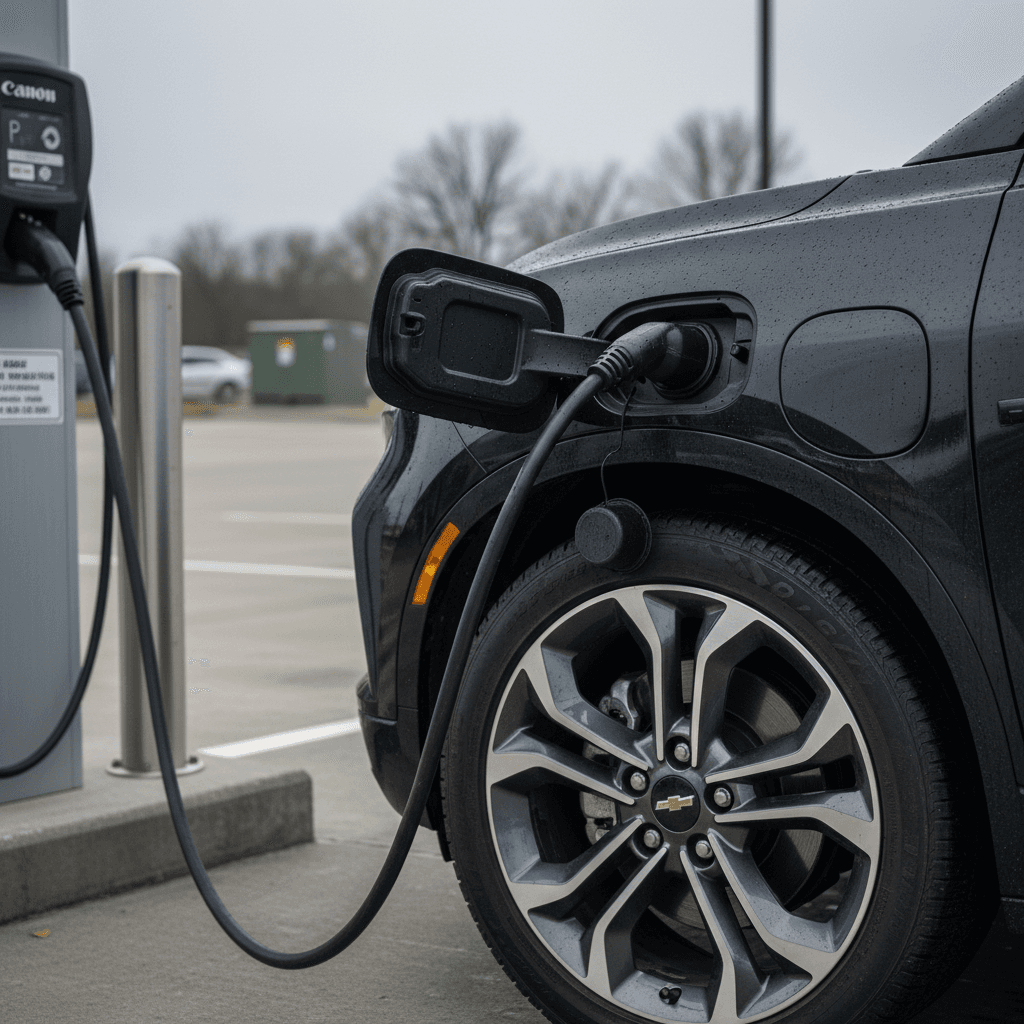
Because the Blazer EV is built on GM’s Ultium platform, charging behavior is heavily software‑managed. Owners have reported several types of charging headaches:
- AC charging sessions (home or workplace) that start and then stop unexpectedly, even as other EVs charge fine on the same station.
- The car declaring “charge complete” at 70–80% state of charge despite a higher limit being set.
- DC fast chargers that refuse to initiate or ramp charge speed as expected, especially before software campaigns were completed.
- The Blazer EV being pickier about voltage drops or imperfect power compared with other EVs, leading to errors on marginal home wiring or older public stations.
Easy things to check first
More stubborn problems, such as repeated failed sessions at multiple chargers, or the car never charging past a certain percentage despite settings, are often resolved at the dealer with updated software or, in rarer cases, by replacing modules linked to the charging or battery management system.
Infotainment and In-Car Electronics Glitches
Infotainment and in‑car electronics are a major complaint category. Owners have reported:
- The main center screen freezing, going black, or rebooting while driving.
- Built‑in navigation and map functions suddenly dropping offline on a road trip, then returning hours later.
- Phone integration and app control behaving inconsistently, remote commands sometimes failing without explanation.
- Interior ambient lighting not working from day one, or behaving inconsistently.
- Seats occasionally forgetting memory positions, even after being set multiple times.
Most of these issues don’t strand you, but they undermine confidence in the car. The saving grace is that many bugs respond to the old “turn it off and on again” approach, rebooting the infotainment system, or disappear entirely after a dealer performs comprehensive software updates.
Safety-Related Quirks: Emergency Brake and Doors
Alongside formal recalls for hard parts like control arms and door strikers, some owners have reported unnerving behavior from the Blazer EV’s driver‑assist and parking brake systems:
- Automatic emergency braking engaging aggressively when nothing is nearby, false positives that jolt the car to a stop.
- Rear parking brake or hold functions activating at odd moments, which later tied into the wiring‑harness recall on some units.
- Doors or power locks behaving inconsistently, especially in vehicles awaiting recall parts for door‑striker campaigns.
Again, these aren’t universal experiences, but they do reinforce why you want a Blazer EV that’s fully up to date on recalls and driver‑assistance calibrations before you start daily‑driving it.
Battery and Range: Are There EV-Specific Red Flags?
One piece of relatively good news: despite its noisy launch, there hasn’t been a wave of catastrophic Ultium battery failures specific to the Blazer EV. Owner surveys list EV battery issues far less frequently than infotainment or charging complaints. The bigger day‑to‑day story is range behavior:
- Noticeable winter range loss, owners are seeing significant drops in cold climates, which is normal for EVs but can feel more dramatic if you’re new to them.
- The car’s predicted range estimate can swing around until it “learns” your driving style and climate.
- Some owners confuse daily‑use charge limits (e.g., 80%) with a fault when the car stops charging before 100%; in reality, that’s the car doing what it’s told to protect long‑term battery health.
How to judge a Blazer EV’s battery health
Ownership Experience: Mixed Reviews From Real Drivers
Scan consumer reviews and you see a strange split screen: half the reviewers are thrilled, half are furious. Some praise the Blazer EV as smooth, quick, great‑looking, and trouble‑free. Others describe cars that have spent weeks in service bays, mysterious shutdowns at highway speeds, and dealer networks that still feel like they’re learning EVs on the job.
When it goes right
Positive reviews highlight:
- Instant acceleration and confident highway passing.
- A cabin that feels more premium and tech-forward than many rivals.
- Roomy seating for tall drivers and families.
- Months of completely drama-free charging and commuting once updates are applied.
When it goes wrong
Negative reviews focus on:
- Repeat trips to the dealer for unresolved software bugs.
- Cars shutting down or throwing major warnings within the first few months.
- Poor communication from dealers who don’t yet feel fluent in EV diagnostics.
- Out-of-pocket costs for rental cars and lost time while the vehicle sits in service.
A high-variance vehicle
Should You Avoid the 2024 Blazer EV, or Buy With Eyes Open?
So is the 2024 Blazer EV a hard pass? Not necessarily. It’s more like a gorgeous house in a neighborhood that floods every few years: you can absolutely live there and love it, but you should understand the risks, know the mitigation steps, and negotiate price accordingly.
2024 Blazer EV: Pros and cons at a glance
Why some shoppers jump on it, and others walk away.
What the Blazer EV gets right
- Striking styling that doesn’t scream science project.
- Strong performance and smooth ride from the Ultium platform.
- Spacious interior and genuinely usable rear seat.
- Heavy early depreciation translates into attractive used pricing.
Where it struggles
- Below-average reliability so far, driven by software and electronics.
- Multiple safety-related recalls to track and verify.
- Dealer network still ramping up EV expertise.
- Charging quirks and infotainment bugs if software isn’t fully current.
Who the Blazer EV still makes sense for
How to Shop a Used 2024 Blazer EV Safely
If you decide the Blazer EV fits your life, the next step is stacking the deck in your favor. Here’s how to dramatically reduce your odds of inheriting someone else’s headache.
Used 2024 Blazer EV buyer checklist
1. Pull a full recall & campaign history
Use the VIN to check every open recall and service campaign. Confirm in writing that all Blazer EV recalls, especially parking brake harness, control arm, door strikers, and rear drive unit, have been completed. If anything is still open, negotiate for the work to be done before you finalize the sale.
2. Verify software is truly current
Ask for a recent service invoice showing comprehensive software updates, not just a single module. If there’s no record, plan a dealer visit immediately after purchase and treat this as part of your cost of entry.
3. Test multiple charging scenarios
On your test drive day, plug into a Level 2 charger and, if possible, a DC fast charger. Confirm the car initiates sessions quickly, doesn’t throw errors, and approaches expected charge speeds. Watch whether it respects the charge limit you set instead of stopping early without explanation.
4. Stress-test the infotainment system
Spend time cycling through navigation, CarPlay/Android Auto, audio, climate menus, seat memories, and driver‑assist settings. You’re looking for freezes, black screens, functions that refuse to load, or safety features that behave unpredictably.
5. Listen and feel for mechanical issues
Even though most Blazer EV drama is electronic, don’t skip the basics: road‑test for clunks from the suspension, steering wander, or vibration. Ask specifically whether the front lower control arm recall applies and has already been completed.
6. Get an EV-focused inspection and battery report
A general mechanical inspection isn’t enough; you want someone who understands EV drivetrains, high‑voltage safety, and charging diagnostics. Buying through a platform that provides a battery health report, like the Recharged Score on Recharged, can give you objective data on how the pack and charging system are aging.
How Recharged can help
FAQ: 2024 Chevy Blazer EV Problems
Frequently asked questions about 2024 Blazer EV issues
Bottom Line: Is the 2024 Blazer EV Worth the Risk?
The 2024 Chevy Blazer EV is a fascinating case study in modern EVs: the hardware is quick and capable, the styling is on point, but the software story and early recalls turned it into a bit of a problem child. If you’re shopping one used, you’re playing on “hard mode”, but if you do the homework, pick a well‑maintained, fully updated example, and back that up with an EV‑specific inspection and battery report, you can end up with a lot of SUV for the money.
If you want help de‑risking that process, Recharged was built for exactly this moment in the EV market. From Recharged Score battery health diagnostics to transparent pricing, financing, trade‑in options, and nationwide delivery, we make it easier to buy a used EV like the Blazer with your eyes wide open, not crossed fingers.