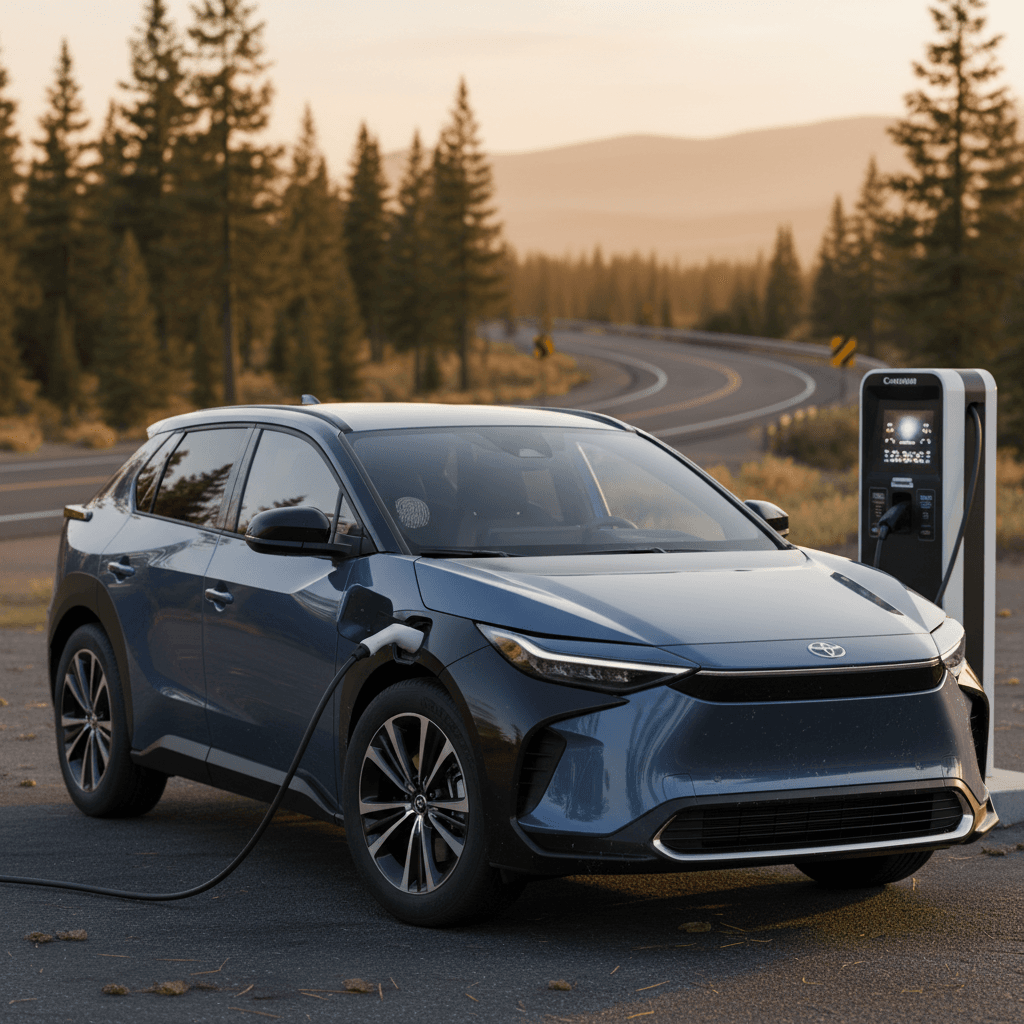
The 2024 Toyota bZ4X is Toyota’s first modern battery‑electric SUV in the U.S., aimed squarely at shoppers who want a practical, ultra‑reliable compact crossover with a plug. On paper it delivers solid range, Toyota refinement and a familiar ownership experience. In reality, the 2024 bZ4X is a mixed bag: comfortable and easy to live with, but behind the curve on charging speed and efficiency compared with the best electric SUVs. This review walks you through the 2024 bZ4X’s strengths, weaknesses, and what to watch for, especially if you’re considering a used one.
Where the 2024 bZ4X fits
2024 Toyota bZ4X overview
Toyota launched the bZ4X for 2023 as a compact electric SUV sharing its platform with the Subaru Solterra. The 2024 model year didn’t radically change the formula, but it did address some early pain points and improve cold‑weather fast charging. For 2024 you still get two main trims, XLE and Limited, each available with front‑wheel drive (FWD) or all‑wheel drive (AWD).
2024 Toyota bZ4X at a glance
Model‑year context matters
Key specs: range, battery and charging
For most EV shoppers, the 2024 bZ4X’s story starts with range and charging. On both fronts it’s competent but not class‑leading, especially compared with Tesla and Hyundai‑Kia rivals.
2024 Toyota bZ4X range by trim
Official EPA range estimates for the 2024 model year in the U.S.
| Trim | Drive | Battery (kWh) | EPA range (mi) | 0–60 mph |
|---|---|---|---|---|
| XLE | FWD | 71.4 | 252 | 7.1 |
| Limited | FWD | 71.4 | 236 | 7.1 |
| XLE | AWD | 72.8 | 228 | 6.5 |
| Limited | AWD | 72.8 | 222 | 6.5 |
Real‑world range will vary with speed, temperature, wheels and driving style, but these numbers frame where the bZ4X sits versus competitors.
Those numbers land the 2024 bZ4X squarely in the middle of the compact EV pack. They’re fine for daily driving and moderate road trips, but they lag the 300‑mile club that includes versions of Tesla’s Model Y and Hyundai’s Ioniq 5. Toyota’s energy efficiency is also merely average, so you don’t get unusually strong real‑world range out of the battery size.
- Battery chemistry: Roughly 71–73 kWh usable capacity depending on FWD vs AWD, with Toyota’s conservative thermal management and an 8–10 year battery warranty depending on market.
- On‑board AC charging: About 6.6–7.6 kW, meaning 0–100% overnight on a typical 240V Level 2 home charger (roughly 9–10 hours from near empty).
- DC fast charging: Toyota quotes up to 150 kW peak; in practice, you should expect 10–80% in roughly 30–45 minutes when the pack is warm.
Cold‑weather improvement, but still not best‑in‑class
Driving experience: comfort over thrills
Behind the wheel, the 2024 bZ4X feels exactly like what you’d expect from a Toyota EV: smooth, predictable and tuned for comfort rather than excitement. Power delivery is linear, with quiet acceleration that’s more than enough for merging and passing, especially in the AWD version. Steering is light and isolation from bumps is good, though the Limited’s 20‑inch wheels ride a bit firmer than the XLE’s 18s.
How the 2024 bZ4X feels on the road
Strengths in refinement, weaknesses in excitement
Ride & refinement
The suspension prioritizes comfort. It soaks up broken pavement well, and wind and road noise are modest for the class. If you’re coming from a RAV4 or Highlander, this will feel familiar but quieter.
Performance
With 201 hp in FWD and 214 hp in AWD form, the bZ4X is quick enough but never punchy. There’s no performance variant, and passing at highway speeds takes some planning compared with the more powerful EVs in this segment.
AWD & light off‑road
AWD models use dual motors and Toyota’s X‑MODE traction software. Light off‑pavement driving and winter traction are confident, but this is not a rock‑crawler, think snow, gravel and muddy trailheads rather than serious off‑roading.
One‑pedal driving? Not really
Charging experience and real-world road-trip usability
Where the 2024 bZ4X really shows its first‑generation status is on road‑trip charging. A peak of 150 kW sounds modern, but the charging curve is conservative: power tends to taper relatively early in the session, so your average charge rate from 10–80% can lag the best in class.
What works well
- Conservative battery management should support long‑term durability, which matters if you plan to keep the car or buy used.
- The 2024 update improves fast‑charge performance in cold weather thanks to better thermal control.
- Included dual‑voltage charging cable (120V and 240V) on U.S. XLE and Limited trims makes it easier to plug into a dryer outlet or basic 240V receptacle at home.
Where it falls short
- Fast‑charging sessions are slower than many rivals, especially from 40–80% state of charge.
- No native Tesla Supercharger access on the 2024 model; that arrives later with the renamed 2026 “bZ.”
- If you do frequent high‑mileage road trips, the combination of range and charging speed feels a generation behind the leaders.
Ideal use‑case for the 2024 bZ4X
Interior, space and tech
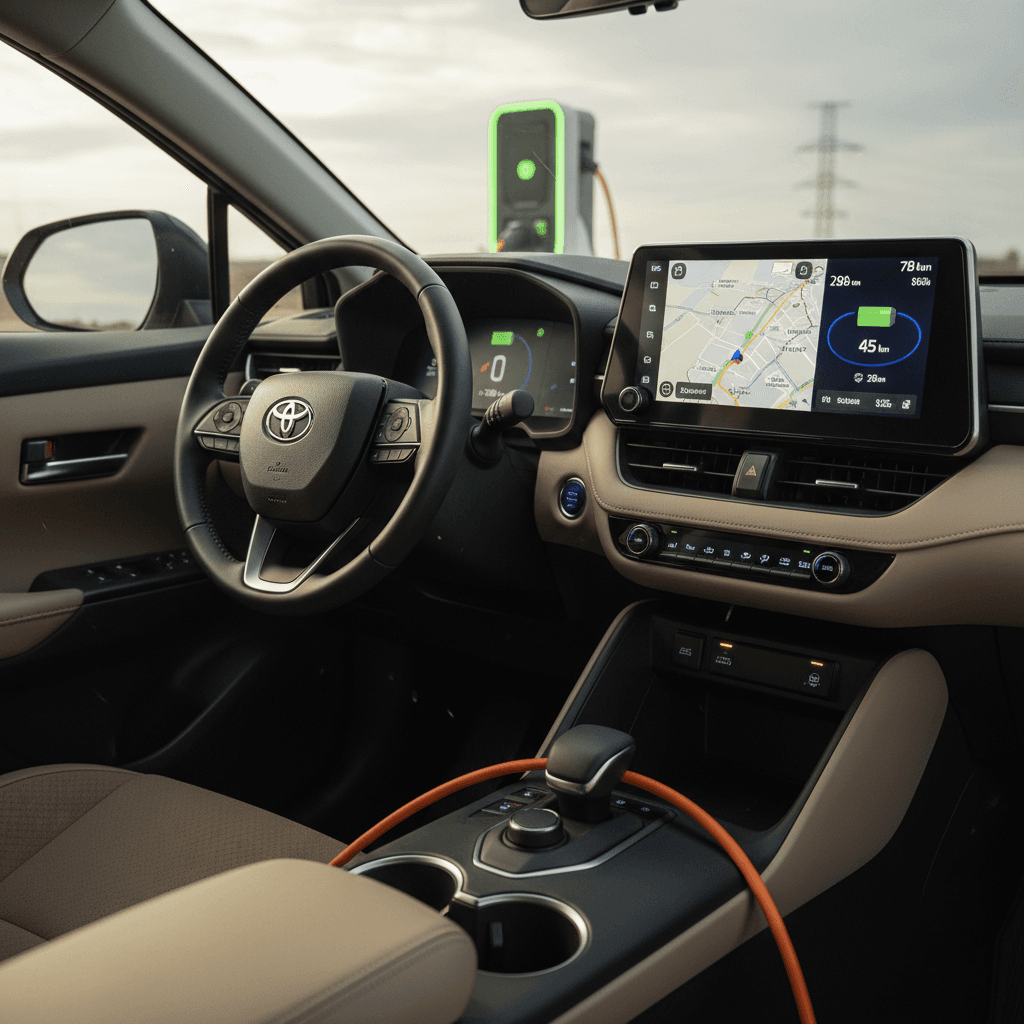
Inside, the 2024 bZ4X feels like a modern Toyota with a slightly more futuristic twist. Materials aren’t luxury‑grade, but everything is solid, with good assembly quality and practical storage. A low dash and large glass area give an airy feel, and there’s generous legroom in both rows for a compact SUV.
2024 bZ4X interior highlights
Practical, airy and tech‑forward, if not lavish
Infotainment
A standard 12.3‑inch touchscreen runs Toyota’s latest Audio Multimedia system with over‑the‑air updates. Wireless Apple CarPlay and Android Auto are supported, and the “Hey Toyota” voice assistant works well for navigation and climate tweaks.
Space & cargo
Two comfortable rows and around 27–28 cubic feet of cargo behind the rear seats put the bZ4X close to a RAV4 in everyday usability. There’s no front trunk, but the rear load floor is flat and easy to use.
Safety tech
Toyota Safety Sense is standard, including adaptive cruise control, lane‑keeping assist, automatic emergency braking and more. The Limited adds features like advanced parking assist on 2024 models, easing tight‑space maneuvers.
Tech learning curve
Ownership costs, incentives and reliability expectations
By 2024, the bZ4X was no longer the newest kid on the EV block, and pricing reflected that. New‑car MSRPs sat in the low‑to‑mid $40,000s depending on trim and drivetrain, but Toyota has since cut prices for later model years to stimulate demand. The upshot: used 2023–2024 bZ4X values tend to be more approachable than some rivals, which is great news if you’re shopping second‑hand.
- Energy costs: With average efficiency, your electricity bill will be similar to other compact EV SUVs. Nighttime home charging on a Level 2 unit is the cheapest way to run a bZ4X.
- Maintenance: Like other EVs, there’s no engine oil, spark plugs or exhaust. You’re mainly looking at tires, brake fluid, cabin filters and occasional coolant services on the battery thermal system.
- Incentives: New 2024 bZ4X models may qualify for state or utility rebates, but federal credit eligibility has shifted and may depend on whether the vehicle is leased. Used buyers in the U.S. can potentially tap the federal used EV tax credit, subject to income and price caps, worth discussing with your tax professional.
- Reliability: Toyota’s long‑term engineering conservatism is a plus; aside from the early 2022 wheel‑hub recall, there have been no systemic horror stories with the bZ4X’s battery or motors. As with any EV, verifying battery health is key when buying used.
How Recharged helps on total cost of ownership
Ready to find your next EV?
Browse Vehicles2024 Toyota bZ4X vs key competitors
If you’re cross‑shopping the 2024 bZ4X, you’re almost certainly also looking at the Tesla Model Y, Hyundai Ioniq 5, Kia EV6, Volkswagen ID.4 or Chevrolet Equinox EV (depending on timing). The bZ4X’s edge is familiar Toyota ergonomics and the promise of conservative engineering; its downside is that it feels like a half‑step behind the segment benchmarks on range, charging and performance.
How the 2024 Toyota bZ4X stacks up
High‑level comparison versus popular compact electric SUVs (approximate values for context).
| Model (2024 MY) | Max EPA range (mi) | Peak DC charge (kW) | Power (hp) | Notable strength |
|---|---|---|---|---|
| Toyota bZ4X | 252 | 150 | 214 | Toyota familiarity, comfort, conservative engineering |
| Tesla Model Y Long Range | 310 | 250+ | ≈384 | Range, efficiency, Supercharger access |
| Hyundai Ioniq 5 | 303 | 235 | 320 | Ultra‑fast charging, spacious cabin |
| Kia EV6 | 310 | 240 | 320+ | Sporty dynamics, fast charging |
| VW ID.4 | 291 | 175 | 201–335 | Solid all‑rounder, often aggressive pricing |
Exact specs vary by trim; think of this as a directional comparison rather than a spec sheet.
Mind the charging gap
Should you buy a 2024 Toyota bZ4X used?
From a used‑EV buyer’s perspective, the 2024 bZ4X is more interesting than it was as a new‑car proposition. Newer rivals and Toyota’s own updates for the 2026 “bZ” have pushed depreciation, so you can often find a 2024 bZ4X at a meaningful discount relative to its original MSRP. That can turn its middle‑of‑the‑pack specs into a fairly strong value play, as long as the battery is healthy and the price reflects its limitations.
Good candidate for you if…
- You want a quiet, comfortable commuter that feels like a Toyota first and an EV second.
- You have home or workplace Level 2 charging and mostly drive under ~100 miles per day.
- You care more about reliability, ease of use and dealer network support than having class‑leading range or speed.
- You find a used 2024 bZ4X priced below comparable Ioniq 5, EV6 or Model Y examples in your area.
You may want to look elsewhere if…
- You plan frequent long‑distance road trips and want the fastest possible DC charging.
- You live in an area with sparse CCS fast‑charging and rely heavily on road‑trip infrastructure.
- You want a sporty driving experience with lots of power.
- You can stretch budget for a newer EV with NACS access and better efficiency, or a later‑model bZ with Toyota’s updates.
Use data, not guesswork, on a used bZ4X
Used bZ4X inspection checklist
What to check before you buy a used 2024 bZ4X
1. Verified battery health
Ask for a recent battery health report or have one performed. You want objective data on remaining capacity, not just the range number on the dash after a charge. Platforms like Recharged include this in the Recharged Score by default.
2. DC fast‑charging history
Frequent high‑power fast‑charging isn’t automatically bad, but extremely heavy use can contribute to long‑term degradation. If possible, review the car’s DC charging history or talk to the prior owner about how the car was used.
3. Software and recall status
Confirm all recalls, service campaigns and over‑the‑air updates have been performed, especially those related to the early wheel‑hub issue and any charging/thermal‑management updates. A Toyota dealer can pull this from the VIN.
4. Tire wear and alignment
EVs are heavy, and uneven tire wear can hint at alignment issues or hard driving. Inspect all four tires for even tread depth and budget for a fresh set if they’re close to worn.
5. Charging port and cables
Inspect the CCS charging port for physical damage, bent pins or corrosion. Make sure the OEM dual‑voltage portable charging cable is included and functional, it’s expensive to replace.
6. Interior tech and driver‑assist
Test the 12.3‑inch touchscreen, cameras and all driver‑assist features (adaptive cruise, lane centering, parking assist). Malfunctioning sensors can be costly to diagnose, so you want everything working smoothly up front.
Don’t skip a road test at highway speeds
2024 Toyota bZ4X FAQ
Frequently asked questions about the 2024 Toyota bZ4X
Bottom line: Who the 2024 bZ4X makes sense for
The 2024 Toyota bZ4X isn’t the flashiest EV SUV, and it doesn’t top the charts for range, charging or performance. But not every buyer needs that. If you want a comfortable, quiet, Toyota‑feeling crossover that happens to be electric, and you can live within its range and charging envelope, the bZ4X can be a perfectly rational choice, especially on the used market where its pricing is often more compelling.
The key is knowing exactly what you’re getting. Understand that fast‑charging is merely adequate, not cutting‑edge. Be realistic about range in your climate and driving pattern. And if you’re buying used, insist on objective battery‑health data rather than taking seller reassurances at face value. Platforms like Recharged exist precisely to make that transparent: with a Recharged Score Report, expert EV guidance and nationwide delivery, you can compare the 2024 bZ4X against other used EVs and decide which one actually fits your life, not just the spec sheet.