The 2024 BMW i7 is a rolling tech lounge: quiet, brutally quick, and packed with gadgets. But if you’re searching for “2024 BMW i7 problems”, you’ve already guessed there’s more to the story than soft leather and ambient light shows. This guide walks you through the real-world issues, recalls, and reliability patterns we’re seeing so you can decide, eyes wide open, whether a new or used i7 belongs in your driveway.
Quick takeaway
2024 BMW i7 problems at a glance
2024 BMW i7 problem snapshot
Because the i7 is still relatively new, there isn’t decades of reliability data. What we do have are formal recalls, early owner reports from forums and surveys, and the broader track record of BMW’s current 7 Series platform. Broadly, 2024 BMW i7 problems cluster into four buckets:
- Safety recalls: brakes, steering, and driver-assistance sensors on certain 2023–2024 builds.
- Electrical and battery-related recalls that can cause loss of drive power in rare cases.
- Software and tech gremlins: infotainment lag, connectivity issues, and tricky driver-assistance behavior.
- Build-quality nitpicks: wind noise, minor interior rattles, and power door quirks on some cars.
Don’t panic, just verify
Major recalls affecting the 2024 BMW i7
Before you worry about mysterious one-off complaints, start with the known, documented issues. Several cross-model BMW recalls hit the 2023–2024 7 Series and i7, and they’re directly relevant if you’re shopping or already own a 2024 i7.
Key recalls that can affect the 2024 BMW i7
Always run the VIN on the NHTSA site or with a BMW dealer to confirm which recalls apply and whether the fix has been performed.
| Issue | Model years affected | Symptom/Risk | Typical fix |
|---|---|---|---|
| Brake system / Integrated brake module | 2023–2024 | Possible loss of power brake assist and ABS/DSC malfunction, leading to longer stopping distances or reduced stability. | Replace integrated brake control module with updated part. |
| Steering wheel hands-on detection wiring | 2023–2024 | Hands-on detection for semi-automated driving may not work correctly; emergency stop assistant might not engage. | Inspect and correct the steering wheel ground connection. |
| Steering spindle double universal joint | Select 2024–2025 7 Series/i7 builds | Spindle may break, causing a sudden increase in steering effort. | Replace the steering spindle double universal joint. |
| Drive-motor software / high-voltage system shutdown | 2023–2024 i7 plus other BMW EVs | Software glitch can shut down the high-voltage system and cause sudden loss of drive power. | Update electric drive motor software (over-the-air or at dealer). |
| High-voltage battery module assembly | Select 2023–2024 i7 units | Improperly assembled modules can stress the frame, potentially causing power loss or increasing fire risk in rare cases. | Replace specific high-voltage battery cell modules. |
This isn’t an exhaustive list of every campaign, but it covers the big safety and electrical issues most 2024 i7 shoppers should know about.
Treat power loss seriously
The good news: when you buy through a BMW dealer or a quality used-EV marketplace, these campaigns are usually free and already completed. The bad news is that on private-party cars, owners sometimes never schedule the work, so you’ll need to double-check.
Software and tech glitches owners report
The i7 is a luxury spaceship, and like most spaceships, its weak spot is software. Owners on forums and in early reviews for 2023–2025 i7s report a similar pattern of tech-related problems that carry over into the 2024 model:
Common tech complaints in the 2024 BMW i7
Most are annoying more than dangerous, but they matter in a six-figure EV.
Infotainment lag & glitches
- Occasional slow responses from the main touchscreen and iDrive controller.
- System freezes and spontaneous reboots, usually fixed by a software update or hard reset.
- Spotify and other built-in apps cutting out or desyncing until the system restarts.
Connectivity problems
- eSIM and cellular connection issues, especially with certain carriers.
- Intermittent dropouts in BMW ConnectedDrive services or streaming video on the Theater Screen.
- CarPlay/Android Auto hiccups, especially after OTA updates.
Comfort & convenience quirks
- Automatic/power doors not opening or closing smoothly on some early builds.
- Gesture or touch controls responding inconsistently.
- Occasional error messages from driver-assistance systems that clear after a restart.
Test-drive the tech, not just the torque
BMW has steadily rolled out over-the-air (OTA) updates that improve stability and fix specific bugs, so later-build 2024 cars and those kept up to date often behave better. Still, if you’re not a patient, tech-comfortable owner, the i7’s complexity can feel like a part-time job.
Driveability, brakes, and steering concerns
Unlike some early EVs, the 2024 i7 doesn’t have a widespread mechanical failure pattern in its motors or suspension. The concerns here are more software and component related, and several are already wrapped into recalls.
Brake system issues
- The integrated brake module used across multiple BMW models can malfunction, leading to loss of power assist and misbehavior from ABS and stability control.
- That doesn’t mean “no brakes,” but it can significantly increase stopping distances and make the car feel unpredictable if the system fails.
- BMW’s recall remedy is to replace the entire module with an updated design, free of charge.
Steering & hands-on detection
- On some 2023–2024 7 Series and i7s, the steering-wheel ground connection wasn’t attached correctly, which can disable the hands-on detection used by driver-assistance systems.
- Separate campaigns cover a steering spindle joint that may fail and sharply increase steering effort.
- On a test drive, pay attention to any steering warnings, uneven effort, or driver-assist faults, and walk away from a car that feels off until it’s been inspected.
What you should feel behind the wheel
There have also been isolated forum stories of unusual acceleration behavior or driver-assistance misjudging gaps. These are rare and hard to verify, but they reinforce the importance of keeping software current and treating warnings or odd behavior as a reason to visit the dealer, not something to shrug off.
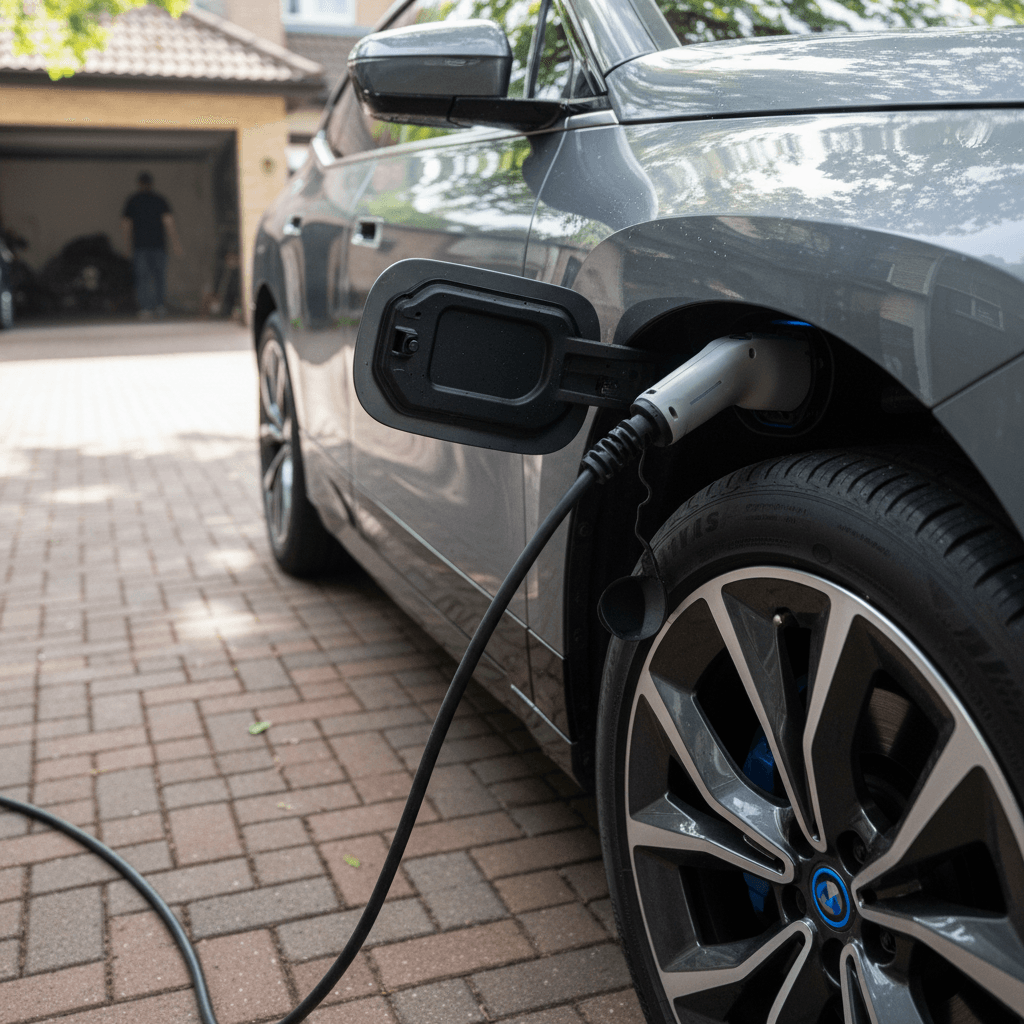
Battery and charging issues in the i7
BMW’s fifth-generation EV platform has, so far, avoided the headline-grabbing battery failures we’ve seen from some early EVs. That said, the i7 isn’t immune to high-voltage quirks and recalls:
- A recall for improperly assembled high-voltage battery modules in a small number of i7s, where stress on the module frame can lead to power loss or, in worst cases, increase fire risk.
- Drive-motor software that can shut off the high-voltage system and cause sudden loss of propulsion until restarted or repaired.
- Owner reports of occasional DC fast-charging sessions stopping early or failing to start on certain public chargers, often fixed by software updates or using a different station.
Battery health vs. battery failure
When you’re test-driving or owning a 2024 i7, watch for warning lights, sudden drops in indicated range, repeated charging failures, or loud cooling fans that stay on for long periods. These aren’t always signs of disaster, but they’re your cue to get a professional scan of the high-voltage system and charging history.
Build quality, noise, and fit-and-finish
On the outside, the i7 looks and feels every bit the flagship. Inside, most owners rave about the materials and the way it shrugs off long highway stints. But even on a six-figure BMW, little things can chip away at the magic:
Everyday quality annoyances reported by i7 owners
These won’t strand you, but they will bug you in a quiet, expensive cabin.
Wind & road noise
- Some owners report wind noise from the side mirrors at interstate speeds.
- Occasional rustling from the rear doors or C-pillar on certain road surfaces.
- Check this on your test drive by cruising at 65–75 mph on a calm day.
Interior squeaks and rattles
- Minor creaks from the rear parcel shelf or seatbacks over sharp bumps.
- Rattles around the large Theater Screen hardware in models equipped with it.
- Often fixable under warranty, but worth noting before you buy used.
What a good i7 should feel like
Should 2024 BMW i7 problems stop you from buying one?
If you want an ultra-luxury EV that drives like a traditional 7 Series and doubles as a screening room, the i7 is squarely in your strike zone. The 2024 BMW i7 problems we’re seeing don’t mark it as a lemon across the board, but they do raise the bar for how carefully you should shop.
Why the i7 is still compelling
- Exceptionally quiet, comfortable, and fast; on the road it feels every bit the flagship it’s meant to be.
- Strong fast-charging capability and competitive real-world range for its class.
- BMW continues to iron out software bugs with OTA updates, so a well-maintained 2024 can be better today than it was new.
Why you should be picky
- Multiple safety-and-braking-related recalls mean you must verify VIN history.
- Heavy reliance on complex software: great when it works, frustrating when it doesn’t.
- Out-of-warranty repairs on a flagship BMW, especially brakes, steering modules, and high-voltage components, won’t be cheap.
If you’re buying new, insist the dealer confirms all current campaigns are completed and that the car has the latest software. If you’re buying used, especially from a private seller, build in time and budget for a pre-purchase inspection that includes battery health, brake and steering modules, and a full diagnostic scan.
Used 2024 BMW i7 checklist: what to inspect
A used 2024 i7 can be a fantastic way to let the first owner eat the initial depreciation while you enjoy the tech. But this is not a car to buy on a handshake and a quick spin. Use this checklist to separate the keepers from the headaches.
Pre-purchase checklist for a used 2024 BMW i7
1. Run the VIN for recalls and service history
Use the NHTSA site or call a BMW dealer with the VIN to confirm <strong>all brake, steering, battery, and software recalls</strong> have been completed. Ask for a printout of warranty and service history if possible.
2. Get a battery health and charging report
Request documentation on state of health (SOH), recent DC fast-charging behavior, and any high-voltage fault codes. On Recharged vehicles, the <strong>Recharged Score Report</strong> includes an independent battery health assessment so you’re not guessing.
3. Inspect brakes and steering feel
On your test drive, check for smooth, progressive braking and consistent steering effort. Any pulling, pulsing, or warning lights deserves professional attention, preferably before you sign anything.
4. Stress-test the tech
Pair your phone, use CarPlay/Android Auto, stream music, run navigation, and, if equipped, deploy the Theater Screen. Confirm that both front and rear displays respond quickly and that apps don’t crash or buffer constantly.
5. Listen for wind noise and rattles
At 65–75 mph on a calm day, listen around the mirrors, doors, and rear shelf. In a car this quiet, <strong>small noises tell big stories</strong> about build quality and past repairs.
6. Check charging behavior in real life
If possible, plug into both a Level 2 charger and a DC fast charger. Watch for inconsistent charging rates, unexpected shutdowns, or error messages. These could point to software issues, or something more expensive.
Put everything in writing
How Recharged helps with used luxury EVs like the i7
Flagship EVs like the 2024 BMW i7 are brilliant when they’re right and brutal when something big goes wrong. That’s exactly the gap Recharged is built to close.
Why shop a used i7 through Recharged?
Transparency matters more as EVs get more complex.
Verified battery health
Recall & history visibility
Financing, trade-in & delivery
Ready to find your next EV?
Browse VehiclesThe 2024 BMW i7 isn’t perfect, no six-figure luxury EV is, but most of its problems are known, documented, and fixable if you choose carefully. Go in with a clear picture of the recalls, insist on proof that the big ones are done, and lean on solid battery and brake diagnostics. Do that, and you can enjoy the i7 for what it does best: making every mile feel a little more like first class.