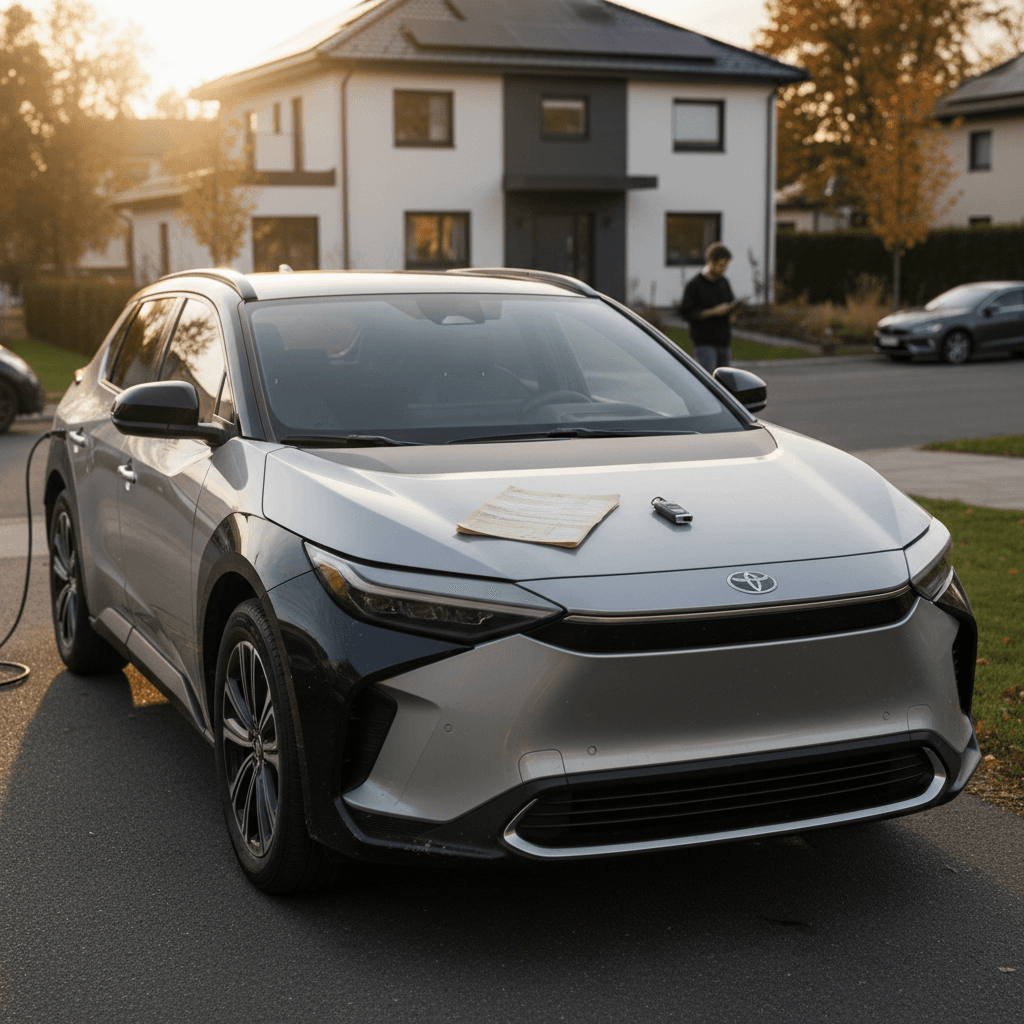
If you’re shopping for a used electric SUV, a 2023 Toyota bZ4X will almost certainly pop up with surprisingly low prices. As Toyota’s first modern dedicated EV, it has the right badge, solid safety tech, and a comfortable cabin, but also some well‑documented trade‑offs in range, charging speed, and depreciation. This 2023 Toyota bZ4X review for used buyers will walk you through what’s genuinely good, what’s frustrating, and how to decide if those compromises make sense for you.
Context: Toyota’s first mass‑market EV
Why the 2023 bZ4X is interesting as a used EV
Where a used 2023 bZ4X makes sense
Three strengths that start to shine once the big new‑car discounts are baked in
Toyota brand & safety
The bZ4X carries Toyota’s safety reputation and a full suite of driver‑assist features. For risk‑averse buyers, that brand trust matters more than badge‑engineered speed records.
Heavy early depreciation
Early bZ4X values dropped hard, which actually makes the used pricing compelling today versus rivals that held their value.
Great for home‑charging owners
If you mostly charge at home and treat the bZ4X as a commuter or family runabout, its quiet ride and simple operation can be a very easy ownership experience.
In other words, the 2023 bZ4X is not a halo EV for road‑trip warriors. It’s a solid, conservative electric Corolla‑adjacent crossover that’s finally getting priced like one on the used market.
Quick take: should you buy a used 2023 bZ4X?
2023 Toyota bZ4X used‑buyer snapshot
Who a used 2023 bZ4X fits best
Who should probably skip it
Used pricing and depreciation for the 2023 bZ4X
The 2023 bZ4X launched into a weird moment: high MSRPs, aggressive lease deals, then a wave of heavy discounts when Toyota realized the market preferred faster‑charging rivals. That cocktail has produced unusually steep depreciation for a Toyota.
Typical 2023 bZ4X used price ranges (United States)
Approximate transaction ranges as of early 2026; exact values vary with mileage, trim, region, and condition.
| Trim / Drivetrain | Typical miles | Rough retail range | Notes |
|---|---|---|---|
| XLE FWD | 20k–40k | $20,000–$25,000 | Often the value sweet spot if you don’t need AWD |
| Limited FWD | 20k–40k | $23,000–$27,000 | More features, same battery and charging limits |
| XLE AWD | 20k–40k | $21,000–$26,000 | Extra traction and power, slightly less range |
| Limited AWD | 20k–40k | $24,000–$28,000 | Top trim; many were leased and come off‑lease now |
Expect wide variation based on whether the car started life as a heavily discounted lease or as a full‑sticker early purchase.
Why depreciation can be your friend here
Compared to Toyota hybrids
On price alone, a used 2023 bZ4X now sits close to a similarly aged RAV4 Hybrid or Venza. Those hybrids will be easier to road‑trip and refuel, but they won’t give you the quiet EV drive or near‑zero running costs if you can charge at home.
Compared to used EV rivals
Versus similarly priced used Ioniq 5, EV6, or Model Y, the bZ4X will feel slower to charge and less efficient on the highway, but it may appeal if you’re wary of newer brands or just want a straightforward Toyota experience with an EV drivetrain.
Range, efficiency, and battery behavior
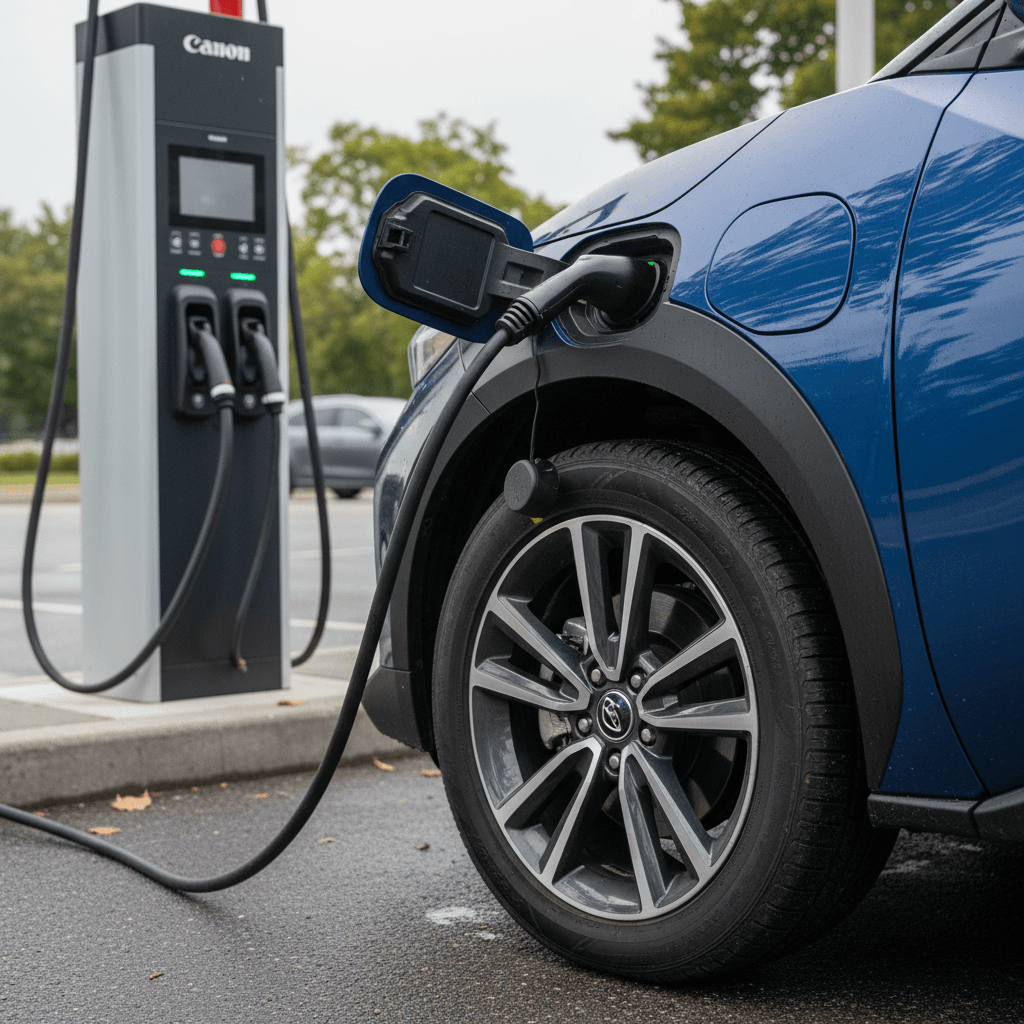
On paper, the 2023 bZ4X’s range looks competitive with other compact EV crossovers: roughly the high‑200s in front‑wheel‑drive form and the low‑200s with all‑wheel drive. In the real world, it’s more nuanced, especially in cold climates.
- FWD range: Expect roughly 220–250 miles in mild weather if you’re driving reasonably, less at highway speeds.
- AWD range: Real‑world reports cluster closer to 190–220 miles depending on temperature, terrain, and speed.
- Cold‑weather hit: Like most EVs, the bZ4X can lose a large chunk of range in freezing temps, owners routinely report winter highway ranges that start with a “1,” not a “2.”
- Hidden battery buffer: Toyota keeps part of the battery’s capacity in reserve, which softens degradation over time but contributes to the sense that range never quite lives up to the badge on the back.
Range reality check
The upside to Toyota’s conservative battery management is that, so far, there’s been no broad pattern of catastrophic pack failures. Individual owners have reported concerning winter range drops, but many of those cases are tied to temperature, driving style, and the bZ4X’s tendency to recalibrate its range estimates based on how you drive.
Charging performance: the big compromise
If there’s one thing you need to go into eyes‑wide‑open on a used 2023 bZ4X, it’s DC fast‑charging performance. This is where Toyota’s conservative approach and early software tuning really show.
2023 bZ4X charging: strengths and weaknesses
Not a deal‑breaker for everyone, but critical to understand
What it gets right
- AC charging: A standard 240‑volt Level 2 home charger can comfortably refill the pack overnight.
- Battery protection: Conservative charging curves and guidance (like limiting DC sessions per day) are aimed at long‑term battery health.
- Simple experience: Plug in, lock, walk away. No complicated settings required.
Where it struggles
- Slow real‑world DC speeds: Owners of 2023 AWD models often see 30–60 kW on public fast chargers rather than triple‑digit peaks.
- Cold‑weather throttling: In low temperatures, charge rates can fall further unless the pack is well‑warmed.
- Limited DC guidance: Toyota suggests minimizing back‑to‑back DC sessions to protect the battery, which is at odds with heavy road‑tripping.
Important if you road‑trip
For a used‑car shopper, the key is aligning the car with the use case. As a home‑charged commuter that occasionally tops up on DC during weekend trips, the 2023 bZ4X is livable. As a primary road‑trip machine, it’s miscast.
Reliability, recalls, and known issues
The bZ4X launched with a few high‑profile headaches, most famously the wheel‑hub recall that briefly halted sales when Toyota discovered a risk of wheels loosening. That issue has long since been addressed in the field, but you still want to confirm the fix was done on any used 2023 you’re considering.
- Wheel‑hub bolt recall: Early 2023 builds were subject to a stop‑sale and recall to replace hub components. Any car still on the road today should have this completed, but always verify via Toyota’s recall lookup and service history.
- HVAC/defrost and camera software recalls: Toyota has issued software updates related to defrost performance and camera behavior. Again, service records matter.
- 12‑volt battery quirks: Some owners report random warnings or no‑start conditions tied to the 12‑volt system. Many of these are fixed under warranty with a battery replacement or software update.
- Charging complaints vs. defects: A lot of online complaints about “bad charging” are really complaints about conservative tuning, not outright hardware failures. That’s frustrating, but different from a defective pack.
How Recharged helps on the reliability front
The bZ4X isn’t a disaster; it’s a very Toyota EV. Conservative, cautious, sometimes frustrating, but likely to be solid basic transportation for a long time, especially if you respect its limits.
Interior, comfort, and tech in daily use
Step inside a 2023 bZ4X and you can tell Toyota was trying to split the difference between a familiar RAV4 and a more futuristic EV cabin. The result is comfortable and well‑equipped, if a bit quirky ergonomically.
Daily‑use highlights
Where the 2023 bZ4X feels more like a nice Toyota than an experiment
Comfortable ride
The bZ4X rides softly and quietly, especially on the smaller wheels found on XLE trims. It’s tuned more for comfort than corner carving, which fits its mission.
Straightforward tech
A 12.3‑inch touchscreen, wireless Apple CarPlay/Android Auto, and Toyota’s latest interface make the car feel modern without being overwhelming.
Strong safety suite
Toyota Safety Sense brings adaptive cruise control, lane‑keeping assist, blind‑spot monitoring, and more, features that matter a lot in used‑buying decisions.
Ergonomics caveat: instrument cluster & wheel
How the 2023 bZ4X compares to other used EV SUVs
Used 2023 bZ4X vs common used‑EV rivals
High‑level comparison for shoppers cross‑shopping mainstream used EV crossovers.
| Model | Real‑world highway range | Typical DC fast‑charge experience | Interior/comfort vibe | Used‑price positioning |
|---|---|---|---|---|
| Toyota bZ4X (FWD) | ~220–240 mi | Typically 50–90 kW with conservative taper | Soft, quiet, conservative | Often cheaper than rivals at similar mileage |
| Toyota bZ4X (AWD) | ~190–210 mi | Often 30–70 kW, especially in cold weather | Same as FWD | Slightly more than FWD but still a value play |
| Hyundai Ioniq 5 | ~230–260 mi | Can sustain 150+ kW on 800V architecture | Futuristic, airy, very roomy | Usually more expensive but worth it for road‑trippers |
| Kia EV6 | ~230–260 mi | Similar to Ioniq 5; excellent charging | Sportier, more driver‑focused | Also commands higher used prices |
| Tesla Model Y | ~250–280 mi | Strong charging plus access to Supercharger network | Minimalist but tech‑heavy | Typically the priciest, but best for long‑distance use |
Exact numbers vary by trim and conditions; this table is meant as a directional guide, not lab‑verified data.
Think in use cases, not just specs
What to check before buying a used 2023 bZ4X
Used 2023 bZ4X pre‑purchase checklist
1. Verify recall completion
Use the VIN to check Toyota’s recall site and confirm the wheel‑hub bolt recall and any HVAC/camera software updates have been completed. Ask for paperwork.
2. Review DC fast‑charging history
If possible, pull service or telematics reports. A car that lived on DC fast chargers every single day isn’t an automatic red flag, but you’ll want to see how the battery has held up.
3. Get a battery‑health report
Request an independent battery‑health assessment. With Recharged, you get a <strong>Recharged Score Report</strong> that translates battery data into an easy‑to‑understand grade and projected range.
4. Test fast charging yourself (if you can)
If there’s a convenient DC fast charger nearby, do a real‑world session from a low state of charge. You’ll quickly discover whether the speeds are acceptable for your expectations.
5. Inspect tires and brakes
Like many EVs, the bZ4X is heavy. Check for uneven tire wear, verify remaining tread depth, and look for any brake noise or vibration during test drives.
6. Live with the ergonomics
Spend a solid 15–20 minutes in the driver’s seat adjusting the wheel and seat. Make sure the gauge cluster is legible and the controls feel natural.
7. Confirm charging‑equipment compatibility
Make sure the included portable charger and any wallbox you plan to use are compatible with your home’s electrical setup. Factor installation costs into your total budget.
8. Compare against other used EVs
Before signing, cross‑shop a similarly priced Ioniq 5, EV6, or Model Y, even if only online. That context makes it easier to decide if the bZ4X’s trade‑offs are acceptable for the discount.
How Recharged simplifies the process
Ready to find your next EV?
Browse VehiclesFAQ: Used 2023 Toyota bZ4X
Frequently asked questions about buying a used 2023 bZ4X
Bottom line: is a used 2023 bZ4X right for you?
A used 2023 Toyota bZ4X is a study in trade‑offs. You’re getting a comfortable, well‑equipped electric SUV from a brand with an unmatched hybrid reputation, at a price that finally reflects its first‑generation compromises. In return, you accept modest real‑world range, slow and conservative DC fast charging, and the reality that Toyota’s first modern EV is less adventurous than its badge might suggest.
If your life is built around home charging, predictable daily miles, and you want an EV that behaves more like a quiet, high‑tech Toyota than a rolling science experiment, a used 2023 bZ4X can be a smart, low‑drama buy, especially when backed by transparent battery data and expert guidance. If you crave long‑distance freedom and the fastest possible charging, you’re better off stretching for one of the segment’s road‑trip specialists instead.
Either way, going in with clear expectations is half the battle. Use tools like the Recharged Score Report, shop across multiple used EVs, and be honest about how you actually drive. Do that, and the 2023 bZ4X can shift from punchline headline to quietly competent electric workhorse in your driveway.