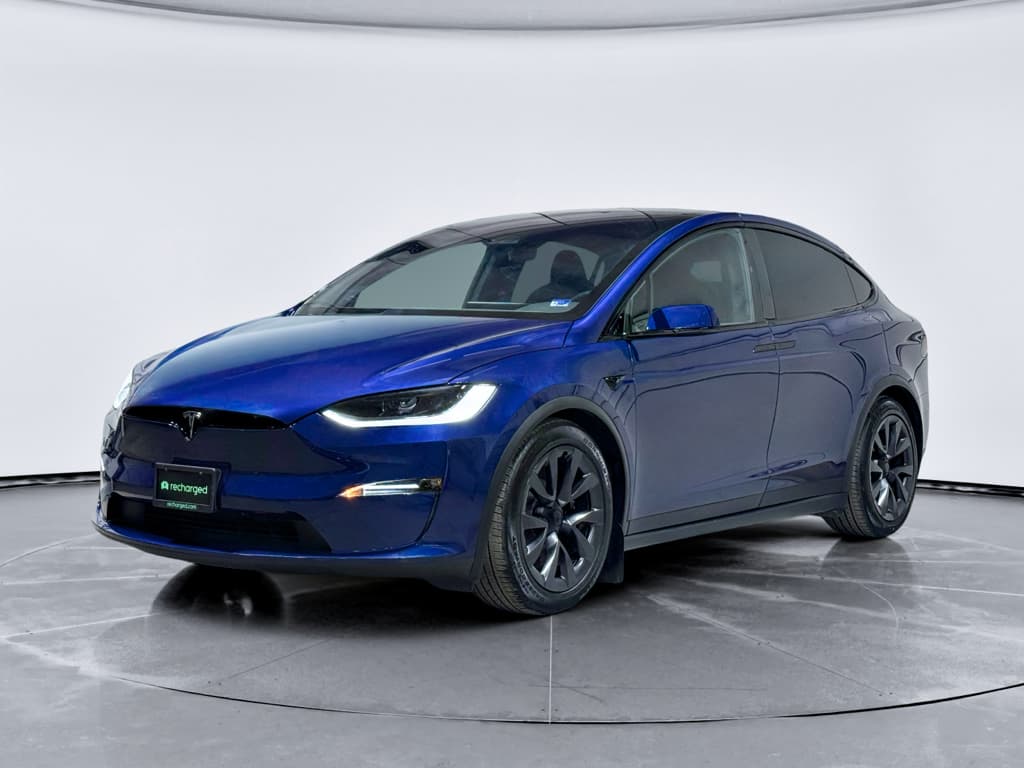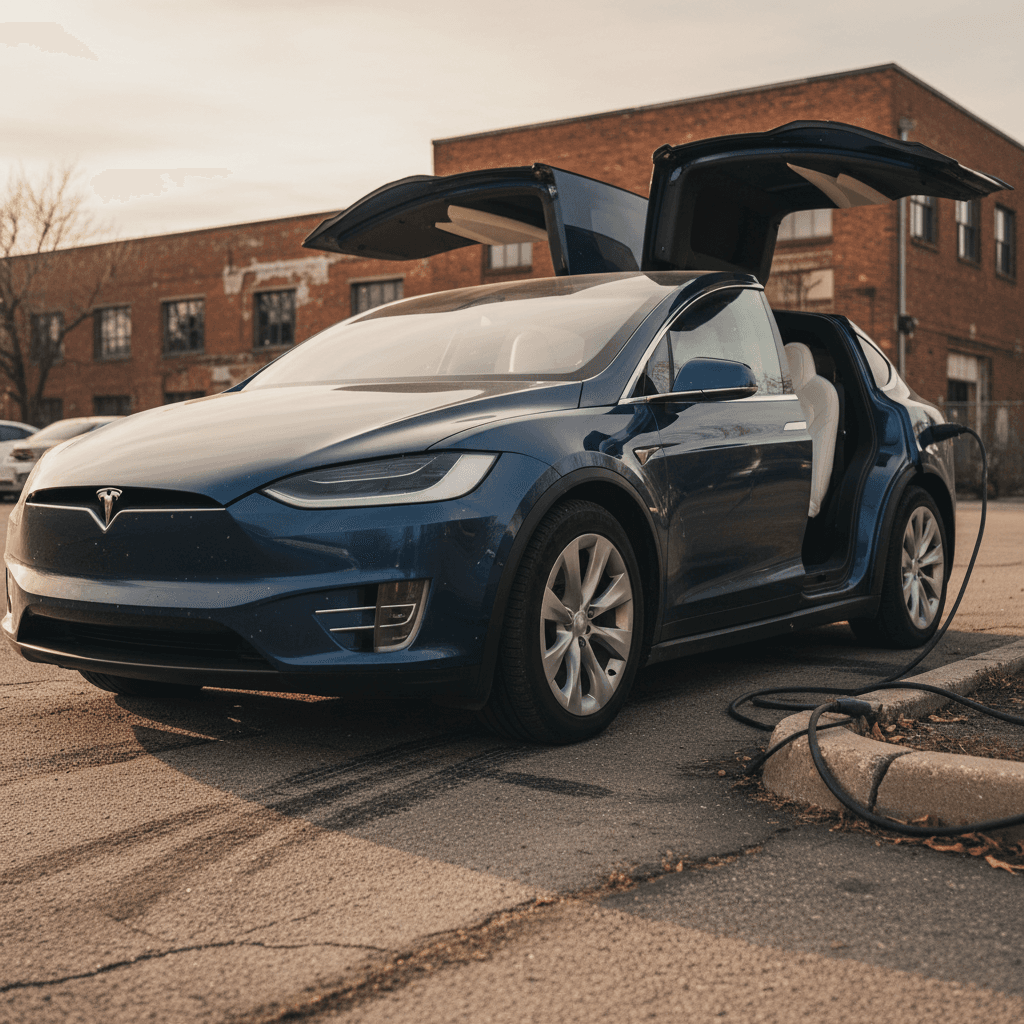
The 2020 Tesla Model X sits at an interesting crossroads. It’s one of the last pre-refresh Model Xs, with the dramatic falcon‑wing rear doors, huge windshield and unmistakable presence that made Tesla’s first SUV famous. On the used market today, though, a 2020 Tesla Model X review has to balance that wow factor against real‑world range, reliability questions and some very aggressive depreciation.
At a glance
2020 Tesla Model X overview
For 2020, Tesla offered the Model X as a large, all‑wheel‑drive electric SUV with seating for up to seven, dual‑motor powertrains and a 100 kWh battery pack across the board. Unlike earlier years that mixed smaller packs, the 2020 lineup standardized the big battery and split into a more efficient Long Range / Long Range Plus and a high‑performance Performance model.
- Body style: 5‑door, three‑row electric SUV
- Drivetrain: Dual‑motor all‑wheel drive on all trims
- Battery: ~100 kWh lithium‑ion pack
- EPA range: roughly 258–351 miles depending on trim and wheels
- DC fast charging: Up to ~150 kW on V2 Superchargers, higher on some V3 sites
- Seating: 5, 6 or 7 seats depending on configuration
Model year vs. software
2020 Tesla Model X key numbers
2020 Model X trims, specs and range
The 2020 Tesla Model X lineup is simpler than earlier years but still confusing on the used market, because Tesla changed names and ratings mid‑year. Here’s the basic hierarchy you’ll see in listings and why it matters for your daily use.
2020 Tesla Model X trims and EPA range
Approximate EPA‑rated ranges when new; actual used range will be lower depending on battery health, wheels and driving conditions.
| Trim (2020) | Typical wheels | EPA range (mi) | Notable traits |
|---|---|---|---|
| Standard Range | 20" | 258 | Least expensive; still brisk, but less highway range. |
| Long Range | 20" | ~328 | Balanced performance and range, dual‑motor AWD. |
| Long Range Plus | 20" | 351 | Most efficient 2020 configuration; software and aero optimizations. |
| Performance (20") | 20" | 305 | Very quick with better range than 22" wheel version. |
| Performance (22") | 22" | 272 | Fastest & flashiest, but highest energy use. |
Smaller wheels and the Long Range Plus trim offer the best efficiency.
Watch the wheels
Driving experience: performance, comfort and noise
Even in Long Range form, the 2020 Model X accelerates like a sports sedan. Dual motors deliver instant torque, and passing power is available at any speed. The Performance versions take that to almost absurd levels, especially when equipped with Tesla’s Ludicrous‑style modes, though real‑world used buyers are usually better served by the Long Range and Long Range Plus trims.
Ride & handling
The air suspension does a decent job of smoothing out big hits, and you can raise it for steep driveways or snow. That said, the Model X is heavy, and on 22‑inch wheels it can feel busy over broken pavement. It’s more comfortable cruiser than canyon carver.
Noise & refinement
Electric drivetrains are naturally quiet, but wind noise around the huge windshield and mirrors can creep in at highway speeds. Later software and seal tweaks helped, yet if you’re cross‑shopping newer luxury EVs you may notice the difference on a long trip.
Towing capability
Interior, seating and practicality for families

If you’re shopping a 2020 Tesla Model X as a family hauler, the cabin may be its biggest selling point. The panoramic windshield floods the front row with light, and the falcon‑wing rear doors make loading kids or installing child seats dramatically easier than in a conventional SUV.
Seating layouts and practicality
Your experience will vary dramatically based on how the vehicle was optioned from new.
5‑seat layout
Simplest and lightest configuration. Huge cargo space with the rear seats folded, but no third row.
6‑seat layout
Two captain’s chairs in the second row and a two‑seat third row. Best for adult access to the back and a truly premium feel.
7‑seat layout
Traditional bench in the second row plus a folding third row. Maximum passenger capacity, but the third row is tight for adults.
Falcon‑wing doors and car seats
Cargo space is another strength. With the third row folded, the rear load area is wide and flat, and there’s a sizable under‑floor compartment plus a large front trunk. If you often travel with strollers, sports gear or road‑trip luggage, the 2020 Model X is far more capable than most electric crossovers from the same era.
Infotainment, Autopilot and safety tech
The 2020 Model X runs Tesla’s earlier‑generation infotainment and driver‑assist stack, which was already ahead of most of the industry at the time. You get a large center touchscreen, a separate instrument display in front of the driver, and over‑the‑air software updates that can add features or refine behavior long after the car left the factory.
- Big center touchscreen with built‑in navigation and media apps
- Over‑the‑air software updates (connectivity level depends on subscription)
- Standard Autopilot (traffic‑aware cruise + lane centering) on most 2020s
- Optional Enhanced Autopilot and/or Full Self‑Driving (FSD) on some cars
- Tesla app integration for preconditioning, charging control and remote lock/unlock
Don’t overpay for software
Charging, real‑world range and battery health
On paper, a 2020 Tesla Model X Long Range Plus delivers up to about 351 miles of EPA range, with other trims spanning roughly 258–328 miles. In practice, real‑world highway range today, several years and tens of thousands of miles later, will usually be lower. That’s a function of battery aging, wheel choice, temperature and how fast you drive.
Home and public charging
- Level 2 home charging: With the 11.5 kW onboard charger and a 240 V circuit, you’re looking at roughly 30–35 miles of range per hour.
- DC fast charging: On Tesla Superchargers, the car can add a substantial chunk of range in 20–30 minutes, but the fastest rates are brief peaks rather than something you see for the whole session.
- Connector: Native Tesla/NACS port, which increasingly works across networks via adapters as standards converge.
Real‑world range expectations
For a healthy‑battery 2020 Long Range or Long Range Plus model, many owners report roughly 70–80% of the original EPA figure when driving 70–80 mph on the highway. That puts real‑world highway legs more in the 220–260 mile range before you’re ready to recharge, and less in cold weather or strong headwinds.
Typical battery degradation
How to check battery health
Reliability, maintenance and running costs
Mechanically, the 2020 Model X has fewer wear items than a comparable gas SUV, no oil changes, spark plugs or traditional multi‑speed transmission. But it’s not maintenance‑free, and some of its unique features introduce their own failure points.
Running costs: where the 2020 Model X shines and stumbles
Think beyond fuel savings to the total cost of ownership.
Lower day‑to‑day costs
- Electricity is typically cheaper per mile than gasoline, especially if you can charge at home off‑peak.
- Brake wear is reduced thanks to strong regenerative braking.
- No engine oil, timing belt, exhaust or emission systems to service.
Potential pain points
- Complex falcon‑wing door mechanisms and seals can be costly out of warranty.
- Suspension components and air‑suspension compressors are common wear items on heavy EVs.
- Out‑of‑warranty repairs at Tesla service centers can be expensive and sometimes slow.
Battery and drive unit warranty
There have also been multiple recalls over the Model X’s life, ranging from power steering bolts to suspension components and trim fitment. Most 2020s on the market today will have had these addressed, but it’s worth checking the VIN for open recalls and ensuring recall work shows up in the service history.
Depreciation and 2020 Model X used pricing
If you’re considering a used 2020 Model X today, depreciation is both the best and worst part of the story. On the one hand, early buyers shoulder a huge upfront hit, which is why these SUVs are now reachable at a fraction of their original six‑figure MSRPs. On the other, it means you can’t assume they’ll hold value like a rare sports car.
Tesla Model X depreciation snapshot
Why the big drops?
When you’re comparing listings, think in terms of total cost of ownership, not just the sticker price. A cheaper 2020 Model X with an expiring battery warranty and 22‑inch wheels on worn tires can be more expensive over five years than a pricier, lower‑mileage example with warranty coverage, efficient wheels and documented service.
Who the 2020 Model X is (and isn’t) for
Great fit if you:
- Need a genuinely spacious EV with three rows and real cargo room.
- Have reliable home charging and do regular long highway trips.
- Value Tesla’s Supercharger network and integrated software experience.
- Prefer dramatic design and performance over traditional luxury trimmings.
Probably not for you if you:
- Live in an area with limited Tesla service coverage.
- Can’t install home charging and rely solely on public stations.
- Want the most refined cabin materials in the segment.
- Are extremely risk‑averse about out‑of‑warranty repairs or further depreciation.
Where Recharged fits in
Ready to find your next EV?
Browse VehiclesChecklist: buying a used 2020 Tesla Model X
Pre‑purchase checklist for a 2020 Model X
1. Confirm trim, wheels and software options
Check whether you’re looking at Standard Range, Long Range, Long Range Plus or Performance, and whether it’s on 20‑ or 22‑inch wheels. Note which driver‑assist and connectivity packages are active on the car, not just what the listing claims.
2. Review battery and drive unit warranty
Ask for the in‑service date and mileage to see how much of the 8‑year/150,000‑mile battery and drive unit warranty remains. High‑mileage 2020s can be at or near the limit.
3. Assess battery health and range
Look at the projected range at a high state of charge, and, ideally, get a battery health report like the Recharged Score, which uses data rather than guesswork to estimate remaining capacity.
4. Inspect falcon‑wing doors and seals
Open and close the falcon‑wing doors multiple times. Listen for grinding or binding, check for water leaks or wind noise evidence, and inspect the rubber seals for damage or misalignment.
5. Check suspension, tires and brakes
On a test drive, listen for clunks or squeaks over bumps and pay attention to how the air suspension raises and lowers. Uneven tire wear can point to alignment or suspension issues; tire replacement on 22‑inch wheels is not cheap.
6. Verify recall and service history
Ask for service records and check the VIN for open recalls. Well‑documented repairs and software updates are worth paying a bit more for, especially as these vehicles age.
7. Model your charging and trip patterns
Be honest about your daily miles, road‑trip habits and home charging situation. If you routinely drive 250+ mile days in bad weather with passengers and cargo, focus on the Long Range Plus or budget for more frequent fast‑charging stops.
8. Compare total cost of ownership
Run the numbers: purchase price, financing, electricity, insurance, expected maintenance and likely resale value. A slightly higher up‑front price for a clean, low‑mile 2020 can be the cheaper choice over 5–7 years.
2020 Tesla Model X FAQ
Frequently asked questions about the 2020 Model X
Bottom line: is a used 2020 Model X worth it?
A used 2020 Tesla Model X is still one of the few vehicles that can combine true three‑row versatility, genuinely quick performance and long‑distance electric road‑tripping in a single package. Its aggressive depreciation and polarizing design work in your favor if you’re the second owner, but only if you take battery health, remaining warranty and service access seriously.
If you want a conventional luxury experience with traditional buttons, plush leather and dealership networks on every corner, other options may suit you better. If you value the EV‑first experience, instant torque, seamless software, at‑home “refueling” and the convenience of the Supercharger network, the 2020 Model X can still make a compelling case for itself. The key is to treat it like the high‑tech asset it is: buy based on verified data, not just gloss and acceleration figures. That’s exactly what tools like the Recharged Score, transparent pricing and EV‑specialist guidance are designed to provide.