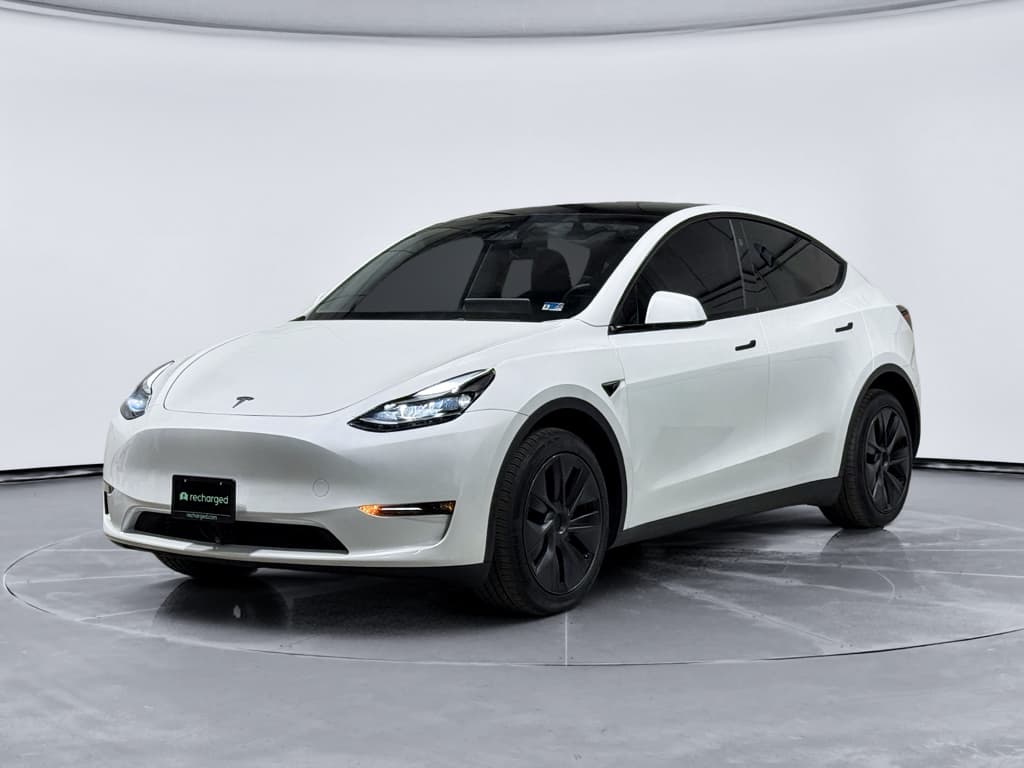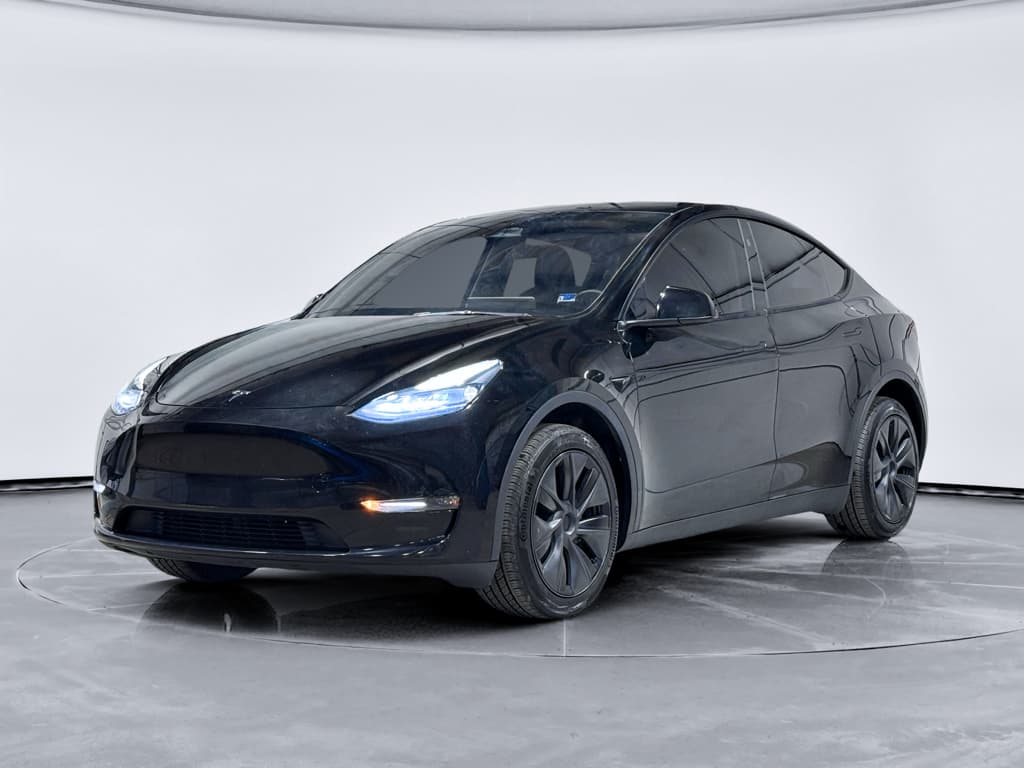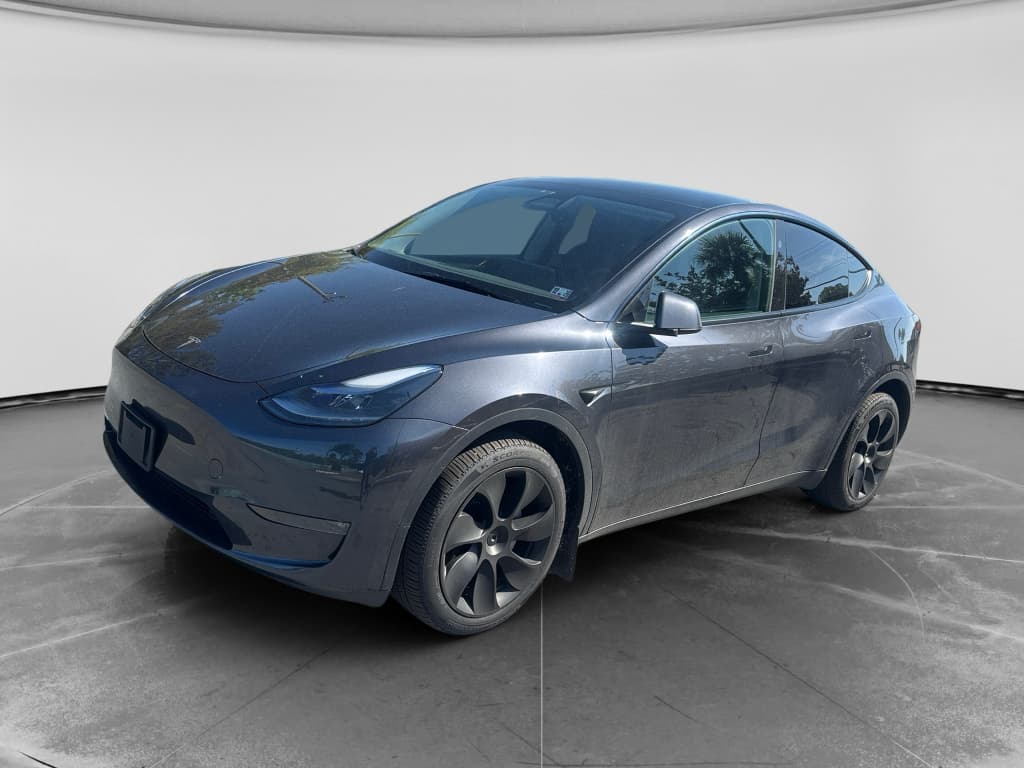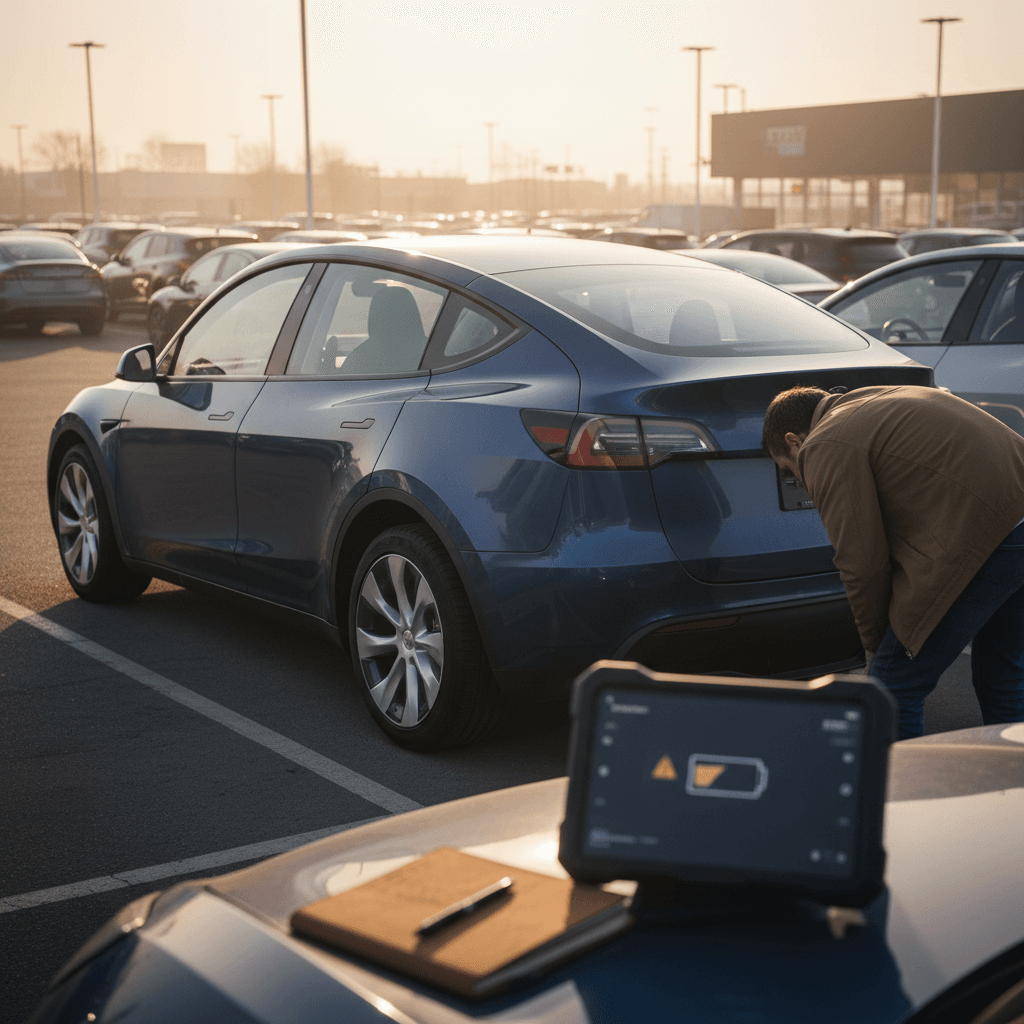
Search for “2023 Tesla Model Y problems” and you’ll find two completely different stories. On paper, the 2023 Y looks like a slam dunk, strong safety scores, excellent efficiency, and a huge owner fanbase. In the real world, owners also report steering failures, squeaks, panel quirks, and the occasional software gremlin. If you’re eyeing a used 2023 Model Y, you don’t need panic, you need clarity and a plan.
The 10‑second take
Overview: Should You Worry About 2023 Model Y Problems?
Why shoppers love the 2023 Model Y
- Strong performance and efficiency, especially versus gas SUVs.
- Over‑the‑air updates that add features years after delivery.
- Good battery longevity data so far for 2020–2023 Model Y packs, with modest average degradation when properly charged and maintained.
- Huge charging ecosystem if you road‑trip often.
Where the trouble starts
- Steering failures on some 2023 Model Y units have triggered a federal engineering analysis of the steering rack.
- Owners report suspension creaks and torn front lateral link bushings at relatively low mileage.
- Tesla’s long‑running build‑quality drama: panel alignment, wind noise, paint, and trim inconsistencies.
- Multiple recalls, mostly fixed via software, but they point to rushed development and testing.
2023 Model Y Problem Snapshot
In other words, the 2023 Model Y isn’t a lemon by default, nor is it the flawless tech icon of Tesla’s marketing deck. It’s a highly efficient EV with some meaningful weak points you should understand before you buy, especially on the used market, where build variations, previous ownership, and climate exposure can make the difference between “fantastic daily driver” and “perpetual service‑center pen pal.”
Major 2023 Tesla Model Y Problems at a Glance
Most-Reported 2023 Model Y Problem Areas
From owner reports, inspections, and investigations
Steering & racks
Loss of steering assist or inability to turn, often accompanied by a “steering assist reduced” warning. Subject of an ongoing federal engineering analysis focused on specific 2023 steering rack part numbers.
Suspension & lateral links
Creaks, pops, and clicks on low‑speed turns or bumps. Some 2023 owners report torn front lower lateral link bushings and replacements under warranty.
Wind noise & seals
Whistling or rushing wind from rear doors or hatch, often due to imperfect weather‑strip fitment or door alignment.
Paint & exterior trim
Panel alignment variations, paint mismatch between steel panels and plastic bumpers, small defects, and orange peel, better than early Teslas, still not class‑leading.
Software & screens
Occasional freezing, phantom warnings, or driver‑assist quirks. Most are fixed by resets or software updates, but they add friction to ownership.
Charging & 12V issues
A minority of owners report home charging hiccups, charge‑port door problems, and occasional low‑voltage (12V) battery warnings.
Not every 2023 Model Y has these issues
Steering Failures and NHTSA Investigation
The most serious 2023 Tesla Model Y problem isn’t a rattle, or a paint run, or even a glitchy screen. It’s the handful of cars that suddenly became very hard, or impossible, to steer.
In mid‑2023, the National Highway Traffic Safety Administration (NHTSA) opened a defect investigation into the steering racks on 2023 Model 3 and Model Y vehicles. Investigators started with a dozen owner complaints and, after getting data from Tesla, ultimately counted more than 2,300 reports tied to specific steering rack part numbers used in 2023 cars. Many owners described the steering going “notchy” or “clicky,” then locking or losing assist, often alongside a “steering assist reduced” warning.
- Loss of steering assist or inability to turn, sometimes at parking‑lot speeds, sometimes at highway speeds.
- A warning message is often, but not always, displayed in time to react.
- Some owners could temporarily restore steering by power‑cycling the car, but the problem tended to return until the steering rack was replaced.
- The investigation focuses on particular steering rack part numbers heavily used in 2023 production.
How serious is this?
For a used‑car buyer, the steering saga isn’t a reason to abandon the Model Y, but it is a reason to be methodical: check for steering‑related service visits, test drive long enough to feel for notchiness or binding, and run the VIN through a recall check before you sign anything.
Suspension Creaks and Lateral Link Wear
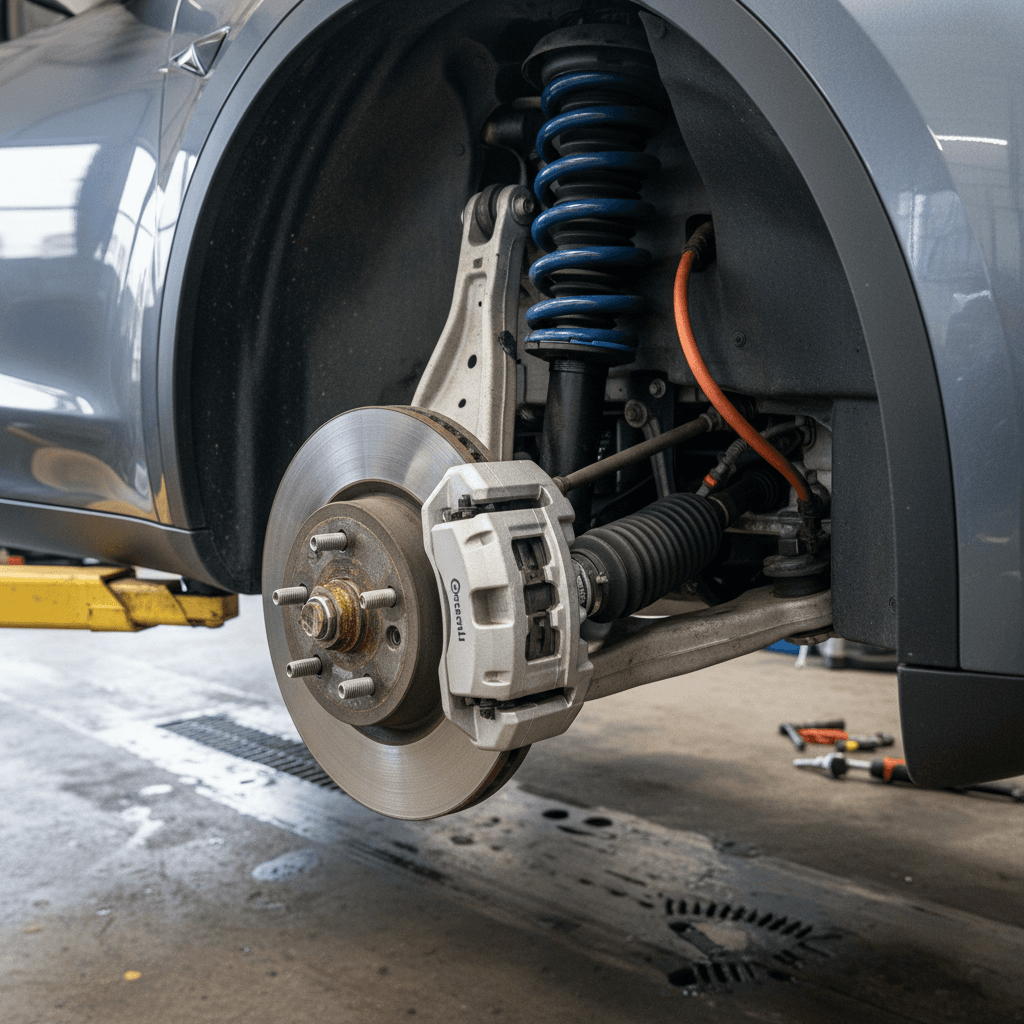
Scroll through owner forums and you’ll find a recurring 2023 Model Y complaint: creaks, pops, or clicks when turning or going over bumps, even at relatively low mileage. Service centers often trace this to the front lower lateral links, critical suspension arms that keep the wheels located properly.
Owners describe torn or prematurely worn bushings in those links. The symptom is usually a rhythmic creak when you turn the wheel in a parking lot or roll slowly over speed bumps. In many 2023 cases, Tesla has replaced one or both front lower lateral links under warranty, sometimes after initially trying to lubricate components like the CV axles.
How to test for this on a test drive
The good news: when caught under warranty, lateral link replacements are straightforward. The bad news: if you’re buying out of warranty and the previous owner ignored the noises, you could inherit the repair bill.
Build Quality, Wind Noise, and Interior Trim
Tesla’s build quality reputation is a bit like airline food jokes, somewhat outdated, but not entirely unfair. By 2023, the Model Y was clearly better than the wild‑west early cars, yet owner reports still mention a familiar mix of cosmetic and refinement issues.
- Panel alignment and gaps: Some 2023 cars leave the factory with misaligned tailgates, doors that sit slightly proud, or inconsistent panel gaps. Service can often adjust them, but not always perfectly.
- Wind noise and seals: A common complaint is wind noise around the rear doors or hatch at highway speeds. The cause is often weather‑strip fitment or door alignment that’s barely outside tolerance.
- Paint and bumper color match: White and other light colors sometimes show a visible tone difference between metal body panels and plastic bumpers. Mild orange‑peel texture is also common.
- Interior trim and squeaks: Most owners find the cabin solid, but some report rattles from the hatch area, seatbacks, or glass roof over rough pavement.
Why this matters more on the used market
When Recharged inspects a Model Y for listing, we look for symmetry in panel gaps, overspray or masking marks around trim, and telltale signs of non‑factory paint work. Cosmetic quirks are common; hidden accident damage is where you should walk away or demand a serious discount.
Software Problems and Driver-Assistance Concerns
The 2023 Model Y is essentially a computer wrapped in a crossover, which is both its charm and its Achilles’ heel. Many owner‑reported issues are really software annoyances rather than physical faults: frozen center screens, Bluetooth weirdness, phantom beeps from driver‑assist features, or Autopilot behavior that inspires more adrenaline than confidence.
- Center screen glitches: Occasional black screens, lag, or unresponsive touch input. Most resolve with a steering‑wheel button reset.
- Driver‑assist quirks: Sudden braking for shadows or parked vehicles (“phantom braking”) on Autopilot; inconsistent lane‑changes with advanced driver‑assist packages.
- Warning lights and messages: Temporary warnings for traction control, ABS, or driver‑assist when the system is confused by road conditions or sensors; usually clear themselves.
- Over‑the‑air updates: New software can fix issues, or introduce new ones. It’s not uncommon for an update to change behavior overnight, for better or worse.
About "Full Self‑Driving" on a used 2023 Model Y
From a used‑car perspective, software problems are less about “Will this bankrupt me?” and more about “Can I live with this car’s personality?” During a test drive, spend time exploring Autopilot, the camera suite, navigation, and basic UI. If the current software build is buggy, you’ll usually know within fifteen minutes.
Battery Health, Range, and Charging Problems
Here’s the bright side: across the 2020–2023 run, Model Y battery packs have aged well compared with many early EVs. Large datasets of used Teslas show roughly 1–1.5% average capacity loss per year for Model Y, with typical cars still retaining close to 90% of original range around 100,000 miles when treated reasonably.
- Normal degradation: Expect a healthy 2023 Model Y to show some range loss, especially if it has high mileage, but not a dramatic collapse in daily range.
- Heat and fast‑charging: Cars that spent their life in very hot climates or living on DC fast chargers can show faster battery wear.
- Charging quirks: A minority of owners report home charging failures traced to wiring, wall connectors, or charge‑port doors; others see public‑charging handshake problems that are usually software‑side.
- 12V system warnings: The low‑voltage battery that runs accessories can fail or show warnings and is a routine maintenance item on any EV.
How Recharged handles battery risk
If you’re shopping privately or at a non‑EV‑specialist lot, insist on checking the displayed range at 100% and 80% charge, ask how the previous owner typically charged (home vs. fast‑charge), and be especially cautious with cars from very hot, inland climates. Battery packs typically outlast many owners, but abusing one for three years can compress a decade of wear into a single lease term.
Recalls Affecting the 2023 Tesla Model Y
By 2026, the 2023 Model Y had been touched by a double‑digit number of recalls. Many are software‑only campaigns that Tesla pushed over the air, fine‑tuning warning chimes, collision‑avoidance behavior, or instrument‑panel displays. Others involve physical components, including seat belts, visibility items, and hardware tied into the steering and suspension story described earlier.
Common Recall Themes for Recent Model Y
Representative categories of recalls that have affected late‑model Teslas, including 2023 Model Y.
| Area | Type of Issue | How It’s Fixed |
|---|---|---|
| Steering / suspension | Steering assist warnings, hardware concerns | Software update and/or steering component replacement |
| Seat belts | Anchoring or warning‑system behavior | Inspection and re‑torque or hardware replacement |
| Lighting / visibility | Incorrect indicator behavior or visibility rules | Over‑the‑air software update |
| Autopilot & FSD | Traffic‑control behavior, collision avoidance logic | Software update with revised parameters |
| Safety warnings | Font size, chimes, or telltales not meeting regulations | Over‑the‑air update to cluster and UI |
Always check a specific VIN on the NHTSA site or Tesla account for the latest, vehicle‑specific recall status.
Why recalls aren’t automatically bad news
What 2023 Model Y Problems Mean If You’re Buying Used
So how do you reconcile scary headlines with the thousands of people happily road‑tripping their 2023 Model Ys right now? The trick is to accept that the Model Y is a great EV with uneven quality control. That means the gap between a good example and a bad one is wider than with, say, a RAV4 Hybrid.
When a 2023 Model Y is a smart buy
- Documented clean history, no structural accidents, and consistent service records.
- No evidence of steering or suspension complaints, or they were fully resolved with part replacements.
- Battery health checks out and real‑world range aligns with expectations.
- You value charging access, over‑the‑air updates, and the EV driving experience.
When you should think twice
- Open steering or safety recalls, or vague records around steering‑rack replacement.
- Persistent suspension noises that a seller dismisses as “just EV sounds.”
- Obvious mismatch in paint or panel structure suggesting prior crash damage.
- A history of frequent DC fast‑charging in very hot climates without documentation of battery health.
How Recharged de‑risks a used Model Y
Ready to find your next EV?
Browse VehiclesChecklist: Shopping for a Used 2023 Model Y
Pre‑Purchase Checklist for a 2023 Model Y
1. Run the VIN for recalls and history
Check the VIN for open recalls and confirm whether steering‑related campaigns or part replacements were completed. Pull a full vehicle‑history report to screen for structural accidents or flood damage.
2. Inspect panels, glass, and paint closely
Walk the car in good daylight. Look for uneven gaps around doors and hatch, ripples or overspray in paint, and any color mismatch between bumpers and body. Uneven wear may indicate prior repairs.
3. Listen for steering and suspension noises
On the test drive, do slow, tight turns and go over speed bumps. Any creaks, pops, or grinding from the front corners deserve a professional inspection before you commit.
4. Stress‑test the software and screens
Spend time using the center display: navigation, audio, cameras, and driver‑assist. Do a steering‑wheel reset if it feels laggy. Minor glitches are normal; frequent freezing or error messages are not.
5. Verify battery health and charging behavior
If possible, see the car at a high state of charge and compare displayed range with the original EPA rating. Ask how the previous owner charged (daily limit, home vs. fast‑charging). A Recharged Score Report can shortcut this with direct battery‑health data.
6. Confirm tires, brakes, and alignment
Uneven tire wear or pulling to one side can hint at alignment or suspension problems. On a 2023, you shouldn’t yet see end‑of‑life brakes unless the car has huge mileage or driving was especially hard.
7. Factor warranty coverage into your decision
Many 2023 Model Ys will still be under Tesla’s basic and battery warranties. Confirm in writing how much coverage remains; it can make borderline cars safer bets if the right components are still protected.
FAQ: 2023 Tesla Model Y Problems
Frequently Asked Questions About 2023 Model Y Problems
Bottom Line: Smart Way to Own a 2023 Model Y
The 2023 Tesla Model Y sits in a strange place: it’s one of the most popular EVs on the road, yet also one of the most heavily scrutinized for defects and recalls. Both narratives are true. When you line up the data, you see a capable, efficient electric SUV with pockets of serious issues, steering failures, suspension noises, and quality inconsistencies, that demand a careful eye from used‑car shoppers.
If you shop casually, you’re trusting that the previous owner, Tesla’s quality control, and a stack of over‑the‑air updates all did their jobs. If you shop deliberately, with a detailed inspection, verified battery health, and a clean recall history, you can land a 2023 Model Y that delivers everything the brochure promised with far less drama.
Recharged exists for that second path. Whether you end up buying through our marketplace or just use this guide as a checklist, treat every 2023 Model Y as an individual case study, not a generic product. Ask hard questions, demand transparent data, and let the car prove it deserves a home in your garage.