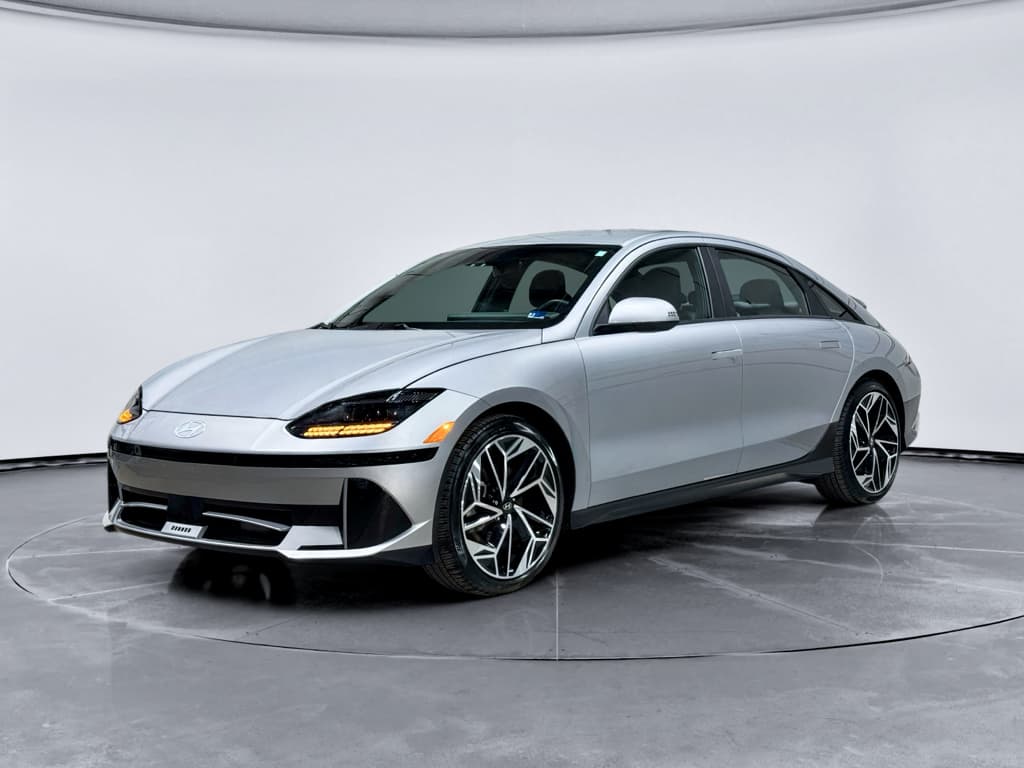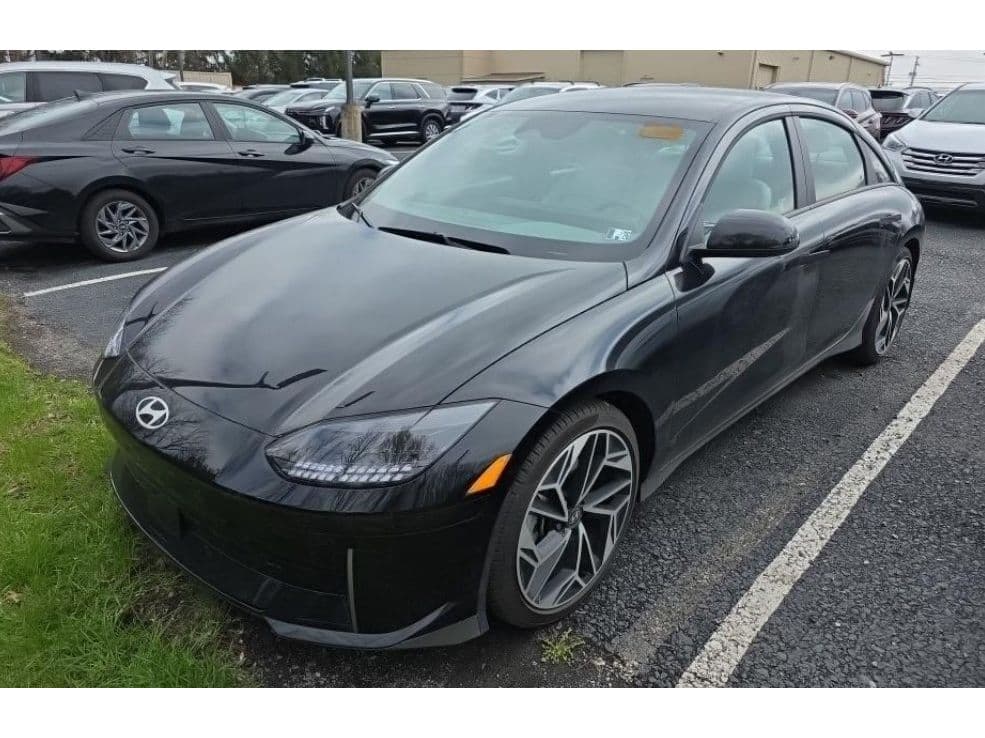
If you’re looking at a Hyundai IONIQ 6, you’re probably wondering one thing: **just how safe is this sleek electric sedan in a crash?** The good news is that the Hyundai IONIQ 6 safety rating and crash test results put it among the safest EVs on the road today, in the U.S. and abroad.
Short answer
Hyundai IONIQ 6 safety overview
The IONIQ 6 rides on Hyundai’s dedicated **E‑GMP electric platform**, the same architecture underpinning the IONIQ 5, Kia EV6, and Genesis GV60. That platform was engineered from day one around a big battery pack and heavy electric hardware, which means the structure, crash zones, and underbody protection weren’t retrofitted from a gas car, they were baked into the design.
Hyundai IONIQ 6 safety at a glance
In plain language: **if safety is high on your EV shopping list, the IONIQ 6 belongs on your short list.** Let’s break down exactly what the crash test numbers mean and how this sedan behaves when the worst happens.
Official crash test ratings: IIHS, NHTSA, Euro NCAP & ANCAP
IIHS Top Safety Pick+ results for IONIQ 6
The U.S. Insurance Institute for Highway Safety (IIHS) put the Hyundai IONIQ 6 through its full battery of crashworthiness and crash‑avoidance tests. Recent model years qualify for **TOP SAFETY PICK+**, the institute’s highest award, reflecting strong scores in both structural protection and active safety tech.
IIHS crash test ratings for Hyundai IONIQ 6 (2024–2025)
IIHS ratings use Good (G), Acceptable (A), Marginal (M), and Poor (P).
| Area | Test / Category | Rating | Notes |
|---|---|---|---|
| Crashworthiness | Small overlap front (driver & passenger) | G | Strong survival cell, controlled intrusion. |
| Crashworthiness | Moderate overlap front – original | G | Very low injury measures in most body regions. |
| Crashworthiness | Moderate overlap front – updated | A | Structure performs well; IIHS’s tougher test keeps nearly all cars from a straight Good. |
| Crashworthiness | Side impact – updated | G | Excellent performance in newer, higher‑energy side test. |
| Crashworthiness | Roof strength, seats & head restraints | G | Good protection in rollovers and rear‑end crashes. |
| Crash avoidance | Front crash prevention – vehicle-to-pedestrian | G | Standard system avoids or significantly mitigates impacts in day and night testing. |
| Visibility | Headlights | A | Most trims earn Acceptable; some specific variants may be Good or Marginal depending on equipment. |
| Child protection | LATCH ease of use | A | Lower anchors are generally easy to find and use, with a few minor quirks. |
Overall, the IONIQ 6 earns mostly top "Good" scores across IIHS tests, underpinning its TSP+ award.
Trim‑level tip
NHTSA 5-star overall safety rating
For 2026, the Hyundai IONIQ 6 (excluding the high‑performance N variant) receives a **5‑star overall safety rating from NHTSA** in the U.S. government’s New Car Assessment Program. That’s the top rating available and means the car performed very well across frontal, side, and rollover tests.
- Frontal crash: strong performance for both driver and passenger seating positions.
- Side crash: excellent protection in side barrier and side pole tests, helped by the battery’s low mounting and rigid structure.
- Rollover resistance: low center of gravity from the under‑floor battery pack helps reduce rollover risk compared with a taller SUV.
Model year note
Euro NCAP & ANCAP: IONIQ 6 global safety scores
Outside the U.S., the IONIQ 6 has also impressed safety organizations. In **Euro NCAP** testing, it earned a full **5‑star** rating. Australia and New Zealand’s **ANCAP** adopted the same test results and likewise awarded 5 stars.
Global Hyundai IONIQ 6 safety scores (Euro NCAP / ANCAP)
Category scores highlight where the IONIQ 6 is strongest.
| Category | Score (percent) | What it means |
|---|---|---|
| Adult Occupant Protection | 97% | Near‑best‑in‑class performance; very low injury risk for driver and front passenger. |
| Child Occupant Protection | 87–88% | Strong child-seat performance and good protection for 6‑ and 10‑year‑old dummies. |
| Vulnerable Road Users (pedestrians/cyclists) | 66% | Average for a modern EV; shape of the front end and hood stiffness matter here. |
| Safety Assist (driver aids) | 90% | Robust suite of standard driver‑assistance systems that actively help you avoid crashes. |
The IONIQ 6 shines in occupant protection and active safety tech, with only pedestrian protection lagging slightly behind.
Best in class
How the IONIQ 6 actually performs in crash tests
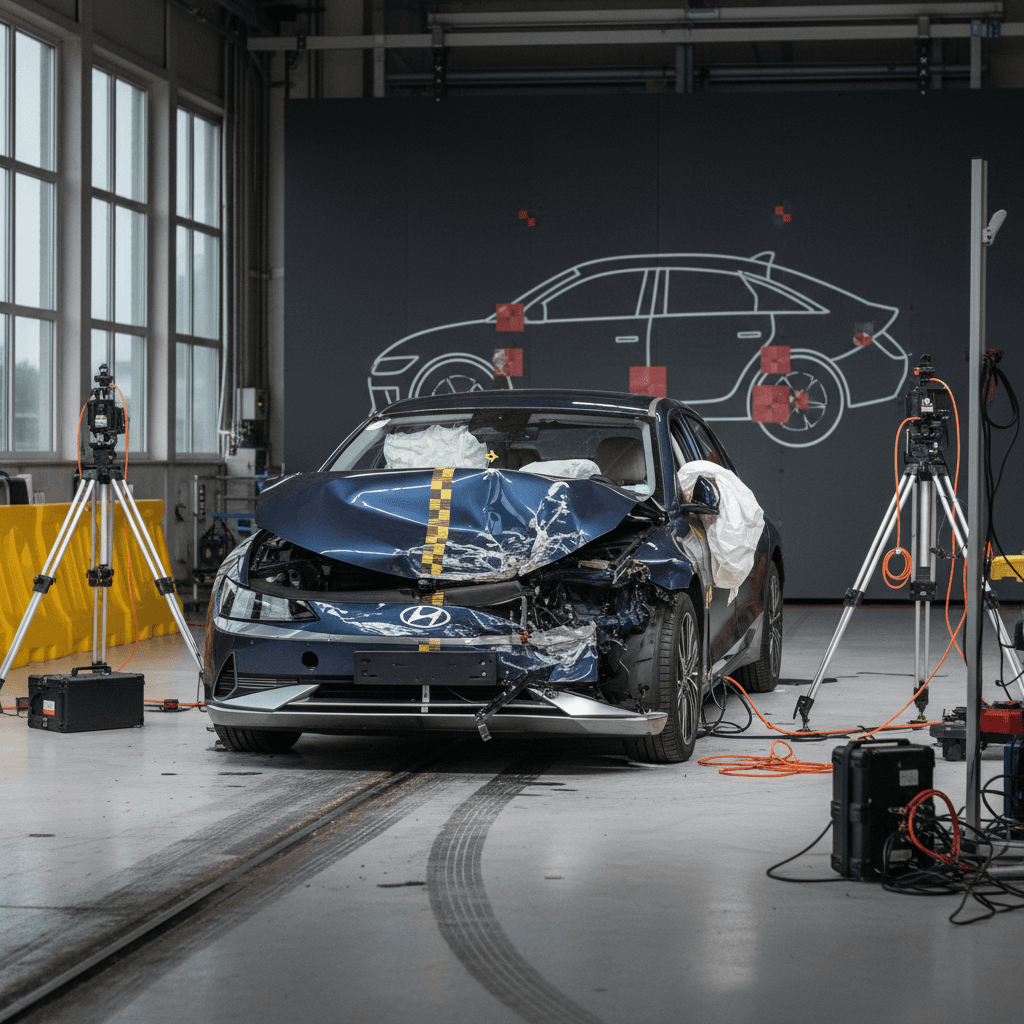
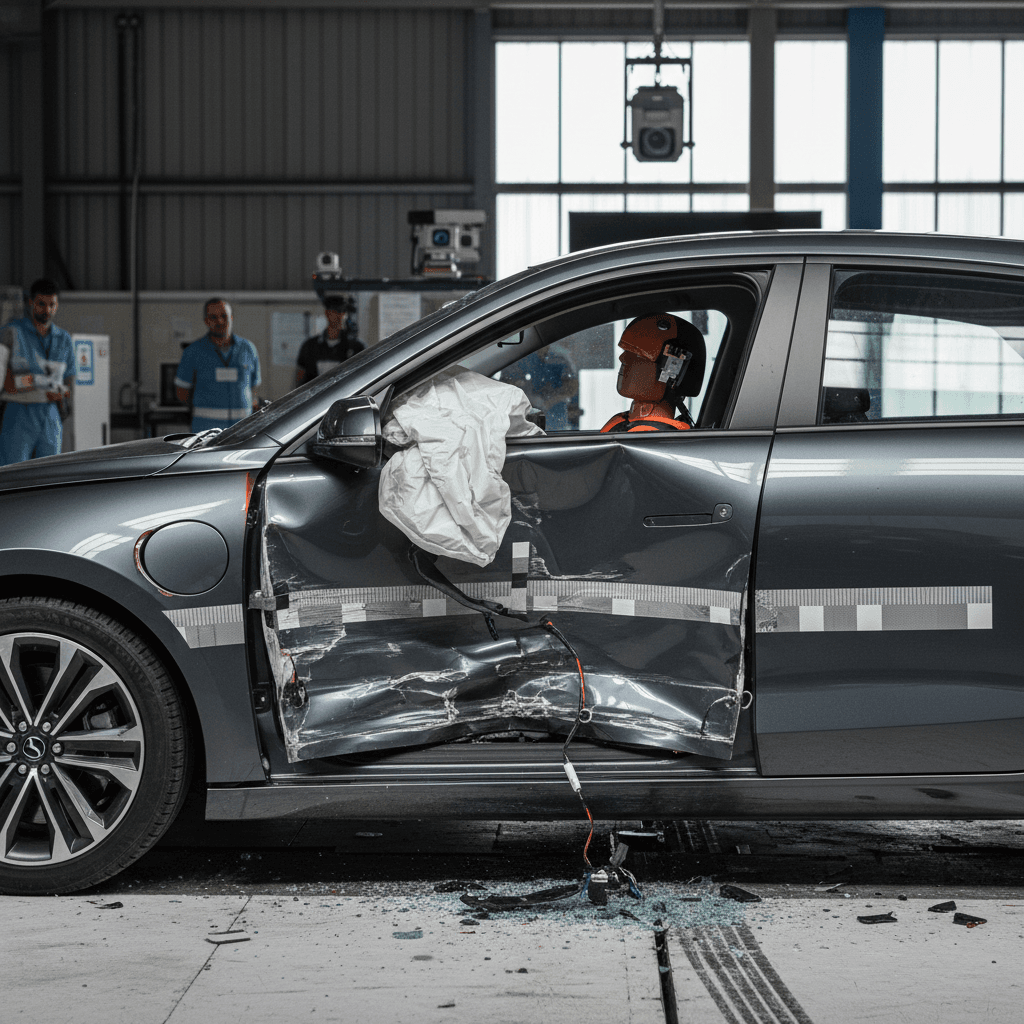
Numbers are one thing; what happens to the car in the test lab is another. Crash videos of the Hyundai IONIQ 6 tell a reassuring story. The **passenger compartment stays largely intact**, doors generally remain operable, and measured forces on the dummies stay comfortably below serious‑injury thresholds in most tests.
- In small‑overlap frontal crashes, the A‑pillar and door frame remain stable, with limited intrusion into the footwell.
- In moderate‑overlap and full‑width frontal tests, the steering wheel and pedals don’t move aggressively toward the driver, protecting legs and chest.
- In newer, higher‑energy side impacts, the combination of **strong side structure** and **fast‑acting side curtain and thorax airbags** keeps the dummy’s head away from hard surfaces.
- The battery pack is mounted within a rigid frame under the floor, staying outside the main crush zones to reduce the risk of thermal events.
What about battery fires?
Key safety features and Hyundai SmartSense tech
Passive crash performance is only half the story. The IONIQ 6 also packs a long list of standard and available **Hyundai SmartSense** features aimed at helping you avoid a crash in the first place, or at least slow it down.
Core Hyundai IONIQ 6 safety & driver‑assist features
Exact equipment varies by trim and market, but here are the big pieces to know about.
Forward Collision‑Avoidance Assist (FCA)
Radar and camera watch the road ahead for vehicles, pedestrians, and cyclists.
- Warns you about an impending collision.
- Can automatically apply the brakes.
- Enhanced functions for junction turning and crossing on many trims.
Lane Keeping & Highway Driving Assist
On highways, the IONIQ 6 can help with both speed and steering.
- Lane Keeping Assist nudges the car back between the lines.
- Highway Driving Assist 2 (HDA 2) can center you in your lane and manage distance to the car ahead.
- Navigation‑based Smart Cruise Control can adjust speed for curves.
Driver Attention & Blind‑Spot Tech
Systems designed to catch what you might miss.
- Driver Attention Warning looks for signs of drowsiness.
- Blind‑Spot Collision‑Avoidance Assist can brake to prevent a side‑swipe.
- Blind‑Spot View Monitor (on some trims) shows a camera view in the cluster when signaling.
Child & rear‑seat safety
Beyond strong crash scores, the IONIQ 6 makes family duty easier.
- Top‑tether and ISOFIX/LATCH points for child seats.
- Safe Exit Warning alerts if a car is approaching from behind when you open the door.
- Rear Occupant Alert (where equipped) can remind you to check the back seat.
Parking collision‑avoidance
Low‑speed crashes are common, and expensive.
- Rear Cross‑Traffic Collision‑Avoidance Assist watches for cars when backing out.
- Parking Collision‑Avoidance Assist can brake if it senses obstacles.
- Surround View Monitor, where fitted, gives you a 360° bird’s‑eye view.
Lighting & visibility
Seeing and being seen is safety 101.
- LED headlights with automatic high beams on many trims.
- Wide LED tail lamps for better visibility in poor weather.
- Good IIHS ratings for most headlight packages.
Safety is standard, not an option pack
Hyundai IONIQ 6 vs other EVs on safety
So where does the IONIQ 6 land versus rivals like the Tesla Model 3, Model Y, or Kia EV6? In a word: **right near the top**. In European testing, its adult occupant protection scores rival or beat several high‑profile competitors, and its U.S. results match the best from mainstream brands.
Where the IONIQ 6 shines
- Structural integrity: Excellent control of cabin intrusion in both frontal and side impacts.
- Adult & child protection: Among the highest scores in its class globally.
- Standard tech: A generous safety list on lower trims, not just fully loaded models.
- Low center of gravity: Stable, predictable handling that also helps in emergency maneuvers.
Where rivals may edge it out
- Pedestrian impact design: Some EVs achieve slightly higher scores for vulnerable road users.
- Software features: Tesla and others lean on constant software updates; Hyundai does support OTA updates on newer IONIQ 6s but not all features are equal across markets.
- Headlights on specific trims: Some trims with simpler headlamps may trail the best‑in‑class lighting systems.
Safety vs. size: sedan advantage
Buying a used IONIQ 6? Safety checklist
If you’re shopping used, you care about **how safely the car will protect you tomorrow**, not just how it performed when it rolled off the assembly line. The underlying safety engineering doesn’t change, but condition absolutely does.
Used Hyundai IONIQ 6 safety checklist
1. Verify model year and rating
Confirm the exact model year and trim, then match it to the published IIHS and NHTSA ratings. Small changes, like different headlights, can affect scores.
2. Check for prior crashes or structural repairs
Look for a clean vehicle history report, and pay attention to notes about airbag deployment, frame damage, or title brands (salvage, rebuilt). Significant repairs can change how a car performs in a future crash.
3. Inspect airbags and safety systems
Confirm the airbag warning light comes on at start‑up and then turns off. If there are any warning lights for airbags, ABS, or stability control, walk away until you know what’s wrong and what it will cost to fix.
4. Confirm ADAS features work properly
On a test drive, gently test lane‑keeping, adaptive cruise (if equipped), and parking sensors. If the car has had bodywork, cameras and radar sensors may need calibration.
5. Evaluate tires and brakes
Even the best crash structure can’t help if you can’t stop or steer. Check remaining brake life and age/condition of tires. Uneven wear could hint at alignment problems from an old impact.
6. Look for software and recall updates
Ask the seller for proof of completed recall work and software updates, especially for critical systems. A Hyundai dealer can confirm outstanding recalls by VIN.
Bring a pro with you
How Recharged checks safety and battery health
Buying a used EV should not feel like a guessing game. At Recharged, every IONIQ 6 we list goes through a **Recharged Score Report** that looks beyond the shiny paint and into the stuff that really matters, like battery health and safety‑critical systems.
What the Recharged Score covers on an IONIQ 6
So you know exactly what you’re getting, before it’s in your driveway.
Battery health & high‑voltage system
We run specialized diagnostics on the IONIQ 6’s battery pack and thermal management system.
- Measures usable capacity vs. original.
- Checks for error codes and imbalance between cells.
- Reviews charge history when available.
Structural & safety inspection
Our inspectors look for signs of prior structural damage and verify key safety items.
- Visual check of crash structures where accessible.
- Airbag status and warning lights.
- Condition of belts, buckles, and seat anchors.
Road test & ADAS function
We don’t just scan modules, we drive the car.
- Brake feel and straight‑line stopping.
- Lane‑keeping and adaptive cruise, where equipped.
- Parking sensors, cameras, and blind‑spot systems.
Ready to find your next EV?
Browse VehiclesOn top of that, Recharged offers **financing, trade‑in options, consignment, and nationwide delivery**, all wrapped in a fully digital buying experience. If you want a Hyundai IONIQ 6 but don’t want to become a part‑time EV engineer, leaning on a curated used EV marketplace can take a lot of stress out of the decision.
Hyundai IONIQ 6 safety FAQ
Frequently asked questions about Hyundai IONIQ 6 safety
Bottom line: Is the Hyundai IONIQ 6 safe?
Put simply, **yes, the Hyundai IONIQ 6 is one of the safest EVs you can buy right now**. It pairs a rock‑solid crash structure and stellar global safety ratings with a deep roster of modern driver‑assistance features. Whether you’re commuting solo or hauling kids and cargo, it’s engineered to look after you when things go wrong, and to help you avoid trouble in the first place.
If you’re considering a **used IONIQ 6**, paying attention to crash history, software updates, and battery health will help you preserve that high level of safety over the long haul. And if you’d rather have experts checking those boxes for you, a curated marketplace like Recharged, with diagnostics‑driven Recharged Score Reports, financing, trade‑in options, and nationwide delivery, can make getting into a safe, efficient IONIQ 6 feel as streamlined as the car itself.