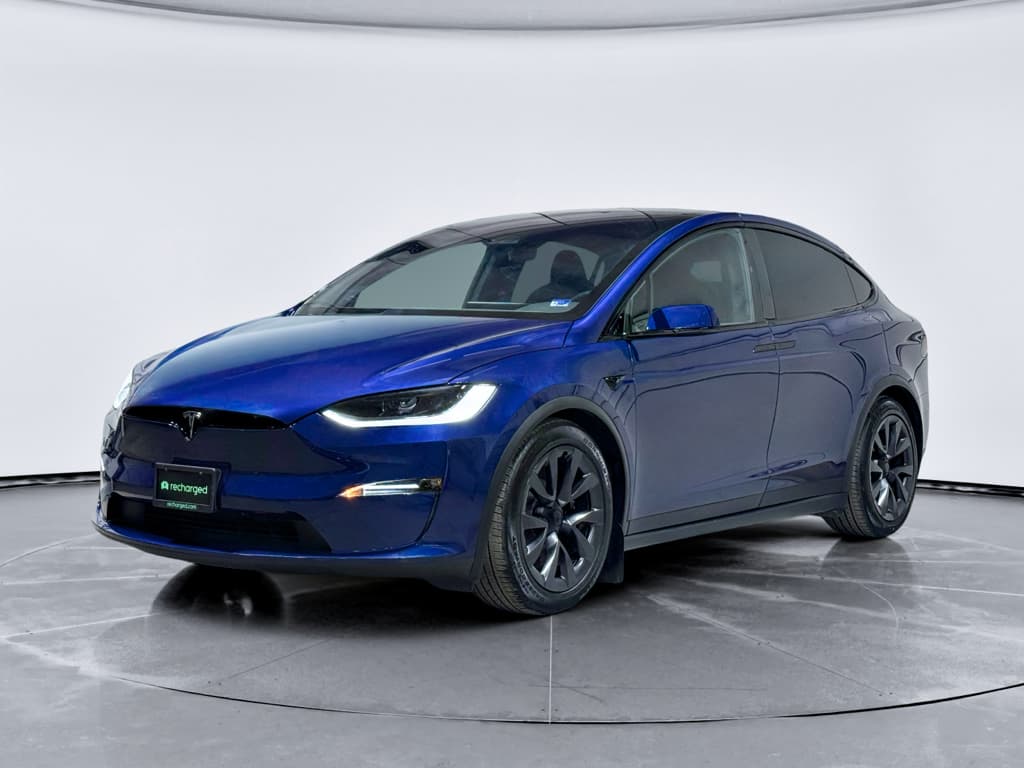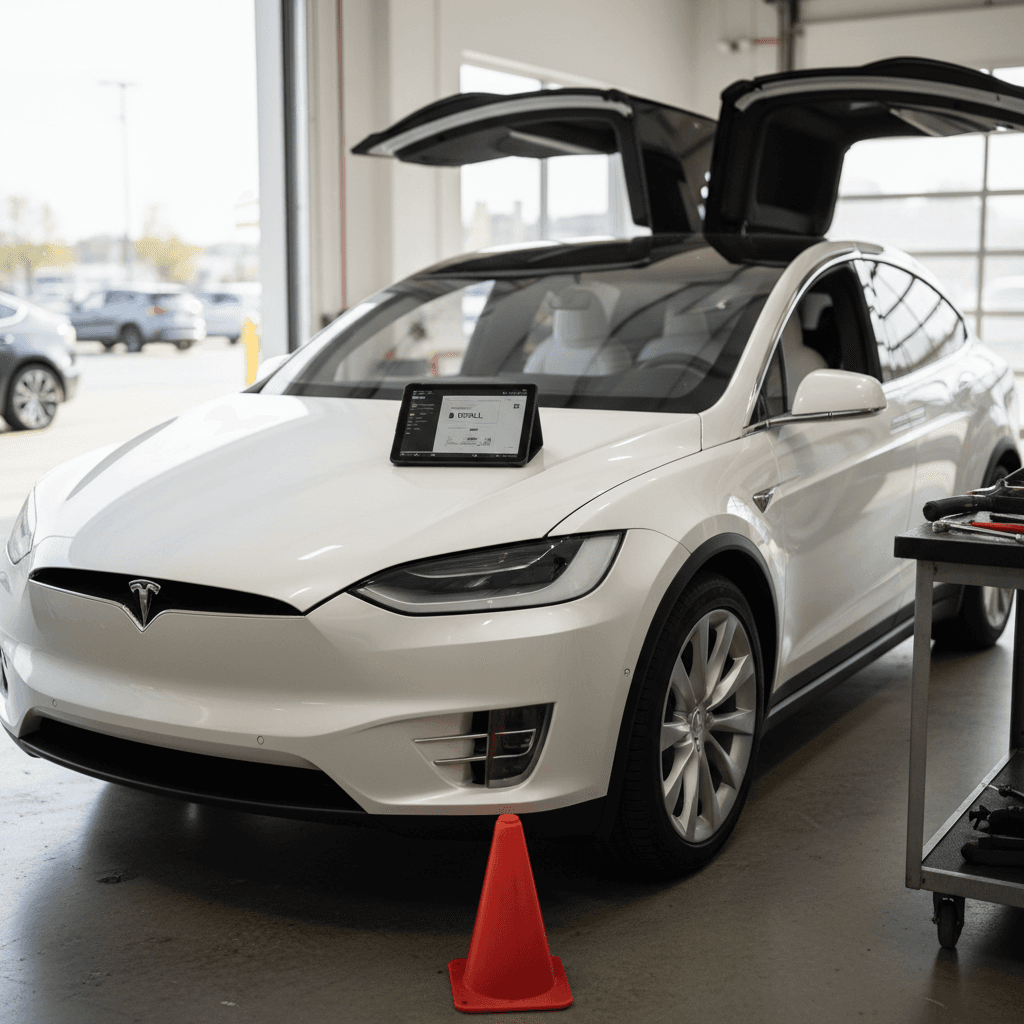
If you own or are shopping for a 2023 Tesla Model X, you’ve probably heard about multiple Tesla recalls in recent years. This guide pulls together the most important 2023 Tesla Model X recalls list, explains what each campaign fixes, and shows you how to confirm that any specific vehicle is up to date, especially critical if you’re buying used.
First things first
Why 2023 Tesla Model X recalls matter
Tesla’s recall story is unusual: the company recalls a lot of vehicles, but many of those fixes arrive as over‑the‑air (OTA) software updates rather than traditional shop visits. For the 2023 Model X, that means seemingly minor software tweaks can be tied to serious safety campaigns, everything from seat belt reminders to steering feel. If you’re evaluating a 2023 X, you need to understand which recalls were software-only and which required physical inspection or repair.
Tesla and modern EV recalls in context
For shoppers, that history cuts both ways. On one hand, it shows Tesla responds to safety investigations and can deploy fixes quickly. On the other, it makes due diligence more complicated than just asking, “Has it ever been in for recall service?”, because some of the most important fixes happen silently in the background.
Quick overview: major 2023 Model X recalls
Below is a high-level snapshot of the most significant recalls that can apply to a 2023 Tesla Model X in the US. The exact recall ID and applicability can vary with build date and software version, so always confirm with a VIN lookup.
Key 2023 Tesla Model X recall campaigns (US)
High-level summary of major recalls that can affect 2023 Model X vehicles. Always verify applicability with a VIN-specific search.
| Issue | Approx. NHTSA ID / Year | Models & Years Involved | Type of Fix | Owner Inconvenience |
|---|---|---|---|---|
| Front seat belts may detach at anchor | 23V-488 (2023) | 2021–2023 Model S & Model X | Physical inspection and potential rework of belt/pretensioner connection | Service visit required |
| Brake fluid level warning may not trigger correctly | 23V-xxx (2023) – brake fluid sensor | 2021–2023 Model X | Software update to correct brake fluid warning thresholds | Usually OTA, sometimes service visit |
| Autosteer / Autopilot misuse risk | 23V-838 (2023) Autosteer controls | Model S/X/3/Y with Autosteer | OTA software update adding additional Autosteer controls and alerts | OTA, no service visit |
| Seat belt reminder chime logic | 2024 seat belt reminder campaign | 2012–2024 S, 2015–2024 X, selected 3 & Y | OTA update to correct seat belt reminder behavior | OTA, no service visit |
| Backup camera may fail to display | 25V-002 (2025) rearview camera | 2024–2025 Model 3/S and 2023–2025 Model X/Y with specific computers | OTA update for car computer to restore reliable camera display | OTA, no service visit |
| Potential steering assist loss in some builds | 2025 steering/assist campaign | Select 2023–2024 Model X (and other models) | Software update and/or hardware inspection depending on VIN | May be OTA plus possible service visit |
| Hood-latch detection / warning font size | 2024 hood latch / display visibility campaign | 2013–2024 S, 2016–2024 X, others | OTA update to correct detection and instrument panel warning legibility | OTA |
This table is a guide, not a substitute for an official NHTSA or Tesla VIN check.
Always double-check by VIN
Detailed 2023 Tesla Model X recalls list
Let’s dig deeper into the major recall themes that show up when you pull a 2023 Model X’s history. We’ll focus on what went wrong, how it’s fixed, and what you should verify on any vehicle you own or are considering buying.
1. Front seat belts may detach (2021–2023 Model S & X)
In 2023, Tesla recalled around 15,869 Model S and Model X vehicles from the 2021–2023 model years after reports that some front seat belts could detach from the outboard lap pretensioner anchor. On inspection, Tesla found that in some vehicles the belts hadn’t been reattached to the pretensioner to spec after prior service work.
- Applies to many, but not all, 2021–2023 Model X SUVs
- Risk: front occupant’s seat belt may detach in a crash, dramatically increasing injury risk
- Remedy: Tesla service inspects both front belts and re-secures or replaces components as needed
- Status: physical inspection required, not just a software update
High-priority check
2. Brake fluid level sensor / warning logic (2021–2023 Model X)
Tesla also issued a non-compliance recall for certain 2021–2023 Model X vehicles because the brake fluid level warning might not illuminate at the correct low-level threshold. The defect isn’t that the brakes fail outright, but that the driver might not get adequate early warning if the fluid level drops.
- Applies to 2021–2023 Model X with specific controller calibration
- Risk: late or missing low brake fluid warning could delay maintenance and increase stopping distance risk in extreme cases
- Remedy: software update adjusting the controller’s low-level threshold; typically delivered OTA (software 2023.32.7 or newer)
- Status: no hardware replacement required, but you still need to ensure the correct software is installed
How to sanity‑check this fix
3. Autosteer / Autopilot misuse risk (December 2023 Autosteer controls recall)
After years of investigation into crashes involving Tesla’s Autopilot, regulators pushed Tesla to modify how Autosteer works. In late 2023 the company recalled more than 2 million vehicles, including the 2023 Model X, to add safeguards that reduce the likelihood of drivers misusing the system.
- Applies to most 2023 Model X vehicles with Autosteer enabled
- Risk: drivers over‑relying on Autosteer outside its intended conditions, contributing to crash risk
- Remedy: OTA software update adding stricter engagement monitoring, clearer alerts, and limitations in certain conditions (for example, some hands‑off or wrong‑road scenarios)
- Status: delivered primarily via software; no service visit needed unless the update fails
What changes for you
4. Seat belt reminder chime logic (2012–2024 S, 2015–2024 X, others)
A more subtle but still important campaign involves the seat belt reminder system. Certain vehicles, including the 2015–2024 Model X, were operating with software that could allow the belt reminder not to chime correctly if specific conditions were met (for example, if a driver unbuckled at low speed and then resumed driving).
- Broad campaign covering many years, including 2023 Model X
- Risk: driver may not receive an audible reminder to buckle up under some edge cases
- Remedy: OTA software update adjusting seat belt reminder logic
- Status: quick fix once the vehicle downloads and installs the specified firmware
5. Backup camera display reliability (2023–2025 Model X and others)
In early 2025 Tesla filed a recall involving rearview camera behavior in vehicles with a specific new-generation car computer. Certain 2024–2025 Model 3 and Model S and 2023–2025 Model X and Model Y vehicles could experience a blank or delayed backup camera image when shifted into Reverse, which obviously undermines the purpose of a mandated safety feature.
- Applies only to 2023 Model X with specific hardware and older software (prior to 2024.44.25.3 or 2024.45.25.6)
- Risk: no or delayed camera image in Reverse, increasing backing‑up collision risk
- Remedy: OTA software update for the affected car computer to restore reliable camera display
- Status: check for recent software; if you see intermittent camera behavior, schedule service even after the update
6. Steering assist / potential loss of assist (select 2023–2024 Model X)
Another 2025 campaign involved reports of potential steering issues, including loss or uneven application of power assist, on several Tesla models. For some 2023–2024 Model X vehicles, Tesla’s remedy combined software changes with inspection of steering components where warranted.
- Scope: not every 2023 Model X is included; applicability depends on production range and hardware
- Risk: sudden change in steering effort that can surprise the driver, especially at low speeds
- Remedy: software update to address steering logic and, for certain VINs, inspection or service of steering components
- Status: treat any steering warning messages or noticeable change in effort as a reason to stop driving and contact Tesla immediately
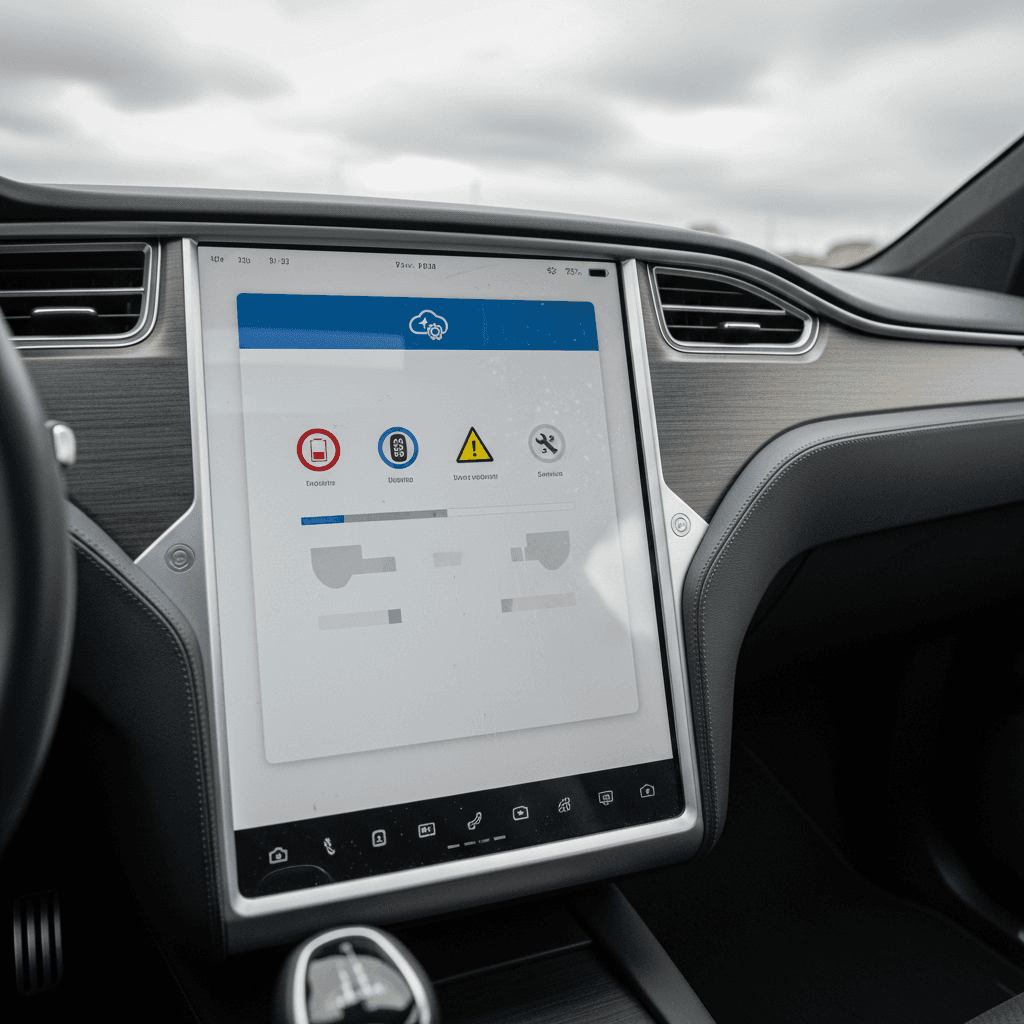
7. Hood-latch detection and warning font size
In 2024, regulators flagged certain Teslas, including the Model X, for non‑compliant warning display behavior related to the hood latch. In some vehicles, the font size or visibility of the warning message when the front trunk wasn’t fully latched didn’t meet federal requirements. It’s a minor‑sounding defect, but the risk is straightforward: a hood that pops up at speed can fully block your view.
- Applies broadly to models including the 2016–2024 Model X, so many 2023 vehicles fall within scope
- Risk: driver may not notice that the hood is unlatched before driving away
- Remedy: OTA display update improving detection behavior and warning legibility
- Status: another campaign where up‑to‑date software is your best clue the fix is in place
Software vs. hardware recalls on the Model X
Software‑only recalls
On a 2023 Model X, many recalls are resolved with over‑the‑air updates:
- Autosteer/Autopilot controls tweaks
- Seat belt reminder logic changes
- Brake fluid warning threshold update
- Backup camera reliability fixes for vehicles with specific computers
- Hood‑latch warning visibility improvements
These usually require no action beyond installing the available update and making sure it completes successfully.
Hardware or inspection‑based recalls
Some campaigns still require a physical check or replacement:
- Front seat belt detachment (2021–2023 S/X)
- Steering assist inspections on affected builds
- Any future campaigns involving suspension, airbags, or body structure
For these, software alone is not enough. You (or a previous owner) must book a service appointment and keep the documentation.
Good news for owners
How to check if your 2023 Model X has open recalls
Because the 2023 Model X sits at the intersection of multiple software and hardware campaigns, you should assume nothing and verify everything. Here’s how to do that in a systematic way.
Step-by-step: verify recall status on a 2023 Model X
1. Run the VIN through NHTSA
Go to the NHTSA recall lookup site and enter the full 17‑character VIN. This returns all open safety recalls in the US, regardless of whether you’re the current registered owner.
2. Cross‑check with Tesla’s recall page
Tesla’s own support site has a recall section where you can see current campaigns by model and year. It’s a good secondary check for recent software‑heavy campaigns.
3. Check the Tesla app for alerts
If you already own the car, open the Tesla app, tap <strong>Service → Recalls</strong> (or the equivalent section), and look for any pending items. Some OTA campaigns show up here before they appear in broader databases.
4. Confirm software version in the vehicle
On the center screen, tap the car icon → <strong>Software</strong>. Compare the installed version to the minimum versions mentioned in recall documentation (your service advisor can confirm this).
5. Review past service records
If you’re buying used, ask for Tesla service invoices or at least on‑screen service history. Look for notes that specific recall campaigns (by ID) were completed, not just generic “multi‑point inspection” language.
6. Test key functions on a drive
Even with all the right software, you should physically test the backup camera, steering feel, seat belt latching and pretension, and hood‑latch warnings during a test drive.
What these recalls mean for used 2023 Model X buyers
From a used‑vehicle perspective, the 2023 Model X occupies an interesting middle ground. It benefits from Tesla’s latest hardware revisions but also sits squarely in the window for some heavyweight software and safety campaigns. That doesn’t make it a vehicle to avoid, but it does mean you should treat recall verification as part of your core inspection, not an afterthought.
For a used 2023 Model X shopper, recalls change the playbook
Here’s how to turn a potential risk into a negotiation advantage.
Safety should be up-to-date
Any open recall, especially seat belts or steering, should be treated as a must‑fix before you put serious miles on the car. An up‑to‑date recall status is a baseline, not a bonus feature.
Open recalls can be leverage
If a seller hasn’t completed free recall work, that’s a red flag about maintenance discipline. At minimum, it’s a negotiation point; in some cases, it’s a sign to walk away.
Documentation matters
Because so many Tesla recalls are OTA, you want written confirmation in service records when hardware or inspections were involved. It’s much easier to trust a car with a clear paper trail.
How Recharged approaches recall-heavy EVs
Cost, safety, and long-term impact
One of the most common questions around Tesla recalls is whether they hurt long‑term ownership costs or resale value. For the 2023 Model X, the answer is nuanced: recalls themselves are free to remedy, but how they’re handled can tell you a lot about an individual vehicle’s history.
- Out-of-pocket cost: Tesla doesn’t charge owners for recall work, whether it’s OTA or service‑center based.
- Time cost: OTA updates are easy but still require you to accept and schedule the install; hardware campaigns demand a service visit, which can be more of a hassle depending on your distance from a Tesla facility.
- Resale impact: A car with all recalls completed, current software, and clean service documentation is typically easier to resell and commands stronger pricing.
- Safety impact: Recalls like the front seat belt detachment or steering assist campaigns are directly tied to crash injury risk. Leaving them unresolved is playing roulette with your own safety and everyone else’s.
In a software-first EV like the Model X, recalls aren’t just about fixing defects, they’re the feedback loop between how the car behaves in the real world and how it should behave.
FAQ: 2023 Tesla Model X recalls
Common questions about 2023 Model X recalls
Bottom line on 2023 Model X recalls
The 2023 Tesla Model X is a complex, software‑centric SUV that’s lived through a busy period of safety scrutiny. That’s not inherently a bad thing, as long as you treat recalls as part of routine ownership, not background noise. A well‑maintained 2023 Model X with all recall work complete, current software, and clear documentation can still be a compelling long‑range family EV with unique capabilities.
If you’re already an owner, your to‑do list is straightforward: run a VIN check, confirm software versions, and schedule any outstanding hardware campaigns. If you’re shopping used, build recall verification, battery health, and service history into your evaluation checklist, or work with a specialist like Recharged that bakes those details into a transparent Recharged Score. That way, the long list of Tesla recalls becomes context, not a deal‑breaker, for your 2023 Model X decision.