
If you’re shopping a used Volvo C40 Recharge, battery health is the big unknown. You can’t see pack degradation on a window sticker, yet it’s the single component that most affects range, performance, and long‑term value. This guide breaks down how to check Volvo C40 Recharge battery health, from quick driveway checks to professional diagnostics, so you’re not guessing about the most expensive part of the car.
Good news for C40 Recharge shoppers
Why battery health matters on a Volvo C40 Recharge
It defines your real‑world range
The C40 Recharge launched with EPA ratings in the low‑ to mid‑200‑mile range depending on model year and drivetrain. As the pack ages, usable capacity shrinks, and those range numbers come down. A pack that’s, say, 10–15% down on capacity can turn a comfortable 230‑mile commuter into something that needs midweek top‑ups.
It’s your biggest long‑term cost
The high‑voltage pack is by far the most expensive component in a C40 Recharge. Volvo backs it with an 8‑year/100,000‑mile warranty against excessive loss of capacity, but once you’re beyond those limits, any serious battery issue moves from Volvo’s balance sheet to yours. Verifying health up front is the best way to keep depreciation and repair risk under control.
Volvo C40 Recharge battery basics at a glance
What Volvo actually measures: battery health vs. range
Before you dive into a Volvo C40 Recharge battery health check, it helps to understand what you can, and can’t, see as an owner. Volvo’s infotainment and app experience are polished, but they don’t give you a simple “battery State of Health (SOH)” percentage like some third‑party tools do for other brands.
How the C40 Recharge talks about its battery
Know what each signal really means before you evaluate a used car
State of Charge (SOC)
The big percentage readout on the cluster and in the Volvo Cars app is state of charge, not health. It’s how full the pack is right now, like a fuel‑gauge for electrons.
Estimated range
The car’s projected miles are a rolling average of your recent driving, climate control use, and conditions. An aggressive previous driver can make a healthy battery look weak, and vice versa.
Hidden SOH data
The battery management system tracks long‑term degradation, but Volvo doesn’t expose that number directly in the UI. Dealers can access more detail via factory diagnostics; some third‑party tools can read partial data.
Don’t confuse low range with bad battery
Quick home checklist to gauge C40 Recharge battery health
5 quick checks you can do without special tools
1. Confirm software and service history
Ask for Volvo service records or app screenshots. Modern EVs, including the C40 Recharge, rely on battery‑management updates delivered via dealer service or OTA. A car that’s never seen software updates or the recommended service cadence is a red flag.
2. Compare indicated range at a known SOC
Charge the car to an even level, ideally 80% or 100%, and note the estimated range. Then compare it with the EPA rating for that model year and wheel size. An honest 5–10% gap in moderate weather is normal; big shortfalls deserve more digging.
3. Normalize for temperature and recent driving
Cold weather, short trips, and highway speeds all reduce range. If you’re evaluating the car on a 30°F day after lots of short, heated‑seat trips, expect the estimate to look pessimistic. Ask the seller how it looks in mild conditions.
4. Look for charging or warning messages
Scroll through the driver display and center screen to check for battery‑related warnings, limited‑performance messages, or DC fast‑charging restrictions. Anything involving the high‑voltage system should be resolved before you buy.
5. Inspect charging behavior
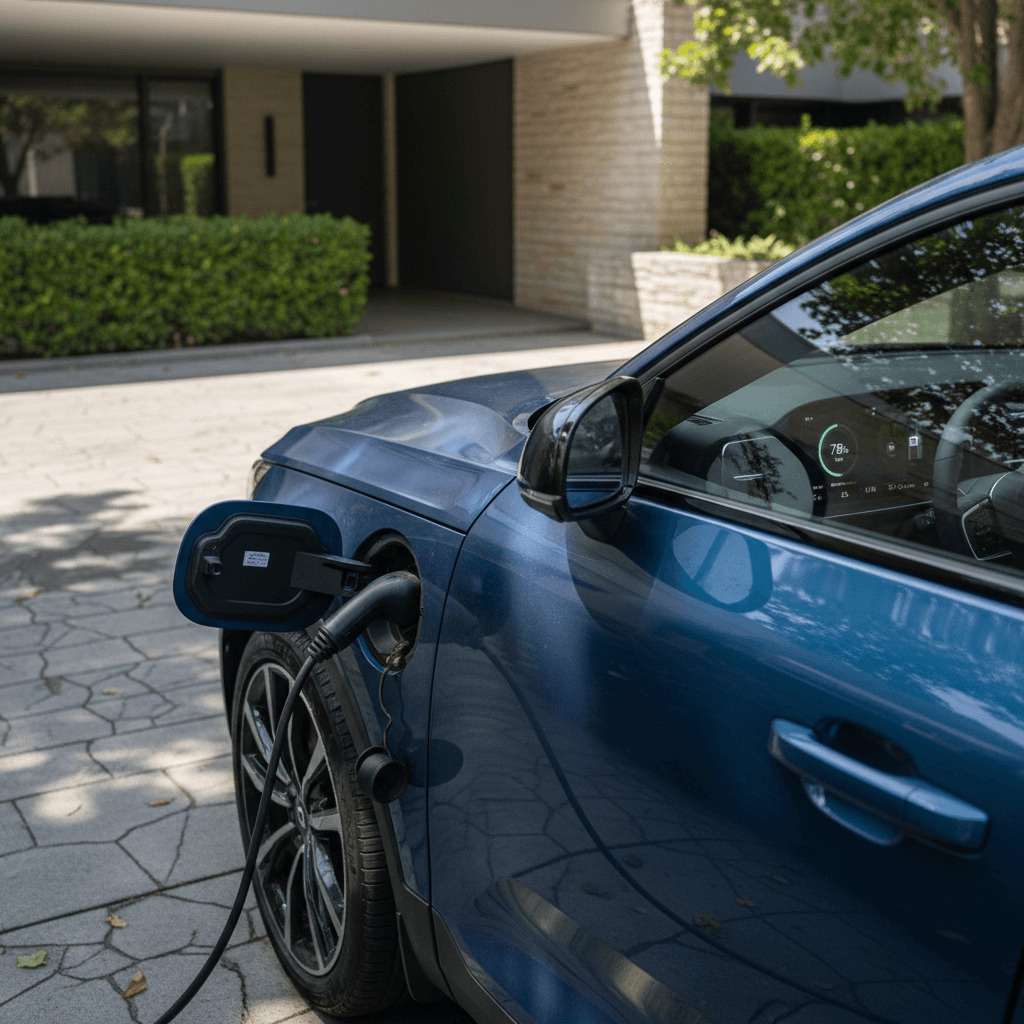
If possible, plug into a Level 2 station and watch the charge rate. It should quickly ramp to a healthy kW figure for that model year, then taper as SOC climbs. Repeated charge interruptions or very low speeds can point to pack or onboard‑charger issues.
Step-by-step test-drive battery health check
A disciplined test drive can tell you a surprising amount about a Volvo C40 Recharge’s battery health, without plugging in a single diagnostic tool. The key is to control as many variables as you reasonably can in a short window.
Test‑drive procedure to benchmark C40 Recharge battery health
Use this simple loop on any prospective C40 Recharge to sanity‑check degradation.
| Step | What to do | What to look for |
|---|---|---|
| 1. Start SOC | Begin around 80–90% charge. | Gives you headroom for a 20–40 mile loop without hitting low‑battery protections. |
| 2. Reset trip meter | Zero out trip distance and average consumption. | You’ll use this to compare energy use and effective range. |
| 3. Drive mixed route | Aim for 20–30 miles of mixed city and 45–65 mph highway speeds. | Replicates the blend used in EPA testing better than pure highway blasting. |
| 4. Keep climate reasonable | Use Auto A/C and seat heaters like you normally would. | Extreme HVAC use can skew results; note outside temperature. |
| 5. Record end SOC and trip data | Note % used, miles driven, and kWh/100 mi (or mi/kWh). | From this you can extrapolate an effective full‑pack range estimate. |
| 6. Compare to expectations | Compare your extrapolated range to the original EPA rating. | A well‑cared‑for car that’s down only ~5–15% is in line with normal aging. Bigger gaps warrant a deeper check. |
Try to start and finish in similar conditions (same route, speed, and climate control settings).
How to estimate range from your test drive
Using apps and OBD tools with the C40 Recharge
Many EV shoppers are used to tools like LeafSpy or Tesla’s in‑app battery data. With the Volvo C40 Recharge, things are more locked down. There’s no official Volvo feature that shows a clean SOH percentage, but there are still ways to get more insight, if you’re willing to go a bit nerdy.
- Volvo Cars app: Great for checking state of charge, recent trips, and climate usage patterns, but not true SOH. It’s useful context while you interpret range, not a health report on its own.
- OBD dongle + third‑party apps: Some tools can read cell voltages, pack temperatures, and other parameters on SPA‑based Volvos (including the C40 Recharge). Support is evolving and often requires community‑maintained profiles.
- PC‑based tools (e.g., VIDA‑compatible software): Enthusiast owners have reported accessing more detailed battery data, including health metrics, via Volvo’s diagnostic ecosystem, but this is firmly in advanced‑user territory.
- Limitations: Even when you can pull a SOH number, recent research across brands shows BMS‑reported health values are not always perfectly calibrated. Treat any tool’s output as one input among several, not absolute truth.
Be careful with unofficial tools
Professional battery health checks: Volvo dealer vs. independent
For a high‑value, high‑voltage component like the C40 Recharge pack, a professional battery health check is money well spent, especially on out‑of‑warranty or high‑mileage cars. You have three main options: a Volvo retailer, an independent EV specialist, or buying from a marketplace that already includes a health report.
Where to get a serious C40 Recharge battery evaluation
Pick the option that matches your risk tolerance and budget
Volvo dealer
Dealers can connect to Volvo’s diagnostic systems, see pack‑level data, run software tests, and check for open recalls or technical campaigns. Expect the most official view of whether the car is inside Volvo’s definition of normal degradation.
Independent EV specialist
Good independents combine scan‑tool data with real‑world tests: controlled charge/discharge sessions, DC fast‑charging behavior, and thermal‑management checks. They may be more willing to talk in plain language about future risk and cost, not just pass/fail.
Battery report included with purchase
Some used‑EV retailers, including Recharged, bundle a Recharged Score Report that includes verified battery health diagnostics, charging behavior, and range expectations, so you don’t have to commission separate testing on every candidate.
When a paid inspection is a no‑brainer
Battery warranty and what counts as abnormal degradation
Volvo, like most legacy automakers, structures its high‑voltage battery warranty around two concepts: time/miles coverage for defects, and a threshold where capacity loss becomes abnormal. Understanding that framework helps you know when a weak battery is Volvo’s problem versus your negotiation point.
Typical Volvo C40 Recharge battery warranty terms
Always confirm the exact terms for the model year you’re buying, but these are the broad strokes in the U.S.
| Item | Typical coverage | What it means for you |
|---|---|---|
| HV battery defect warranty | 8 years / 100,000 miles from first in‑service date | Covers manufacturing defects and serious failures in the high‑voltage battery pack. |
| Capacity retention expectation | Often around 70% usable capacity within warranty window | If Volvo confirms the pack has dropped far below this under normal use, you may qualify for repair or replacement. |
| Normal degradation | Single‑digit to low‑teens % capacity loss over many years | Considered part of ownership; priced into the car, not covered as a defect. |
| Abuse / neglect | Damage from misuse or ignoring warnings | Frequent deep discharges, extreme storage SOC, or ignoring critical alerts can jeopardize coverage. |
Warranty coverage usually transfers to subsequent owners, which is good news if you’re buying used.
Warranty is a floor, not a promise of like‑new
How a Recharged Score simplifies C40 Recharge battery shopping
If you’re comparing multiple used C40 Recharges, doing your own test‑drive calculations on each one can get exhausting fast. This is exactly where a structured, third‑party battery assessment saves time and stress.
What the Recharged Score covers on a C40 Recharge
- Verified battery health data: Objective diagnostics similar to what you’d get from a specialist inspection, not just guessing from the range estimate.
- Charging behavior and compatibility: How the car actually charges on Level 2 and DC fast chargers, and whether anything in its behavior suggests hidden issues.
- Fair‑market pricing: The battery’s condition is factored directly into how each C40 Recharge is priced versus the market, so healthier packs aren’t hiding behind the same numbers as neglected ones.
Why this matters for used C40 shoppers
Most buyers don’t want to become EV battery engineers just to avoid a bad purchase. By starting with a Recharged C40 Recharge that already has a Recharged Score Report, you effectively bundle the research and pre‑purchase inspection into the sticker price. You still get to test‑drive and ask questions, but you’re starting from a known‑good baseline rather than an educated guess.
How to care for your C40 Recharge battery after you buy
Once you’ve found a C40 Recharge with a healthy pack, the goal is to keep it that way. The same habits that keep range consistent also make any future warranty conversations much easier, because you can show you’ve followed Volvo’s guidance.
Everyday habits that support long C40 Recharge battery life
Stay around 20–80% for daily use
For routine commuting, avoid living at 0% or 100%. Use higher charge levels when you actually need the range, like road trips, rather than “just in case” every day.
Prioritize Level 2 over fast charging
DC fast charging is great for long drives, but relying on it constantly adds heat and stress. A 240 V home charger is gentler and usually cheaper per kWh.
Avoid long‑term parking at extreme SOC
If you’re leaving the car for weeks, park it closer to mid‑pack, roughly 40–60%, rather than full or nearly empty. This is straight from Volvo’s own battery‑care advice.
Keep software up to date
Let the car install updates and don’t delay recommended service. Battery‑management and thermal‑control tweaks often arrive quietly in these updates.
Watch for pattern changes, not single trips
Don’t panic over one low‑range day in a cold snap. Worry if your C40 Recharge feels like it has shrunk by 20% in mild weather over months. That’s when to engage a dealer or specialist.
Document your experience
Volvo C40 Recharge battery health FAQ
Frequently asked questions about Volvo C40 Recharge battery health
A Volvo C40 Recharge with a healthy battery is a genuinely compelling EV: quick, comfortable, and practical range for most American commutes. The trick is separating those cars from the small minority with hidden pack or charging issues. By combining disciplined test drives, a basic understanding of what Volvo’s screens are really telling you, and, ideally, a professional battery report such as a Recharged Score, you can buy with the same confidence you’d bring to any premium used car, without needing an electrical‑engineering degree.