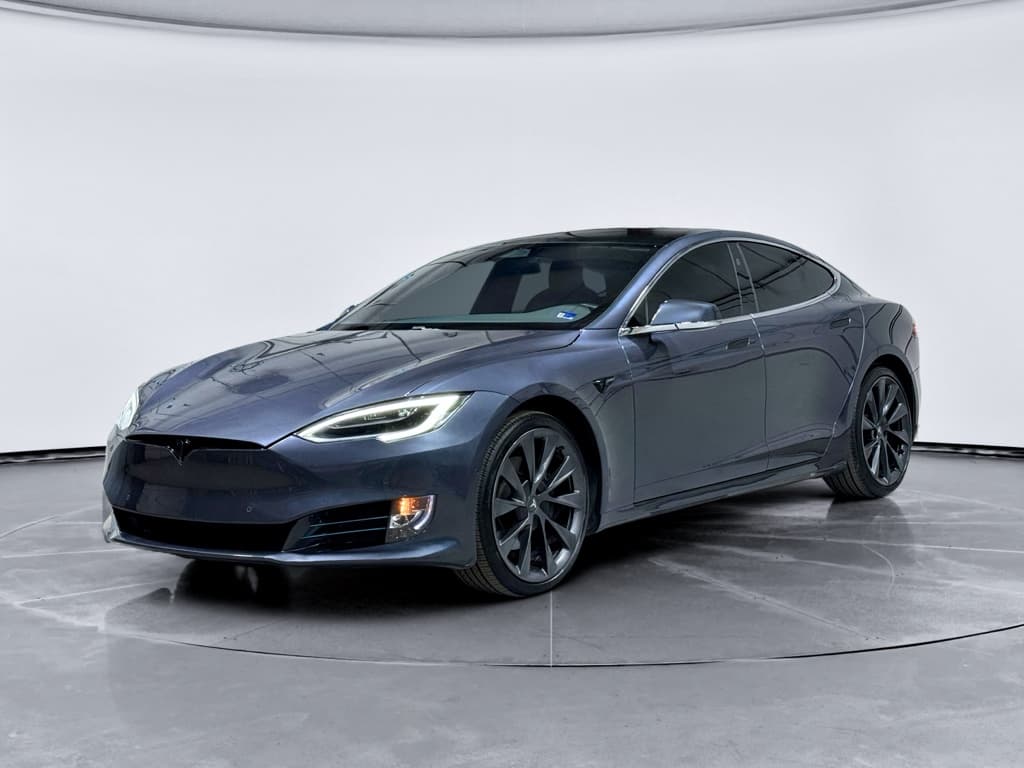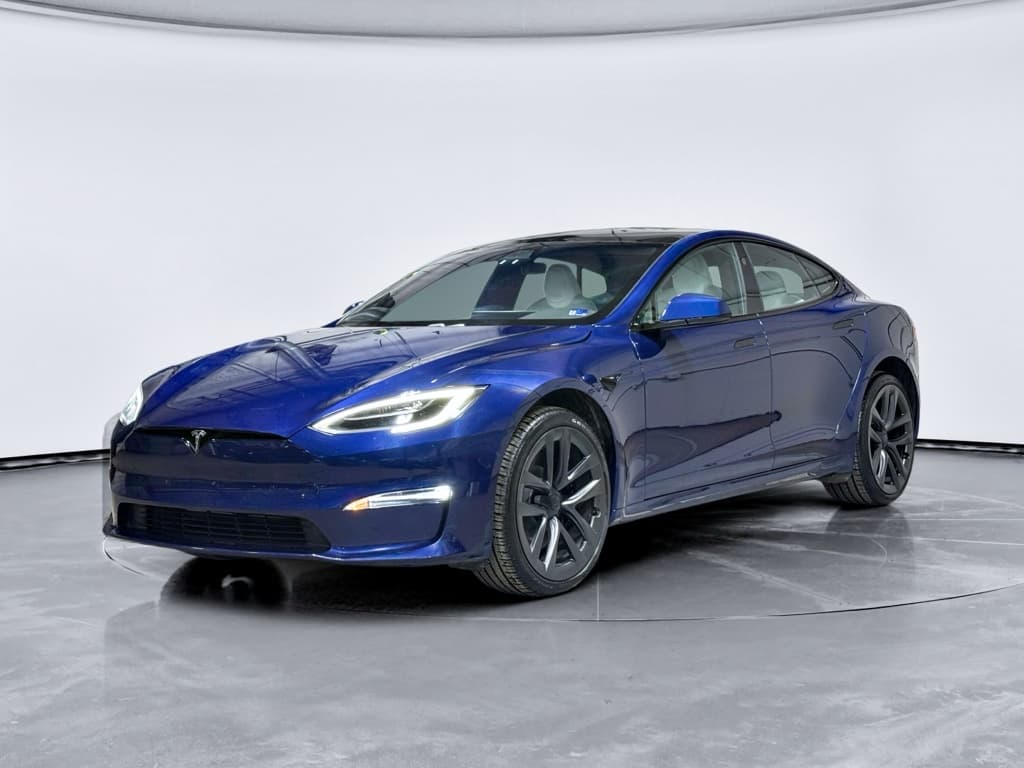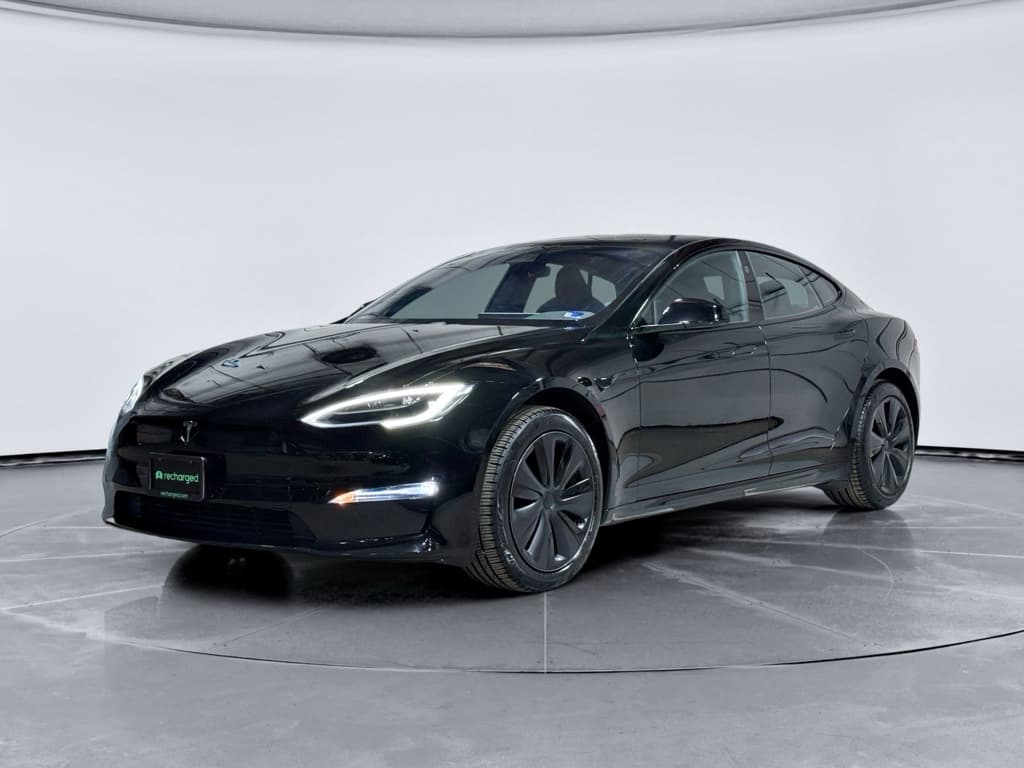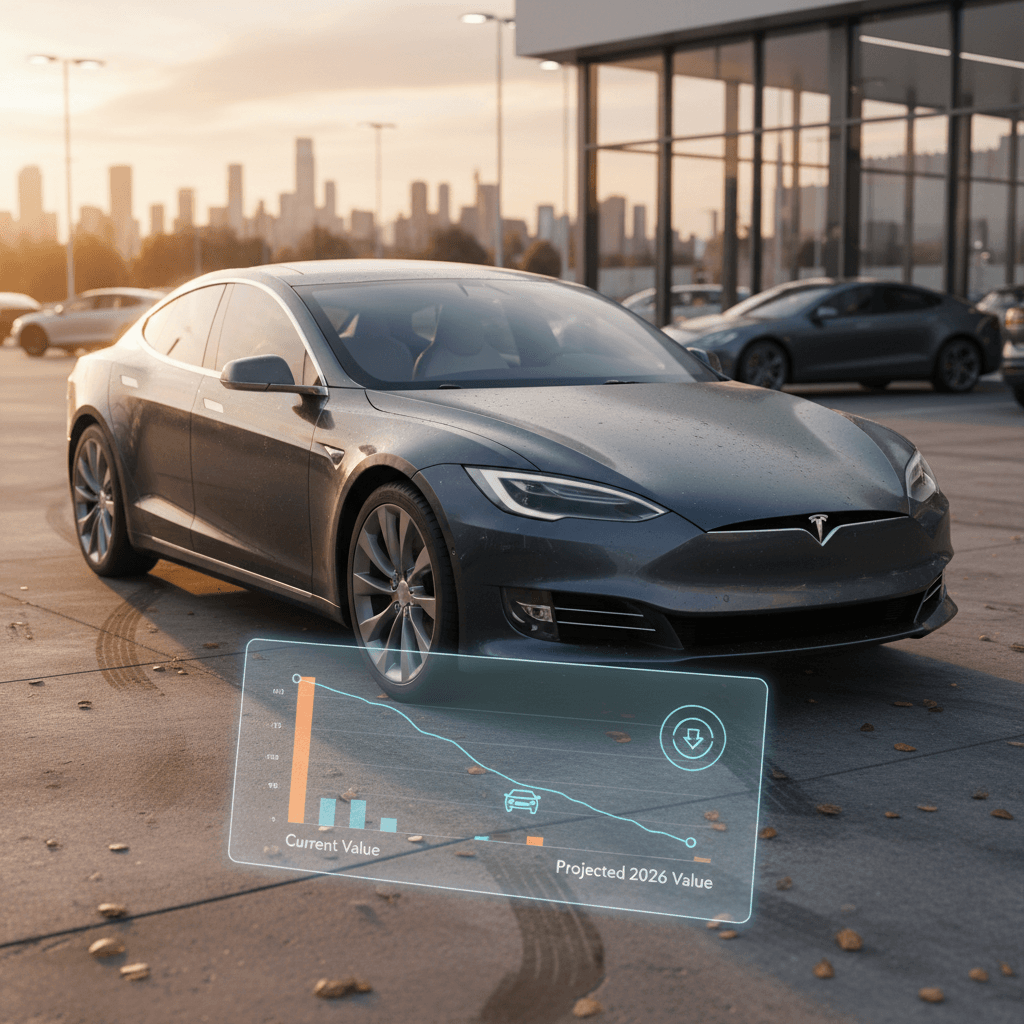
You didn’t buy a 2023 Tesla Model S to flip it like a meme stock. But here you are in 2026, watching prices move week by week and wondering: what’s my car actually worth as a trade‑in right now? The answer isn’t one number; it’s a band, shaped by trim, mileage, battery health, and a used‑EV market that’s finally stabilizing after Tesla’s wild price cuts of 2022–2024.
Quick Take
Overview: What a 2023 Model S Trades For in 2026
2023 Tesla Model S Value Snapshot (2026)
Those are directional numbers, not gospel. A 2023 Model S Long Range that stickered around $80,000 and has led a gentle highway life will sit near the top of that range. A Plaid with big wheels, hard use, and a tired battery can fall under it. The central story is that three‑year‑old luxury EVs now behave a lot like traditional German sedans: they lose a meaningful chunk up front, then values flatten out.
How Much Is a 2023 Tesla Model S Worth Today?
Let’s put some realistic brackets around 2023 Tesla Model S trade in value in the U.S. for early 2026. We’ll assume clean title, no big accidents, and a mainstream color like Pearl White, Midnight Silver, or Deep Blue.
Typical 2023 Tesla Model S Values in 2026 (U.S.)
Approximate ranges for well‑kept cars; individual offers will vary by region, demand, and battery health.
| 2023 Model S Configuration | Approx. Miles (2026) | Dealer Trade‑In Range | Retail / Marketplace Asking Range |
|---|---|---|---|
| Long Range, minimal options | 20,000–30,000 | $48,000–$55,000 | $55,000–$62,000 |
| Long Range, loaded (21" wheels, white interior, FSD) | 20,000–30,000 | $50,000–$58,000 | $58,000–$66,000 |
| Long Range, high mileage commuter | 45,000–60,000 | $42,000–$50,000 | $49,000–$57,000 |
| Plaid, standard miles | 20,000–30,000 | $60,000–$70,000 | $68,000–$78,000 |
| Plaid, low miles / pristine | <15,000 | $68,000–$78,000 | $78,000–$88,000 |
| Any trim, cosmetic or minor accident history | Any | $3,000–$7,000 below clean comps | $2,000–$5,000 below clean comps |
Use this as a starting point for negotiations, not a final verdict on your car.
Values Shift Fast
5 Big Factors That Move Your 2023 Model S Trade-In Price
- Mileage – A 2023 Model S with 15,000 miles is in a different universe than one with 60,000. Luxury EV shoppers still pay an emotional premium for low odometer readings.
- Battery health – Two identical cars on paper can be separated by 5–10% remaining battery capacity. A dealer who actually measures this will price accordingly.
- Accident and paint history – Modern Teslas are aluminum‑intensive, and big repairs are expensive. Structural work, poorly matched paint, or a branded title will savage your number.
- Spec and options – Plaid, 21" wheels, white interior, premium colors, and FSD can help resale, but not in a dollar‑for‑dollar way. The market loves performance more than software checkboxes.
- Where and how you sell – Tesla trade‑in, traditional dealers, instant‑offer sites, and EV‑focused marketplaces all value your car differently. Convenience versus top dollar is the eternal trade‑off.
Know Your Floors and Ceilings
The 2023 Model S Depreciation Curve Explained
Depreciation on the Model S used to be the envy of the industry. Then Tesla slashed new‑car prices in 2023–2024, and used values fell like a dropped iPhone. The good news in 2026: the worst of that adjustment looks baked in, and values for late‑model S sedans have firmed up again.
Years 0–3: The Big Drop
Most data sources now show a roughly 35–40% loss in value for a Model S over its first three years. That aligns with what we see in real‑world trade‑ins: a 2023 car that cost around $80,000 new trading in for mid‑$40,000s to low‑$50,000s, depending on mileage.
Heavy early depreciation is normal for luxury vehicles, but Tesla’s mid‑cycle price cuts exaggerated it for cars sold at higher MSRPs in 2022–2023.
Years 3–7: The Plateau
Once the early‑adopter tax is paid, the Model S starts to behave like a well‑loved German sedan. The curve flattens, and annual losses are smaller in absolute dollars. A healthy 2023 car should still have plenty of life and tech relevance in 2030.
That’s why three‑year‑old cars like your 2023 are so interesting: much of the damage has already happened, but the car still feels cutting edge.
Luxury EV Reality Check
Trade In, Sell to a Service, or List With a Marketplace?
Once you know roughly what your 2023 Model S is worth, the harder question is how to sell it. Each path has its own economics and emotional tax.
Three Main Ways to Move a 2023 Model S
Convenience on one side, maximum value on the other.
Dealer or Tesla Trade‑In
Easiest path: hand them the keys, sign a few papers, and roll the equity straight into your next car.
- Pros: Fast, simple, tax advantages in many states.
- Cons: Usually the lowest dollar amount you’ll see.
Instant‑Offer Car Buying Sites
Online players (CarMax, Carvana, etc.) bid on your VIN and sometimes beat local dealers, especially if they like Teslas.
- Pros: Transparent offers, quick payment.
- Cons: Still wholesale‑minded; little nuance for battery health.
Specialist EV Marketplace
Platforms like Recharged focus on EVs only, pairing transparent battery diagnostics with nationwide buyers.
- Pros: Closer to retail pricing, EV‑savvy buyers, expert help.
- Cons: May take a bit more time than an on‑the‑spot trade.
Where Recharged Fits
Ready to find your next EV?
Browse VehiclesHow to Boost Your 2023 Model S Trade-In Offer
7 Smart Moves Before You Get a Quote
1. Detail the car, inside and out
A professional interior and exterior detail is a cheap way to add perceived value. Buyers of luxury EVs judge hard on first impressions, wheels, glass, and upholstery matter.
2. Fix obvious, inexpensive defects
Curb‑rashed wheels, missing trim pieces, filthy floor mats, and small windshield chips are red flags. If a repair costs <$300 but looks like $3,000 in the buyer’s mind, fix it first.
3. Gather your documentation
Have your service history, tire receipts, and charging records (if you keep them) ready. A clean, organized paper trail makes any appraiser more comfortable stretching to the top of their band.
4. Get your own value baseline
Check multiple guides and marketplaces, KBB, Edmunds, EV‑focused sites, plus platforms like Recharged, to understand both dealer trade‑in and private‑party pricing for 2023 Model S comps.
5. Know your battery story
If possible, pull a <strong>third‑party battery health report</strong> or work with an EV specialist like Recharged that will measure and certify your pack. Walking in with proof of strong health changes the conversation.
6. Time it around demand spikes
Tax‑refund season, start of summer road‑trip season, and local EV‑incentive changes can all nudge offers up. Trading in on December 31 with snow in the forecast is… less optimal.
7. Shop more than one offer
Don’t stop at the first number. Get a quote from Tesla, at least one big‑box used‑car chain, and an EV specialist. Use the strongest to negotiate or simply choose the path with the best money‑to‑hassle ratio.
Common Mistake
Why Battery Health (and a Recharged Score) Matter So Much
On a gas S‑Class, you can guess residual value from the odometer. On a three‑year‑old Model S, the battery is the story. Two 2023 Long Range cars with 30,000 miles can drive very differently if one has spent its life fast‑charging at 5% and the other has been pampered on Level 2 at home.
How Battery Health Shows Up in Your Trade-In Price
Same VIN on paper, different dollars in reality.
Healthy Pack (≈95% of original)
- Strong real‑world range; test drives feel like new.
- Dealers and marketplaces are confident listing it at the top of the comp range.
- Can easily justify $3,000+ more than a tired pack to a savvy buyer.
Tired Pack (noticeable degradation)
- More frequent charging, reduced highway comfort.
- Buyers mentally price in future inconvenience or pack replacement.
- Wholesale buyers hedge by pushing your trade‑in toward the bottom of the range.
This is why Recharged built the Recharged Score: a battery‑first inspection that quantifies range, pack health, and charging behavior instead of guessing from mileage alone. When you sell or trade a 2023 Model S through Recharged, that report travels with the car, making it easier to justify top‑of‑market pricing to the next owner, and therefore a stronger offer to you.
Realistic 2023 Model S Trade-In Scenarios
Let’s pressure‑test these numbers with a few simplified examples. These aren’t quotes, they’re illustrations of how the market behaves when you change the variables.
Sample 2023 Tesla Model S Trade-In Scenarios (2026)
Three fictional owners, three very different outcomes.
| Owner Profile | Car Details | Likely Trade‑In Band | What a Specialist Might Pay |
|---|---|---|---|
| Highway Commuter | 2023 Long Range, 52,000 miles, 19" wheels, no FSD, strong battery health | $44,000–$49,000 | $48,000–$53,000 with certified battery report |
| Garage Queen | 2023 Plaid, 11,000 miles, 21" wheels, white interior, no accidents, excellent battery | $70,000–$78,000 | $78,000–$86,000 if marketed nationally to performance buyers |
| City Life, Hard Miles | 2023 Long Range, 38,000 miles, multiple curb‑rashed wheels, one minor accident, moderate degradation | $40,000–$45,000 | $44,000–$50,000 with cosmetic reconditioning and transparent battery disclosure |
All values are illustrative and assume a stable used‑EV market like early 2026.
Think in Bands, Not Exact Dollars
FAQs: 2023 Tesla Model S Trade-In Value
Frequently Asked Questions
Bottom Line: Is Now a Good Time to Trade Your 2023 Model S?
Three years in, your 2023 Tesla Model S has already taken the hardest depreciation punch it’s going to take. In 2026, trade‑in values have stabilized, battery tech hasn’t leapt so far ahead that your car feels obsolete, and there’s real demand for clean, late‑model luxury EVs, especially with verified battery health. That makes this a rational, defensible moment to move on if the next car in your life is calling.
The key is not to treat your trade‑in number like fate. Take the time to prep the car, understand the true value band for your configuration, and collect offers from more than one type of buyer, including EV‑first platforms like Recharged that live and breathe battery health and fair market pricing. Do that, and your 2023 Model S stops being a question mark and becomes what it should have been all along: leverage.