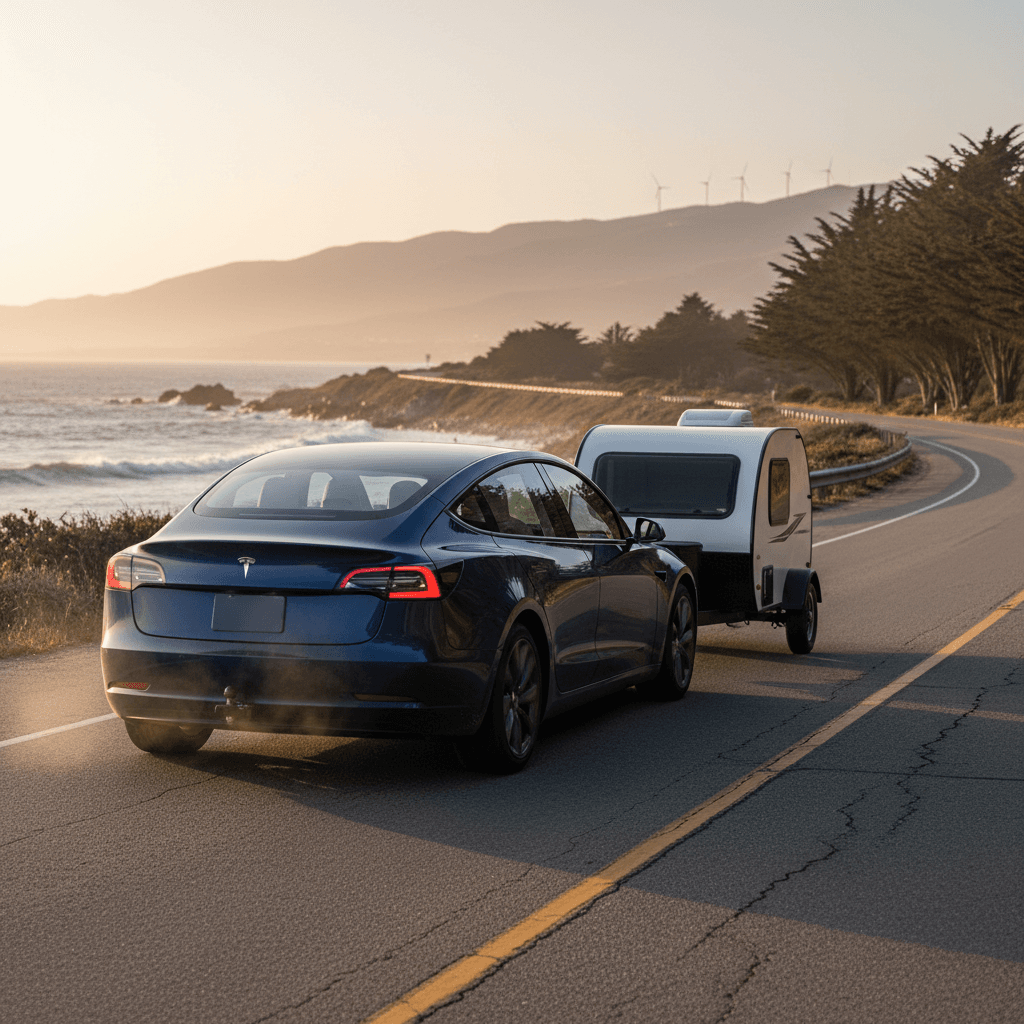
If you’re eyeing a Tesla Model 3 as a light-duty tow vehicle, you’re asking two smart questions: what is the Model 3 towing capacity, and how much range loss should you expect when you hook up a trailer? The answers depend on where the car was sold, whether it has the factory tow package, and what you’re pulling behind it.
Quick takeaway
Overview: Can a Tesla Model 3 Tow, and What Happens to Range?
Tesla has gradually embraced towing with the Model 3. In Europe, an optional hitch has been offered for years. More recently, a factory tow package has become available in North America, with a rating up to 2,200 pounds on properly equipped cars. At the same time, many U.S. cars were sold without a factory tow option, and Tesla historically warned owners not to tow with non-approved equipment.
From a range perspective, the rule of thumb from owners and testers is simple: plan on losing roughly half your normal range with a typical camping or utility trailer. A small, low, streamlined trailer might cost you a bit less than that. A tall box trailer or heavy enclosed U‑Haul can easily cost you more.
Legal and warranty note
Official Tesla Model 3 Towing Capacity by Market
Tesla’s published towing limits for the Model 3 vary by region and by whether the car has the approved tow package. Here’s a simplified snapshot of what you’re likely to see in the owner’s manual and Tesla’s shop listings in early 2025.
Tesla Model 3 Towing Capacity Overview
Approximate factory ratings for common Model 3 configurations when equipped with the Tesla tow package. Always confirm in the manual for your specific car.
| Market / Package | Typical Model Years | Max Trailer Weight (braked) | Unbraked Limit | Tongue Weight (approx.) | Notes |
|---|---|---|---|---|---|
| Europe & UK – Factory Tow Bar | 2019+ (SR+, LR, Performance, where equipped) | ~2,000–2,200 lb (≈ 910–1,000 kg) | ~1,650 lb (≈ 750 kg) | ~200 lb (≈ 90 kg) | Tow rating appears on car data plate; common rating: 1,000 kg braked. |
| North America – Factory Tow Package | 2024+ refresh and select earlier cars when equipped | Up to 2,200 lb (998 kg) | Check your manual | ≈ 220 lb (100 kg) | Tesla’s tow package listing in the U.S. shop quotes a 2,200 lb capacity on RWD and AWD models. |
| Markets Without Factory Rating | Various | Not officially rated | Not officially rated | N/A | Owner’s manual may state the vehicle is not approved for towing. Aftermarket hitches are at your own risk. |
These figures are for general guidance only. Your car’s door jamb label and owner’s manual take precedence.
Where to find your exact rating
How Towing Affects Tesla Model 3 Range
A Model 3 is one of the most efficient EVs on the road because of its slippery shape and relatively low weight. When you add a trailer, you’re fighting two enemies: aerodynamic drag and extra weight. At highway speed, drag matters more than weight, which is why a tall boxy trailer hurts range far more than a small, low teardrop camper of the same mass.
Why Towing Slashes Model 3 Range
The physics are the same whether you drive gas or electric, EVs just make the impact easier to see.
Aerodynamic drag
At 60–70 mph, pushing a flat front wall of trailer through the air takes enormous energy. A boxy trailer can double or triple your drag compared with the car alone.
Added mass
A 1,500–2,000 lb trailer adds a big chunk to a Model 3’s curb weight. Hills, stop‑and‑go traffic, and frequent accelerations all burn extra kWh.
Higher average load
More load means the battery and motors are working harder. That heats components faster and may reduce peak power or speed on long grades, especially in hot or very cold weather.
Typical Range Loss When Towing With a Model 3
A simple planning rule
Real-World Examples of Model 3 Towing Range Loss
Because Tesla doesn’t publish official “towing range” numbers, the best data comes from owners and road tests. Numbers vary with terrain, temperature, wind, trailer shape, and speed, but some patterns show up repeatedly.
- A Model 3 Long Range towing a compact, aero‑optimized teardrop camper at about 55 mph has been measured around 250–380 Wh/mi, roughly a 30–45% hit vs. solo driving on the same route.
- Owners towing small utility trailers or lightweight boats in the 800–1,800 lb range often report roughly double their usual Wh/mi on faster highway legs (65–75 mph), which translates to about half the normal range.
- Pulling tall, enclosed rental trailers near the 2,000+ lb limit can push consumption well above 400–450 Wh/mi at highway speeds, especially in hilly terrain or cold weather. That’s where you see 60%+ range reduction.
Remember, these are ballpark numbers. The key controllable factor is speed. Dropping from 70–75 mph to more like 55–60 mph can turn an ugly towing day into a manageable one, even with a modest battery like a standard‑range Model 3.
Don’t tow near empty
Matching Your Trailer to a Model 3 Tow Rating
If you keep expectations realistic, a Model 3 can be a terrific partner for small trailers and hitch‑mounted accessories. The key is to stay well within the published tow rating and pay attention to tongue weight and aerodynamics.
What Pairs Well With a Tesla Model 3 Tow Rating?
Typical trailer pairings that make sense for a Model 3 tow vehicle, assuming a 2,000–2,200 lb factory rating.
| Trailer Type | Typical Loaded Weight | Aero Profile | Model 3 Suitability | Comments |
|---|---|---|---|---|
| 2–4 bike rack on hitch | Up to ~200 lb (with rack) | Minimal | Excellent | What Tesla’s hitch was practically made for, no meaningful range hit. |
| Small utility trailer (lumber, appliances, yard waste) | 800–1,500 lb | Low/medium | Good | Fine for short to medium trips; expect ~30–50% range loss at highway speeds. |
| Compact teardrop or EV‑optimized camper | 1,200–2,000 lb | Low, rounded | Good (if under rating) | Plan for 40–55% range loss and stick to moderate speeds. |
| Tall 5×8 enclosed box trailer | 1,500–2,200+ lb | Tall, flat front | Marginal | Eats range quickly and can stress the car on grades. Only consider for infrequent, well‑planned trips. |
| Large travel trailer / toy hauler | 3,000+ lb | Tall, flat | Not recommended | Exceeds or crowds the Model 3’s tow rating and can be unstable and unsafe. Use a heavier‑duty tow vehicle. |
Always compare the loaded (ready‑to‑camp) trailer weight, not just dry weight, to the rating in your specific owner’s manual.
Model 3 towing sweet spot
Setup Basics: Tires, Weight Distribution, and Brakes
However you use your Model 3 for towing, good setup is non‑negotiable. Because you’re working nearer the limits of a relatively light car, you want to give yourself every possible advantage in stability, braking, and cooling.
Model 3 Towing Setup Checklist
1. Confirm the tow rating for your VIN
Look in the owner’s manual and on any data plate for maximum trailer and tongue weight. If your manual says the car is not approved for towing, take that seriously.
2. Use an approved hitch and wiring
If your market offers a factory tow package, use it. Aftermarket hitches should be professionally installed, with correct trailer wiring so lights and (where legal) electric brakes work properly.
3. Mind tongue weight and cargo
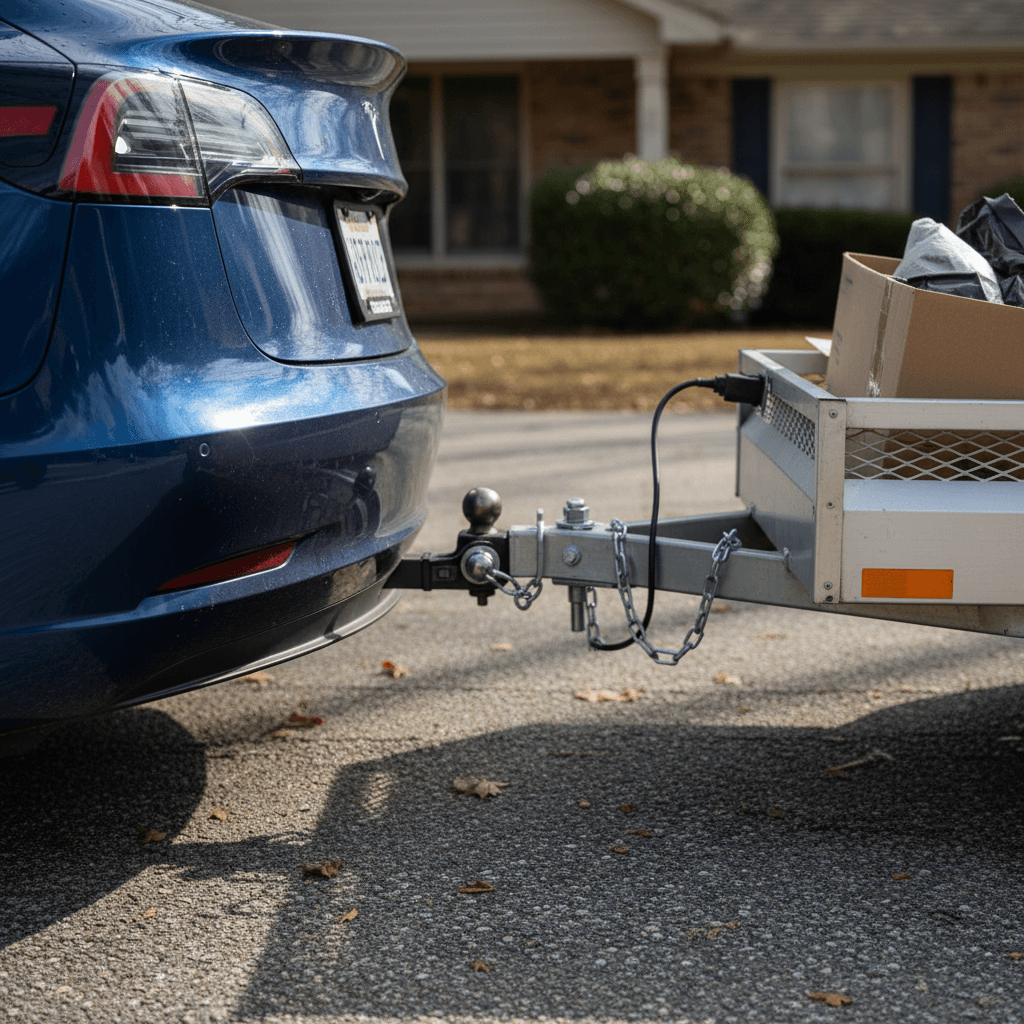
Typical tongue weight limits for Model 3 tow packages are around 200–220 lb. That has to include the weight of anything in the trunk or on a hitch rack behind the axle. Overloading the rear can hurt handling and braking.
4. Run correct tire pressures
Set all four tires to at least the pressures recommended for a fully loaded car. Underinflated tires heat up quickly under towing loads and waste energy.
5. Use trailer brakes when required
Many jurisdictions require <strong>brakes on trailers over a certain weight</strong> (often around 1,500–3,000 lb). Even if local law doesn’t, trailer brakes dramatically improve stopping distance and stability.
6. Watch temperatures and behavior
On long grades or in hot weather, pay attention to warning messages and how the car feels. If you sense instability, slow down, redistribute weight, or shorten your day’s drive.
Stability before speed
Charging and Trip Planning in a Model 3 While Towing
EV towing can be incredibly smooth once you get the rhythm down, but you’ll charge more often and you’ll need to be strategic about where you stop. That’s especially true with a Model 3, whose shorter wheelbase and lower rated tow capacity naturally favor lighter trailers and somewhat shorter hops between chargers.
Plan shorter legs
With a typical trailer you might see effective highway range of 80–160 miles on a full charge, depending on battery size and trailer. Instead of relying on the in‑car default route, manually add an extra stop or two so you’re not stretching to the last few percent.
Think in terms of time, not just distance: steady 45–60 minute drives followed by quick DC fast‑charge stops are less stressful than trying to push a long leg and then doing one giant charge.
Pick tow‑friendly chargers
Not all charging stations are easy with a trailer. Look for:
- Pull‑through stalls at Superchargers or CCS sites where you can keep the trailer hitched.
- Stations with plenty of room behind the stalls so you can angle in without blocking traffic.
- Sites near grocery stores or rest stops where you can make use of the downtime.
In tight locations, you may need to briefly unhitch or park the trailer nearby while you charge the car.
Use conservative consumption estimates
Special Considerations for Used Tesla Model 3s
If you’re shopping a used Tesla Model 3 specifically to tow a small trailer or bikes, you’ll want to look beyond the window sticker. Not every Model 3 is rated to tow, and not every previous owner treated their car kindly when it was hitched up.
Used Model 3 Towing Checklist
What to check before you trust a pre-owned Model 3 with a trailer.
Hitch condition
Look at the hitch receiver, mounting points, and wiring. Fresh undercoating, bent brackets, or cracked paint can hint at overloading or improper installation.
Battery health
Frequent heavy towing at high speeds or in heat can contribute to faster battery degradation. A battery health report is valuable if you’ll be towing regularly.
Service & tires
Uneven rear tire wear or a history of suspension repairs can indicate the car was used hard when loaded. Make sure the alignment and tires are in good shape.
Every vehicle sold through Recharged includes a Recharged Score Report with verified battery health and transparent pricing. If towing is on your wish list, you can use that report, plus a close inspection of any factory or aftermarket hitch, to decide if a particular used Model 3 is a smart match for your plans.
How Recharged can help
FAQ: Tesla Model 3 Towing Capacity & Range Loss
Frequently Asked Questions
Bottom Line: When Does Model 3 Towing Make Sense?
Used thoughtfully, a Tesla Model 3 can be a surprisingly capable light‑duty tow vehicle. Stay within the official tow rating for your market, favor low and aerodynamic trailers, keep an eye on tongue weight, and plan for roughly half your normal highway range on long towing days. Do that, and you’ll find that bikes, small campers, and weekend projects fit comfortably into the Model 3’s capabilities.
If you’re shopping used, you don’t have to figure this out alone. Recharged combines verified battery health reports, fair pricing, and EV‑savvy guidance to help you choose the right Model 3, and the right expectations, for your towing and range needs.