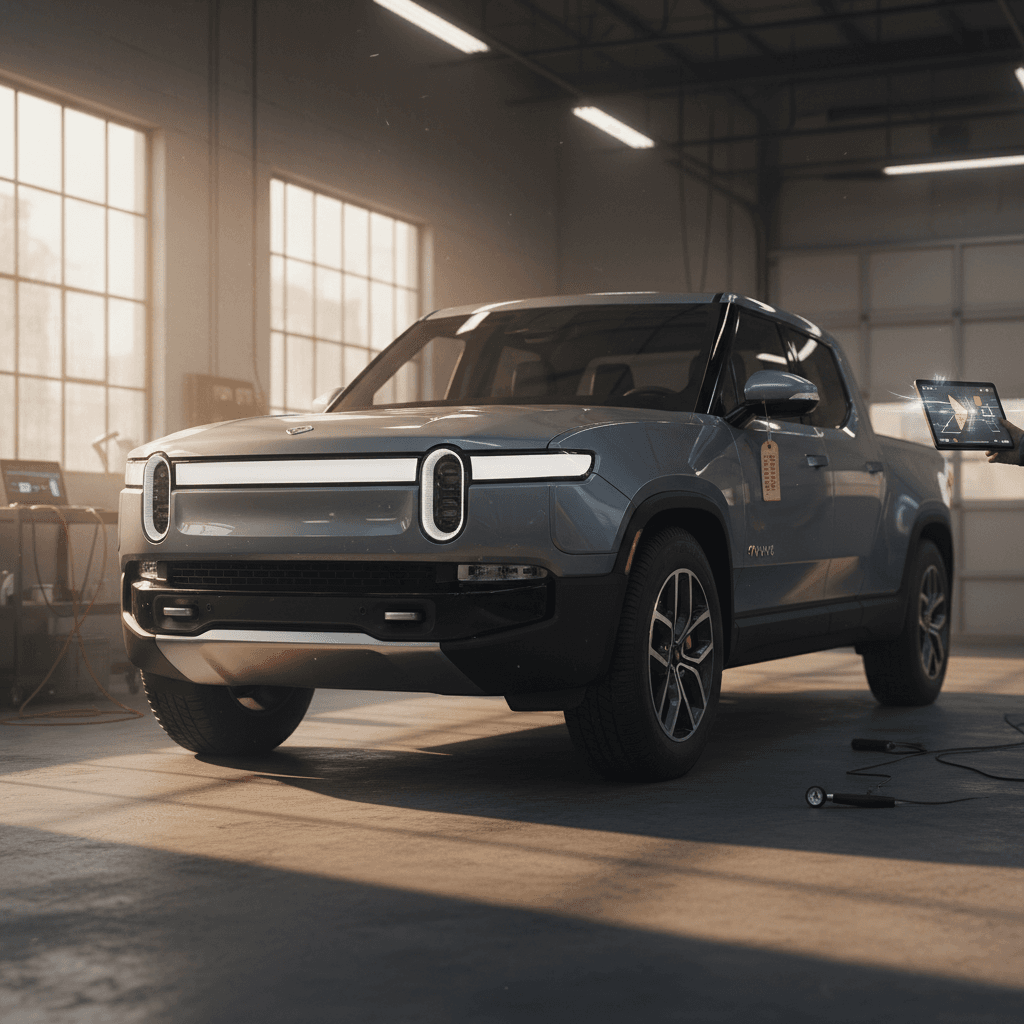
If you own, or are eyeing, a used 2023 Rivian R1T, you’ve probably heard about recalls. The good news is that most of the 2023 Rivian R1T recalls list is manageable, and many fixes are quick or handled with software. The key is knowing which recalls apply to your truck and how they affect safety, value, and your day‑to‑day driving.
Recalls are normal, especially for new EV brands
Overview: Why 2023 R1T recalls matter
The 2023 model year sits right in the middle of Rivian’s early production curve. By 2023 the R1T was past its shaky launch, but the company was still refining hardware, suspension components, and software. That’s why the 2023 Rivian R1T shows several NHTSA-recorded recalls, covering suspension, accelerator pedal behavior, exterior lighting, and seat belt hardware, plus quieter “service campaigns” that owners often discover during a service visit.
2023 Rivian R1T reliability at a glance
Information changes fast
Quick 2023 Rivian R1T recalls list
Exact campaign numbers and affected build ranges vary, but as of April 2026, a typical 2023 Rivian R1T may show some or all of the following recalls. Think of this as a plain‑English roadmap, not a legal record, your VIN is the final word.
Key 2023 Rivian R1T recalls (high-level summary)
This table summarizes major recalls that commonly include 2023 R1T trucks. Your exact truck may have more, fewer, or different campaigns depending on its build date and service history.
| Recall topic | What can go wrong | Typical fix | Seriousness |
|---|---|---|---|
| Rear suspension toe link service recall (2022–2025 builds) | Toe link may separate if reassembled incorrectly after prior service, causing loss of control. | Inspect rear suspension service history and toe link hardware; replace or reassemble with updated procedure. | High – safety‑critical if ignored. |
| Accelerator pedal behavior / unintended torque (2022–2023 built trucks) | Pedal input may not match expected torque delivery under rare conditions. | OTA software update plus, in some cases, replacement pedal hardware. | Medium–High – drivability and crash‑risk concern, mostly addressed via software. |
| Headlight low‑beam outage (2022–2025 R1T/R1S) | Low‑beam may fail due to internal module fault, reducing night visibility. | Replace or reprogram headlight control module at service center. | Medium – serious at night, but straightforward to repair. |
| Seat belt front D‑ring anchorage (2022–2025 R1T/R1S) | Improperly installed bolts could reduce seat belt effectiveness in a crash. | Inspect and re‑torque or replace D‑ring bolts with improved procedure. | High – core crash‑protection system. |
| Early airbag and occupant safety system recalls (mainly 2022–early 2023) | Airbags may not deploy correctly under certain conditions. | Update software or replace specific sensors / modules as required. | Medium–High – depends on build date; many 2023 trucks already remedied before sale. |
Use this as a conversation starter with Rivian service or a seller, not a substitute for an official VIN check.
Don’t panic if your truck shows multiple recalls
Major safety recalls explained
Rear suspension toe link service recall
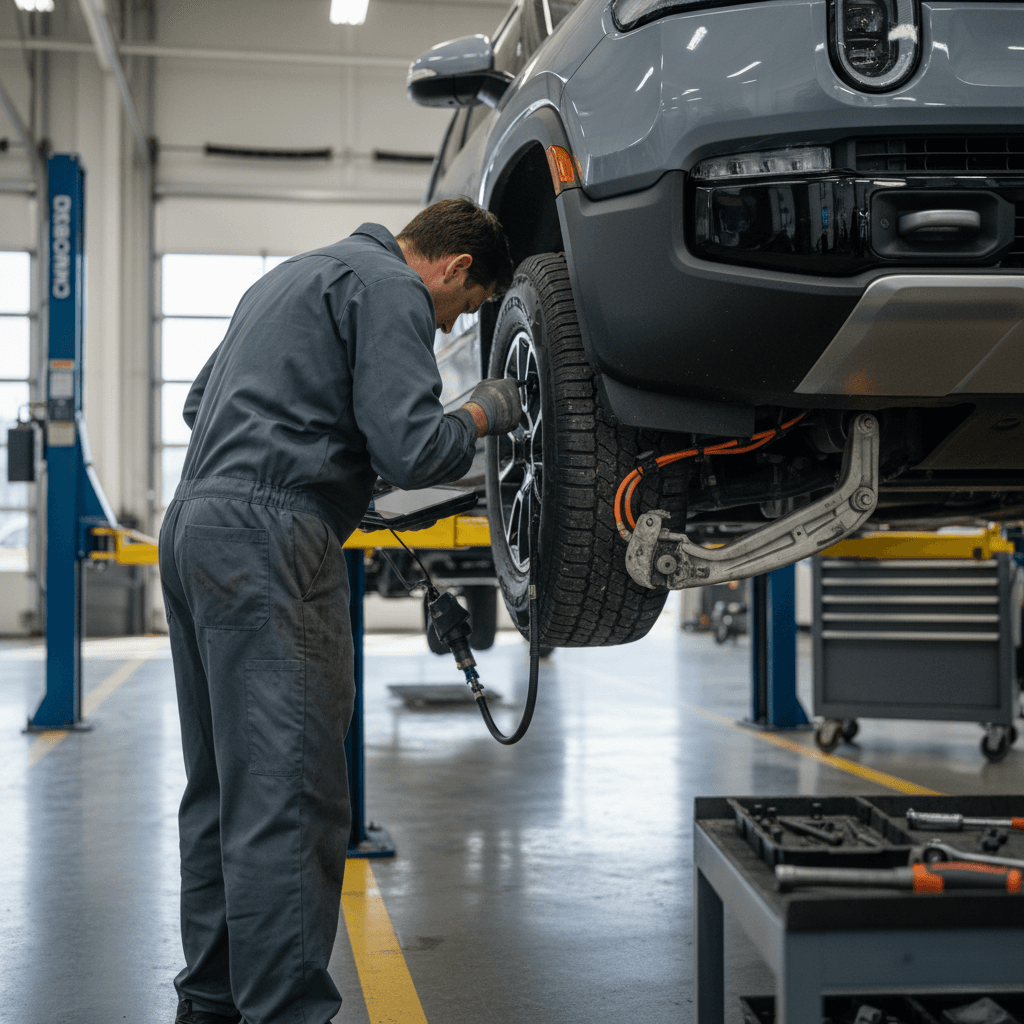
One of the most important recalls covering 2022–2025 R1T and R1S trucks involves the rear suspension toe link. This isn’t about a bad design leaving the factory; it’s about what can happen after a prior suspension service. If the toe link joint is reassembled incorrectly, it can eventually separate while you’re driving, suddenly changing rear wheel alignment and making the truck hard, or impossible, to control.
- Symptoms can include clunks from the rear, odd tracking, or unpredictable rear‑end behavior over bumps.
- The recall is especially relevant if your 2023 R1T had previous rear suspension work between 2022 and March 2025.
- NHTSA campaigns for this issue typically reference 2022–2025 R1T and R1S with prior service, not every truck built.
Why this one matters
Accelerator pedal / unintended torque behavior
Another high‑profile recall centered on the accelerator pedal assembly and software. On a subset of R1T and R1S vehicles built through late 2023, Rivian identified scenarios where the pedal input and delivered torque didn’t align perfectly, raising concerns about unintended acceleration or delayed response. The company moved quickly with an over‑the‑air (OTA) update, then followed up with a formal recall that, in some cases, adds a revised physical pedal.
What owners notice
- Unusual response when modulating the pedal at low speeds.
- Occasional drivability quirks after specific software updates.
- Recall notifications in the Rivian app or by email.
What the fix looks like
- An OTA update that changes how the truck interprets pedal input.
- For some VINs, a physical pedal replacement at a service center or via mobile service.
- Quick verification drive and system checks after the update.
Good news on the pedal recall
Headlight low‑beam failure
A newer recall concerns headlight low‑beam outages on certain 2022–2025 R1T and R1S vehicles. An internal issue in the headlight control module can knock out the low beams, leaving you with only high beams or non‑functional headlights. It’s the kind of failure you may not think about until you’re driving home in the rain at night.
- The fix usually involves replacing or reprogramming the headlight control module.
- Some owners have this handled during another service visit or combined with other recall work.
- If you test‑drive a used 2023 R1T, always check low and high beams in a dark area.
Seat belt front D‑ring anchorage
Rivian also issued a recall on front seat belt D‑ring bolts across multiple R1T and R1S model years, including many 2023 trucks. In some vehicles, the bolts securing the upper seat belt anchorage may not have been torqued exactly to spec at the factory. In a serious crash, that can reduce how well the belts keep you in place.
How to sanity‑check seat belts on a 2023 R1T
1. Ask for recall documentation
Request the Rivian service invoice or recall completion email covering the seat belt D‑ring campaign. It should clearly note inspection and torque verification.
2. Inspect trim around the upper anchor
Look for signs the B‑pillar trim has been removed and reinstalled cleanly, this is often needed to access the D‑ring bolts.
3. Tug test (gently)
With the truck parked, give the upper anchor a firm tug. You’re not trying to break it loose, just confirming nothing is obviously loose or rattling.
4. Confirm with a VIN check
Even if paperwork looks good, run the VIN through NHTSA and the Rivian app. All seat belt campaigns should show as "remedied" or "closed".
Software and OTA-related recalls
Because the R1T is a rolling computer, some “recalls” for 2023 trucks look more like big software patches than traditional wrench‑and‑socket repairs. That’s a double‑edged sword: issues can be fixed quickly, but it also means it’s easy to ignore that little update notification.
- Infotainment and cluster glitches after certain 2023 software builds that triggered limited service campaigns or halted OTA rollouts.
- Powertrain calibration updates that improve pedal response or traction under specific conditions.
- Battery and charging logic updates that change preconditioning, DC fast‑charge behavior, or state‑of‑charge display.
Always keep your 2023 R1T up to date
Service campaigns vs. official recalls
If you hang around Rivian owner forums, you’ll see talk of “service campaigns” that never show up in NHTSA’s recall database. These might cover things like early 12‑volt battery replacements, wheel hub torque inspections, or updated half‑shafts for noise. They’re real, but they’re handled differently than federally reportable recalls.
Official NHTSA recalls
- Safety‑related defects or non‑compliance.
- Publicly searchable by VIN at NHTSA.gov.
- Must be performed at no cost to you.
- Generate formal letters to registered owners.
Internal service campaigns
- Quality or durability fixes the automaker wants to improve proactively.
- May only be visible to Rivian service or when you schedule a visit.
- Often handled quietly during another repair.
- Still worth asking about on a used 2023 R1T.
What this means for a used 2023 R1T
How to check your 2023 R1T for open recalls
Before you sign anything, or before you shrug off that dashboard message, take five minutes to run a full recall check. You don’t need special tools; you just need the VIN and an internet connection.
Step‑by‑step: Checking a 2023 R1T for recalls
1. Grab the VIN
You’ll find it at the base of the windshield on the driver’s side, on the driver‑door jamb label, or in the digital documents inside the Rivian app.
2. Use NHTSA’s online tool
Go to NHTSA’s recall lookup and enter the VIN. You’ll see all <strong>federally registered safety recalls</strong>, whether they’re open or completed.
3. Check in the Rivian app
Once the truck is in your Rivian account, open the app and look for service or recall notifications. Rivian often surfaces campaigns here even before letters arrive.
4. Call Rivian service
If anything looks confusing, especially around suspension or seat belt work, call Rivian and ask for a <em>full recall and campaign history</em> for that VIN.
5. Keep proof
After recall work is done, save the digital or printed service record. It helps when selling later and reassures future buyers that your 2023 R1T has been cared for.
Don’t rely on Carfax alone
Buying a used 2023 R1T: what to watch for
The 2023 Rivian R1T is a fantastic truck to drive, quick, quiet, and wildly capable off‑road. Recalls don’t change that. What they do change is how carefully you need to read the paperwork. A truck with all recalls completed is usually a better buy than one that’s been blissfully ignored.
Key recall-related questions for a 2023 R1T seller
You don’t need to be a technician, just ask clearly and wait for specifics.
"Do you have recall paperwork?"
Ask for service invoices or emails showing completion of suspension, seat belt, and headlight recalls. A vague "I think they did it" isn’t enough.
"Has the truck had suspension work?"
If the rear suspension was touched between 2022 and early 2025, verify the toe link recall was done afterward using the updated procedure.
"Are all software updates current?"
From the center screen, check for pending updates. A truck stuck on very old software may have unapplied safety fixes.
How Recharged handles recalls on used Rivians
Ready to find your next EV?
Browse VehiclesReal-world owner experience and reliability
Spend any time with R1T owners and you’ll hear a consistent story: they love driving the truck, and they’ve also acted as unpaid beta testers. For 2023 owners, that’s meant occasional visits (or mobile service appointments) for recalls, updated parts, or surprise 12‑volt battery replacements, plus a steady drumbeat of software updates.
- Many early issues, like occasional infotainment crashes, are annoying but not safety‑critical.
- Hardware recalls around suspension, seat belts, and headlights are where you should focus your energy.
- Rivian’s mobile service model often means recalls are handled in your driveway, not at a traditional dealership.
"Owning an early EV truck is a little like owning a high‑end smartphone. The updates matter, the early bugs are real, and by year three or four, the product is usually much better than when it left the factory."
FAQ: 2023 Rivian R1T recalls
Frequently asked questions about 2023 R1T recalls
Bottom line for owners and shoppers
Recalls are part of the story with any early‑generation EV, and the 2023 Rivian R1T is no exception. What matters is not whether the truck has ever been recalled, it almost certainly has, but whether those campaigns were handled promptly and correctly. A 2023 R1T with completed suspension, seat belt, headlight, and pedal recalls, current software, and a clean service record is still one of the most compelling electric pickups on the road.
If you already own a 2023 R1T, stay on top of updates and use recall notices as your cue to schedule service before problems show up on the road. If you’re shopping used, treat recall history as a window into how carefully a truck has been maintained. And if you’d rather not decode all of this yourself, a used R1T listed through Recharged comes with a Recharged Score battery and health report, expert guidance, and support from test‑drive to delivery, so you can enjoy the truck and leave the recall detective work to us.