If you own, or are eyeing, a used 2021 Tesla Model Y, you’ve probably heard the horror stories: phantom braking, flaky heat pumps in the cold, panel gaps you could lose a quarter in. The 2021 Tesla Model Y has some very real problems, but it’s also one of the most popular EVs on the road. This guide breaks down the most common 2021 Model Y problems and fixes, what’s covered by recalls, and how to shop smart if you’re buying used.
How bad is it, really?
2021 Tesla Model Y reliability snapshot
Overview: Should you worry about 2021 Model Y problems?
The 2021 Model Y sits in Tesla’s **early‑production sweet spot**: the engineering was mostly baked, but quality control and software were still a moving target. That means more recalls and software patches than you’d see on a typical compact SUV, but not necessarily a car you should avoid outright.
- Mechanically, the dual‑motor powertrain and battery pack are proving durable in normal use.
- Most safety‑critical issues (like Autopilot behavior and backup camera problems) have been addressed through recalls and over‑the‑air updates.
- Annoying quality issues, wind noise, rattles, paint, trim, are still what owners complain about most, especially on early‑2021 builds.
- Cold‑weather owners need to pay close attention to the HVAC/heat pump history before buying.
Where Recharged fits in
Quick list: top 2021 Model Y problems and fixes
Most common 2021 Model Y problems and typical fixes
Use this as your cheat sheet, then dive into the detailed sections below.
| Problem area | Typical symptoms | Likely cause | Typical fix | Covered by recall/warranty? |
|---|---|---|---|---|
| Phantom braking / Autopilot | Sudden hard braking on highway or two‑lane roads | Camera‑only driver‑assist logic misinterpreting shadows/traffic | Update Autopilot software; adjust following distance; in some cases, Tesla service diagnostics | Often addressed via software recalls/updates |
| Heat pump / HVAC | No heat in cold weather, loud compressor noises, foggy windows | Early heat pump design and control software issues | Software updates, replacement of heat pump/super manifold or sensors | Many cases covered under warranty or specific recalls |
| Build quality & water leaks | Wind noise, rattles, misaligned panels, water in trunk or tailgate | Early production fit/finish and sealing issues | Panel adjustment, new seals, trim refit; sometimes paint/body work | Usually **not** recall; may be goodwill or paid repair depending on age/mileage |
| Door handles / power loss | Doors won’t open after low‑voltage battery event; passengers feel "trapped" | Electronic latches not releasing when 12V battery is weak | Replace low‑voltage battery; teach passengers emergency releases; watch for emerging investigations | Under investigation; some cases handled under basic warranty |
| Suspension & noises | Clunks over bumps, loose feeling front end, premature tire wear | Loose suspension bolts, early‑wear links/bushings | Torque/replace bolts, align wheels, replace links as needed | Some issues covered by past recalls; others are normal wear |
| Battery & charging | Range lower than expected, DC fast‑charging slows quickly | Normal degradation, cold‑weather losses, software‑limited fast charging | Battery health check, charge habit adjustments, pre‑conditioning before fast charging | Generally **not** recall unless a specific defect is found |
Not every 2021 Model Y will have these issues, but these are the problem patterns owners report most often.
Phantom braking and Autopilot issues
If there’s one 2021 Tesla Model Y problem that shows up again and again, it’s **phantom braking**, sudden, unexpected deceleration when you’re using Autopilot or cruise control. Owners describe the car slamming on the brakes for overpasses, shadows, parked vehicles on the shoulder, or seemingly nothing at all.
- Most common on highways and undivided two‑lane roads with traffic in the opposite direction.
- Tied to Tesla’s decision to rely on cameras only, no radar, starting in 2021.
- Officially addressed by several software recalls and updates, but some owners still see occasional incidents.
Safety first
How to reduce phantom braking in a 2021 Model Y
You can’t eliminate it entirely, but you can stack the odds in your favor.
1. Use the right following distance
Bump your following distance up a notch when using Autopilot, especially on busy highways. A longer gap gives you and the system more time to react to false positives.
2. Prefer well‑marked roads
Phantom braking is more common on poorly marked roads and in heavy rain or glare. On sketchy surfaces or in bad weather, drive manually instead of relying on Autopilot.
3. Keep software updated
Many Autopilot calibration tweaks arrive through over‑the‑air updates. Make sure your car is on the latest approved software before assuming a hardware issue.
What Tesla can do
- Run diagnostics on the camera suite and Autopilot computer.
- Check for calibration issues after glass replacement or collision repair.
- Apply any open software recalls or configuration changes.
What you can do
- Document incidents with date, time, and conditions in the app.
- Consider turning off traffic‑aware cruise on busy two‑lane roads.
- If phantom braking is frequent and severe, open a service ticket and reference related NHTSA investigations into 2021 Model Y/3 phantom braking.
Heat pump and HVAC failures (especially in winter)
The 2021 Model Y’s **heat pump** was supposed to be a game‑changer for efficiency. In cold climates, though, it became one of the most notorious 2021 Tesla Model Y problems. Owners describe losing cabin heat at sub‑freezing temperatures, sometimes right after a fast‑charge session, and watching the windshield fog or frost while the car blows cold air.
- Symptoms range from weak heat to total loss of cabin heating, often setting HVAC‑related error messages.
- Tesla issued recalls and software updates targeting heat pump behavior and control valves on 2021–2022 vehicles with specific firmware versions.
- In many cases, service centers have replaced the heat pump assembly, “super manifold,” or related sensors under warranty.
Cold‑weather safety warning
DIY checks before you head to service
1. Note outside temperature and conditions
Loss of heat around or below freezing, especially after DC fast charging or at higher speeds, is a classic 2021 Model Y heat pump failure pattern.
2. Try different HVAC settings
Switch between Auto and manual, change fan speeds, and adjust vent direction. If you only get lukewarm or cold air no matter what, that’s a clue.
3. Listen for compressor noises
Loud buzzing, rattling, or cycling noises from the front of the car with HVAC on can indicate a failing compressor or mount.
4. Check for software updates
If the car is behind on software, install pending updates, some heat pump issues are mitigated by control‑logic tweaks.
5. Document everything in the app
Take screenshots of errors and note when the failure occurs. This gives the service center a head start and strengthens your case for warranty coverage.
Typical fix and cost
Ready to find your next EV?
Browse VehiclesBuild quality, paint, and water leaks
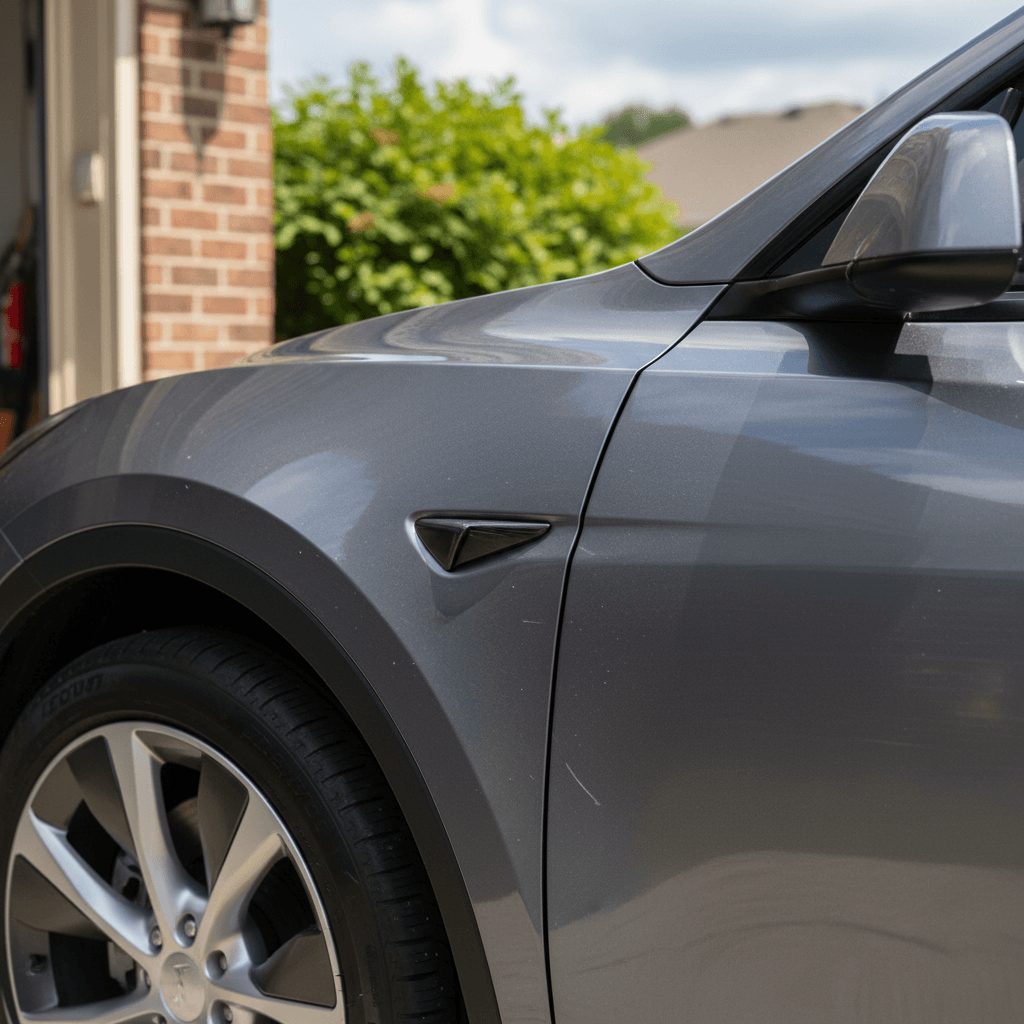
Early Model Y production, including many 2021s, earned a reputation for **so‑so build quality**. The drivetrains tend to be stout; it’s the stuff you see and touch that makes owners grumble.
- Panel gaps and alignment: misaligned doors, liftgates, and bumpers.
- Paint thinness and chipping, especially on rocker panels and lower doors.
- Wind noise from frameless windows, mirrors, and A‑pillars.
- Water leaks into the trunk or liftgate area after heavy rain or car washes.
What’s mostly cosmetic
- Minor panel gaps that don’t affect sealing.
- Small paint defects that haven’t rusted or spread.
- Squeaks and rattles over specific road surfaces.
These can be annoying but aren’t deal‑breakers for most used‑car shoppers, especially if the price reflects them.
Problems you shouldn’t ignore
- Water in the trunk, under the rear seats, or in the taillight housings.
- Evidence of sloppy repainting or body filler that suggests prior damage.
- Wind noise so loud you need to raise your voice at 65 mph.
Water intrusion and badly repaired damage can lead to electrical issues and poor resale value down the line.
Used‑buy tip
Door handles, power loss, and safety concerns
Traditional door handles are simple. Tesla’s electronic latches are not. Federal safety regulators opened a **preliminary investigation in 2025 focused on 2021 Model Y rear doors that wouldn’t open** when the car’s low‑voltage battery was weak, forcing some parents to break a window to get children out.
- Normal behavior: If the 12V (or low‑voltage) battery is fine, electronic handles should work as expected, with manual releases available inside the cabin.
- Problem behavior: A weak or failed low‑voltage battery can leave electronic handles dead, and passengers, especially kids, may not know how to use the manual release.
- Status: As of early 2026, the investigation is still in the information‑gathering phase; it hasn’t yet resulted in a dedicated recall, but Tesla has a long track record of addressing such issues via software changes or campaign repairs.
Door‑handle and exit‑safety checklist
1. Learn all manual releases
Front doors have pull‑type mechanical releases near the window switches; rear doors use lower mechanical levers. Make sure every regular passenger knows where they are.
2. Test handles with the car “off”
With the car parked, try opening each door from both inside and outside. Any door that feels inconsistent or requires multiple pulls is worth a service visit.
3. Watch for low‑voltage warnings
Messages about the 12V or low‑voltage battery shouldn’t be ignored. Schedule service promptly, this battery runs the latches as well as the screens.
4. Ask about recall and investigation status
When buying used, ask the seller or service center to confirm whether all current campaigns and software updates related to door latches and low‑voltage power have been completed.
If a door won’t open in an emergency
Suspension noises and premature wear
The Model Y is a heavy, quick SUV on relatively low‑profile tires. That’s a tough recipe for suspension components, and 2020–2021 cars have seen **more than their share of clunks, creaks, and loose‑feeling front ends**.
- Loose or under‑torqued suspension bolts on early builds prompted recall‑level attention for certain 2020–2021 Model Y vehicles.
- Owners report front‑end clunks over small bumps, especially at low speeds or when maneuvering in parking lots.
- Some see uneven tire wear on the inner edges, hinting at alignment issues or worn control‑arm bushings.
Normal vs. not‑so‑normal
How to test a 2021 Model Y’s suspension on a test drive
1. Low‑speed parking‑lot test
Turn the wheel lock‑to‑lock at walking speeds over small bumps or driveway lips. Listen for pops or clunks from the front corners.
2. Straight‑line stability
On a straight, lightly traveled road, see if the car tracks straight with a loose grip on the wheel. Constant correction can mean alignment or tire issues.
3. Brake‑then‑bump check
Gently brake as you cross a small bump. If you hear a distinct clack or knock as the front end loads and unloads, have the control arms and strut mounts checked.
4. Inspect tire wear
Before buying, look at the inner shoulders of all four tires. Excessive wear there may mean poor alignment history or worn suspension parts.
Battery degradation and charging complaints
The good news: **most 2021 Model Y packs age gracefully** when they’re not abused. The bad news: a lot of owners misunderstand what “healthy” looks like. That leads to complaints that the battery is dying when it’s really just doing what lithium‑ion batteries do.
- Typical real‑world degradation for a well‑cared‑for 2021 Model Y after 4–5 years is often in the single‑digit percentage range.
- Cold‑weather range loss can temporarily cut usable range by 30% or more, especially on short trips.
- Repeated fast‑charging from low states of charge can accelerate degradation and trigger more aggressive charge‑rate tapering.
How Recharged checks battery health
Better battery habits for a 2021 Model Y
Simple tweaks that protect range and longevity.
Charge to ~80–90% for daily use
Reserve 100% charges for road trips. Living at the top of the pack every day stresses the cells unnecessarily.
Pre‑condition in cold weather
Use scheduled departure and navigation‑based Supercharger pre‑conditioning so the pack is warm before you drive or fast‑charge.
Avoid deep discharges
Try not to live below 10–15% state of charge. Occasional low runs are fine; doing it constantly isn’t.
Software bugs, screens, and minor electrical gremlins
Tesla’s strength, and weakness, is that the 2021 Model Y is **software on wheels**. That means you get new features over the air, but you also see your share of bugs, glitches, and recall‑driven behavior changes.
- Center screen reboots or goes temporarily blank.
- Bluetooth key or phone‑as‑key occasionally failing to unlock.
- Backup camera lag or momentary black screens (the subject of multiple recalls and updates).
- Changes to Autopilot behavior after safety‑related software recalls.
When a reboot is enough, and when it’s not
Pre‑purchase checklist for a used 2021 Model Y
Shopping for a used 2021 Tesla Model Y can feel like speed‑dating: you have limited time to decide if a car is a keeper. This checklist focuses on the model‑year‑specific problem areas we’ve been talking about.
Checklist: Evaluating a used 2021 Model Y
1. Run the VIN for recalls and updates
Ask the seller for a screenshot of the car’s Software screen and Service > Recall section, or have Tesla confirm that all open 2021 campaigns are complete.
2. Inspect panels, paint, and glass
Look for misaligned liftgates, ripples in repaint areas, cracked glass, or mismatched paint. Small cosmetic flaws are normal; structural sloppiness is not.
3. Test heat and A/C thoroughly
Even in warm weather, set the climate to HI and verify strong, consistent heat. In cold climates, test from a cold soak if possible and watch for error messages.
4. Drive it like you’ll use it
Take at least 15–20 minutes. Use Autopilot briefly on a highway to check for extreme phantom braking. Listen for rattles and suspension clunks over imperfect pavement.
5. Check charging behavior
If you can, plug into a Level 2 charger and watch the rate. Ask for recent Supercharger session screenshots to see how quickly it tapers on fast charge.
6. Review service history
Ideally, you want a car with documented HVAC and suspension work already done, rather than one still waiting to experience known early‑build issues.
7. Get an independent EV inspection
If you’re not buying from a specialist, consider an EV‑savvy inspection. Recharged’s process was built specifically around the weak spots of cars like the 2021 Model Y.
When to walk away from a 2021 Model Y
Not every used 2021 Model Y is a good deal, no matter how shiny the paint or how persuasive the seller. The trick is knowing when the risk stack is just too tall for the price.
- Multiple serious open recalls with no plan to address them.
- Evidence of major collision repair with poor panel alignment or overspray.
- Unresolved heat pump failures in a cold‑climate car.
- Severe Autopilot or braking weirdness on a short test drive.
- Unexplained warning lights or repeated screen blackouts.
- A seller who refuses to provide a VIN, service records, or a pre‑purchase inspection opportunity.
Hard pass signals
FAQs: 2021 Tesla Model Y problems and fixes
Frequently asked questions about 2021 Model Y problems
Bottom line: Is a 2021 Model Y still worth it?
A 2021 Tesla Model Y is not a set‑and‑forget appliance. It’s an early mainstream EV that delivers stunning efficiency and performance wrapped in a body that, frankly, sometimes left the factory before the details were fully sorted. **If you go in eyes‑open about the common 2021 Tesla Model Y problems and fixes, it can still be a terrific family EV.**
The smart play is to treat each car as an individual: check recall status, scrutinize its HVAC and suspension history, drive it long enough to expose any weird behavior, and get objective battery‑health data. That’s the philosophy behind Recharged’s **Recharged Score Report**, EV‑specialist inspections, and fully digital buying experience, so you spend your energy driving, not worrying about what might go wrong.
If you find a well‑documented 2021 Model Y that’s already had the big problems fixed, you’re inheriting a mature, capable EV with years of life left. If you find one that’s been neglected or hiding issues, do yourself a favor: thank it for its time, walk away, and keep shopping until you find the right one.