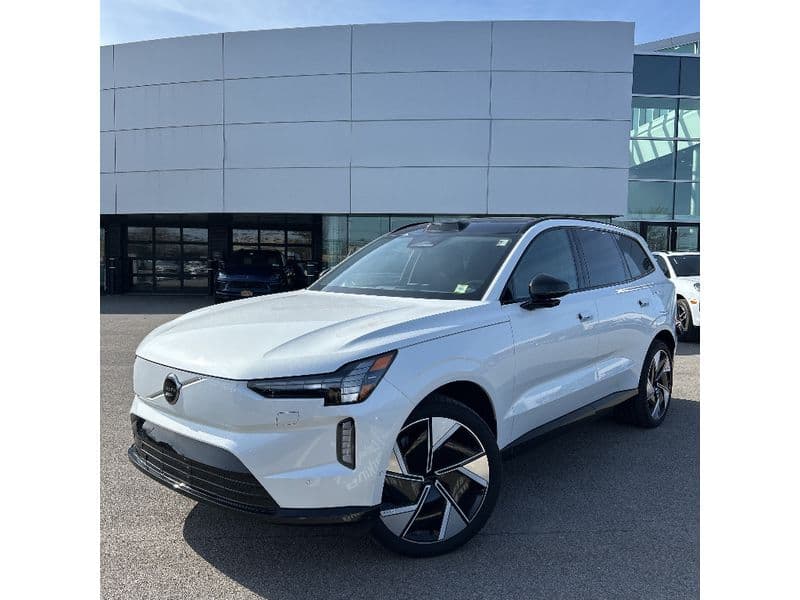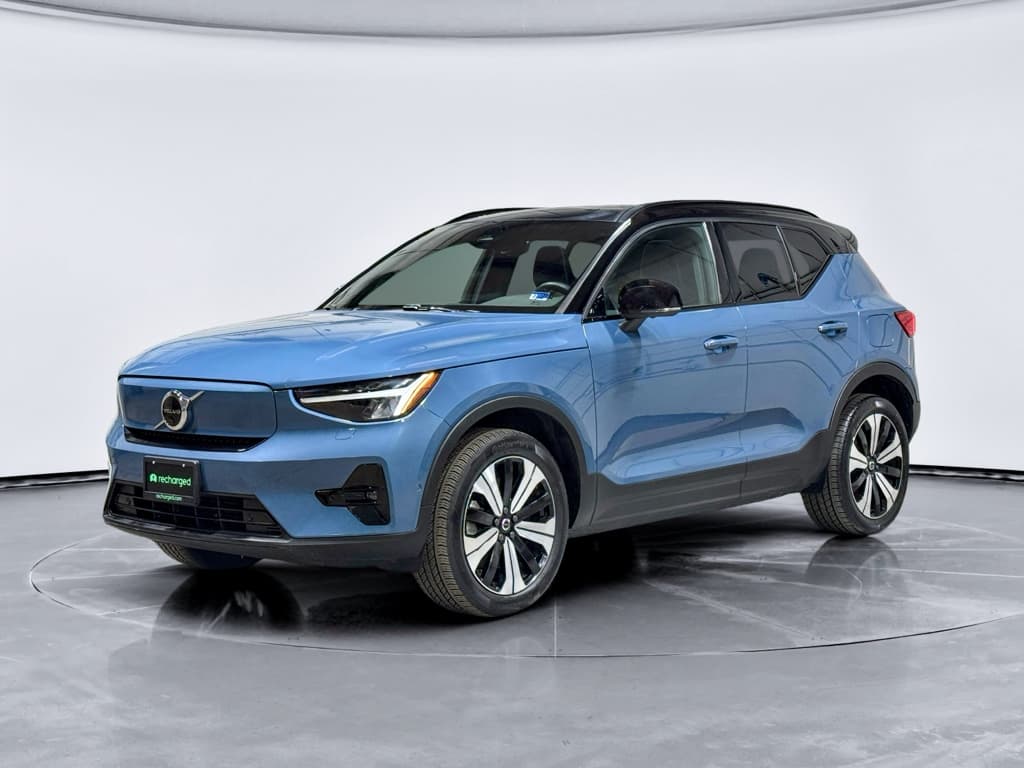
If you’re cross‑shopping a **Volvo XC90 T8 Recharge** and the fully electric **Volvo EX90**, the question isn’t just “Which one is nicer to drive?” It’s “Which one will actually cost me less to own over the next 5–10 years?” This guide breaks down Volvo XC90 vs Volvo EX90 total cost of ownership (TCO) in plain language so you can see where the money really goes.
How we approach the numbers
XC90 vs EX90: why total cost of ownership matters
On paper, the **XC90 T8 plug‑in hybrid** and **EX90 battery‑electric SUV** are siblings: three rows, Scandinavian design, strong performance. But they manage energy and long‑term costs very differently. The XC90 blends a turbocharged gas engine with a sizeable battery and about 30–40 miles of real‑world electric range; the EX90 ditches the gas tank entirely and relies on a large battery pack and DC fast charging.
That difference cascades through your finances. It affects: - **Upfront price and incentives** (only the EX90 is a full EV) - **Energy costs per mile** (electricity vs gasoline + electricity) - **Maintenance and repair exposure** (fewer moving parts in a BEV) - **Depreciation and resale value** as the market shifts toward EVs Getting TCO right matters even more if you’re deciding whether to **buy new**, **buy used**, or **lease**, and that’s exactly where a platform like Recharged can help by surfacing battery health, fair pricing, and financing options side by side.
XC90 vs EX90: quick 5‑year cost snapshot (U.S. estimates)
Base prices, incentives, and how much you really pay
Let’s start with what you’re likely to pay to get into each vehicle in the U.S. today (spring 2026).
Volvo XC90 vs EX90 pricing overview (new, U.S.)
Approximate starting MSRPs for popular trims. Real transaction prices often come in lower thanks to discounts and dealer incentives.
| Model | Powertrain | Typical starting MSRP | Likely transaction reality | Key price drivers |
|---|---|---|---|---|
| Volvo XC90 T8 Recharge | Plug‑in hybrid (PHEV) | ≈$71,900+ | Discounts and dealer incentives are common; may transact closer to high‑$60Ks depending on trim and market. | Long‑running model, multiple trims, dealer flexibility. |
| Volvo XC90 B6 (non‑PHEV) | Mild hybrid gas | ≈$59,000+ | Generally the lowest entry price into a 3‑row XC90. | No plug‑in hardware, fewer incentives but lower sticker. |
| Volvo EX90 Twin Motor | Battery‑electric (BEV) | ≈$79,995+ | Early production and strong demand mean less discounting; many buyers see real‑world prices in the low‑to‑mid $80Ks. | All‑new technology, large battery, standard ADAS and infotainment upgrades. |
Pricing changes often. Always confirm current MSRPs and offers with a retailer before you buy or lease.
Don’t forget tax credits and local incentives
When you net out realistic discounts on an XC90 T8 and potential EV incentives on an EX90, **the effective gap can narrow to roughly $5,000–$10,000** for many shoppers. That’s the hurdle the EX90’s lower fuel and maintenance costs have to clear over your ownership window.
Energy costs: gas plus electric vs all‑electric
Energy is where most buyers expect the EX90 to trounce the XC90, and over enough miles, it usually does. But plug‑in hybrids can be surprisingly efficient when driven and charged the right way, which is why it’s important to look at realistic scenarios.
XC90 T8 Recharge: blended fuel economy
- EPA‑style figures: recent XC90 T8 models are rated roughly in the high‑30s MPGe combined when operating on electricity plus gas, with a gas‑only figure in the high‑20s mpg.
- Real‑world experience: owners who charge consistently report effective energy costs in the 5–7¢ per mile range when most of their daily driving stays within the electric range.
- Long trips: once the pack is depleted, the XC90 behaves like a heavy gas SUV. On premium fuel at $4/gal and ~27 mpg, you’re closer to 14–15¢ per mile on highway road trips.
EX90: all‑electric efficiency
- Battery and range: the EX90 uses a large pack (well over 100 kWh usable) and delivers competitive range for a three‑row luxury EV.
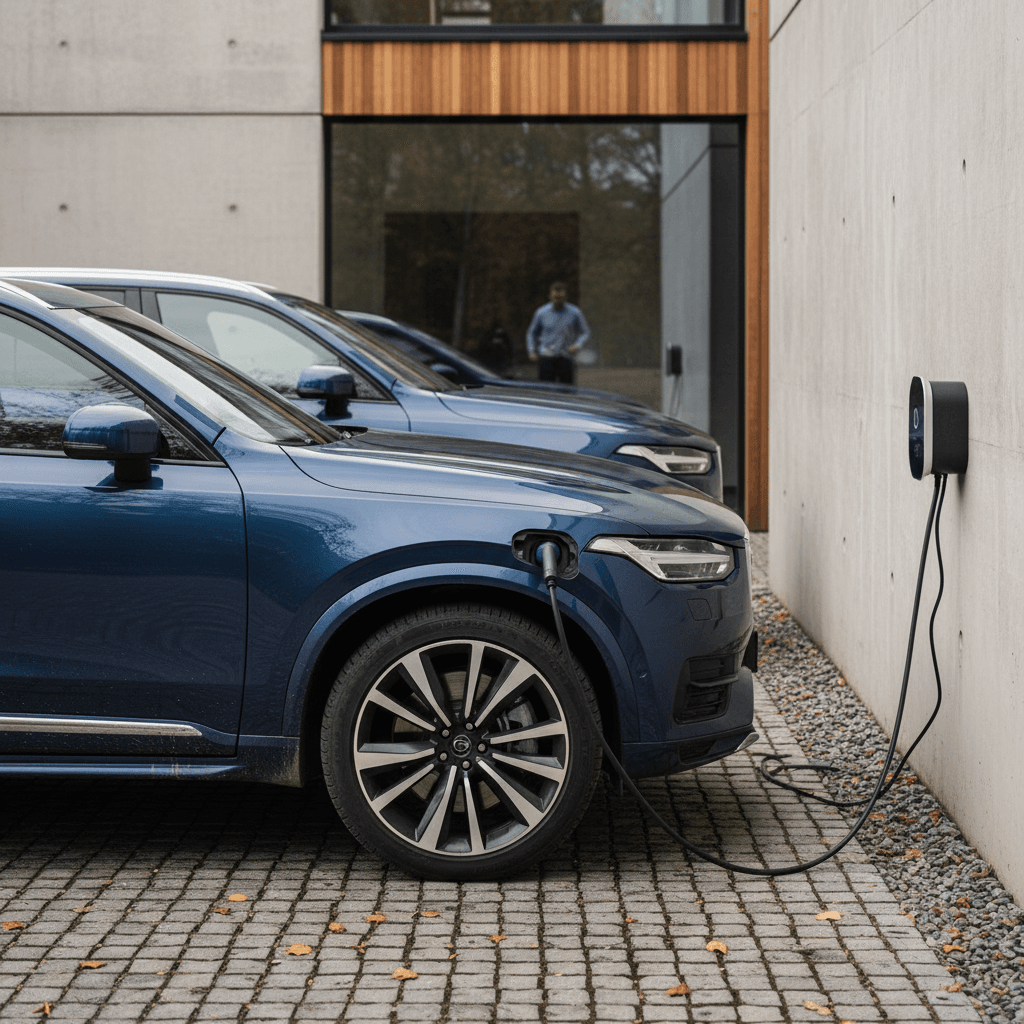
- Home charging: at a typical U.S. residential rate around $0.15/kWh, an EX90 that averages ~2.2–2.5 mi/kWh lands near 6–7¢ per mile.
- Public DC fast charging: rates can climb to $0.35–$0.50/kWh, lifting highway energy cost closer to 15–20¢ per mile. That still competes well with a gasoline XC90, but it’s not always cheaper.
The utility bill fine print
- If you mostly drive **short daily trips** and can plug in at home, the XC90 T8 can operate on electricity much of the time and feel cheaper to run than a pure gas XC90, but often still more expensive per mile than an EX90 charged at home.
- If you do a lot of **multi‑hundred‑mile highway trips** where the XC90 spends most of its time on gasoline, the EX90’s energy advantage can easily save you **$800–$1,500 over five years**, sometimes more in high‑fuel‑price regions.
- In regions with **very high electricity prices** and moderate gas prices, the XC90’s blended flexibility can narrow or even erase the EX90’s energy‑cost lead.
Maintenance, repairs, and warranty coverage
EVs eliminate many traditional maintenance line items, oil changes, spark plugs, transmission service, but luxury hardware is never maintenance‑free. In this matchup, though, the EX90 still has a structural advantage: **fewer moving parts, no exhaust system, and no complex turbocharged gas engine**.
XC90 vs EX90: what you’re likely to service
Same Volvo DNA, very different drivetrains.
XC90 T8: dual‑systems complexity
- Gas engine oil and filters
- Coolant, belts, exhaust, emissions hardware
- Hybrid system components and two energy sources
- Regular brake fluid and periodic brake service
Expect higher long‑term variability in repair costs as the vehicle ages past warranty.
EX90: fewer wear items
- No oil changes or exhaust system
- Simpler single‑speed drive unit
- Brake wear reduced by strong regen
- Tires and suspension may wear faster due to weight and torque
Day‑to‑day maintenance is typically cheaper and more predictable.
Warranty and battery coverage
- Both XC90 and EX90 include comprehensive basic and powertrain warranties for the first years of ownership.
- High‑voltage battery coverage generally extends longer (often around 8 years / 100,000 miles) to protect against major degradation.
- Software and driver‑assist hardware on the EX90 may see more over‑the‑air improvement than on the XC90.
What third‑party data suggests
Depreciation and resale value
Depreciation is often the single biggest line item in total cost of ownership, and it’s especially important for luxury SUVs. Recent data for new XC90s suggests a **5‑year depreciation in the mid‑$30,000 range**, or about $7,000 per year on average for a conventionally financed new example.
The EX90 is newer, so long‑term resale trends are still forming, but a few themes are already clear:
- Demand for well‑equipped **three‑row EVs** is strong, and supply remains limited compared with two‑row crossovers.
- Battery health and range retention will be **make‑or‑break drivers** of resale value. A clean EX90 with documented fast‑charging habits and solid battery diagnostics should command a premium over one with heavy DC‑fast‑charging use and noticeable range loss.
- Policy risk cuts both ways. More stringent emissions rules could hurt resale on large gas SUVs, but future changes to EV incentives might also reshape used EV pricing.
Why battery reports matter on used EX90s
Insurance and taxes: what changes with an EV?
Insuring a luxury three‑row SUV is never cheap, and both vehicles sit at the high end of the market. Carriers increasingly treat EVs and PHEVs differently, though:
XC90 vs EX90: insurance and tax considerations
Check repair‑cost assumptions
EX90 bodywork and high‑voltage components can be expensive to repair or replace after a crash, which some insurers bake into premiums. That can offset some of your energy and maintenance savings.
Ask about EV and safety discounts
The EX90’s advanced driver‑assistance and collision‑avoidance tech may qualify you for additional discounts that the older XC90 platform doesn’t unlock with every carrier.
Account for property and excise taxes
Some U.S. states assess annual fees or registration surcharges on EVs in lieu of gas taxes. Others offer reduced registration fees or exemptions for plug‑ins. These localized policies can tilt TCO in either direction.
Leasing vs buying implications
Leases sometimes bake federal EV incentives into the monthly payment even when a purchase wouldn’t qualify. That can make EX90 leasing more compelling relative to financing an XC90 outright.
5‑year total cost of ownership scenarios
Instead of chasing false precision, it’s more useful to look at **directional 5‑year scenarios**. Assume 12,000 miles per year and reasonable financing. These are not quotes, just structured comparisons to clarify how the pieces fit together.
Illustrative 5‑year TCO comparison: XC90 T8 vs EX90
Very rough scenarios assuming similar trim levels and options. All numbers in U.S. dollars, rounded, and highly dependent on your local prices and driving mix.
| Cost category (5 yrs) | XC90 T8 Recharge – heavy city, charged often | XC90 T8 Recharge – mostly highway, little charging | EX90 – home charging with occasional fast charge |
|---|---|---|---|
| Purchase & finance cost | $72k purchase; ≈$15k in interest & taxes over term → ≈$87k total outlay before resale. | Same as city‑heavy XC90 scenario. | $82k purchase; ≈$17k in interest & taxes over term → ≈$99k total outlay before resale. |
| Energy (fuel + electricity) | High EV usage keeps costs low: ≈$5,000 over 5 yrs (mix of electricity and some gas). | Mostly gas at ~14–15¢/mi → ≈$8,500–$9,000 over 5 yrs. | Home charging at ~6–7¢/mi plus some DCFC → ≈$4,500–$6,000 over 5 yrs. |
| Maintenance & repairs (in‑warranty) | Routine hybrid + ICE service → ≈$4,000–$5,000, assuming no major failures. | Same baseline, though highway miles may pull some services forward. | Fewer scheduled items → ≈$2,500–$3,500, mainly tires, inspections, brake fluid, cabin filters. |
| Depreciation (est.) | –$32k to –$38k from transaction price, depending on miles and condition. | Similar range; heavy highway mileage may push toward the higher end. | –$35k to –$40k from transaction price, heavily dependent on battery health and demand for 3‑row EVs. |
| Net 5‑yr cost before resale | Out‑of‑pocket ≈$96k–$101k excluding resale value. | Out‑of‑pocket ≈$100k–$105k excluding resale value. | Out‑of‑pocket ≈$108k–$115k excluding resale value. EX90 may claw some back with stronger resale and lower running costs. |
Use this as a framework, then plug in your own local fuel, electricity, insurance, and tax numbers to refine the picture.
How the math usually shakes out
Used XC90 or used EX90: what changes?
On the used market, the dynamics shift. Someone else has already eaten the steepest years of depreciation, and **condition matters more than brochure specs**.
Used XC90 T8: watch age and complexity
- Older XC90s can look like bargains, but you’re buying an aging luxury SUV with two powertrains to maintain.
- Out‑of‑warranty repairs on engine, hybrid components, or advanced safety systems can turn a cheap purchase into an expensive ownership experience.
- On the plus side, established parts availability and independent‑shop familiarity can help control some costs.
Used EX90: battery health is king
- The EX90 is newer, so used inventory will be thinner and prices firmer at first.
- Battery capacity and DC‑fast‑charge history will drive future value. A seemingly attractive price on a car with noticeable range loss may not be a bargain.
- Software support and over‑the‑air updates matter: newer software can improve efficiency, safety features, and charging behavior over time.
How Recharged simplifies used Volvo TCO
Which Volvo makes more sense for you?
XC90 vs EX90: quick decision guide
Match the powertrain to your lifestyle and budget reality, not just your driveway image.
Choose XC90 T8 if…
- You can’t reliably charge at home, but want some EV driving around town.
- Your region has high electricity prices and relatively moderate fuel costs.
- You prefer the flexibility of gas for long road trips without planning charging stops.
- You’re buying used and can find a well‑maintained XC90 with warranty coverage left.
Choose EX90 if…
- You have dedicated home Level 2 charging and drive at least 10–12k miles per year.
- You live in an area with reasonable residential electricity rates or EV‑friendly time‑of‑use plans.
- You’re comfortable planning occasional fast‑charge stops on long trips.
- You want to future‑proof against tightening emissions rules and rising fuel prices.
When both can work
- If you split time between city commuting and occasional road trips, both XC90 T8 and EX90 can be rational choices.
- Your decision may come down less to spreadsheet perfection and more to how much you value smooth EV driving, quietness, and lower maintenance risk versus upfront price.
- In that grey zone, it’s worth test‑driving both and running personalized numbers using your actual energy prices.
Build your own XC90 vs EX90 TCO comparison
1. Gather your local prices
Look up your current electricity rate (off‑peak if available) and local premium gasoline prices. These two numbers drive most of the energy‑cost math.
2. Estimate your annual miles and mix
Write down how many miles you drive per year and what share are short trips vs multi‑hundred‑mile highway drives. Plug‑in hybrids shine on short routes; BEVs shine with more miles and consistent charging.
3. Check home‑charging feasibility
Confirm whether you can install (or already have) a 240‑volt Level 2 charger. If not, factor in installation cost, or accept that an EX90 will rely more on public charging.
4. Compare real offers, not just MSRPs
Ask dealers for out‑the‑door quotes on XC90 T8 and EX90, and run incentives through a knowledgeable tax professional. The real upfront gap may be smaller than the window stickers suggest.
5. Plan for years 6–10
If you tend to keep vehicles a long time, lean toward the option with fewer complex moving parts and better long‑term efficiency. That often favors the EX90 over the XC90.
FAQ: Volvo XC90 vs Volvo EX90 total cost of ownership
Frequently asked questions
Choosing between the Volvo XC90 T8 and Volvo EX90 is less about chasing a single “cheapest” option and more about aligning a powertrain with your real life. If you can plug in at home, drive a lot of miles, and plan to keep the vehicle for the long haul, the EX90’s **lower energy and maintenance costs** can justify its higher sticker price and reduce your total cost of ownership over time. If you’re charging‑constrained or buy lightly used and move on quickly, a well‑bought XC90 can still make economic sense. Either way, going in with a clear TCO framework, and, on the used side, transparent battery‑health data from partners like Recharged, turns a fuzzy decision into a confident, numbers‑backed choice.